How to Check PDF Creator on iPad: Files, Split View, and Source-App Clues Before You Share
To check PDF creator on iPad, open the real file from Files, Mail, Messages, or iCloud Drive, inspect the hidden Creator field in a metadata-aware view, and compare it with the app that should actually explain the share-ready PDF.
If the creator still points to an old template app, scanner default, personal workflow, or stale export source, clean it up before the document leaves your iPad.
iPad workflows create the same false confidence as iPhone workflows, then add one more trap: multitasking makes it easy to compare a PDF with notes, email, or the source file and still never inspect the hidden metadata. A document can look polished in Files, Safari, Mail, or Split View while the Creator field still points to a draft app, template chain, or export path that no longer belongs in the final version. The useful goal is not simply opening the PDF. It is proving the invisible source-app clue still tells the right story before the file gets uploaded, forwarded, archived, or shared with someone else.
Fastest practical path: open the final iPad copy, inspect the embedded creator field once, compare it with producer and author, then keep, standardize, or clear the stale source-app clue before you share the PDF.
In a hurry? Jump to quick start: check PDF creator on iPad in about 5 minutes.
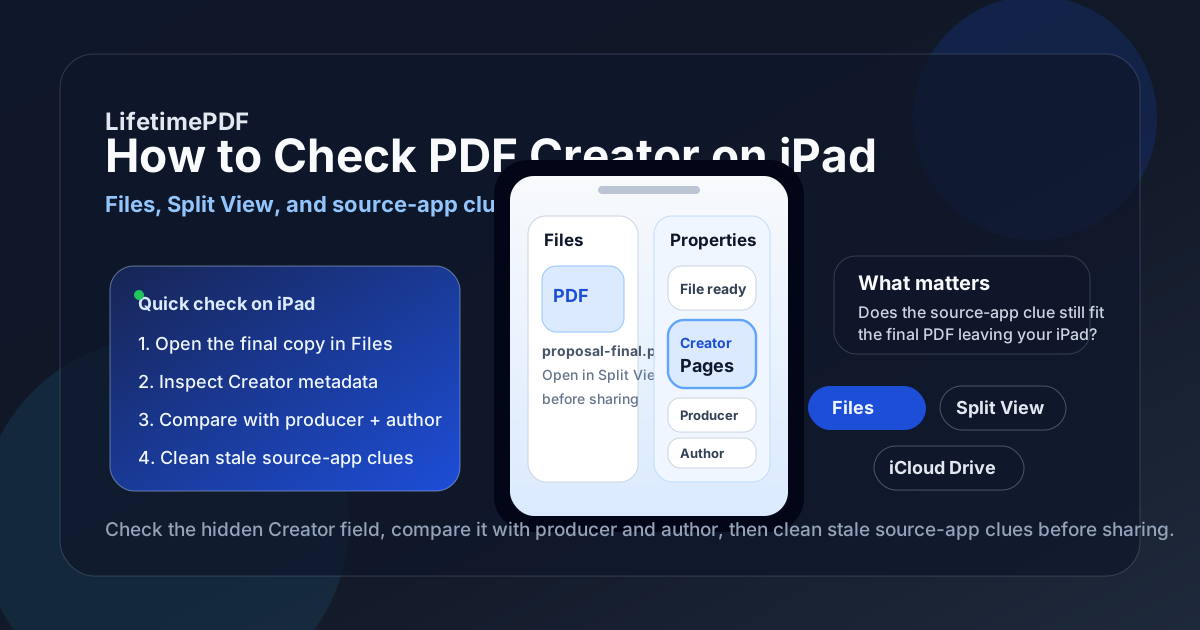
Table of contents
- Quick start: check PDF creator on iPad in about 5 minutes
- What you are really checking when you review PDF creator on iPad
- Where iPad users get misled
- Step-by-step: how to check PDF creator on iPad
- Warning signs that the creator field needs cleanup
- When to keep, standardize, or clear creator on iPad
- Related LifetimePDF tools and guides
- FAQ
Quick start: check PDF creator on iPad in about 5 minutes
If your real question is does this iPad PDF still carry the right source-app clue before I send it?, use this order:
- Open the exact PDF you plan to email, upload, archive, publish, or forward from Files, Mail, Messages, Safari downloads, iCloud Drive, or a portal export.
- Inspect the stored Creator value through a metadata-friendly workflow like PDF Metadata Editor or View PDF Properties.
- Compare that creator value with the nearby producer and author clues.
- Ask whether the final copy still needs that source-app clue or whether it only exposes an old draft tool, personal workflow, or export step that no longer matters.
- Keep, standardize, or clear the value depending on what the share-ready file needs to communicate.
- Save the cleaned file and reopen it once so you verify the corrected creator really stuck to the iPad copy you are about to share.
What you are really checking when you review PDF creator on iPad
The PDF creator field is hidden metadata stored inside the file. It usually points to the application that originally created the document content before later export, conversion, or optimization steps produced the final PDF. It is not the filename you see in Files, not the visible title on page one, and not automatically the same thing as the software that generated the finished PDF container.
That difference matters on iPad because PDFs often arrive after several handoff steps and get reviewed side by side with other material. A document may begin in Word, Pages, Google Docs, Excel, a browser form, or a scanning app, then get exported, downloaded, reopened, and compared in Split View against notes, email, or the source file. The file can look completely polished in every preview while the hidden creator still points to an older source app, template workflow, or private export step that no longer explains the finished copy very well.
| Field | What it usually represents | Why it matters on iPad |
|---|---|---|
| Creator | The app that likely started the document content | Helps explain whether the source-app clue still fits the final PDF you are about to share. |
| Producer | The engine or workflow that generated the final PDF output | Helps explain later conversions, print paths, optimizers, or portal export steps. |
| Author | The person, team, or organization attached to the file | Helps you judge whether the ownership story inside the PDF still feels intentional. |
| Filename | The storage name shown in Files, Mail, or iCloud Drive | Useful for navigation, but not proof of where the document really started. |
Where iPad users get misled
iPad makes PDFs feel trustworthy very quickly. Files previews, Mail attachment previews, Messages thumbnails, Safari download views, and Split View comparisons create a smooth review experience. The trap is that a smooth review experience is not proof that the metadata underneath is telling the right story.
| iPad path | What it is good for | What it cannot safely prove |
|---|---|---|
| Files preview | Confirming you picked the right file and that the visible pages still look correct. | That the hidden Creator field still points to the most sensible source app for the final PDF. |
| Mail, Messages, or Safari preview | Showing that the PDF opens and the visible content still looks fine. | Whether the embedded creator is stale, revealing, or inconsistent with the file you are actually about to share. |
| Split View comparison | Helping you compare the PDF with notes, the source file, or an email thread without leaving the screen. | That the source-app clue still belongs to the final share-ready copy. |
| iCloud Drive or portal handoff | Showing how the PDF moves through your real send or upload workflow. | That an older creator value was not inherited from a reused template or earlier export step. |
| Metadata editor or full properties view | Giving you the clearest look at the embedded Creator field itself. | You still have to judge whether the value helps the PDF or only carries workflow noise. |
That last point matters most. Tools can reveal the creator value. They cannot decide for you whether the final iPad PDF should keep the source-app clue, standardize it, or drop it altogether.
Step-by-step: how to check PDF creator on iPad
This workflow is fast enough for everyday iPad use and strong enough to catch the source-app mismatches that quietly travel with shared PDFs.
Step 1: Start with the exact iPad copy you plan to share
Review the real file that will leave your tablet. If the PDF came from Files, Mail, Messages, Safari downloads, or iCloud Drive, open that final copy directly. Checking one version and sharing another is one of the easiest ways to miss stale creator metadata.
Step 2: Inspect the Creator field directly
Use PDF Metadata Editor, View PDF Properties, Acrobat Reader, or another metadata-aware workflow. Do not assume the filename or visible heading already answers the same question. On iPad, it is common for a polished PDF to keep an older creator value from the desktop, browser, scan workflow, or template that originally produced the content.
Step 3: Compare creator with producer and author
Creator is most useful when you read it alongside the other nearby clues. Compare the source app with the producer, the author, and the visible document itself. If all of them tell broadly compatible stories, the file usually feels coherent. If creator points to an old draft tool while everything else points to a newer finalized workflow, the metadata probably needs attention.
Step 4: Keep the clue only if it still helps the final file
Not every creator value is a problem. Sometimes it is useful provenance. But if the field points to an old desktop template, a contractor workflow, a scanner app, or a source route that makes the PDF feel messier than it really is, the final file may be better off with a standardized or cleared value.
Step 5: Clean stale values deliberately
If you decide to change the creator, do it with intent. A vague replacement can be worse than a truthful original. Standardize the field when you know what the share-ready file should communicate. Clear it when the source-app clue adds more exposure than value. If you are already doing a broader cleanup pass, continue with Edit PDF Metadata or Remove Metadata From PDF.
Step 6: Save and verify once
Reopen the final PDF and confirm the corrected creator really stuck to the same file you are about to send. This catches the classic iPad mistakes: cleaning one copy while sharing another, trusting a cached preview, or fixing the metadata in a draft that never leaves your device.
Reliable sequence: open the final iPad copy, inspect the creator field, compare it with producer and author, keep only the source-app clue that still helps the file, then verify the finished PDF once before you share it.
Warning signs that the creator field needs cleanup
These patterns show up constantly in iPad workflows built around email attachments, downloads, shared folders, scans, and repeated exports from desktop apps.
| What you notice | What it usually means | Best next move |
|---|---|---|
| The creator still names an old template app | The PDF inherited metadata from a source document or workflow that is older than the final file. | Decide whether the clue is still useful; if not, standardize or clear it. |
| The creator points to a private or overly specific workflow | A workstation app, niche export route, or internal process leaked into the share-ready metadata. | Remove or simplify the value before the PDF leaves your iPad. |
| Creator and producer tell completely different stories | The PDF may have passed through several export, print, scan, or optimization steps. | Compare creator, producer, author, and visible content before deciding what to keep. |
| The file looks polished in Files or Split View, but the metadata feels random | The visible document was cleaned while the hidden source-app clue never got reviewed. | Run one deliberate creator check before sharing the final copy. |
| The creator field would confuse a recipient if they saw it | The metadata is telling an internal or outdated story that does not belong to the finished PDF. | Keep only the value that helps the file make sense from the inside out. |
Healthy default
If the hidden creator value would make a recipient wonder why this PDF identifies itself that way, the file probably deserves one more metadata pass before you share it from your iPad.
When to keep, standardize, or clear creator on iPad
Not every iPad PDF needs the same answer. The useful question is whether the creator field helps explain the final file or only drags old workflow details into a copy that should feel cleaner.
Keep it
Best when the source-app clue is accurate, harmless, and useful for troubleshooting, archive context, or workflow transparency.
Standardize it
Best when the file needs a cleaner, more intentional metadata story than whatever the source app happened to leave behind.
Clear it
Best when the creator adds no value, exposes private workflow details, or creates confusion for a public or sensitive share copy.
In practice, the strongest choice is usually the smallest amount of hidden source-app detail that still helps the document make sense. Internal drafts may benefit from a truthful creator trail. Client-facing or public PDFs often do not. If you are sharing a sanitized file, an archive copy, or something headed to a strict portal, review nearby fields such as author, title, and producer so the metadata story stays coherent.
- Keep the creator when it truthfully explains the file and does not expose anything awkward.
- Standardize it when an older source-app clue would make the PDF feel sloppy or inconsistent.
- Clear it when the value adds exposure without adding useful context.
- Verify related metadata when the PDF matters to archives, portals, external clients, or public downloads.
FAQ
How do I check PDF creator on iPad quickly?
Open the final PDF on your iPad, inspect the hidden Creator field in a metadata-aware workflow, compare it with the intended source-app story of the file, and fix it if the value is stale, private, or misleading.
Is PDF creator the same as producer or author on iPad?
No. Creator usually points to the app that started the content, producer usually points to the final PDF-making engine, and author usually points to a person, team, or organization attached to the file.
Can Files prove the creator field is correct?
Not by itself. Files is useful for opening the right copy and checking the share path, but you still need a metadata-aware workflow to judge whether the embedded creator value actually makes sense for the finished PDF.
Should I remove the creator field before sharing from my iPad?
Remove or clear it when the source-app clue is stale, confusing, or too revealing. Keep it when it still helps explain the file or supports archive and troubleshooting context.
Why does creator matter if the PDF already looks fine in Files or Split View?
Because hidden metadata still travels with the file. A polished PDF can still expose an old template app, a private workflow, or a source-software clue that no longer belongs in the final share-ready copy.
Check the hidden creator before the PDF leaves your iPad.
A clean iPad workflow is simple: inspect the Creator field, compare it with the rest of the metadata story, keep only the source-app clue that still helps the file make sense, and verify the final copy once before you send it.
Published by LifetimePDF — Pay once. Use forever.