How to Check PDF Metadata on iPad: Files, Safari, Split View, and Privacy-Safe Review
To check PDF metadata on iPad, save the file into Files, open a metadata-friendly workflow, and review the title, author, subject, keywords, creator, producer, and date fields before you share the PDF.
If the hidden details are outdated, private, or inconsistent with the visible document, clean them first so the invisible side of the file matches the polished copy people actually receive.
That is the short answer. The useful iPad answer is that Files, Safari preview, Mail preview, Messages, and cloud app previews do not always surface the full metadata story in the same way. A PDF can look completely finished on your screen while still carrying an old draft title, the wrong author name, internal keywords, or software fingerprints you never meant to send along.
Fastest practical path: save the exact iPad copy, review the high-signal metadata fields once, fix or remove anything that should not travel with the file, then verify the cleaned version before you send it onward.
In a hurry? Jump to quick start: check PDF metadata on iPad in about 5 minutes.
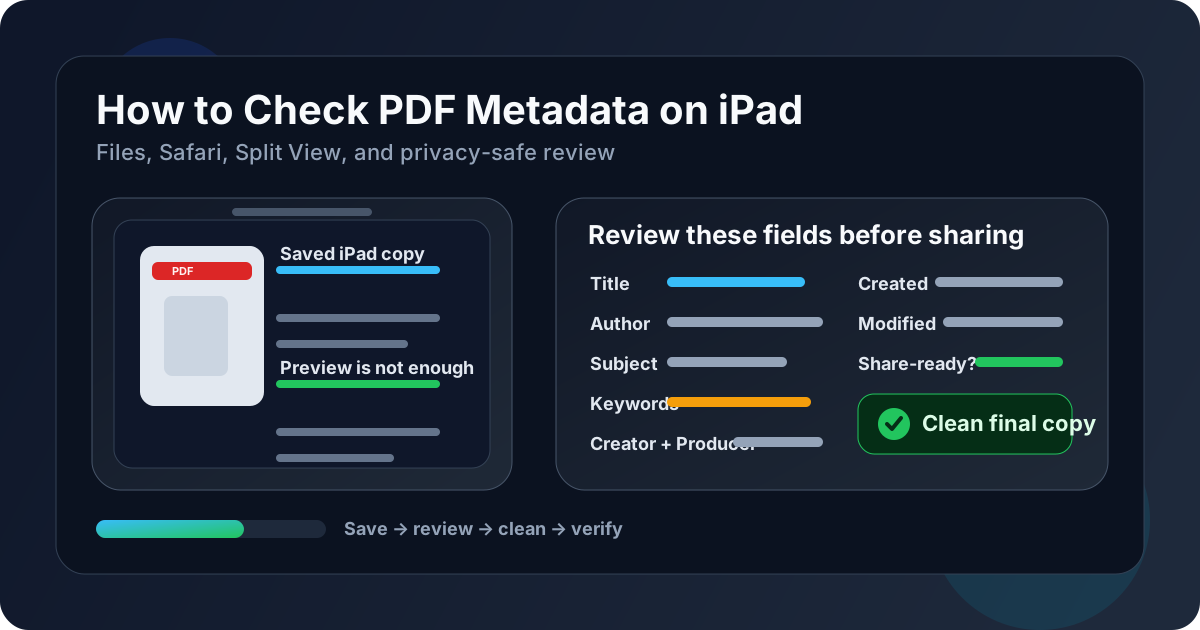
Table of contents
Quick start: check PDF metadata on iPad in about 5 minutes
If your real goal is simply make sure this iPad PDF does not carry the wrong hidden details before I send it, use this order:
- Save the exact PDF you plan to email, upload, archive, submit, or share into Files on your iPad.
- Do not rely on Safari preview, Mail preview, Messages, or a cloud app preview as your only check.
- Use a metadata-friendly workflow that lets you review the full title, author, subject, keywords, creator, producer, and date picture.
- Check the high-signal fields first: Title, Author, Keywords, Creator, Producer, Creation Date, and Modification Date.
- Decide whether each field helps the final file, adds confusion, or exposes private workflow details.
- Save the cleaned PDF and reopen it once to confirm the corrected metadata actually stuck.
What counts as PDF metadata on iPad
PDF metadata is the hidden document-property layer attached to the file itself. It is separate from the visible page text, signatures, and layout. On iPad, the fields most worth checking usually include the title, author, subject, keywords, creator, producer, and the file's created or modified timestamps.
| Field | What it usually tells you | Why it matters on iPad |
|---|---|---|
| Title | The intended document name inside the PDF | Can surface differently from the filename in previews, tabs, downloads, or the apps another person uses after download |
| Author | The person, team, or organization attached to the file | Often where an old employee name, a personal device identity, or a reused template quietly remains |
| Subject and keywords | Short description and search-oriented tags | Easy place for internal project names, client shorthand, or stale archive labels to leak into a share copy |
| Creator and producer | The software or workflow that made the PDF | Useful sometimes, but often just technical clutter or more workflow detail than you want to expose from a tablet-first share |
| Creation and modification dates | When the file was made or changed | Can reveal drafting history, reused templates, or a timeline that no longer fits the final version |
The important distinction is that an iPad PDF can look polished on screen while the metadata still tells an older, messier story underneath. That is why this check belongs in the final review step rather than as an afterthought after you already tapped send.
Where iPad users get misled
iPad gives you several fast ways to glance at a PDF, but not every path proves the hidden properties are clean. A quick preview answers whether the file opens. It does not always answer whether the metadata is accurate, intentional, or safe to share.
| Opening path | What it is good for | What it cannot safely prove |
|---|---|---|
| Files preview | Confirming you saved the right file and doing a quick first-pass check. | That every important PDF metadata field is present, clean, and appropriate for the copy you plan to share. |
| Safari, Mail, or Messages preview | Checking that the PDF opens and looks familiar. | That the hidden title, author, keywords, producer, and dates are accurate or that the downloaded final copy behaves the same way elsewhere. |
| Cloud app preview such as Drive or Dropbox | Making sure the uploaded or downloaded file appears to be the right document. | That the stored copy is not still carrying internal names, old dates, or private workflow metadata. |
| Split View or side-by-side multitasking | Comparing the PDF with the email, filename, source notes, or upload destination. | It still does not expose the full hidden document-property layer unless you use a metadata-aware workflow on the actual file. |
Step-by-step: how to review PDF metadata on iPad
This workflow gives you a dependable answer without turning a simple metadata check into a giant mobile chore.
Step 1: Save the exact iPad copy first
If the PDF is still inside Safari preview, Mail preview, Messages, a browser download sheet, or a cloud tab, save it first. The metadata check should apply to the exact file you are about to send, upload, archive, print, or submit. That small habit prevents you from cleaning the wrong version and then wondering why the shared copy still looks messy later.
Step 2: Start with the high-signal fields, not every possible detail
You do not need a forensic deep dive before you know whether the PDF is basically safe to share. On iPad, start with the fields that most often cause problems: title, author, keywords, creator, producer, and the key dates. Those are the values most likely to expose draft history, stale names, internal naming habits, or software fingerprints.
- Title that still looks like a draft export name or odd filename.
- Author that names the wrong person, the wrong organization, or a personal device account.
- Keywords or subject fields that expose internal project names, client codes, or old filing habits.
- Creator and producer fields that add workflow detail you do not want to carry forward unnecessarily.
- Dates that make the file feel older, reused, or inconsistent with the version being sent.
Step 3: Compare the hidden fields with the visible document context
A healthy iPad metadata check is not only about whether the fields are filled in. It is about whether the hidden story matches the visible story. If the cover says one thing, the filename says another, and the metadata says something else again, the PDF still needs cleanup even if no field looks obviously broken.
Step 4: Use iPad context to catch version mix-ups
iPad users often juggle the same PDF across Files, Mail, Safari, and cloud storage. That makes it easy to check one version and send another. A good habit is to open the source email or upload target in Split View while reviewing the saved file, so you can confirm you are cleaning the exact PDF that is about to leave the device.
Step 5: Decide whether each field should stay, change, or disappear
Not every field needs to be removed. A clean title and a sensible organization name can help archives, document libraries, and professional presentation. The better question is whether the field still earns its place in the final copy. If it helps the recipient trust, file, or identify the PDF, keep it accurate. If it only adds confusion or exposure, clear it.
Step 6: Save the cleaned copy and verify once
This is the step people skip when they are rushing on a tablet. After you clean the metadata, reopen the saved iPad PDF and check it once more. One last verification pass is usually enough to catch the classic failure where the original file was corrected but the outgoing copy was not.
Need a faster cleanup flow? Use the metadata tool for the full hidden-property review, then pair it with related LifetimePDF guides if the title, author, or keywords still need work.
Common signs the metadata needs cleanup
These patterns come up repeatedly when an iPad PDF looks ready on screen but still carries the wrong hidden identity.
| What you notice | What it usually means | Best next move |
|---|---|---|
| The title still looks like a draft export name | The visible document was polished, but the hidden title was never updated | Rename the metadata title so the file feels deliberate in viewers and archives |
| The author names the wrong person or device account | The PDF inherited a local profile, old employee, or template default | Replace it with the right person, team, organization, or remove it |
| Keywords expose internal project labels | The metadata still carries internal workflow context the recipient does not need | Clear or standardize the keywords before the PDF leaves your iPad workflow |
| Creator or producer fields feel surprisingly revealing | The file is exposing more about the software chain than you expected | Decide whether the technical detail is harmless, useful, or better removed |
| The dates tell an awkward timeline story | The PDF may have been reused from an older template or finalized later than the metadata suggests | Review whether the dates are acceptable for the destination or whether a cleaner final copy is better |
Healthy default
If the metadata would make a recipient ask “why does this hidden information not match the file I am looking at?”, the PDF probably deserves one more cleanup pass.
When to edit metadata vs remove it
A lot of people assume the safest iPad workflow is to wipe every metadata field. Sometimes that is right. Sometimes it just makes the file harder to manage later. The better question is whether the metadata should be useful, neutral, or absent for the PDF's next destination.
Edit the metadata when
- the title should match the actual finished document,
- the author should represent a team or company cleanly,
- the subject or keywords help archiving and search,
- the file is part of an organized document library,
- the hidden fields add professionalism rather than noise.
Remove or minimize the metadata when
- the file contains sensitive HR, legal, financial, health, or investigative material,
- the author or keywords expose personal or internal identities,
- the creator or producer details reveal more workflow context than you want to share,
- the PDF is a public-facing or neutral share copy that does not benefit from extra hidden details.
For many iPad workflows, the best answer is not empty metadata. It is intentional metadata. Keep what makes the file easier to trust and manage. Remove what only creates confusion, clutter, or privacy risk.
FAQ
How do I check PDF metadata on iPad?
Save the PDF into Files, inspect it in a metadata or document-properties workflow, and review the title, author, subject, keywords, creator, producer, and dates before the file leaves your iPad.
Can Files or Safari show all PDF metadata on iPad?
Not always. iPad previews can help with a quick first look, but a dedicated metadata workflow is better when you need the full hidden-property story and want to clean the file confidently.
What PDF metadata fields should I check first?
Start with title, author, subject, keywords, creator, producer, creation date, and modification date. Those fields carry most of the professionalism and privacy risk in everyday iPad workflows.
Should I remove PDF metadata completely?
Not always. Keep metadata that helps the file make sense, archive cleanly, or present professionally. Remove metadata when it is misleading, noisy, or more revealing than useful for the copy you are sharing.
Why should I check PDF metadata before sharing a file from iPad?
Because a PDF can look perfect on your iPad while still carrying old titles, personal names, client shorthand, or software details in the hidden metadata. A quick iPad review prevents avoidable privacy leaks and sloppy handoffs.
Published by LifetimePDF — Pay once. Use forever.