How to Check PDF Art Box on Linux: Okular, Evince, and Meaningful-Artwork Checks Before You Crop, Place, or Share
To check PDF art box on Linux, open the saved PDF in a page-box-aware properties workflow and compare the art box with the crop box, media box, trim box, and bleed box so you know what part of the page the file treats as meaningful artwork.
If the art box is missing, oversized, or disconnected from the visible page, decide that before you upload, print, crop, place, export, or share the PDF so you fix the right layer instead of trusting a Linux preview that may hide the real geometry.
Linux makes PDFs feel trustworthy fast. The file opens cleanly in Okular, looks stable in Evince, and seems finished in Firefox, Chromium, Nautilus, or Dolphin. Then a layout app, upload portal, printer, or teammate reveals that the file's internal art box is stale, missing, or pointing at the wrong content region. A quick review helps you separate harmless metadata from a real page-box problem before the PDF reaches a workflow that actually cares.
Fastest practical path: open the real Linux copy, compare the art box with crop first, use media, trim, and bleed only to clarify the bigger page-box story, then decide whether the art box is useful, optional, or worth fixing.
In a hurry? Jump to quick start: check PDF art box on Linux in about 5 minutes.
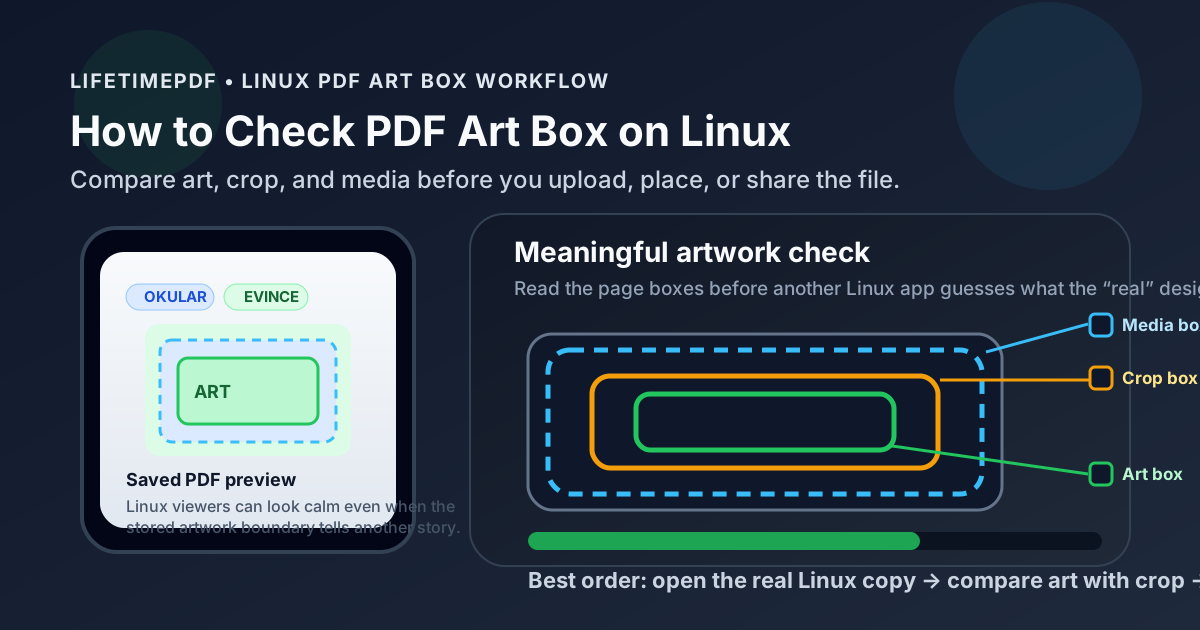
Table of contents
- Quick start: check PDF art box on Linux in about 5 minutes
- What an art box really means on Linux
- Where Linux users get misled
- Step-by-step: how to review PDF art box on Linux
- When art box matters and when it does not
- What to do if the art box is missing, wrong, or confusing
- Related LifetimePDF tools and guides
- FAQ
Quick start: check PDF art box on Linux in about 5 minutes
If your real goal is simply figure out whether this Linux PDF defines the meaningful artwork area sensibly before it moves to another app, machine, or person, use this order:
- Open the exact PDF you plan to upload, print, email, place, archive, or share from your Linux machine.
- Do not assume Okular, Evince, Firefox, Chromium, or a file-manager preview proves the file's internal page boxes make sense.
- Open a page-box-aware workflow such as View PDF Properties so you can read the art box, crop box, and media box clearly.
- Check whether the art box matches the content region you would naturally call the meaningful design area.
- Compare it with trim and bleed only if the PDF is headed into print, packaging, or another edge-sensitive production workflow.
- If the art box is wrong but harmless, leave it alone. If it is causing bad framing or placement decisions downstream, fix the source geometry or re-export the PDF instead of guessing with random crops.
What an art box really means on Linux
The art box is an optional PDF page box that describes the region the file treats as meaningful artwork. It is not automatically the visible page, the final trim size, or the full stored canvas. Sometimes it lines up neatly with those other boxes. Sometimes it exists mainly so layout, placement, or production workflows understand which part of the page should count as the real design area.
That matters on Linux because one PDF often bounces through Okular, Evince, Firefox, Chromium, upload portals, printers, desktop layout apps, and shared folders that do not all interpret page-box data the same way. A document can look perfectly fine on your screen while still carrying an art box that is too tight, too loose, missing, or inherited from an older export step. Checking it lets you decide whether you are looking at harmless metadata or a real geometry mismatch before the file reaches a workflow that cares.
| Page box | What it usually means | Why a Linux user should care |
|---|---|---|
| Art box | The meaningful artwork region the PDF wants another workflow to notice | This is the field you review when the question is what part of the page does the file consider the real design area? |
| Crop box | The visible page area many viewers respect | Compare art with crop first because Linux previews often make crop feel like the whole story. |
| Media box | The full stored page canvas | Useful when the file carries outer clutter, oversized canvas, or export leftovers that the art box may be trying to summarize. |
| Trim box | The intended finished page after cutting | Relevant when the PDF is meant for print or production and you need to know whether the art box aligns with the final size. |
| Bleed box | The extra edge area meant to survive trimming | Helpful when artwork reaches the edge and the job still needs safe extra content beyond trim. |
Where Linux users get misled
Linux gives you several trustworthy ways to open a PDF, but most of them answer only one question: does the file open and look roughly normal? They do not automatically answer whether the art box is useful, missing, or misleading for the workflow that comes next.
| Linux path | What it is good for | What it cannot safely prove |
|---|---|---|
| Okular, Evince, Firefox, or Chromium preview | Quickly opening the final file and spotting obvious layout trouble. | Whether the PDF defines the meaningful artwork region sensibly for another app, layout workflow, or production handoff. |
| Nautilus, Dolphin, or a synced-folder preview | Confirming you saved the right outgoing copy and are not still looking at a temporary preview. | Whether the art box agrees with crop, media, trim, and bleed or whether another app may interpret the page differently. |
| Browser or portal upload preview | Making sure the file renders at all before you send it onward. | You do not want this to be the first place you discover the PDF's content region is defined oddly. |
| Layout app, printer, or packaging workflow | Revealing when another workflow starts caring about page geometry more than a casual Linux preview did. | By this point, a stale art box can already be causing confusion about framing or placement. |
| Properties-aware page-box review | Giving you the clearest answer before the PDF leaves Linux. | It does not automatically tell you to crop or re-export. It only shows which layer is actually wrong. |
The easy mistake
People often assume the file must be fine because it looks centered and complete in the Linux app they happened to use first. In reality, a calm-looking preview can still hide an art box that points to the wrong region, carries stale export data, or disagrees with crop and media in ways that matter only later.
Step-by-step: how to review PDF art box on Linux
This workflow is short enough for everyday Linux use and strong enough for real design, placement, upload, and handoff decisions.
1) Open the exact Linux copy first
Do not judge only a browser tab, portal preview, or synced thumbnail if another saved file is the one truly headed to upload, print, or another app. Start with the real outgoing PDF on disk.
2) Open a page-box-aware properties view
Use View PDF Properties or a comparable workflow that exposes art, crop, media, trim, and bleed instead of leaving you to guess from the visible preview.
3) Compare the art box with the crop box first
This is the fastest high-value comparison on Linux because it tells you whether the PDF's meaningful artwork region matches what the current viewer is presenting as the page.
4) Compare it with media, then trim and bleed if needed
If the page still feels odd, look at the full canvas and then the production edges so you can tell whether the art box is summarizing the design well or hiding a deeper geometry mismatch.
5) Decide whether the art box actually matters here
For casual reading it may be irrelevant. For placement, packaging, prepress, or design handoff, it may shape how another app frames the page or interprets the meaningful content area.
6) Fix the right layer once
Re-export when the page geometry is truly wrong, crop or clean the PDF only when the visible framing is the issue, and stop editing when the art box is harmless metadata that will not affect the real workflow.
Reliable sequence: open the real Linux copy → read art and crop first → use media, trim, and bleed to understand the bigger picture → decide whether the art box matters for the actual job → re-export, clean up, or leave the file alone.
When art box matters and when it does not
Art box is not a universal emergency field. It matters most when another workflow may actually read it to decide what counts as the important design area.
High-priority art-box jobs
Packaging proofs, placed artwork, design handoff, prepress review, marketing assets moving from Linux to desktop layout, or any PDF that may be imported into another app that cares about content framing.
Best move: compare art, crop, and media carefully before the file leaves Linux.
Lower-priority art-box jobs
Screen-only reading, simple contracts, ordinary office printing, or straightforward PDFs where no downstream tool will care about an optional artwork boundary.
Best move: do not fix art-box metadata just because it exists.
Important limitation
A sensible art box does not guarantee correct trim, bleed, crop, page size, or resolution.
Best move: use the other page boxes too when the workflow is production-sensitive.
| What you notice | What it usually means | Best next move |
|---|---|---|
| The art box closely matches the visible design area | The PDF is probably describing the meaningful artwork region honestly. | Leave it alone unless another production field still looks wrong. |
| The art box is smaller or larger than the visible page for no obvious reason | The file may carry stale export data or a framing rule another app could misread. | Compare art with crop and media, then decide whether the source file needs correction. |
| The PDF has no art box at all | This may be perfectly normal, especially for ordinary office or screen workflows. | Check whether crop, trim, bleed, media, and page size already tell a complete enough story. |
| The destination workflow behaves strangely | The art box may be one part of a wider page-geometry disagreement. | Review all page boxes before editing blindly. |
| The visible page is messy because of extra outer space | The deeper problem may be crop or media rather than art itself. | Use Check PDF Media Box and crop cleanup tools before you blame the art box alone. |
What to do if the art box is missing, wrong, or confusing
Most Linux art-box decisions come down to a short diagnostic question: is the art box affecting a real workflow, or is it merely metadata you noticed while investigating something else?
Best decision rule
If the art box is confusing but harmless, leave it alone. If another app is clearly framing, placing, or interpreting the PDF badly because of it, fix the source geometry or re-export the file. If the visible page itself is wrong, solve crop or media first instead of obsessing over art-box labels.
No art box
Common and often harmless.
If the PDF behaves correctly in the real workflow, you may not need to add one at all.
Useful and accurate
The art box matches the meaningful design area.
Leave it alone and move on to the next check.
Wrong but visible page looks fine
The metadata may be stale, even if the preview feels normal.
Re-export or correct the source only if another workflow is actually reading that bad definition.
Page geometry is messy
Art, crop, media, trim, or bleed are disagreeing in a real way.
Fix the underlying page setup instead of making random downstream edits.
FAQ
How do I check PDF art box on Linux?
Open the saved PDF, use a page-box-aware properties workflow, and compare the art box with the crop box, media box, trim box, and bleed box so you can see whether the file's meaningful artwork region makes sense.
Can Okular or Evince show an art box clearly on Linux?
They are useful for opening the exact saved file and spotting obvious issues, but a properties-aware workflow is better when you need the clearest read on art, crop, trim, bleed, and media relationships.
Is art box the same as crop box on Linux?
No. The art box describes the meaningful artwork area, while the crop box is the area many viewers treat as the visible page. They may align, but they are not automatically the same.
Is a missing art box on Linux always a problem?
No. Many PDFs work perfectly without one. If the file already behaves correctly for the real workflow, a missing art box may not matter at all.
Should I crop the PDF if the art box looks wrong on Linux?
Only if the visible framing is the real problem. If the deeper page geometry is wrong, re-exporting or fixing the source file is usually a better move than making blind crop edits.
Check the artwork boundary before another Linux app guesses for you.
On Linux, the cleanest art-box workflow is simple: inspect the real outgoing file, compare art with crop first, use media, trim, and bleed only to understand the bigger geometry story, and fix only the layer that is actually wrong.
Published by LifetimePDF — Pay once. Use forever.