How to Check PDF Page Size on Linux: Okular, Evince, and Letter-vs-A4 Mistakes Before You Print
To check PDF page size on Linux, open the saved PDF in Okular or Evince, use a page-size-aware properties view, and read the real dimensions in inches, millimeters, or points instead of trusting the preview.
If the file mixes Letter, A4, Legal, or custom page sizes, catch that before you print, upload, merge, or share it.
That is the fast answer. The useful Linux answer is that Okular, Evince, browser previews, and file-manager thumbnails make almost any PDF feel calm and correct on screen. The real trouble shows up later in the print dialog, a strict upload portal, or the moment one appendix suddenly gets different margins for no obvious reason.
Fastest practical path: open the exact Linux copy, read the stored page dimensions, confirm every page matches, then decide whether the real fix is crop, resize, re-export, or no change at all.
In a hurry? Jump to quick start: check PDF page size on Linux in about 5 minutes.
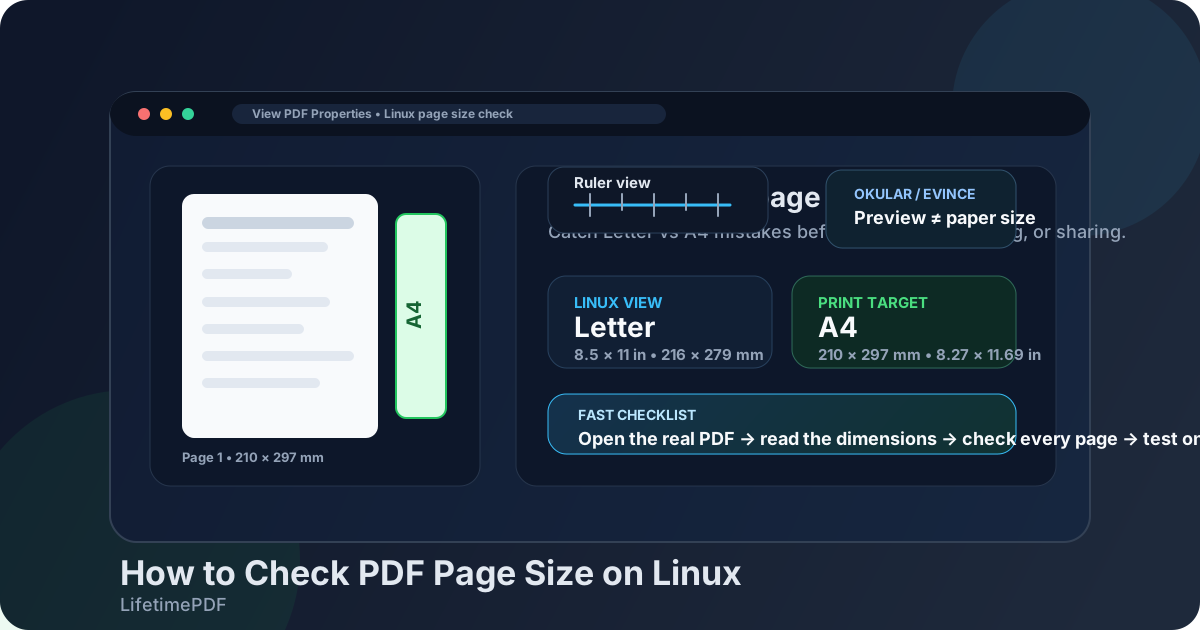
Table of contents
- Quick start: check PDF page size on Linux in about 5 minutes
- Why page size matters more on Linux than people expect
- Where Linux users get misled about PDF page size
- Step-by-step: how to review PDF page size on Linux
- How to spot mixed-size PDFs before printing or uploading
- Common Linux page-size problems and what to do next
- Related LifetimePDF tools and guides
- FAQ
Quick start: check PDF page size on Linux in about 5 minutes
If your real goal is simply make sure this PDF is the right paper size before it leaves my Linux machine, use this order:
- Open the exact PDF you plan to print, upload, email, merge, or archive from Downloads, your project folder, or the saved attachment location.
- Do not assume the preview in Okular, Evince, a browser tab, or a file-manager thumbnail proves the real paper size.
- Open a properties-aware workflow such as View PDF Properties and read the stored dimensions.
- Confirm whether the page is Letter, A4, Legal, or a custom size.
- Check whether every page matches, especially if the file came from scans, LibreOffice exports, or several merged sources.
- If something is wrong, decide whether the fix is crop, a fresh export, or leaving the file alone because the dimensions are already correct.
Why page size matters more on Linux than people expect
Page-size trouble often stays hidden until the last possible moment. A PDF can open cleanly in Okular, Evince, Chromium, Firefox, or a desktop file preview while still being the wrong format for a printer, upload portal, binder, or client requirement. The first clear clue may be clipped content, strange white borders, a portal rejection, or a file that shrinks because one part of the workflow expects Letter while another expects A4.
Linux users run into this more than they expect because PDFs move through mixed workflows. You might export from LibreOffice, save a browser-generated form, combine scans from a network printer, merge an appendix from another teammate, or reopen the file later in a different viewer. One odd page or one wrong paper preset is enough to create a document that feels fine in a calm desktop preview but behaves badly the moment it gets printed or uploaded somewhere strict.
Page size helps with
printing, portal uploads, forms, mailing labels, scanned packets, and any workflow where the PDF must match one exact paper standard.
Page size matters most when
you switch between Letter and A4 regions, combine files from several apps, handle scans, or send documents to someone else's printer or office system.
Page size matters less when
the PDF is only for casual reading and nobody downstream cares about paper format, exact margins, or predictable print behavior.
Where Linux users get misled about PDF page size
Linux gives you several fast ways to look at a PDF, but not every path answers the same question. Some views tell you whether the file opens. Fewer tell you the exact stored dimensions of the pages inside it.
| Opening path | What it is good for | What it cannot safely prove |
|---|---|---|
| File-manager thumbnail or quick preview | Confirming you saved the right PDF and checking whether it opens normally on your Linux desktop. | That the page is truly Letter, A4, Legal, or a custom size suitable for the workflow ahead. |
| Okular or Evince | Viewing the exact saved file quickly and spotting obvious layout damage or the wrong version. | That every page shares the same dimensions or that the paper size matches a printer or portal requirement unless you explicitly inspect the stored size. |
| Browser preview or cloud preview | Checking whether the document generally looks right and deciding whether you downloaded the intended file. | That the final local PDF is the same size or same version that will actually be printed, uploaded, or shared. |
| Properties-aware review workflow | Reading the stored page dimensions before the file leaves Linux. | It does not fix the problem by itself. You still have to decide whether crop, re-export, or no change is the correct next move. |
Step-by-step: how to review PDF page size on Linux
This workflow gets you to a dependable answer quickly without turning a simple size check into a full document audit.
1) Open the exact Linux copy first
Do not inspect only a browser tab, webmail preview, or sync preview if another saved file is the one actually going to the printer or portal. Start with the real outgoing PDF on disk.
2) Read the stored dimensions clearly
Use View PDF Properties or another properties-aware path so you can read the exact page size instead of guessing from the preview.
3) Confirm the actual paper format
Ask one practical question: is this page truly Letter, A4, Legal, or a custom size, and is that what the next step in the workflow expects?
4) Check more than the first page
Merged reports, scanned packets, and office exports often hide one odd page. If the file matters, inspect beyond page one so one outlier does not become tomorrow's printing problem.
5) Decide whether the fix is crop, resize, or no change
Crop when the content is already fine but the page carries extra borders or marks. Resize or re-export only when the actual paper size is wrong for the job.
6) Test one final output
Preview the corrected PDF again, or run one sample print. That catches the common Linux mistake where you checked one copy but printed or shared another.
Best default sequence: open the real Linux copy → read the dimensions → confirm every page → decide crop versus re-export → test one final output.
How to spot mixed-size PDFs before printing or uploading
Mixed-size PDFs are the quiet troublemakers of Linux workflows. One Letter page inside an A4 packet, one Legal appendix inside a standard report, or one scan with oversized borders can make the whole document feel inconsistent even though most pages are fine.
The good habit is simple: if one page prints differently, shows larger borders, or triggers a portal warning, assume the file may contain more than one page size until you prove otherwise. That is especially common after combining office exports, browser-generated forms, downloaded attachments, or scanned inserts from different sources.
The first pages look fine but one appendix clips or shrinks
That often means one page has a different stored size. Check the full packet instead of trusting the first clean-looking page in Okular or Evince.
The printout suddenly gets bigger white borders
This is a classic sign of an A4-versus-Letter mismatch or a page carrying extra marks or margins that should be cropped.
The upload portal rejects one page or one whole packet
Many portals quietly require one exact format. One Legal or custom-size outlier can fail the submission even if the rest of the PDF is compliant.
The scan looks oversized even though the content seems normal
The content may already be the right size, but the page could include scanner borders, crop marks, or padded margins that call for a crop instead of a full resize.
When the issue is just extra border space, a crop is usually the clean fix. When the issue is the underlying paper format itself, a fresh export or resize may be better. If the file already matches the workflow requirement, leave it alone and move on.
Common Linux page-size problems and what to do next
These are the situations that show up most often when a Linux PDF looks fine at first but turns into a practical headache later.
LibreOffice or another app exported A4, but the destination expects Letter
If the destination expects Letter, confirm whether the PDF truly needs a new export or whether the print setting is doing the damage. Blindly forcing fit-to-page can create new layout problems.
White borders appear only on some pages
Check for mixed-size pages or extra crop marks. If the content area is already correct, crop the excess instead of resizing the whole document blindly.
Portal rejects the PDF for size or format
Read the exact requirement first. Many portals want one precise paper size and dislike mixed packets, odd aspect ratios, or pages padded by scanner artifacts.
You checked one local copy but printed or shared another
Linux workflows often involve Downloads, synced folders, and browser-generated duplicates. Reopen the exact final file before you print or upload so you know the right PDF is the one leaving your machine.
A good Linux habit is to fix only the real problem. If the paper size is correct, leave it alone. If the document only needs cleaner page edges, crop it. If the whole PDF was built on the wrong dimensions, rebuild it from the source rather than patching the symptoms.
FAQ
How do I check PDF page size on Linux?
Open the saved PDF in Okular or Evince, use a properties or page-size-aware workflow, and read the real dimensions in inches, millimeters, or points. Do not rely on zoom level or how large the page looks in a preview.
Can Okular or Evince prove that a PDF has the right page size?
They are great for opening the exact saved file and spotting obvious layout problems, but a properties-aware review path is better when you need the clearest view of the stored page dimensions.
Why does a PDF look normal on Linux but print at the wrong size?
Because Linux viewers scale pages to fit the screen. The real problem may be a Letter-versus-A4 mismatch, mixed-size pages, crop marks, or extra scan padding that stays hidden until print or upload time.
How do I tell whether a Linux PDF mixes page sizes?
Check more than the first page. If one page prints differently, shows larger borders, or triggers an upload warning, inspect the stored dimensions page by page and look for a Legal, A4, Letter, or custom-size outlier.
Should I crop or resize a PDF when the page size seems wrong on Linux?
Crop when the real content size is already correct but the page carries extra borders or marks. Resize or rebuild only when the underlying paper size itself is wrong for the printer, portal, or workflow requirement.
Check the stored dimensions before the PDF surprises you later.
On Linux, the cleanest page-size workflow is simple: inspect the real dimensions, confirm every page, fix only the actual problem, and test one final output before the file leaves your machine.
Published by LifetimePDF — Pay once. Use forever.