How to Check if a PDF Has JavaScript on Chromebook: Chrome Viewer, Drive Preview, and Safe Delivery Checks
To check if a PDF has JavaScript on Chromebook, save the file locally and inspect it in a properties, validation, or security-aware PDF workflow instead of trusting Chrome, the Files app, Gmail, or Google Drive preview alone.
If the PDF contains document scripts, form calculations, submit actions, or other interactive behavior, decide whether to keep the live original or send a flattened delivery copy.
That is the short answer. The practical Chromebook answer is that a PDF can look perfectly calm in a browser tab, a classroom download, a Drive preview, or a Files-app view while still carrying JavaScript for forms, buttons, calculations, prompts, or workflow actions. If the file matters, a quick preview is a convenience check, not a structural review.
Fastest practical path: inspect the exact Chromebook copy for JavaScript, compare the behavior with the file's real purpose, then keep the interactive version only when it genuinely belongs in the next step.
In a hurry? Jump to quick start: check PDF JavaScript on Chromebook in about 5 minutes.
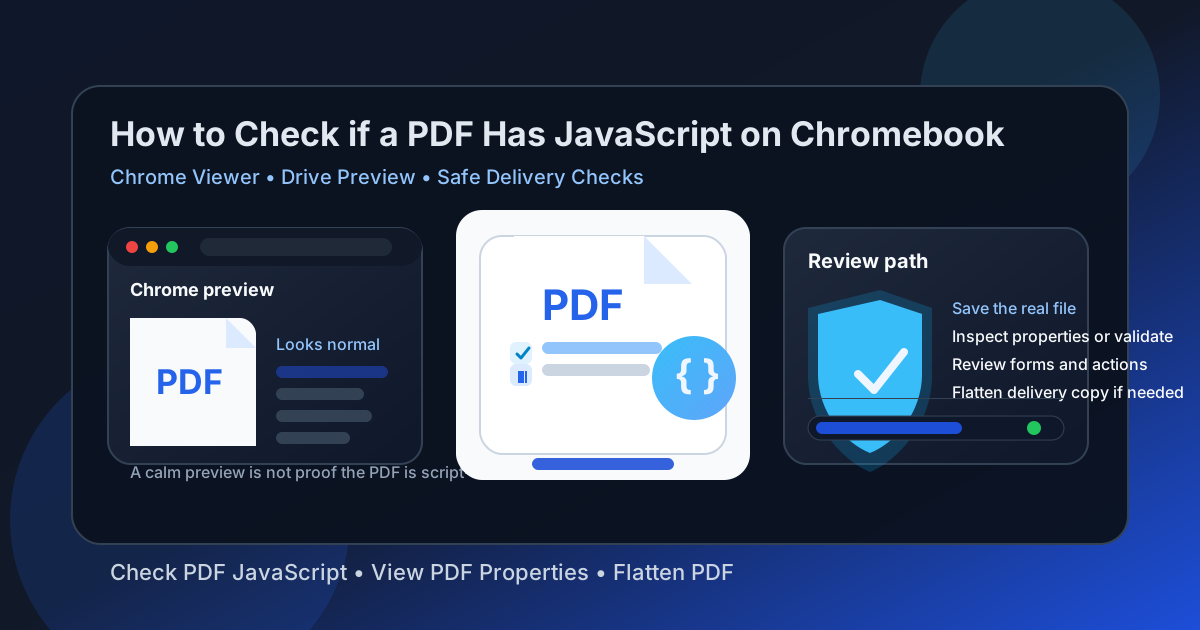
Table of contents
- Quick start: check PDF JavaScript on Chromebook in about 5 minutes
- What counts as PDF JavaScript on Chromebook
- Where Chromebook users get misled
- Step-by-step: how to review PDF JavaScript on Chromebook
- Common signs the PDF still has script-driven behavior
- When to keep the live PDF, flatten it, or rebuild it
- Related LifetimePDF tools and guides
- FAQ
Quick start: check PDF JavaScript on Chromebook in about 5 minutes
If your real goal is simply find out whether this Chromebook PDF contains scripts and decide whether that matters before sharing, use this order:
- Save the exact PDF you plan to send, upload, archive, or trust into a clear local folder in the Files app.
- Do not rely on a quick Chrome tab, Gmail preview, Google Drive preview, or a classroom attachment preview as your only check.
- Open the same file in a workflow that can expose document JavaScript, form actions, button behavior, or validation details.
- Check whether the interactivity is actually expected for the file's purpose.
- If the next person only needs a stable visual result, create a flattened delivery copy and keep the working original separate.
- If the behavior is unexpected, investigate before forwarding, uploading, or archiving the file.
What counts as PDF JavaScript on Chromebook
PDF JavaScript is script logic embedded in the document. It can live at the document level, on form fields, on buttons, inside calculations, or inside actions triggered by opening, clicking, printing, or submitting data. In plain English, it means the PDF may behave like a small app instead of just a static page.
| Behavior | What it usually does | Why it matters on Chromebook |
|---|---|---|
| Document-open action | Runs logic when the PDF opens | Chrome or Drive preview may look calm even though the file behaves differently in another PDF environment |
| Form calculations | Updates totals, dates, validation, or field formatting automatically | Useful in a live form, but awkward in a final upload, archive, or portal handoff |
| Button or submit action | Triggers an event when someone clicks a control | Can fail in lightweight Chromebook views or behave differently for the recipient |
| Hidden workflow logic | Changes navigation, visibility, prompts, or behind-the-scenes behavior | Easy to miss if you judge the PDF only by how normal it looked in Chrome or Files |
The important distinction is that a Chromebook PDF can contain JavaScript even if you never see a dramatic warning or popup. Some previews suppress scripts, some only support part of the behavior, and some reveal the issue only when the file is opened elsewhere or someone actually clicks through the document.
Where Chromebook users get misled
Chromebook makes PDF preview frictionless. That is helpful right until it creates false confidence. A quick preview answers what the page looks like right now. It does not always answer how the document behaves.
| Opening path | What it is good for | What it cannot safely prove |
|---|---|---|
| Chrome PDF tab | Checking that you saved the right file and doing a fast visual pass. | That the PDF contains no JavaScript or hidden actions just because nothing obvious happened. |
| Files app preview | Confirming the local copy opens and looks like the expected document. | That the saved PDF is structurally simple, script-free, or ready for a sensitive workflow. |
| Gmail, Classroom, or Google Drive preview | Seeing whether the attachment or shared file looks correct at a glance. | That the downloadable copy is free of interactive behavior or will behave the same for every recipient. |
| Properties or validation-aware PDF review | Inspecting whether scripts, forms, actions, or other interactive elements are present. | It still does not decide for you whether the scripts belong in the next workflow step. You still have to judge the file's purpose. |
Step-by-step: how to review PDF JavaScript on Chromebook
This workflow gives you a dependable answer without turning a simple check into a technical rabbit hole.
Step 1: Save the real outgoing or incoming Chromebook copy
If the PDF is still only sitting in Gmail, Drive, Classroom, Slack, a portal preview, or a Chrome download strip, save it first. Script behavior can differ between the preview you glanced at and the exact file you later forward, upload, or archive. If the check matters, it should apply to the exact copy that will actually move on.
Step 2: Start with the broad JavaScript question
Use Check PDF JavaScript and View PDF Properties as the first pass. Your goal is not to reverse-engineer every line of logic. Your goal is to answer a practical question: does this file depend on script-driven behavior or not?
Step 3: Review nearby interactive clues
On Chromebook, JavaScript often travels with other interactive pieces. If you see fields, buttons, navigation controls, or submit actions, review those too. It helps to check PDF forms, links, and attachments when the file feels richer than a simple document.
- Fields that auto-calculate, auto-format, or reject certain entries.
- Buttons that submit, reset, reveal, or navigate.
- Prompts or warnings that appear in one viewer but not another.
- Files that behave differently in Chrome, Files preview, and a fuller PDF workflow.
- Legacy forms that still work, but no longer belong in the final outward-facing copy.
Step 4: Match the behavior to the file's actual purpose
A working intake form, calculator, or guided workflow PDF may need JavaScript. A final report, school submission, compliance archive, signed packet, or portal upload often does not. The right answer depends less on whether scripts exist and more on whether the next destination benefits from them.
Step 5: Keep, flatten, or rebuild deliberately
If the interactivity is expected and the next user needs it, keep the live original. If the next user only needs a stable result, create a flattened copy. If the behavior feels unexplained or wrong, rebuild the outgoing file from a trusted source instead of blindly forwarding it.
Step 6: Verify the saved result once
Open the final Chromebook copy again and make sure it now behaves the way you intended. If you removed or flattened the interactive behavior, confirm the recipient-facing file is stable. If you kept the live version, confirm the scripts are still doing only what the workflow actually needs.
Reliable sequence: save the exact Chromebook file → inspect for JavaScript → review forms and actions → decide whether interactivity still belongs → flatten or rebuild when needed → verify once more.
Common signs the PDF still has script-driven behavior
These patterns show up repeatedly when a Chromebook PDF carries JavaScript or depends on richer interactive logic.
| What you notice | What it usually means | Best next move |
|---|---|---|
| The PDF looks simple in Chrome but acts differently elsewhere | The file may contain scripts, forms, or actions that one viewer handles differently | Inspect it in a properties or validation-aware workflow before sharing |
| Fields auto-calculate or format themselves | The file likely uses form logic or JavaScript | Decide whether the destination actually needs that live behavior |
| A button submits, resets, or jumps around the document | The PDF contains actions that may depend on scripts or richer viewer support | Review the file as an interactive workflow document, not just a visual page |
| The file is headed to a portal, archive, classroom, or legal record | Even harmless interactivity may be unnecessary or fragile in the destination | Flatten the outward-facing copy unless the live logic is truly needed |
| You cannot explain why the script behavior is there | The PDF may be carrying inherited workflow baggage or an unexpected action | Slow down, validate the file, and rebuild the delivery version if needed |
When to keep the live PDF, flatten it, or rebuild it
Not every script-driven PDF deserves the same treatment. The smart move depends on what the next person is supposed to do with the file.
Keep the live PDF when the interactivity is part of the job
If the document is an active form, worksheet, approval packet, or guided workflow PDF, JavaScript may be useful rather than problematic. In that case, the real job is confirming the behavior is expected and that the recipients will use a viewer that supports it well enough.
Flatten the delivery copy when consistency matters more than interactivity
If the recipient only needs a final read-only result, a flattened copy is often the cleaner choice. That is especially helpful for uploads, long-term archives, sign-off packets, or external sharing where fewer moving parts means fewer surprises.
Rebuild the file when the behavior feels wrong or unexplained
If the JavaScript is unexpected, outdated, or impossible to justify clearly, rebuilding the outgoing PDF from a trusted source is usually safer than hoping the odd behavior will not matter. Hidden workflow baggage has a way of becoming visible at the worst possible moment.
Healthy default
Keep one working original and one simpler delivery copy. That way you preserve legitimate interactivity without forcing every recipient, portal, or archive system to interpret it the same way.
Bottom line: if the next person only needs the final result, do not let hidden PDF behavior make the decision for you.
FAQ
How do I check if a PDF has JavaScript on Chromebook?
Save the PDF locally on Chromebook, then inspect it in a properties, validation, or security-aware PDF workflow that can surface document scripts, form calculations, and actions. Do not assume Chrome, Files, Gmail, or Drive preview tells you the full story.
Can Chromebook preview open a PDF without showing that it contains JavaScript?
Yes. A Chromebook preview can open a PDF quietly even when the file still contains scripts or actions. Quiet behavior only proves what that viewer chose to show or run.
Is PDF JavaScript always dangerous on Chromebook?
No. Some PDFs use JavaScript for legitimate form calculations, validation, formatting, or workflow logic. The important question is whether that interactivity belongs in the destination workflow.
Should I flatten a PDF if it has JavaScript?
Flatten the delivery copy when the recipient only needs a stable visual result. Keep the interactive original only when the scripts are useful, expected, and supported by the next step.
Why check PDF JavaScript before uploading or sharing from Chromebook?
A quick review helps you avoid viewer-specific surprises, broken form behavior, awkward portal uploads, and archive copies that keep hidden interactivity nobody actually needs.
Published by LifetimePDF — Pay once. Use forever.