How to Watermark a PDF on iPad: Add Draft, Confidential, and Branded Labels Without a Desktop
To watermark a PDF on iPad, open LifetimePDF's Watermark PDF tool in Safari or Google Chrome, choose the file from Files, Mail, iCloud Drive, or Safari downloads, enter a short label such as DRAFT or CONFIDENTIAL, preview the page on the larger iPad screen, and save the updated copy.
If the file is sensitive, add password protection or redact private information afterward, because a watermark helps with labeling but does not control access on its own.
That is the short answer. The useful part is knowing when the iPad's bigger preview actually helps, when Markup is too flimsy for repeated labels, how to avoid covering signatures or totals, and how to save the final copy so you do not send the untouched original by mistake.
Fastest path: open Watermark PDF in Safari or Chrome, pick the file from Files or Mail, add a short readable label, preview the result once, then save the updated PDF with a clear new name.
In a hurry? Jump to Quick start: watermark a PDF on iPad in a few minutes.
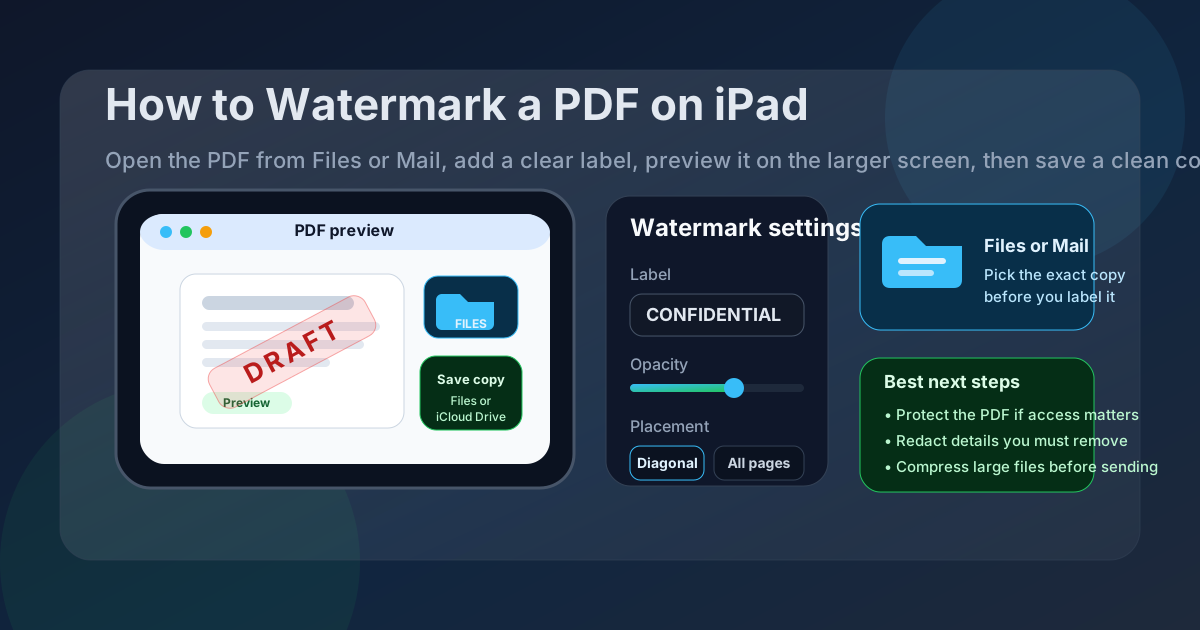
Table of contents
- Quick start: watermark a PDF on iPad in a few minutes
- The best iPad workflow for watermarking PDFs
- Markup, Apple Pencil notes, and a real watermark
- Step-by-step: watermark from Files, Mail, iCloud Drive, or Safari downloads
- Best watermark text, opacity, and placement on iPad
- How to watermark only selected pages on iPad
- How to save, share, and secure the final copy
- Common iPad watermarking problems and quick fixes
- Related LifetimePDF tools and guides
- FAQ
Quick start: watermark a PDF on iPad in a few minutes
If the PDF is already on your iPad and you mainly need a visible status label before you send it, this is the workflow most people actually want:
- Open Watermark PDF in Safari or Chrome.
- Choose the file from Files, Mail, iCloud Drive, or a recent Safari download.
- Enter a short label such as DRAFT, CONFIDENTIAL, SAMPLE, or a project name.
- Keep the watermark readable but light enough that the page still feels easy to read at normal zoom.
- Preview one representative page before saving the final copy.
- If the content is private, follow up with PDF Protect or Redact PDF.
The best iPad workflow for watermarking PDFs
On iPad, watermarking works best when you treat it as a labeling step instead of a catch-all editing trick. You are not trying to rebuild the document or hand-place a giant word on every page. You are making the file's status obvious the moment someone opens it.
That usually means three things:
- Start with the right file from Files, Mail, or iCloud Drive so you do not label the wrong version.
- Use short wording that stays readable across different page layouts.
- Preview before saving so the watermark does not sit on top of signatures, totals, dense tables, or small legal text.
iPad gives you more room than a phone, which is helpful, but it can also give you false confidence. A larger screen makes mistakes easier to catch, not impossible. A clean workflow is simple: choose the real source PDF, add the label with intention, inspect one or two representative pages, then save a clearly named copy before it goes back into Mail, Messages, a portal, or a shared folder.
Markup, Apple Pencil notes, and a real watermark
A lot of iPad users try to fake watermarking with Markup or an Apple Pencil text box. That can be fine for a quick note on one page. It is not the same as a proper watermarking workflow.
| What you need | Best option | Why it works |
|---|---|---|
| Add a visible draft, confidential, or sample label | Watermark | Cleaner for repeated status labels and easier to keep intentional across the document. |
| Leave a quick one-page note or comment | Markup or Apple Pencil annotation | Fine for casual review, but usually not the best choice for a polished shared copy. |
| Prevent casual opening | Password protection | A visual label does not stop access. Protection handles access control. |
| Remove private information permanently | Redaction | If information must not stay in the file, it needs removal, not just a translucent label on top. |
In plain English: use a watermark when you want the file clearly labeled. Use Markup for casual notes. Use protection when access matters. Use redaction when the content itself should not remain in the shared PDF.
Step-by-step: watermark from Files, Mail, iCloud Drive, or Safari downloads
1) Start with the exact PDF you plan to share
Before you add anything, make sure you are opening the real source file. On iPad, it is easy to tap a Mail preview, then later reopen an older copy from Files or Downloads and wonder why the label is missing. Save the PDF somewhere obvious first if the workflow matters.
2) Open Watermark PDF in Safari or Chrome
Open Watermark PDF in Safari or Chrome. Choose the document from Files, Mail, iCloud Drive, or a recent download. If you like working side by side, keep Files open in Split View while you save the finished copy back into the right folder.
3) Use short wording that fits different page layouts
Short labels work better than long sentences. DRAFT, CONFIDENTIAL, SAMPLE, REVIEW COPY, or a company-safe project label will stay cleaner across contracts, worksheets, forms, slide exports, and scanned PDFs. The longer the text, the easier it is to make the page feel cluttered.
4) Preview before you accept the result
This is the step people still skip on iPad because the screen feels roomy enough to trust at a glance. Check at least one text-heavy page and one page with signatures, tables, or graphics. If the watermark lands on the one thing someone needs to read quickly, the file feels careless even if the label itself is technically correct.
5) Save a clearly named copy and reopen it once
Download the updated PDF, open it once from Files, and read it like the next person will. That catches the most common iPad mistakes: the watermark looked balanced in preview but feels too dark at normal size, the wrong file got labeled, or the saved filename does not make the final copy obvious.
Best watermark text, opacity, and placement on iPad
The best watermark is obvious at a glance but does not fight the document. On iPad, that balance matters because the bigger screen makes it tempting to add more than you need.
What to write
Use short wording you can defend later. Good examples include:
- DRAFT
- CONFIDENTIAL
- SAMPLE
- INTERNAL USE ONLY
- REVIEW COPY
- Your company or project name
How dark should the watermark be?
Lighter is usually better than your first instinct. If the label is so dark that the page becomes annoying to read, the watermark is doing too much. Dense text, invoices, and forms usually need a lighter touch than slide exports or image-heavy pages.
Where should it sit?
Diagonal center placement usually works well because it is visible without hammering the exact same lines on every page. If you are labeling a file that already has signatures, totals, or tiny legal paragraphs, preview carefully. A good watermark feels deliberate; a bad one looks rushed.
How to watermark only selected pages on iPad
Not every PDF needs the same label on every page. Maybe only the proposal section should say DRAFT. Maybe the sample appendix needs a visible label, but the signed cover page should stay clean.
In that case, a selected-page workflow is usually better than stamping the entire file blindly:
- Use Extract Pages to isolate the section that actually needs the label.
- Apply the watermark to that smaller file.
- Use Merge PDF if you need to rebuild the final packet afterward.
This is especially useful when the document mixes a clean cover page, a draft working section, and a signed page that should not have a large translucent label across it.
How to save, share, and secure the final copy
Save the watermarked PDF with a new name
Keep the original untouched when you can. A filename such as proposal-draft.pdf, sample-deck.pdf, or contract-confidential.pdf reduces mix-ups later, especially when Files, Mail, and cloud folders all keep their own copies.
Protect the file if access actually matters
A watermark tells people how to treat the document. It does not stop them from opening or forwarding it. If the file should not be casually opened, add a password with PDF Protect.
Redact information that should not remain
If there is private information on the page, use Redact PDF. A watermark is not a privacy tool. It is just a visual label.
Compress the file before sending if needed
If the PDF got bulky because of scans, photos, or slide exports, shrink it with Compress PDF before attaching it to email or uploading it to a portal.
Common iPad watermarking problems and quick fixes
The watermark looks balanced on iPad but too heavy after I send it
Reopen the final PDF at normal zoom and imagine someone viewing it on a laptop or phone. If the label dominates the page, dial the opacity back. What matters is the saved result, not the rushed preview moment.
I saved the file but keep reopening the original from Mail or Files
Save the source PDF into one obvious folder in Files before you start, then give the final copy a distinct name. Do not trust a chain of previews, Recents, and duplicate downloads if the document actually matters.
The watermark covers a signature, total, chart, or important paragraph
Preview a representative page before you finish. If only one part of the document needs the label, extract that section and watermark it separately.
I used Markup or Apple Pencil first and it still looks messy
Switch to a real watermark workflow. Markup is fine for quick notes, but it is usually not the cleanest way to label a PDF you plan to share professionally.
The PDF is sensitive and I need more than a visual label
Good instinct. Add password protection or redact the content that should not remain. Watermarking helps with clarity, not with actual removal or access control.
Related LifetimePDF tools and guides
Watermarking on iPad often turns into one or two extra cleanup steps. These are the most useful companions:
- Watermark PDF — add draft, confidential, sample, or branded labels cleanly.
- PDF Protect — add a password when the file should not open casually.
- Redact PDF — permanently remove information that should not stay in the shared copy.
- Compress PDF — shrink large scanned or image-heavy files before sending.
- Extract Pages and Merge PDF — better for selected-page watermark workflows.
Related reading on LifetimePDF: Watermark PDF, How to Redact a PDF on iPad, How to Compress a PDF on iPad, How to Sign a PDF on iPad, and Extract Pages From PDF.
iPad shortcut: watermark the file when you need a visible label, protect it when access matters, and redact it when the content itself should not remain.
FAQ: How to watermark a PDF on iPad
How do I watermark a PDF on iPad without installing an app?
Open a browser-based watermark tool in Safari or Chrome on your iPad, choose the PDF from Files or Mail, enter a short label such as DRAFT or CONFIDENTIAL, preview the page, and save the updated copy back to Files.
Is iPad Markup the same as a PDF watermark?
No. Markup is fine for quick notes or a one-off overlay, but a real watermark workflow is usually cleaner when you want a repeated status label that still looks intentional after sharing.
What should I write in a PDF watermark?
Short labels work best: DRAFT, CONFIDENTIAL, SAMPLE, REVIEW COPY, INTERNAL USE ONLY, or a company or project name. Short wording stays readable on more page layouts.
Can I watermark only one page of a PDF on iPad?
Yes. Extract the page or section that needs the label, apply the watermark there, then merge it back into the final packet if necessary.
Does a watermark protect a PDF from copying or sharing?
No. A watermark is mainly visual. If the file is sensitive, add password protection or redact information that should not remain in the shared copy.
Published by LifetimePDF — Pay once. Use forever.