How to Merge PDFs on iPhone: Combine Files in Safari Without Losing Order
To merge PDFs on iPhone, open a browser-based Merge PDF tool in Safari, choose the files from Files or saved attachments, put them in the right order, then download the combined PDF back to your phone.
If your sources include screenshots, scans, or photo-based pages, convert those into PDF first so the final packet is easier to read and less annoying to send.
That is the short answer. The part that actually saves time on iPhone is knowing how to pull documents from Mail, Messages, or Files without losing track of them, how to avoid weird ordering mistakes on a small screen, and when to clean up size or rotation after the merge instead of fighting the wrong problem first.
Fastest path: save the PDFs to Files if they are still buried in messages, open LifetimePDF's Merge PDF tool in Safari, arrange the order carefully, merge once, then compress the finished packet only if the destination rejects the file size.
In a hurry? Jump to Quick start: merge PDFs on iPhone in a few minutes.
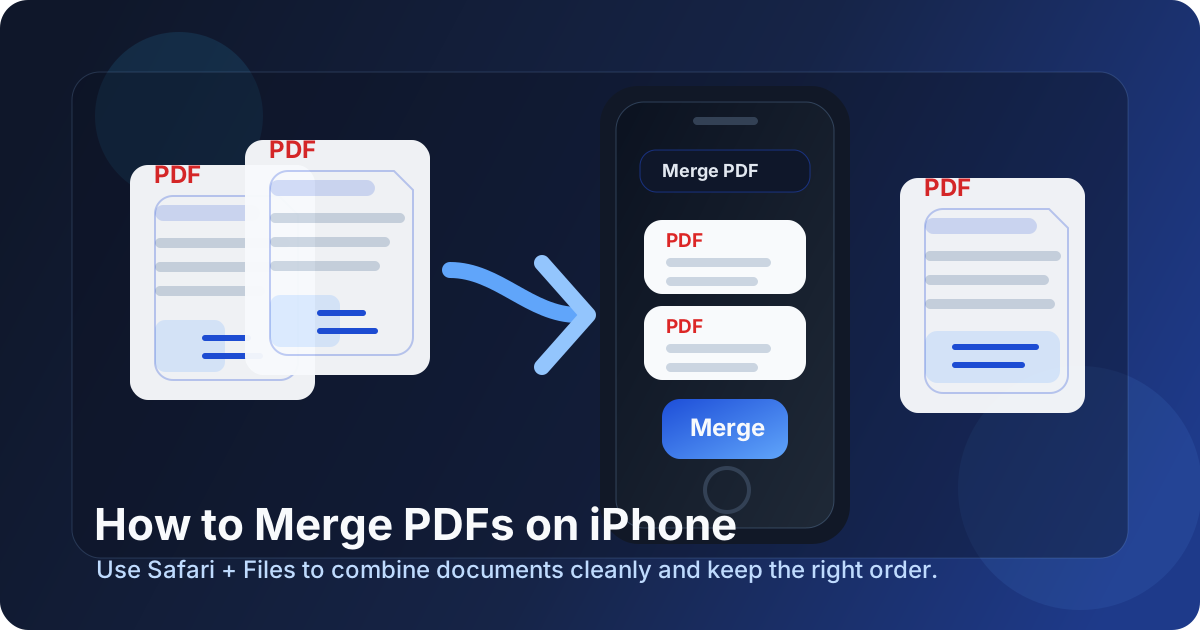
Table of contents
- Quick start: merge PDFs on iPhone in a few minutes
- The easiest iPhone workflow for combining PDFs
- Step-by-step: merge PDFs in Safari on iPhone
- How to pull files from Mail, Messages, and Files
- What to do with scans, photos, and screenshots
- How to keep the page order sane on a small screen
- What to do if pages are sideways or the file is too large
- Related LifetimePDF tools for smoother iPhone workflows
- FAQ (People Also Ask)
Quick start: merge PDFs on iPhone in a few minutes
If the files are already PDFs and you just need one clean packet, this is the dependable iPhone workflow:
- Open Merge PDF in Safari on your iPhone.
- Choose the source files from Files, or save them there first if they are still inside Mail or Messages.
- Arrange the documents in the exact order you want another person to read them.
- Run the merge and download the combined PDF.
- Open the result once from Files and check the beginning, middle, and end before you send it anywhere.
The easiest iPhone workflow for combining PDFs
iPhone gives you a few possible paths, but they are not equally pleasant. You can tap around inside Files, use odd share-sheet workarounds, or move the job into a proper browser tool in Safari. For combining multiple PDFs cleanly, Safari is usually the least frustrating route.
Why? Because the browser-based workflow keeps the job focused on the result you actually want: one readable document in the right order. You are not trying to improvise a merge out of preview tricks. You are choosing the source files, setting the order, and downloading one finished packet.
| Method | Best for | Where it struggles |
|---|---|---|
| Files / Quick Look | Opening and reviewing PDFs already on the phone | Not the smoothest way to combine several separate documents into one clear final packet |
| Share-sheet workarounds | One-off hacks when you are stuck | Easy to lose order, create odd exports, or waste time repeating the process |
| LifetimePDF Merge PDF in Safari | Choosing files, setting order deliberately, and downloading one clean merged PDF | You still need one review pass before sending |
That is why Safari is usually the sweet spot on iPhone. Your source files can start in Mail, Messages, Files, or another app, and the finished PDF can go right back to Files as something you can attach, upload, or archive without confusion.
Step-by-step: merge PDFs in Safari on iPhone
Here is the practical sequence most people actually need.
Step 1: Put the documents where you can reach them
If the PDFs already live in Files, great. If they arrived by email, message, or a download link, save them to Files first if you can. That makes the upload and final save-back step much cleaner than hunting through different apps twice.
Step 2: Open Merge PDF in Safari
Go to Merge PDF in Safari. A browser-based merge flow is usually simpler than trying to force iPhone into a job it was not really designed to do elegantly inside the default preview tools.
Step 3: Upload only the files that belong together
Do not throw every nearby attachment into the packet. Pick the documents that genuinely belong in one final file. If this is a submission, review packet, or application, think about what the other person actually needs to read in one sequence.
Step 4: Arrange the files in human order
Put the main document first. Supporting pages follow after that. If one file is only background material, it usually belongs near the end rather than the top. The right order matters more than people expect because it decides whether the merged PDF feels thoughtful or messy.
Step 5: Merge once, then inspect the result
Download the finished PDF and open it from Files. Scroll the first pages, one middle section, and the end. That is the easiest way to catch order mistakes, blank pages, or one file that should not have been included in the first place.
Shortest route that still feels reliable: save files to Files, open Merge PDF in Safari, set the order carefully, merge once, and review before you upload or send.
How to pull files from Mail, Messages, and Files
Most iPhone merge jobs start with scattered inputs. One PDF came from Mail. Another is sitting in Messages. A third is already in iCloud Drive. That is normal. The easiest way to avoid confusion is to gather those files into Files before you merge.
If the PDF came from Mail
Open the attachment and save it to Files. That gives you a predictable place to grab it when the merge tool opens the iPhone file picker.
If the PDF came from Messages
Save it to Files or another location your iPhone file picker can access cleanly. Message threads are fine for receiving documents, but they are a clumsy place to manage a multi-file merge.
If the PDF is already in Files
You are already in the best position. Pick the documents directly, merge them, then save the final packet back into the same folder or a clearly named destination folder.
What to do with scans, photos, and screenshots
Not every source on iPhone starts as a PDF. Sometimes you are merging real PDFs with a few phone scans, screenshots, or photographed receipts. That can still work well, but it is cleaner if you turn the image-based material into PDF first.
A screenshot gallery or a stack of phone photos is not the same thing as a finished document. The better sequence is:
- Convert the images into PDF with Images to PDF.
- Check that the pages read in the right order.
- Then merge that PDF with your other files.
Why this helps
- the final packet behaves more like one real document,
- ordering is easier to manage,
- you avoid mixing loose images and PDFs in a way that feels improvised,
- the next person gets one cleaner review experience.
If the image-based pages are scans of paperwork, you can also run OCR PDF afterward if searchable text matters.
How to keep the page order sane on a small screen
The small screen is what makes iPhone merges feel risky. The merge itself is easy. The hard part is making sure the final packet reads the way a human expects.
Think in document sequence, not file receipt order
The first file you received is not always the first file that belongs in the packet. Start with the document the reader actually came for, then place support files after it.
Check file names before you trust them
A lot of PDFs on phones have vague names. If two files look similar, open them once before merging so you do not discover too late that the appendix ended up before the main document.
Do one sanity review after download
On iPhone, this is the difference between a smooth handoff and an annoying redo. Open the merged PDF in Files and confirm that the reader sees page 1 first, the middle pages still make sense, and the last section actually belongs there.
| Use case | Best order | Why it works |
|---|---|---|
| Job application packet | Resume → cover letter → supporting pages | The core decision document appears first |
| Expense or receipt packet | Summary page → receipts in date order | The reviewer gets context before proof |
| Scanned paperwork | Page 1 → page 2 → page 3 | The PDF behaves like a normal document instead of a camera roll |
| Client handoff | Main document → appendix → evidence | Supporting material stays attached without taking over the opening pages |
What to do if pages are sideways or the file is too large
The best time to solve most cleanup problems is after the merge is correct. Do not start compressing or tweaking everything before you even know whether the packet itself is right.
If a page is sideways
Use Rotate PDF on the finished packet or on the problem source file, depending on what is easier. One crooked page can make the whole document feel sloppier than it really is.
If the final file is too large to send
Run Compress PDF after the merge. That is usually cleaner than trying to pre-shrink every source file and guessing where the real size problem lives.
If extra pages slipped in
Use Delete Pages to remove blanks, duplicates, or filler pages that never should have traveled with the packet.
Good cleanup order: get the merge right first, then rotate, compress, or trim the final packet only if a real problem remains.
Related LifetimePDF tools for smoother iPhone workflows
Merging is often just one step in the broader document job. These tools help when the files are not quite ready yet:
- Merge PDF for combining separate PDF files into one packet.
- Images to PDF for turning screenshots, scans, and photos into cleaner PDF pages first.
- Compress PDF when the finished file is too large for email or portal limits.
- Rotate PDF when a scanned page lands sideways.
- Delete Pages when the final packet still contains blanks or unnecessary pages.
Related blog guides
- Merge PDF
- Merge PDF Online
- How to Merge PDFs Online for Free Without Losing Quality
- Scan to PDF on iPhone
- How to Rotate a PDF on iPhone
- How to Sign a PDF on iPhone
- Browse all LifetimePDF articles
Ready to combine PDFs from your iPhone without a messy workaround?
Open the files in Safari, set the order deliberately, merge once, and send one clean packet instead of a pile of attachments.
FAQ (People Also Ask)
How do I merge PDFs on iPhone without installing another app?
Open a browser-based merge tool in Safari, upload the PDFs from Files or from documents you saved out of Mail or Messages, arrange them in the right order, merge them, and download the final PDF back to your iPhone.
Can I merge scans, photos, or screenshots on iPhone too?
Yes, but it is usually cleaner to turn those image-based sources into PDF first. Once they behave like document pages, they are easier to combine with your other PDFs and easier for the next person to review.
What is the easiest place to manage source files on iPhone?
Files is usually the easiest because it gives you one reliable place to choose documents and save the finished result. If a PDF arrives in Mail or Messages, saving it to Files first often reduces friction.
What if the merged PDF is too large to email or upload?
Merge the packet first, then use Compress PDF on the finished file if the destination rejects it because of size.
How do I avoid getting the order wrong when merging on iPhone?
Arrange the files in the exact sequence another person should read them, not the order they happened to arrive on your phone. Then open the finished PDF once and check the start, middle, and end before sending it.