How to Check PDF Producer on Chromebook: Chrome, Files, and Export-Path Clues Before You Share
To check PDF producer on Chromebook, save the real file from Chrome, Files, Drive, or Gmail, inspect the hidden Producer field in a metadata-aware view, and compare that software fingerprint with the export path you expected.
If the producer still points to a print dialog, browser conversion, scan app, or stale automation layer, clean it up before the document leaves your Chromebook.
Chromebook makes PDF sharing feel almost frictionless. A file opens in Chrome, sits neatly in Files, previews in Drive, and attaches in Gmail with barely any ceremony. That convenience is exactly why the producer field gets ignored. The pages can look finished while the hidden software fingerprint still tells a different story about how the PDF was actually created. Sometimes that story is harmless. Sometimes it explains why a portal rejects the file, why form behavior changed, or why the document exposes more workflow detail than you wanted anyone else to see.
Fastest practical path: save the final Chromebook copy, inspect the Producer field once, compare it with creator and author metadata, decide whether the software fingerprint still makes sense, then verify the cleaned file before you share it.
In a hurry? Jump to quick start: check PDF producer on Chromebook in about 5 minutes.
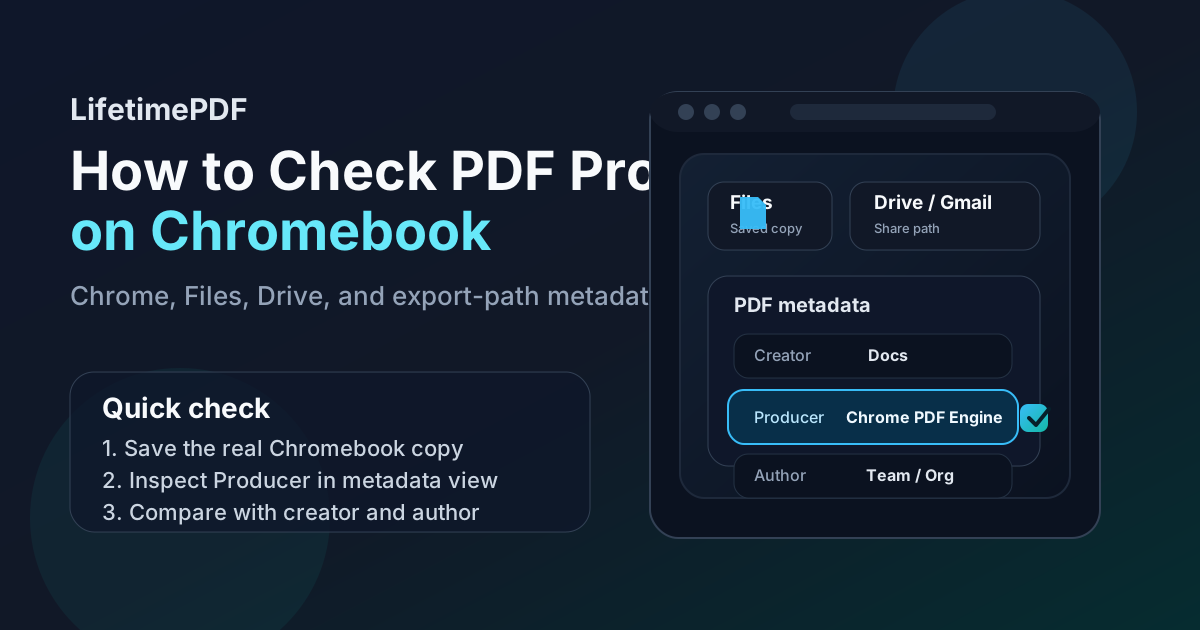
Table of contents
- Quick start: check PDF producer on Chromebook in about 5 minutes
- What you are really checking when you review PDF producer on Chromebook
- Producer vs creator vs author on Chromebook
- Where Chromebook users get misled
- Step-by-step: how to check PDF producer on Chromebook
- Warning signs that the producer field needs attention
- When to keep, standardize, or clear the producer field
- Related LifetimePDF tools and guides
- FAQ
Quick start: check PDF producer on Chromebook in about 5 minutes
If your real question is what actually generated this Chromebook PDF, and does that software clue still belong on the file I am about to send?, use this order:
- Open the exact PDF you plan to email, upload, archive, submit, or forward from Files, Downloads, Drive, Gmail, or a portal export.
- Inspect the stored Producer value using PDF Metadata Editor, Acrobat Reader, or View PDF Properties.
- Compare the producer with what you expected: direct export, Chrome print path, scan workflow, optimizer, merge tool, or another conversion step.
- Check nearby fields too, especially creator and author, so the hidden story stays coherent.
- Keep the field if it is harmless and useful, or clean it up if it is misleading, noisy, or more revealing than the recipient needs.
- Save the final copy and reopen it once so you confirm the Producer value really belongs to the file that will leave your Chromebook.
- If the destination is strict, continue with Validate PDF before uploading or sharing.
What you are really checking when you review PDF producer on Chromebook
The PDF producer field is hidden metadata stored inside the file. It usually points to the software engine or output path that generated the final PDF structure. That makes it different from the filename you see in Files and different from the visible document content. It is also different from the creator field, which often points to the application where the document content started.
On Chromebook, one PDF often passes through several quiet handoffs before anyone inspects the metadata. A document may begin in Google Docs, Word, Slides, a browser form, a scan app, or someone else's desktop workflow. Then it gets exported, printed to PDF, flattened, downloaded from a portal, synced through Drive, reopened in Chrome, and attached in Gmail. By the time you look at the final copy, the pages can feel perfectly normal while the hidden producer still reveals a last-minute conversion step that explains why the PDF behaves the way it does.
| Field | What it usually represents | Common Chromebook misunderstanding |
|---|---|---|
| Filename | The storage name shown in Files, Downloads, Drive, or Gmail. | Looks tidy enough that people assume the hidden metadata must also be tidy. |
| Creator | The application that likely started the document content. | People confuse the source app with the final PDF engine. |
| Author | The person, team, or organization attached to the file. | Ownership can look fine while the software fingerprint still tells a messier story underneath. |
| Producer | The engine or software path that generated the final PDF output. | Gets ignored even when it explains flattened forms, search problems, or an unexpected conversion chain. |
Producer vs creator vs author on Chromebook
When these three fields are read together, Chromebook PDF metadata becomes much easier to interpret. You do not need forensic certainty. You just need the hidden story to make practical sense for the file you are about to share.
| Question you are asking | Best field to inspect | What it usually tells you |
|---|---|---|
| Where did the document content probably begin? | Creator | The authoring app or source system that likely started the content before final PDF generation. |
| What software likely produced the final PDF container? | Producer | The final engine, browser print path, converter, optimizer, or PDF library behind the file you have now. |
| Who does the PDF identify with? | Author | The person, department, company, or organization attached to the document. |
| Why does the metadata story feel inconsistent? | All three together | Comparing creator, producer, and author often reveals whether the file followed a normal export path or inherited stale clues from several stages. |
Example: a clean proposal might show Creator: Google Docs, Producer: Skia/PDF m126, and Author: Sales Team. That is a coherent story. A different file might show Creator: Word, Producer: Chrome Print Preview, and Author: Personal Chromebook even though the visible pages look like a polished client deliverable. That does not automatically mean the PDF is broken, but it does mean the hidden story deserves a quick check before the file goes any farther.
Creator
Best for understanding the original authoring app or content source before later PDF steps happened.
Producer
Best for understanding the final export engine, print path, scan workflow, or conversion layer that shaped the share-ready PDF.
Author
Best for understanding the human or organizational identity the file carries after it leaves your Chromebook.
Where Chromebook users get misled
Chromebook gives you several fast ways to glance at a PDF. The trap is that a successful preview feels like proof. It is not. A file can open cleanly while the producer field still reveals an export path you did not expect.
| Chromebook path | What it is good for | What it cannot safely prove |
|---|---|---|
| Files preview or Downloads shelf | Confirming the correct filename, folder, and share-ready copy. | That the hidden producer field matches the export chain you expected. |
| Chrome PDF viewer | Showing that the pages render and the visible content looks familiar. | Whether the final PDF came from direct export, browser print, a scan path, or another software engine. |
| Drive or Gmail preview | Showing how the file moves through your real Chromebook sharing workflow. | That the outgoing copy is not carrying stale software fingerprints underneath. |
| Metadata editor or full properties view | Giving you the most dependable view of the Producer field itself. | You still have to decide whether the software clue is expected, irrelevant, or too revealing. |
That last point matters most. Tools can show the stored producer value. They cannot decide for you whether the final Chromebook PDF should still carry that software fingerprint. That judgment depends on where the file is going, how sensitive it is, and whether the export path tells a useful or awkward story.
Step-by-step: how to check PDF producer on Chromebook
This workflow is quick enough for daily use and strong enough to catch the problems that matter most.
Step 1: Start with the exact Chromebook copy you plan to share
Open the real file from the location that matters. If the PDF exists in Files, Drive, a Gmail draft, a classroom handoff, and Chrome downloads, choose the version that is actually leaving your device. Many producer checks fail simply because people inspect one copy and send another.
Step 2: Inspect the Producer field directly
Use PDF Metadata Editor, Acrobat Reader, or a full properties workflow like View PDF Properties. Do not assume the visible page already tells you how the final PDF was generated. On Chromebook, that assumption breaks all the time after print dialogs, browser saves, scan-to-PDF steps, merge tools, and optimization passes.
Step 3: Compare producer with creator, author, and the file's behavior
This is where the field becomes useful instead of trivia. Ask whether the producer makes sense for the file in front of you. If the PDF came from Docs or Word, does the producer look like a normal export path? If the forms are dead, does the producer suggest a print workflow? If search is weak, does the producer hint at a scan chain? If the document is headed to a strict portal, does the producer look like the kind of software path that might cause validation trouble?
Step 4: Fix stale or risky software clues first
Start with the producer values that are most likely to create confusion: old print drivers, internal automation labels, scanner defaults, test conversion stacks, and oddly specific tools that no longer explain the finished file. If the producer belongs with a wider cleanup, continue with Edit PDF Metadata or Remove Metadata From PDF.
Step 5: Save and verify once
Reopen the finished PDF and confirm the corrected producer really stuck to the file you are about to share. This catches the classic Chromebook mistakes: editing the wrong copy, trusting a browser cache, or fixing one local version while the outgoing attachment still points at an older one.
Reliable sequence: inspect the producer field, compare it with creator and author, decide whether the final software fingerprint helps or hurts the file, then verify the saved Chromebook copy once before sharing.
Warning signs that the producer field needs attention
These patterns show up constantly in Chromebook workflows that involve browser downloads, scan apps, shared cloud folders, and repeated PDF handoffs.
| What you notice | What it usually means | Best next move |
|---|---|---|
| The producer looks like a print driver instead of the source app you expected | The file may have been printed to PDF, which can flatten forms, links, tags, or other richer structure. | Check whether the file behavior matches that print path and decide if a cleaner export is better. |
| The producer looks like scanner software on a file that should be fully digital | The PDF may have been rescanned or rebuilt from paper, which can weaken text search and structure. | Review OCR, accessibility, and validation before sharing. |
| The producer feels overly specific or internal | The metadata may be exposing workflow details that add no value for the recipient. | Standardize or clear the field during metadata cleanup. |
| Creator and producer tell completely different stories | The file probably passed through more than one export or conversion layer. | Review creator, producer, and file behavior together so the mismatch stops being a mystery. |
| The PDF looks polished on Chromebook, but strict systems still reject it | The producer may hint at a weak conversion chain, unsupported PDF engine, or flattened export path. | Validate the file and consider rebuilding it from a cleaner source path. |
Healthy default
If the hidden producer value would make a recipient, archive reviewer, or portal operator wonder how the PDF was really generated, the file probably deserves one more Chromebook metadata pass before it leaves your hands.
When to keep, standardize, or clear the producer field
Not every Chromebook PDF needs the same answer. The useful question is whether the producer field improves the finished file or only drags extra workflow noise along for the ride.
Keep it
Best when the software fingerprint is honest, harmless, and useful for archive context, troubleshooting, or document provenance.
Standardize it
Best when the current producer is technically true but the wording or path feels messy, overly specific, or inconsistent with the file's finished role.
Clear it
Best when the producer adds no real value, leaks internal details, or makes a public-facing PDF feel sloppier than it should.
In practice, the best answer is the smallest amount of software history that still helps the PDF make sense. Internal working files may benefit from a useful producer trail. Public downloads, privacy-sensitive handoffs, and sanitized client copies often work better with a cleaner metadata story. If the producer field keeps drifting into confusing territory, make the decision part of your export checklist so each new Chromebook PDF starts cleaner.
- Keep the field when it supports trust, troubleshooting, or long-term recordkeeping.
- Standardize the field when the current software clue is half-true, messy, or inconsistent with the final document.
- Clear the field when it only reveals internal workflow trivia or distracts from the finished file.
- Review nearby fields too so producer, creator, author, title, and dates stop telling five different stories at once.
FAQ
How do I check PDF producer on Chromebook quickly?
Save the final PDF on your Chromebook, inspect the hidden Producer field in a metadata-aware tool, compare it with the export path you expected, and fix the value only if it feels misleading, noisy, or too revealing.
Is PDF producer the same as creator on Chromebook?
No. Creator usually points to the app that started the document content, while producer usually points to the engine or path that generated the final PDF output.
Can Chrome or Drive show the PDF producer field clearly?
Chrome and Drive are useful for opening the right file and confirming the handoff path, but a fuller document-properties or metadata workflow is more reliable when you need to inspect the embedded Producer field with confidence.
Why does the producer field matter if the pages already look correct?
Because hidden metadata still travels with the file. A PDF can look polished in Chrome, Files, Drive, or Gmail while the producer still hints at a print-to-PDF step, a scan path, or another conversion layer that explains quality or compatibility problems.
Should I remove the producer field from a Chromebook PDF before sharing it?
Only when the value is misleading, cluttered, or reveals more workflow detail than you want attached to the distributed copy. If the value is harmless and useful, leaving it alone is often fine.
Check the hidden producer before the PDF leaves your Chromebook.
A clean Chromebook workflow is simple: inspect the Producer field, compare it with the export path you expected, keep only the software clues that still help the file make sense, and verify the final copy once before you share it.
Published by LifetimePDF — Pay once. Use forever.