How to Check PDF Page Labels on Windows: Match Viewer Numbering to Covers, Roman Numerals, and Appendix Pages
To check PDF page labels on Windows, save the final PDF locally, open it in a viewer that makes page jumps easy, and compare the numbering readers see with the file's real physical page order.
If a cover page, Roman-numeral preface, merged insert, or appendix changes the visible numbering, catch that before you quote, extract, print, or share the file.
That is the fast answer. The useful Windows answer is that page-label mistakes are quiet until they become expensive: the wrong page gets cited, the wrong sheet gets extracted, or someone says "go to page 12" and two people land in different places. A two-minute page-label check prevents a surprising amount of PDF confusion.
Fastest practical path: save the exact Windows copy, find the real page order, compare it with the labels shown in the viewer, then fix the structure or numbering only after you know where the mismatch starts.
In a hurry? Jump to quick start: check PDF page labels on Windows in about 5 minutes.
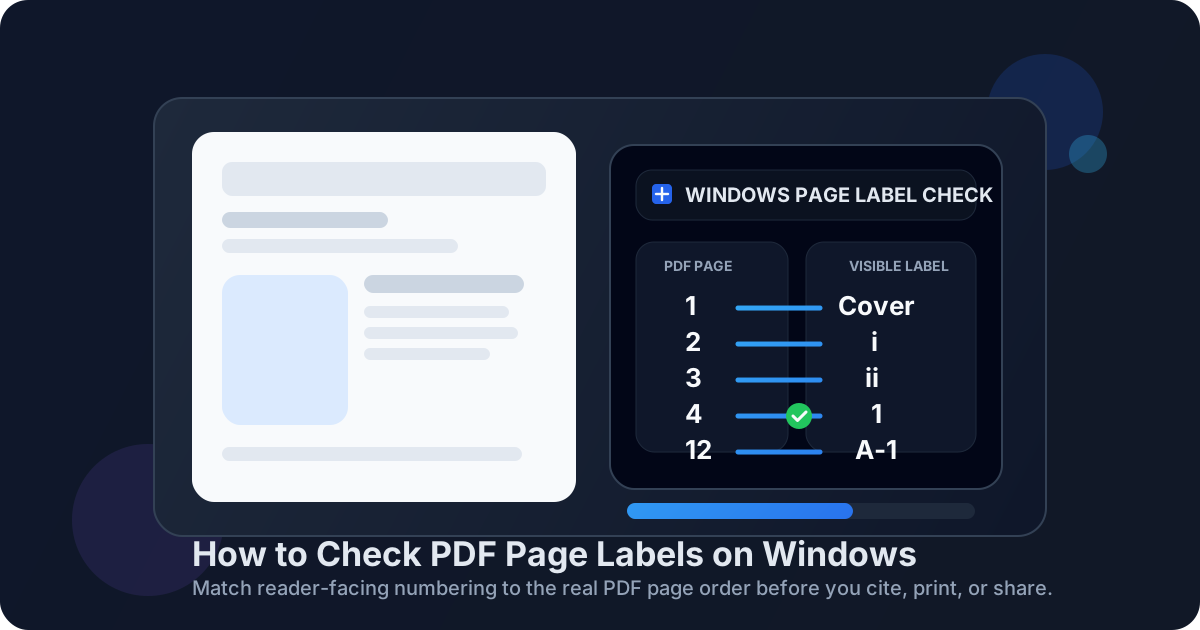
Table of contents
- Quick start: check PDF page labels on Windows in about 5 minutes
- What PDF page labels actually mean on Windows
- Where Windows PDFs usually go wrong
- A practical Windows page-label workflow
- Common symptoms and what they usually mean
- What to fix before you renumber anything
- Related LifetimePDF tools and guides
- FAQ
Quick start: check PDF page labels on Windows in about 5 minutes
- Save the exact file locally. Do not trust an email preview, browser preview, or Teams download thumbnail if the final PDF might be different.
- Open it in Edge, Chrome, Acrobat Reader, or another Windows viewer that lets you move between page thumbnails or typed page jumps quickly.
- Find the physical page order first. Count the actual sheets from the beginning so you know where the file truly starts.
- Check the first visible label. If the PDF begins with a cover, the first label might be blank, i, or 1 depending on how the file was built.
- Check every numbering transition. Front matter often uses Roman numerals, the main body restarts at 1, and appendices may switch to A-1, A-2, or similar styles.
- Test one page deep in the last section. A PDF can look correct at the front and still break after a merge, delete, or inserted packet later in the file.
The shortest reliable test
On Windows, compare three checkpoints:
- the first numbered page
- the first numbering transition
- one page inside the last section
If those three points line up, your page labels are usually safe enough for citations, extraction, and review workflows.
What PDF page labels actually mean on Windows
Windows does not change the underlying logic of a PDF. The file still has a physical internal page order, but the labels visible to the reader may tell a different story. That difference is normal when the structure is deliberate and a problem when it is accidental.
For example, a file may physically contain fifteen sheets, but the reader-facing numbering can look like this:
| Physical PDF page | Visible label on Windows | Why it happens |
|---|---|---|
| 1 | Cover or no visible number | A title page or cover sits outside the main numbering. |
| 2-4 | i, ii, iii | Front matter uses Roman numerals. |
| 5 | 1 | The main body restarts with Arabic numbering. |
| 12 | A-1 | An appendix or exhibit section uses its own label style. |
That setup is fine if it is intentional. The real risk is assuming that page label 12 always means physical PDF page 12 on Windows. Often it does not.
Where Windows PDFs usually go wrong
Merged packets
When people combine reports, exhibits, or scanned inserts on Windows, the label logic often survives from the first file but not from the later sections.
Covers and title pages
A cover page can shift the reader-facing numbering by one or more pages even though the document still looks tidy in preview mode.
Roman numeral front matter
Prefaces, tables of contents, and disclaimers often use i, ii, iii, then the main report restarts at 1. That is correct when intentional and chaotic when half-applied.
Late-stage deletions
Deleting pages after the PDF is already numbered can leave the visible labels lagging behind the new structure, especially in legal, academic, or proposal workflows.
A practical Windows page-label workflow
| Step | What to do on Windows | What you are checking for |
|---|---|---|
| 1. Confirm the final file | Open the local copy you will actually share, print, or upload. | No stale draft, temporary export, or browser-cached version. |
| 2. Count the physical opening pages | Look at the first few sheets in thumbnails or page view and identify covers, inserts, and front matter. | Where the real page order begins before labels try to make it reader-friendly. |
| 3. Find the first numbered content page | Check whether the main body starts at 1, restarts later, or follows Roman numerals. | Whether the start of meaningful content matches the intended label logic. |
| 4. Check the first transition | Test the point where labels change from cover to numerals, numerals to digits, or digits to appendix style. | The exact place where numbering errors usually begin. |
| 5. Inspect the last section | Jump near the end of the PDF and verify that later merged material still follows the intended pattern. | Whether a later insertion, split, or merge broke the labels deeper in the file. |
| 6. Fix structure first, labels second | Delete, extract, split, or merge pages before you renumber. | A stable final file that will not invalidate your numbering work five minutes later. |
Common symptoms and what they usually mean
| What you see on Windows | Likely cause | Best next move |
|---|---|---|
| Page 1 appears after several opening sheets | Cover page or front matter before the main body | Check whether that shift is intentional and documented. |
| The PDF jumps from iii to 1 | Roman numeral front matter before the main section | Usually fine, but verify the transition page carefully. |
| The last section restarts with A-1 or B-1 | Appendix or exhibit labeling | Confirm citations, bookmarks, and table of contents use the same scheme. |
| A quoted page number does not match the sheet a reviewer opens | Visible labels and physical page order are out of sync | Review the label transitions before sharing feedback or instructions. |
| Labels made sense before a merge but not after | Inserted or combined PDF sections broke the original numbering logic | Rebuild the structure, then re-check or reapply page labels. |
What to fix before you renumber anything
Renumbering is tempting because it feels like the obvious fix. On Windows, it is often the last fix, not the first one. If the file still has pages to delete, inserts to move, scans to split, or sections to merge, finish that structure work first.
- Delete obvious junk pages first. Blank scans, duplicate covers, and stray exports should not survive into the final numbering pass.
- Merge sections into their final order before checking labels again. Otherwise you may repair a numbering pattern that breaks the moment a new section is inserted.
- Keep bookmarks, table of contents, and page labels aligned. If one says Appendix A starts at A-1 and another says 47, readers lose trust fast.
- Reopen the saved final PDF once. A last verification pass catches the "I fixed it in the editor but not in the exported copy" mistake.
Good sequence for most Windows workflows: clean the page order, merge or split as needed, verify labels, then apply page numbering if the finished file still needs it.
FAQ
How do I check PDF page labels on Windows?
Save the PDF locally on Windows, open it in a viewer that lets you jump between pages easily, and compare the numbering readers see with the file's real physical page order. Focus on covers, front matter, numbering restarts, and appendix sections.
Are PDF page labels the same as the real page count on Windows?
No. The physical page count and the visible labels can diverge whenever the PDF uses covers, Roman numerals, numbering restarts, or appendix styles such as A-1.
Why does page 1 in a Windows PDF sometimes start on the third sheet?
Because the file may begin with a cover page, title page, or Roman-numeral front matter. The first main-content page can be labeled 1 even when it is the third actual page in the PDF.
Should I fix page labels before merging or deleting pages on Windows?
Usually no. Finalize the page order first, then verify or repair the labels. If you renumber too early, later edits can break the label sequence again.
What is the fastest way to spot a bad page-label setup on Windows?
Check the first numbered page, the first numbering transition, and one page inside the final section. Those three checkpoints reveal most label problems quickly.
Trust the page reference only after you verify the label logic.
On Windows, a PDF can look perfectly normal while still confusing reviewers, printers, or teammates with mismatched page labels. Check the transition points, fix the structure first, and only then lock in the final numbering.
Published by LifetimePDF — Pay once. Use forever.