How to Check PDF Keywords on Linux: File Managers, Okular, and Metadata Cleanup Before You Share
To check PDF keywords on Linux, save the final file locally, inspect the hidden Keywords field in Okular, another document properties view, or a metadata editor, and decide whether those tags genuinely help search, filing, or archives.
If the field is stale, duplicated, inherited from an old export, or exposing internal labels you would not want leaving Files, Dolphin, Nemo, Thunar, Thunderbird, or a shared drive, rewrite it or clear it before you share the PDF.
Linux workflows often feel clean because the file itself is easy to trust. The PDF opens fine in Okular or Evince, the filename looks sensible in your file manager, and a browser preview makes it seem ready to send. Meanwhile the hidden keyword field may still carry template leftovers, internal team shorthand, stale client tags, or a noisy list of terms nobody would ever search on purpose. The useful goal is not merely confirming the document renders. It is confirming the invisible filing layer still belongs to the exact PDF you are about to hand off.
Fastest practical path: save the final Linux copy, inspect the keyword field once, decide whether the tags help a real filing workflow, then keep only the metadata that still belongs on the share-ready PDF.
In a hurry? Jump to quick start: check PDF keywords on Linux in about 5 minutes.
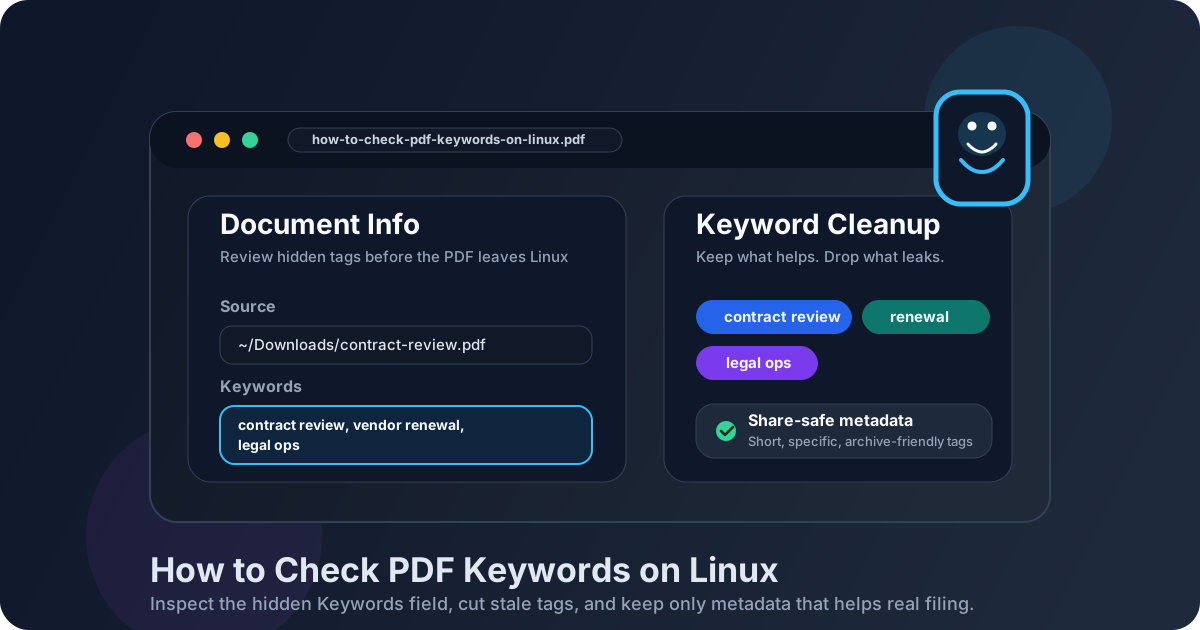
Table of contents
- Quick start: check PDF keywords on Linux in about 5 minutes
- What you are really checking when you review PDF keywords on Linux
- Where Linux users get misled
- Step-by-step: how to check PDF keywords on Linux
- Warning signs the keyword field needs cleanup
- When to keep, rewrite, or remove PDF keywords
- Related LifetimePDF tools and guides
- FAQ
Quick start: check PDF keywords on Linux in about 5 minutes
If your real question is does this Linux PDF still carry useful keyword metadata before I send it?, use this order:
- Open the exact PDF you plan to email, upload, archive, publish, or place in a shared folder from Downloads, Desktop, Nextcloud, network storage, Thunderbird, or your project directory.
- Inspect the hidden Keywords field with a metadata-aware workflow such as PDF Metadata Editor, View PDF Properties, or a Linux viewer that exposes document info.
- Ask whether the stored tags would help a real person find, sort, or understand the file later.
- Remove duplicated, stale, private, stuffed, or vague terms.
- Keep a short, specific keyword set only if it adds genuine search, filing, or archive value.
- Save the cleaned PDF and reopen it once so you confirm the updated keywords really stuck to the final Linux copy.
What you are really checking when you review PDF keywords on Linux
The Keywords field is hidden metadata stored inside the PDF. It is not the filename shown in Files, Dolphin, Nemo, or Thunar, and it is not the visible heading on page one. Think of it as a quiet filing layer that some viewers, archives, search systems, and document workflows can read. That layer can be useful when it is deliberate. It becomes awkward when it survives from an older export, a reused template, a previous matter, or a private internal naming habit.
On Linux, the confusion often comes from how many outer signals already feel trustworthy. The file may live in a carefully organized folder structure, open perfectly in Okular, and show decent extracted text in a browser or document viewer. None of that proves the keyword field is healthy. The hidden tags may still point to last quarter's project, a retired department code, a scan batch label, or a long stuffed list that helps nobody and reveals too much.
| Field | What it usually means | Typical Linux mistake |
|---|---|---|
| Filename | The storage name shown in your file manager, network share, or synced folder. | People assume a tidy filename means the hidden keyword field must also be clean. |
| Visible title or heading | The reader-facing label shown on the page itself. | It gets treated like proof that the hidden metadata matches, even when the PDF was exported from an older template. |
| Search index or extracted text | What Linux desktop search, OCR, or viewer text extraction can find in the page content. | Users confuse searchable page text with the hidden keyword field even though they are different layers. |
| PDF Keywords | Hidden tags stored inside the document for metadata, filing, or retrieval purposes. | They stay untouched for months and quietly carry stale project labels, internal shorthand, or keyword clutter into the share-ready copy. |
Where Linux users get misled
Linux gives you several fast ways to inspect a PDF, but not every path proves the keyword metadata is healthy. A clean preview answers whether the file opens. It does not answer whether the hidden tags are useful, harmless, or quietly embarrassing.
| Linux view | What it is good for | What it cannot safely prove |
|---|---|---|
| Files, Dolphin, Nemo, or Thunar | Confirming which copy you are about to share and how the filename looks in a real folder. | That the embedded keyword field is relevant, current, or safe for the audience receiving the PDF. |
| Okular, Evince, or another PDF viewer | Opening the real document and, in many cases, giving you access to document info. | That the stored keywords still match the final version rather than an older export or template. |
| Firefox, Chrome, or browser preview | Showing how the PDF behaves in a normal download, portal, or webmail workflow. | Whether the hidden tags are useful, stale, or exposing internal workflow language. |
| Thunderbird, chat preview, or cloud handoff | Reflecting the version that is actually leaving your Linux machine in day-to-day work. | That the PDF is not carrying private tags, archive leftovers, or clutter from upstream tools. |
| PDF properties or metadata editor | Reading the actual stored Keywords field and comparing it with the file's real purpose. | You still have to decide as a human whether the tags help retrieval or only create noise. |
That last line matters most. Tools can show you the tags. They cannot decide whether those tags still deserve to travel with the final PDF.
Step-by-step: how to check PDF keywords on Linux
This workflow is quick enough for everyday Linux use and detailed enough to catch the metadata mistakes that most often survive into client files, archives, and public downloads.
Step 1: Start with the exact Linux copy you plan to share
Review the real file from the folder, synced directory, email draft, browser download path, or project directory that actually matters. If the PDF passed through Nextcloud, a Samba share, a browser preview, or a local export folder, inspect that final copy directly. Checking one version while sending another is one of the easiest ways to miss stale keywords.
Step 2: Read the Keywords field directly
Use PDF Metadata Editor, a document-properties view, or the broader workflow in How to Check PDF Metadata on Linux. Do not rely on the filename, extracted text, or visible page content alone. On Linux, those outer signals often look cleaner than the hidden keyword field actually is.
Step 3: Judge usefulness instead of volume
Keywords do not get better just because there are more of them. A short set of specific tags can help archives and document libraries. A long comma-heavy list usually looks like leftovers from an old export habit. The real test is whether the terms would help a future user retrieve the file without needing your internal folder logic to decode them.
Step 4: Remove obvious noise first
Cut duplicated terms, generic filler words, old client labels, internal ticket numbers, stale team shorthand, and distribution-specific notes that nobody outside your immediate workflow would understand. In most Linux review sessions, the biggest improvement comes from subtraction rather than adding more tags.
Step 5: Keep the remaining tags short, stable, and aligned
If you decide the keyword field is worth keeping, make sure it aligns with the file's title, subject, filename, and visible purpose. Good keyword metadata should still make sense later in a file manager, on a shared drive, or after the PDF has been copied to another Linux box or a mixed-device team environment.
Step 6: Save and verify the final copy once
Reopen the cleaned PDF and confirm the Keywords field really changed on the file you are about to share. This catches the classic Linux problems: editing the wrong copy, trusting a preview tab, or saving the cleanup in one directory while the outgoing attachment still points somewhere else.
Reliable sequence: open the real Linux copy, inspect the hidden keyword field, remove stale or private tags, keep only the terms that genuinely help filing, then verify the final saved PDF once before it leaves your workflow.
Warning signs the keyword field needs cleanup
These patterns show up constantly in Linux workflows built around browser downloads, synced folders, reused templates, scanner apps, and fast portal handoffs.
| What you notice | What it usually means | Best next move |
|---|---|---|
| The keyword field looks like a long stuffed list | The PDF probably inherited tags from an old export habit instead of a real filing strategy. | Cut the list back to the few terms that would genuinely help retrieval, or clear it entirely. |
| The tags mention an old client, quarter, or project code | The file likely carried metadata forward from an earlier draft or template. | Rewrite the keywords so they reflect the current document, not its backstory. |
| Every exported PDF carries nearly the same keywords | A template or upstream workflow is stamping generic or stale metadata onto new files. | Fix the template if possible and clean the final PDF before sharing. |
| The title, subject, and keywords tell different stories | The metadata layer is inconsistent and may confuse archives, libraries, or reviewers. | Bring the hidden fields back into the same document identity. |
| The PDF is going outside your organization, but the tags reveal internal language | The keyword field may be exposing more workflow context than the recipient needs to see. | Remove or neutralize the internal tags before the PDF leaves Linux. |
Healthy default
If someone opened the PDF properties and the keywords would look stale, cluttered, or oddly revealing, the file deserves one more metadata pass before you send it.
When to keep, rewrite, or remove PDF keywords
Not every Linux PDF needs the same answer. The useful question is whether the keyword field earns its place in the final file.
Keep the keywords
Best when the tags support a real archive, records, or document-library workflow and still describe the finished PDF accurately.
Rewrite the keywords
Useful when the field still matters, but the current tags are stale, duplicated, overgrown, or inherited from an earlier version.
Remove the keywords
Smart when the field adds no retrieval value, creates privacy risk, or reveals internal context that should not travel with the share-ready file.
In practice, good PDF keywords behave like calm filing labels. They are short, stable, and understandable. Bad PDF keywords behave like scraps from old folders, inherited exports, and internal systems that nobody meant to expose. A blank field is often better than a noisy one.
- Keep the field when it helps real retrieval.
- Rewrite it when the concept is useful but the current tags are messy.
- Remove it when the tags are vague, private, stuffed, or more confusing than helpful.
- Align keywords with the title, subject, and filename so the file tells one consistent story.
FAQ
How do I check PDF keywords on Linux quickly?
Open the final PDF on Linux, inspect the hidden Keywords field in document properties or a metadata tool, and keep only the tags that actually help search, filing, or archives.
Can file managers or browser preview show PDF keywords clearly on Linux?
Not always. File managers and browser preview are useful for confirming the right file, but a dedicated PDF properties or metadata workflow is more reliable when you need the full keyword field and related hidden-property context.
Do I need terminal commands to review PDF keywords on Linux?
No. A viewer-first workflow is fine for most people. If you are comfortable with Linux command-line checks, they can confirm what a document-properties panel shows, but they are optional for everyday metadata cleanup.
Should every PDF have keywords?
No. Many PDFs work better with a blank keyword field than with a cluttered one. Keep keywords only when they help a real archive, library, or retrieval workflow.
Can PDF keywords leak internal information?
Yes. Keywords can expose internal taxonomy, project codes, client names, and workflow labels that never appear on the visible pages, so they are worth checking before the PDF leaves your normal Linux environment.
Check the hidden tags before the PDF leaves Linux.
A clean Linux workflow is simple: inspect the keyword field, keep only the terms that help real retrieval, remove stale or private tags, and verify the final saved copy once before you share it.
Published by LifetimePDF — Pay once. Use forever.