How to Check PDF Crop Box on Chromebook: Chrome, Files, and Visible-Page Checks Before You Print or Share
To check PDF crop box on Chromebook, save the exact PDF from Files, Downloads, Chrome, Drive, or Gmail, open a page-box-aware properties workflow, and compare the crop box with the media box and trim box so you know what ChromeOS is actually treating as the visible page.
If the crop box is hiding useful edge content or showing more border than you want, fix that before you print, upload, submit, or share the file so the outgoing PDF behaves the way you intended.
Chromebook makes PDF review feel deceptively simple. A file opens in Chrome, sits in Files, gets passed through Drive or Gmail, and can be forwarded or printed in moments. That speed is great when everything is fine, but it also makes it easy to trust the preview instead of the page definitions underneath it. A crop-box check tells you whether the visible page is actually right before the PDF leaves your device.
Fastest practical path: save the real Chromebook copy, compare the crop box with the other page boxes, inspect edge-sensitive content once, then decide whether the file needs crop cleanup, a fresh export, or no change at all.
In a hurry? Jump to quick start: check PDF crop box on Chromebook in about 5 minutes.
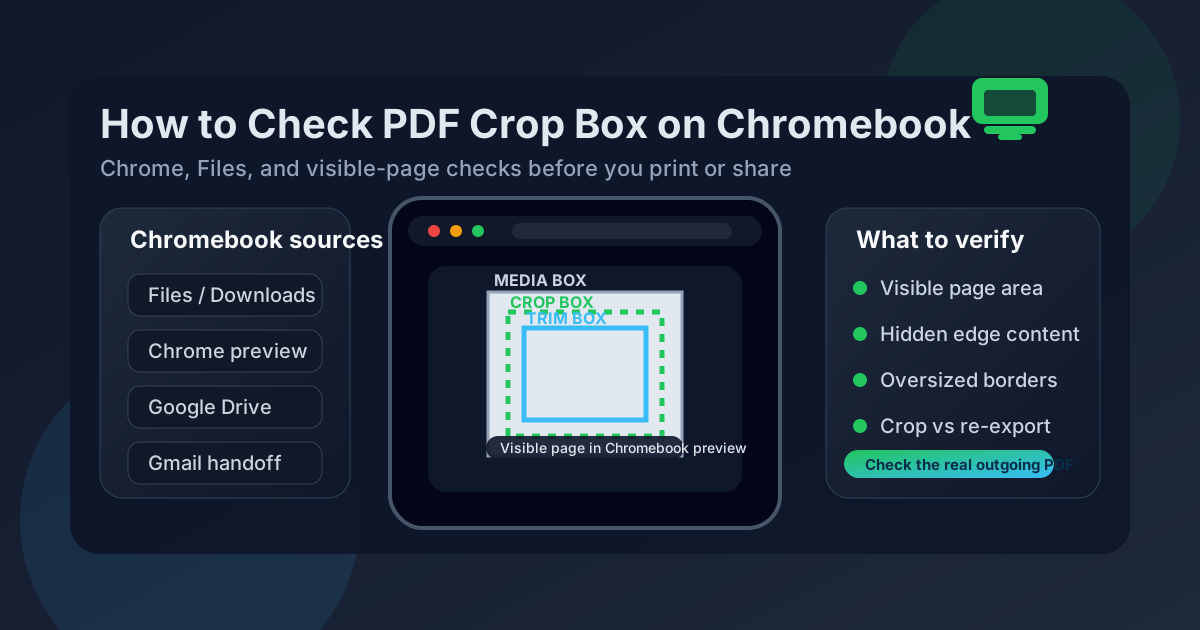
Table of contents
Quick start: check PDF crop box on Chromebook in about 5 minutes
If your real goal is simply confirm what area this Chromebook PDF is actually showing before it causes trouble, use this order:
- Save the exact PDF you plan to print, upload, email, archive, or share into a local Chromebook folder so you are checking the real outgoing copy.
- Do not assume the preview inside Chrome, Gmail, Drive, or a classroom or chat handoff proves the visible page area is correct.
- Open a page-box-aware workflow such as View PDF Properties so you can read the crop box clearly.
- Compare the crop box with the media box and, when relevant, the trim box.
- Check whether page numbers, signatures, charts, borders, tables, or scanned edges sit outside the visible frame or leave too much empty outer space around the page.
- If the visible frame is wrong, use Crop PDF. If the underlying page setup is wrong, a fresh export is usually cleaner than forcing a crop-box fix.
What a crop box really means on Chromebook
The crop box marks the area many PDF viewers treat as the visible page. It does not automatically mean anything outside that area has been deleted. In practice, it often means the PDF is telling the browser preview, print workflow, portal upload, or shared-reader view, “this is the part people are supposed to see first.”
That matters on Chromebook because one file can move through several lightweight viewing paths very quickly: Chrome, Files, Downloads, Drive, Gmail, learning portals, and printer dialogs. A document can feel clean on screen and still carry extra outer space, hidden edge content, or leftover production structure that only becomes obvious when someone prints it or opens it elsewhere. Checking the crop box helps you separate a harmless preview from a file that still needs cleanup.
| Page box | What it usually means | Why a Chromebook user should care |
|---|---|---|
| Media box | The full stored page canvas | Useful when you need to know whether the PDF still contains outer area beyond the visible page, including scanner padding, production marks, or export leftovers. |
| Crop box | The visible page area many viewers respect | This is the key field when you want to confirm what ChromeOS viewers are really treating as the page you are about to send onward. |
| Trim box | The intended finished page after trimming | Important when a file came from a print-oriented export and you need to know whether the visible page and the finished page are telling the same story. |
Where Chromebook previews mislead people
Chromebook gives you several fast ways to open a PDF, but not every path proves the same thing. Some views tell you the file opens. Fewer tell you whether the visible page area is defined well enough for print, upload, archive, or delivery.
| Chromebook path | What it is good for | What it cannot safely prove |
|---|---|---|
| Files or Downloads quick open | Confirming you saved the right file and that it opens without obvious corruption. | Whether the visible page area is actually defined well or whether extra content still sits outside the current view. |
| Chrome, Gmail, Drive, or classroom preview | Quickly viewing the saved file and spotting obvious layout trouble. | Whether the crop box, media box, trim box, and print intent all agree with each other. |
| Printer dialog, upload portal, or shared link preview | Making sure you are about to send the correct PDF rather than a stale tab or different export. | Whether the destination will render the visible page the way you expect once the PDF leaves your Chromebook. |
| Properties-aware page-box review | Giving you the strongest answer before the PDF leaves your laptop. | It does not automatically choose crop versus re-export for you. It only shows which problem you actually have. |
The easy mistake
People often assume the crop box must be fine because the document looks calm in a Chromebook browser tab. In reality, a clean preview can make an imperfect page definition feel finished until a printer, portal, or desktop reviewer reveals clipped content, broad borders, or leftover production clutter.
Step-by-step: how to review PDF crop box on Chromebook
This workflow is quick enough for daily Chromebook use and detailed enough to catch page-boundary problems before the file is already in someone else's inbox, printer queue, or upload system.
1) Save the exact Chromebook copy first
Do not inspect only a browser tab, Drive preview, or Gmail attachment if another file is the one really headed to print, upload, or a portal. Start with the actual outgoing PDF in local storage.
2) Open a page-box-aware properties view
Use View PDF Properties or a comparable workflow that exposes the crop box instead of leaving you to guess from the visual preview.
3) Compare crop with media and trim
This step tells you whether the visible page is smaller than the stored canvas, larger than the intended finished page, or already aligned with the document's real purpose.
4) Inspect edge-sensitive content
Check signatures, footers, page numbers, tables, charts, stamps, and border elements so you can tell whether the crop box is hiding useful material or showing too much empty edge.
5) Check whether page size is the real issue
A crop-box problem is not the same as an A4-versus-Letter mismatch. If the document still behaves badly, compare it with page size on Chromebook before editing the wrong layer.
6) Crop, re-export, or leave it alone deliberately
Crop when the visible frame is wrong, re-export when the source layout or page definitions are wrong, and stop editing when the current page boxes already fit the real job.
Reliable sequence: save the real Chromebook copy → read the crop box → compare the page boxes → inspect edge content → check page size if needed → choose crop versus re-export → test one final output.
Common Chromebook crop-box signals and what to do next
Most Chromebook crop-box problems show up in a few repeat patterns. Recognizing the pattern usually tells you whether the fix is visible-area cleanup or a deeper rebuild.
The PDF still shows broad borders or extra outer clutter
That often means the crop box is too loose or the file still exposes outer production or scan space beyond the area people are meant to see.
Footers, signatures, or stamps feel clipped
That can mean the crop box is too tight or the source layout was built too close to the edge. Inspect the underlying page before you crop anything further.
The file looks fine in Chrome but prints awkwardly
A normal Chromebook preview does not guarantee the visible frame is defined well. Print or portal workflows often expose page-box relationships that a browser tab hides.
The PDF feels tidy on screen but risky to submit
That is usually a clue that the crop area, finished-page intent, or surrounding production structure no longer matches the destination that matters now.
| What you notice | What it usually means | Best next move |
|---|---|---|
| Huge white borders or visible marks | The crop box may be too loose, or the file may still be exposing outer production or scanner space. | Compare crop with media and trim, then use Crop PDF if the visible frame is the real issue. |
| Footer, page number, or signature feels clipped | The crop box may be too tight, or the source content was built too close to the edge. | Check whether the missing content still exists outside the visible area before cropping anything tighter. |
| The file looks fine on screen but prints awkwardly | The viewer may respect the crop box while paper size or print settings still conflict with the real job. | Review page size on Chromebook so you do not blame the wrong setting. |
| The PDF came from a print-oriented export | Some outer structure may be intentional, especially when trim or bleed matters. | Preserve it unless the destination truly wants a cleaner reader-facing copy instead. |
Best decision rule
Fix only the layer that is actually wrong. If the visible frame is wrong, crop it. If the paper size or source layout is wrong, rebuild it. If the page boxes already match the workflow, leave the PDF alone and move on.
FAQ
How do I check PDF crop box on Chromebook?
Save the PDF locally, open a page-box-aware properties workflow, and compare the crop box with the media and trim boxes so you can confirm what the viewer is really treating as the visible page area.
Can Chrome or Files show a crop box clearly on Chromebook?
They are useful for opening the exact saved file and spotting obvious issues, but a properties-aware workflow is better when you need the clearest read on crop, media, and trim relationships.
Is crop box the same as media box on Chromebook?
No. The media box is the full stored page canvas, while the crop box is the area many viewers treat as the visible page.
Should I crop or re-export when the crop box seems wrong?
Crop when the visible page area is the real problem but the underlying page setup is otherwise correct. Re-export when the source layout or finished-page intent is wrong and the crop box is only exposing that deeper issue.
Why does the PDF look fine on Chromebook but still print strangely?
Because a Chromebook preview can look normal while the file still carries page-box or paper-size settings that become obvious later. Checking crop, media, trim, and page size together usually reveals the real cause.
Check the visible page before the PDF surprises you later.
On Chromebook, the cleanest crop-box workflow is simple: inspect the real outgoing file, confirm what area the viewer is truly showing, fix only the layer that is actually wrong, and test the saved result once before the PDF leaves your device.
Published by LifetimePDF — Pay once. Use forever.