Convert Packing Slip PDF to Excel: Turn Shipment Rows, SKUs, and Shipped Quantities Into a Spreadsheet You Can Actually Use
To convert packing slip PDF to Excel, upload the packing slip to LifetimePDF's PDF to Excel tool, export the XLSX, and review the packing slip number, order reference, SKUs, shipped quantities, carton counts, and notes before trusting the sheet.
If the file is scanned, image-only, or mixed with labels and invoices, keep only the real packing slip pages and run OCR first so the spreadsheet stays much cleaner.
Most people searching this phrase are not trying to admire a file conversion. They are trying to stop retyping shipment rows, compare what shipped against what was ordered, investigate shortages faster, and get a spreadsheet that warehouse, ecommerce, or operations teams can sort without wrestling with a messy PDF layout.
Fastest path: use LifetimePDF's PDF to Excel tool, keep only the packing slip pages, and OCR the file first if it came from a scan, a photo, or an older image-only export.
In a hurry? Jump to Quick start: convert packing slip PDF to Excel in about 5 minutes.
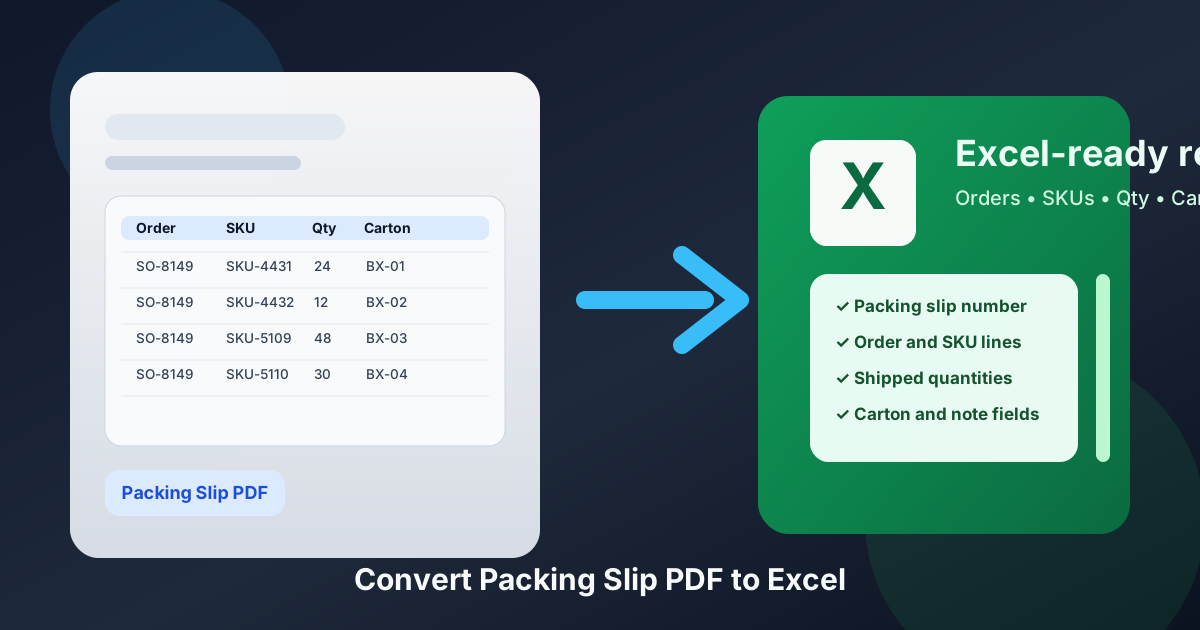
Table of contents
- Quick start: convert packing slip PDF to Excel in about 5 minutes
- Why teams need packing slip PDFs in Excel
- Which packing slip fields matter most
- What converts cleanly and what usually breaks
- Step-by-step: extract packing slip data with LifetimePDF
- Review checklist before you trust the spreadsheet
- Excel vs CSV for receiving, fulfillment, and reconciliation
- Privacy and shipping-document hygiene
- Related LifetimePDF tools and companion guides
- FAQ (People Also Ask)
Quick start: convert packing slip PDF to Excel in about 5 minutes
If the packing slip already contains selectable text and the layout is fairly clean, this workflow is usually enough:
- Open PDF to Excel.
- Upload the packing slip PDF you want to extract.
- If the file also contains invoices, labels, return paperwork, or proof-of-delivery pages, isolate only the actual packing slip pages with Extract Pages.
- If the packing slip is scanned, photographed, or image-only, run OCR PDF before converting.
- Export the spreadsheet and review the packing slip number, order reference, item descriptions, SKUs, shipped quantities, carton counts, and notes.
Why teams need packing slip PDFs in Excel
A packing slip PDF is easy to store and forward, but awkward to work with once you need to compare many shipments, many SKUs, or many exceptions at once. The PDF shows the layout nicely. It does not give you a working sheet you can filter, total, match against an order, or hand to receiving and operations without more effort.
- Match shipped quantities against sales orders or purchase orders
- Investigate shortages, substitutions, or backorders faster
- Reconcile 3PL, warehouse, or supplier shipment paperwork
- Build cleaner receiving or fulfillment worksheets
- Prepare rows for ERP, WMS, inventory, or exception reporting
- Packing slip numbers stay readable and searchable
- Order references remain tied to the right shipment rows
- SKUs and item descriptions land in sensible columns
- Shipped quantities and carton counts stay aligned
- Notes about shortages or substitutions remain traceable
The point is not to get a perfect spreadsheet from every shipment document without review. The point is to get close enough that cleanup takes a minute or two instead of forcing someone to type the same rows by hand. For warehouse admins, ecommerce operators, customer-service teams, and logistics coordinators, that time saving adds up quickly.
Why packing slips feel simple but extract awkwardly
Packing slips often combine a header block, addresses, order references, carrier notes, carton details, item rows, and footer instructions on the same page. Humans ignore the clutter and read the useful fields. Converters have to infer structure from spacing and alignment, which is why page isolation and OCR matter so much here.
Which packing slip fields matter most
Not every field matters equally. If you know which values actually drive the next step in the workflow, you can review the spreadsheet much faster and catch the errors that create real downstream problems.
- Packing slip number or shipment reference
- Order number, PO number, or customer reference
- Ship date
- SKU, item code, or product description
- Quantity shipped and unit of measure
- Carton count, box number, or package ID
- Warehouse or fulfillment location
- Carrier or tracking reference
- Lot, serial, batch, or variant details
- Short-shipped or backorder notes
- Special handling comments
- Receiver or internal exception notes
If the spreadsheet gets those fields right, it is usually useful. If it loses the order reference, shifts the shipped quantity onto the wrong row, or splits one SKU across several cells, you may still save time compared with manual typing, but only if you catch the bad rows early.
Rows and sections that deserve extra attention
- Wrapped item descriptions: one long product line can spill into the next row and push quantity columns out of place.
- Repeated headers: multi-page slips often repeat the table heading, which can create fake data rows in Excel.
- Barcode or routing blocks: these can become junk rows if they sit near the item table.
- Shortage and backorder notes: the details matter, but they are easy to separate from the line they belong to.
- Carton or package references: codes with leading zeros can change if Excel treats them like ordinary numbers.
What converts cleanly and what usually breaks
Packing slip extraction gets easier when the PDF is already digital, text-based, and consistent across pages. It gets harder when the document is scanned, photographed, printed from a warehouse system badly, or bundled with other shipment paperwork.
- Digital exports from ecommerce, ERP, WMS, or shipping systems
- Files with selectable text
- Clean item tables with predictable columns
- Standalone packing slip PDFs without unrelated pages attached
- Scanned paper copies or phone photos from the dock
- Documents mixed with invoices, labels, or signed delivery pages
- Layouts with tiny fonts, long item descriptions, or crowded footers
- Files with stamps, highlights, handwriting, or barcode stickers over key fields
The phrase convert packing slip PDF to Excel sounds simple, but the quality of the source still decides how clean the output can be. A good converter saves time. A better workflow saves more time because it gives the converter a cleaner file to work with in the first place.
Why page isolation helps more than people expect
If the file includes a shipping label, invoice, order confirmation, return form, internal email, or proof-of-delivery signature page, separate those first. A converter cannot know which page is operationally important to your spreadsheet and which page is just along for the ride. Removing the clutter first often improves field detection more than people expect.
Step-by-step: extract packing slip data with LifetimePDF
Here is the practical workflow that works best when you want a spreadsheet that is useful fast instead of technically converted but annoying to trust.
1) Start with the right pages
If the file includes labels, invoices, delivery confirmations, return instructions, or email printouts, remove those first. Use Extract Pages to keep only the packing slip pages you actually need.
2) OCR first if the packing slip is scanned
Image-only PDFs make everything harder. Before converting, run the file through OCR PDF so order references, SKU lines, shipped quantities, carton details, and notes are easier to recognize as text. This matters most for emailed scans, warehouse printouts, and phone-camera captures from receiving or fulfillment teams.
3) Fix sideways or noisy pages before extraction
If a page is rotated, tilted, or padded with large borders, clean it up first. Rotate PDF helps with orientation problems, and Crop PDF helps when margins, shadows, or footer clutter are overwhelming the useful table area.
4) Convert the packing slip to Excel
Open PDF to Excel, upload the cleaned packing slip PDF, and export the XLSX file. At this point, the goal is not perfection. The goal is a structured sheet that already has most shipment rows in the right place.
5) Review the high-risk fields first
Check the packing slip number, order reference, ship date, SKUs, shipped quantities, carton counts, and any shortage or substitution notes. If those look good, the rest of the spreadsheet is usually much easier to clean.
Review checklist before you trust the spreadsheet
A short review catches most of the errors that matter. You do not need to inspect every row equally. You need to focus on the fields most likely to create headaches later.
- Confirm the document identity: make sure you converted the correct packing slip and not a mixed packet that also included labels or delivery paperwork.
- Check the packing slip number and order reference: those are the first values people use to search and reconcile later.
- Spot-check the first few item lines: verify SKU, description, quantity shipped, and carton details stay aligned.
- Review one line from the middle or end: repeated headers and page breaks often show up later in the file.
- Look for notes that drifted into the table: barcode, handling, and routing text should not become fake shipment rows.
- Check one shortage or backorder line carefully: exception rows are the least forgiving if the spreadsheet shifts.
- Compare one row back to the source PDF: that quick trace gives you confidence before sharing or importing the result.
Common cleanup moves after conversion
- Delete repeated header rows that appear once per page
- Keep SKU, carton ID, and shipment reference columns formatted as text when leading zeros matter
- Split merged description cells if long product names collapsed together
- Standardize numeric formats for quantities and carton counts
- Move shortage, substitution, or internal notes into their own columns if they landed awkwardly
Excel vs CSV for receiving, fulfillment, and reconciliation
Both formats can be useful. The better choice depends on what happens after extraction.
- You still need to review and clean the output
- You want filters, formulas, notes, or highlighting
- You are handing the file to warehouse, ecommerce, or operations staff
- You want a working spreadsheet, not just raw rows
- You only need plain rows and columns for import
- The downstream system already expects CSV
- You do not need formulas, tabs, or workbook formatting
- You want the simplest possible export after cleanup
For most packing slip workflows, Excel is the better first stop because it gives you room to review and fix the extraction. Once the structure looks right, you can always save a CSV afterward if another system requires it.
Privacy and shipping-document hygiene
Packing slips are operational documents, but they still contain sensitive information. Depending on the business, that may include customer names, addresses, order references, internal item codes, quantities, routing notes, and warehouse details. That means the workflow should stay deliberate.
- Upload only the pages you need instead of the full shipment packet.
- Redact when appropriate if the document contains addresses, notes, or references that should not travel further.
- Use OCR and cleanup tools first so you do not share extra pages just to improve extraction.
- Protect final files when needed if cleaned documents or spreadsheets are going out by email.
- Keep the source PDF and reviewed sheet traceable so corrections are easy to audit later.
If the original PDF needs cleanup before or after extraction, pair this workflow with Redact PDF, Delete Pages, or Password Protect PDF for Email depending on what the file needs next.
Related LifetimePDF tools and companion guides
Converting the packing slip is often only one step in the overall workflow. These related tools and guides help when the raw PDF needs cleanup before or after extraction.
Extract Pages
Remove labels, invoices, or unrelated packet pages before converting.
Open Extract PagesCompanion guides
Useful adjacent reading for nearby logistics and shipping extraction workflows.
Packing List GuideProof of Delivery Guide
More related guides
- Convert Packing Slip PDF to Excel Online Without Monthly Fees
- Convert Packing List PDF to Excel
- Convert Purchase Order PDF to Excel
- Convert Shipping Manifest PDF to Excel
- Convert Bill of Lading PDF to Excel
Need the shortest route? Keep only the packing slip pages, OCR the file if needed, convert it to Excel, then review the order reference and shipped quantities before sharing or importing the sheet.
FAQ (People Also Ask)
How do I convert a packing slip PDF to Excel?
Upload the packing slip PDF to a PDF to Excel converter, export the XLSX file, and review the packing slip number, order reference, SKUs, shipped quantities, carton counts, and notes before using the spreadsheet. If the file is scanned, OCR first usually improves the result.
Can I convert a scanned packing slip PDF to Excel?
Usually yes. Scanned packing slips work better when you run OCR first and isolate only the pages that actually contain the shipping table. Cleaner scans and straighter pages usually improve row and field recognition.
Why do packing slip PDFs often create messy spreadsheets?
Because many packing slips combine address blocks, order references, carrier details, item rows, barcode labels, carton summaries, and footer notes on the same pages. Mixed packets and low-quality scans make extraction harder too.
Is Excel better than CSV for packing slip extraction?
Usually yes if a person still needs to review the result. Excel makes it easier to filter shipments, check quantities, fix shifted rows, and hand the file to warehouse, ecommerce, or operations teams before importing data elsewhere.
What should I verify after converting packing slip data?
Check the packing slip number, order reference, ship date, item descriptions, SKU references, shipped quantities, carton counts, and any shortage, substitution, or backorder notes. Those are the values most likely to create downstream receiving or fulfillment mistakes if one row shifts during conversion.