Table of contents
- Quick start: watermark a PDF in Vivaldi in a few minutes
- What Vivaldi does well and where watermarking actually happens
- The best Vivaldi workflow for watermarking PDFs
- Step-by-step: watermark from Downloads, webmail, Google Drive, or Dropbox
- Best watermark text, opacity, and placement in Vivaldi
- How to watermark only selected pages
- How to save, share, and secure the final copy
- Common Vivaldi watermarking problems and quick fixes
- Related LifetimePDF tools and guides
- FAQ
Quick start: watermark a PDF in Vivaldi in a few minutes
If the PDF is already open in your browser and you mostly need a clear status label before sharing it, this is the workflow that usually solves the job cleanly:
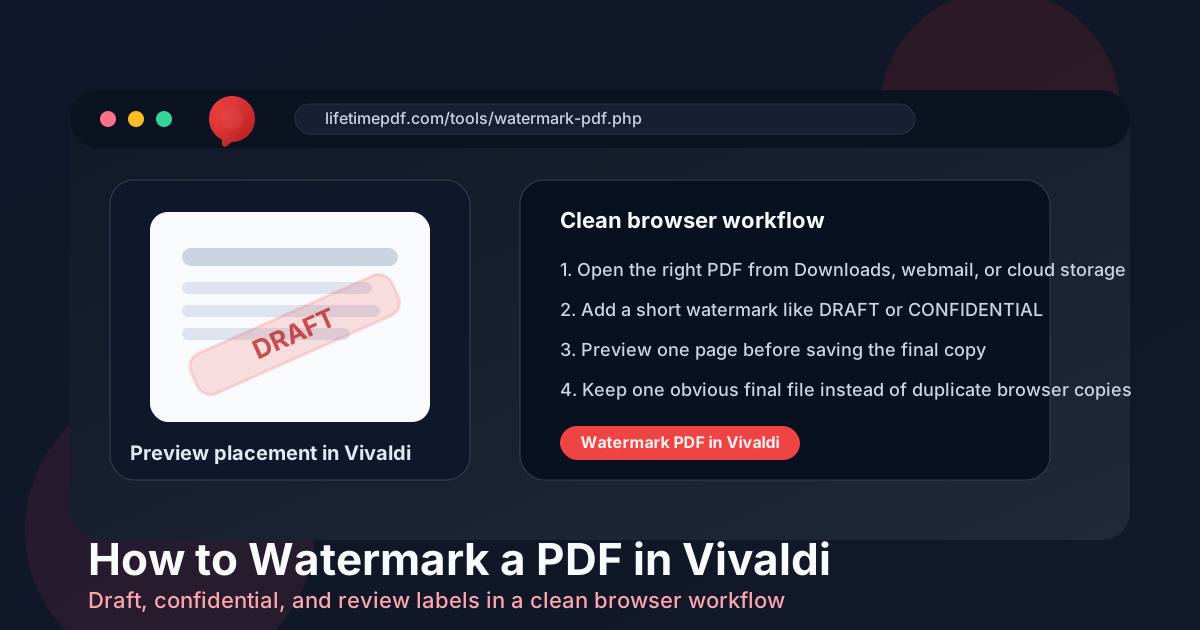
- Open the exact PDF in Vivaldi from Downloads, webmail, Google Drive, Dropbox, or another trusted source.
- Open Watermark PDF in Vivaldi because the built-in viewer is for checking the file, not for applying a true watermark.
- Add a short label such as DRAFT, CONFIDENTIAL, SAMPLE, or REVIEW COPY.
- If you use tab stacks or workspaces, keep one obvious source file open so you do not label the wrong version by accident.
- Preview at least one representative page before you download the result.
- If only part of the document needs the label, use Extract Pages first instead of stamping the whole file blindly.
- Download the finished PDF, reopen it once in Vivaldi, and then protect, redact, or compress it only if the next step actually needs more than a visible label.
What Vivaldi does well and where watermarking actually happens
Vivaldi is often where the PDF first becomes convenient. You open an attachment, review a cloud file, compare two versions in different tabs, or park a draft inside a workspace while you finish the rest of the task. That makes it a very practical place to start PDF work.
It is also where people sometimes assume the built-in viewer should handle the entire job. Vivaldi can display, zoom, review, download, and help you confirm that you have the right file, but that is different from applying a polished watermark that should look intentional across the page.
In practice, Vivaldi works best when you divide the workflow clearly:
- Open and verify the right file: excellent inside Vivaldi.
- Apply a real watermark: better through a browser-based PDF watermark tool running in Vivaldi.
- Label only part of a document: use page extraction and merging instead of forcing the same watermark onto every page.
- Fix a trusted tool that stalls: check Vivaldi's tracker blocking, popup handling, or download rules for that tab before you start over.
Once you think of Vivaldi as the browser front door instead of the full watermark engine, the workflow becomes much simpler and much less error-prone.
The best Vivaldi workflow for watermarking PDFs
A good Vivaldi watermark workflow is mostly about avoiding preventable mistakes. The label itself is easy. The problems usually come from opening the wrong tab, labeling an older cloud version, keeping too many browser copies around, or saving the finished file with a vague name that later gets mixed up with the original.
The clean workflow has four parts:
- Start from the real source PDF. Decide which copy is authoritative before you touch anything.
- Use short wording. A watermark should be readable at a glance instead of turning into a diagonal paragraph.
- Preview a representative page. This catches the classic problem where the label lands on a signature line, total, chart, or tiny legal note.
- Save one obvious final copy. Vivaldi stays tidy when the labeled PDF is easy to recognize later.
| What you need to do | Best Vivaldi-friendly option | Why it usually works better |
|---|---|---|
| Open and review a PDF | Vivaldi built-in viewer | Fast, familiar, and ideal for checking the file you are about to label. |
| Add a visible draft or confidential label | Watermark PDF in Vivaldi | You get cleaner placement and a more predictable saved result than improvised print or annotation workarounds. |
| Watermark only one section | Extract Pages, watermark that section, then Merge PDF | You avoid cluttering pages that should stay clean. |
| Prevent casual opening | PDF Protect | A watermark tells people how to treat the file, but it does not control access. |
| Remove private content permanently | Redact PDF | If the content should not remain visible, it needs removal, not a translucent label sitting on top. |
In plain English: use Vivaldi to reach the correct file quickly, use a real watermark tool to label it cleanly, and secure or compress the result only if the next step genuinely needs those extras.
Step-by-step: watermark from Downloads, webmail, Google Drive, or Dropbox
1) Pick the real source file first
This matters more in Vivaldi than people expect. It is easy to have the same PDF open in two tabs, another copy sitting in Downloads, and an older version still parked in a cloud folder. If the document matters, decide which file is the real source before you start.
2) Use Vivaldi to verify the document, not to fake the watermark
Open the PDF in Vivaldi and confirm you have the right file, page count, and version. Then open Watermark PDF in another tab for the actual label. This keeps the browser convenient without forcing the built-in viewer to do something it was never designed to do.
3) Choose a short label that stays readable
Short labels survive more page layouts. Contracts, invoices, scanned reports, HR packets, proposals, and slide exports all react differently to big diagonal text. DRAFT, CONFIDENTIAL, SAMPLE, and REVIEW COPY are usually safer than long phrases.
4) If a trusted tool stalls, check Vivaldi before you blame the PDF
On a trusted site, Vivaldi's tracker blocking, popup handling, or download rules can be the reason an upload spinner never finishes or the final file refuses to save. Relax the setting for that tab only when you trust the site and the problem clearly matches a blocked workflow. Then retry the step instead of rebuilding everything from scratch.
5) Save a clearly named copy and reopen it once
Download the labeled PDF with a filename such as proposal-draft.pdf, contract-confidential.pdf, or review-copy.pdf. Reopen that exact saved copy once in Vivaldi before you email it, upload it, or put it back into cloud storage.
Clean sequence: open the source file in Vivaldi → use Watermark PDF for the label → preview the result once → save a clearly named copy → protect, redact, or compress only if the next step really needs it.
Best watermark text, opacity, and placement in Vivaldi
The best watermark is obvious at a glance but does not bully the document. If the label is the first and only thing anyone notices, it is usually too strong.
What should you write?
Use wording that makes instant sense and still feels professional if the file gets forwarded or reopened later. Good options include:
- DRAFT
- CONFIDENTIAL
- SAMPLE
- REVIEW COPY
- INTERNAL USE ONLY
- A short company, department, or project name
How dark should the watermark be?
Usually lighter than your first instinct. If the page becomes annoying to read at 100 percent zoom, the watermark is doing too much. Dense legal text, forms, price sheets, and scanned records usually need a softer touch than a slide export or image-led proposal.
Where should it sit?
Diagonal center placement is popular because it is hard to miss without hammering the same exact line on every page. Still, the right position depends on the document. Preview first if the PDF includes signature blocks, totals, footnotes, or busy charts.
How to watermark only selected pages
Not every PDF should carry the same label on every page. Maybe only the proposal section should say DRAFT. Maybe the appendix should be marked SAMPLE while the signed cover page stays clean.
In those cases, a selected-page workflow is better than stamping the whole file blindly:
- Use Extract Pages to isolate the section that actually needs the label.
- Apply the watermark to that smaller file in Vivaldi.
- Use Merge PDF if you need to rebuild the final packet afterward.
This is usually cleaner than forcing one watermark across a mixed document where some pages should stay untouched.
How to save, share, and secure the final copy
Save the labeled PDF with a new filename
Avoid vague names like final-v2.pdf. Vivaldi workflows stay much cleaner when the finished file says exactly what it is, like contract-confidential.pdf or proposal-draft.pdf.
Protect the file if access actually matters
A watermark is a visible label, not a lock. If the file should not open casually, add a password with PDF Protect after the content is final.
Redact information that should not remain
If private details are visible in the file, use Redact PDF. A watermark does not remove names, numbers, clauses, or personal data underneath it.
Compress the file before sending if needed
If scans or images made the PDF bulky, shrink it with Compress PDF before you attach it to email, upload it to Drive, or send it through a portal.
Common Vivaldi watermarking problems and quick fixes
I thought Vivaldi could do this by itself
Vivaldi can open and preview the file beautifully, but a real watermark usually comes from a browser-based tool used in Vivaldi rather than from the built-in viewer alone.
I watermarked the wrong tab, workspace copy, or download
Start from one real source file, close or ignore duplicate browser copies, save the finished PDF with a fresh filename, and reopen that exact copy once. Browser convenience is great until you lose track of which preview or download is the real version.
The watermark tool will not upload or download correctly
If the site is trustworthy, check whether Vivaldi's tracker blocking, popup rules, or download handling are interrupting the step that keeps failing. Adjust the setting only for that trusted tab, retry, and then restore your normal habits afterward.
The watermark covers a signature, total, or chart
Preview a representative page before you finish. If only part of the file needs the label, extract that section and watermark it separately.
I need more than a visible label
Add protection when access matters and redaction when information should not remain. A watermark is mostly for status and context, not for true security.
Related LifetimePDF tools and guides
Watermarking a PDF in Vivaldi often turns into one or two related cleanup steps. These are the most useful companions:
- Watermark PDF — add draft, confidential, sample, or review labels cleanly.
- PDF Protect — add a password when access matters.
- Redact PDF — permanently remove sensitive information.
- Compress PDF — shrink scans or image-heavy files before sending.
- Extract Pages and Merge PDF — better for selected-page watermark workflows.
Related reading on LifetimePDF: Watermark PDF, Add Watermark to PDF, how to watermark a PDF in Chrome, how to watermark a PDF in Edge, how to watermark a PDF in Firefox, how to watermark a PDF in Opera, and how to edit a PDF in Vivaldi.
Vivaldi shortcut: use the browser to open the right file fast, use Watermark PDF for the actual label, and add protection or redaction only when the workflow genuinely needs more than a visual status mark.
FAQ: How to watermark a PDF in Vivaldi
Can I watermark a PDF directly in Vivaldi?
Vivaldi is excellent for opening and reviewing PDFs, but a real watermark usually comes from a browser-based PDF tool running in Vivaldi rather than from the built-in viewer alone.
Why did my PDF tool stall in Vivaldi?
On a trusted site, Vivaldi's tracker blocking, popup handling, or download rules can interrupt uploads or finished downloads. If the site is trustworthy and the issue clearly matches a blocked workflow, relax the setting for that tab and retry.
What should I write in a PDF watermark in Vivaldi?
Short labels work best: DRAFT, CONFIDENTIAL, SAMPLE, INTERNAL USE ONLY, or REVIEW COPY. Short wording stays readable across more page layouts.
Can I watermark only selected pages of a PDF in Vivaldi?
Yes. Extract the page or section that needs the label, apply the watermark there, then merge it back into the final packet if needed.
Does a watermark protect a PDF from sharing?
No. A watermark is mainly visual. If access matters, add password protection, and if information should not remain visible, redact it instead of relying on the watermark alone.
Published by LifetimePDF — Pay once. Use forever.