How to Unlock a PDF in Chrome: Open, Edit, Print, or Sign Files from Downloads, Gmail, and Drive Without Wrong-Copy Mix-Ups
To unlock a PDF in Chrome, open LifetimePDF's PDF Unlock tool in Chrome, upload the right file from Downloads, a saved Gmail attachment, Google Drive, or another folder, enter the current password if needed, then download the unlocked working copy and test the blocked action right away.
If Chrome can preview the file but will not let you print, copy, sign, or edit it, you are usually dealing with PDF permissions rather than the wrong app, so the fix is to unlock the authorized working copy and then finish the real task.
That is the short answer. The part that usually causes trouble in Chrome is not the unlock button itself. It is keeping the real source file straight when the same PDF exists as a Gmail preview, a Google Drive tab, a browser download, and a duplicate copy with a nearly identical name.
Fastest path: confirm you are allowed to use the file, open PDF Unlock in Chrome, choose the exact PDF from Downloads, Gmail, or Drive, enter the current password if required, unlock it, and immediately try the blocked job that sent you here.
In a hurry? Jump to Quick start: unlock a PDF in Chrome in a few minutes.
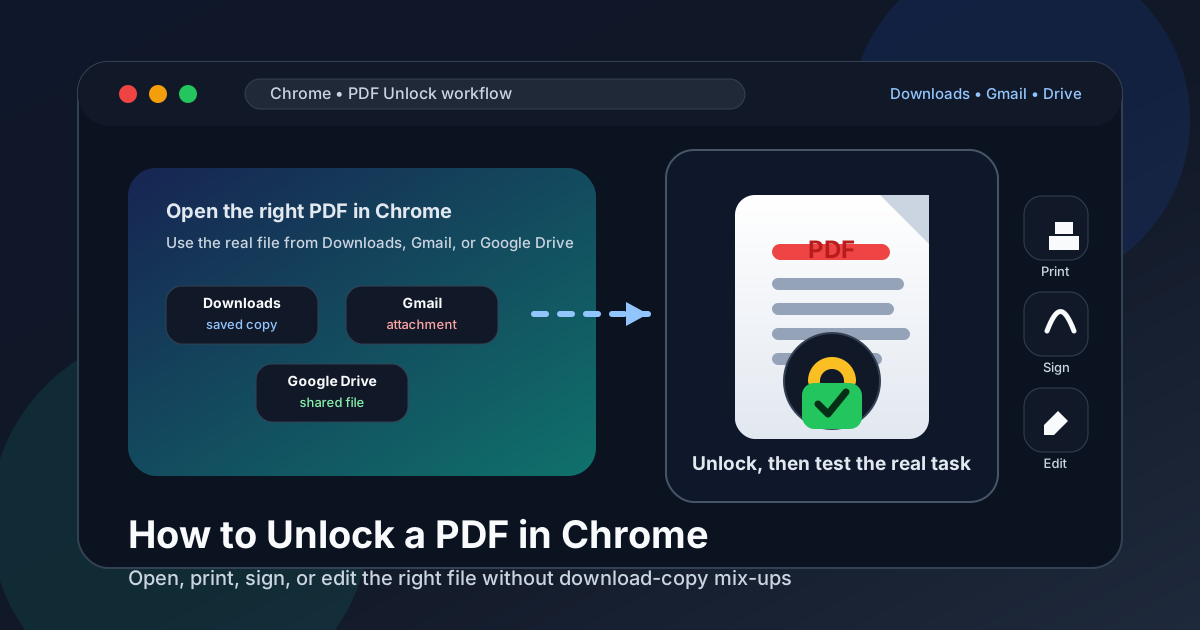
Table of contents
- Quick start: unlock a PDF in Chrome in a few minutes
- When unlocking a PDF in Chrome is the right move
- Open password vs permission restrictions in Chrome
- Step-by-step: how to unlock a PDF in Chrome
- Chrome viewer, Gmail, Drive, Downloads, and profile mix-ups
- What to do after the PDF is unlocked
- Common Chrome problems and quick fixes
- Related LifetimePDF tools and guides
- FAQ
Quick start: unlock a PDF in Chrome in a few minutes
If you already know you are allowed to work with the file, this is the shortest useful Chrome workflow:
- Open PDF Unlock in Chrome.
- Choose the exact PDF from Downloads, a saved Gmail attachment, Google Drive, or another folder.
- Enter the current password if the document requires it.
- Download the unlocked working copy.
- Open it in Chrome and immediately try the action that used to be blocked: print, copy text, sign, edit, or extract pages.
- If the finished version still needs controlled access, add fresh protection after the real work is done.
When unlocking a PDF in Chrome is the right move
Most people searching this do not want a lecture on PDF security. They are stuck in a normal browser-first workflow. The file opens in Chrome, but printing is blocked. Or the PDF asks for a password. Or a contract still needs a signature, a form still needs edits, or a long report only needs a few pages copied or extracted before it goes onward.
Chrome is a common starting point because many PDFs already live there. They arrive in Gmail, open from Drive, or preview inside a client portal before you ever save them locally. That makes Chrome a useful staging area. The actual unlock step matters when the protection is the only thing preventing work you are authorized to do.
| Situation | Best move | Why it helps |
|---|---|---|
| You can view the PDF in Chrome but cannot print, copy, sign, or edit it | Use an authorized unlock workflow | It removes the friction blocking the real task you need to finish |
| The file asks for a password and you know it | Open it with the password, unlock the working copy, and continue | You stop re-entering protection and move into the actual job faster |
| You only need a few pages or one signature after access is restored | Unlock first, then extract, sign, or edit | You avoid improvised workarounds and keep the final copy cleaner |
| You do not know the password and the file is not yours | Ask the sender or owner for access | That is the correct fix when authorization, not Chrome, is the real issue |
Chrome is the window where the problem becomes obvious. Unlocking is the step that makes the next useful step possible again.
Open password vs permission restrictions in Chrome
A lot of confusion comes from mixing up two different kinds of protection.
Open password
This is the password that appears before you can view page one. If Chrome stops you before the document opens, you are dealing with access protection. If you do not know that password, the right fix is usually to get it from the owner or ask for an unrestricted copy.
Permission restrictions
In this case, the PDF opens in Chrome, but the useful part is blocked. You may not be able to print, copy text, fill fields, sign, rearrange pages, or edit the content. That is why a PDF can feel locked even though it is already visible in Chrome's built-in viewer.
| Protection type | What it blocks | What usually fixes it |
|---|---|---|
| Open password | Viewing the PDF at all | Enter the correct password or request access from the sender |
| Permission restriction | Printing, copying, editing, signing, extracting pages, or other actions | Use an authorized unlock workflow to remove the restriction |
| Wrong-copy confusion | You unlock one file but keep working on another | Confirm the exact source file before you start and name the unlocked copy clearly |
Step-by-step: how to unlock a PDF in Chrome
Here is the cleanest order for most browser-based workflows:
1) Confirm you are allowed to remove the protection
If the file belongs to a client, school, employer, bank, or legal sender, make sure you are supposed to unlock it. Sometimes the fastest fix is simply getting the right password or asking for a clean copy rather than forcing a messy browser workaround.
2) Identify the real source file before you touch anything
The same PDF can exist as a Gmail preview, a Google Drive tab, a portal preview, a browser download, and a duplicate file with a number added to the name. Decide which copy is the real source first. That one habit prevents a surprising number of mistakes.
3) Open PDF Unlock in Chrome
Go to LifetimePDF PDF Unlock. A browser-based workflow is often the fastest route when the document is already living inside Chrome and you just want the restriction removed so you can continue working.
4) Choose the file from Downloads, Gmail, Drive, or your working folder
Use the file picker to select the exact PDF you mean to work on. If it arrived in Gmail, save the attachment first if that makes version control clearer. If it came from Drive, stay deliberate about which copy is still restricted and which copy becomes the working file.
5) Enter the current password if required
If the document uses an open password or password-linked restrictions, enter it carefully. Most failures here are ordinary: a wrong character, an outdated password from an older revision, or a different file than the one you thought you selected.
6) Unlock the PDF and download the working copy
Download the unlocked version and give it a clearer name if needed. Something like contract-working.pdf, packet-unlocked.pdf, or statement-ready-to-sign.pdf is much safer than relying on Chrome to keep several similar filenames straight.
7) Test the blocked action immediately
Do not stop after the download. Open the unlocked file in Chrome and try the actual task that sent you here. Print a page. Copy text. Add the signature. Extract the needed pages. Move into editing. That quick check tells you whether the workflow is truly finished.
8) Finish the real task and re-protect only if the final copy still needs it
Once the document is usable, finish the actual work. If the final version still needs controlled access before you share it, add fresh protection afterward with PDF Protect.
Clean Chrome sequence: identify the right file → unlock it → test the blocked action → finish the real job → protect the final share copy again if needed.
Chrome viewer, Gmail, Drive, Downloads, and profile mix-ups
Chrome's built-in PDF viewer is useful for opening and reading documents quickly. Gmail and Drive make it easy to jump into a file without saving it first. That convenience is exactly why the wrong-copy problem shows up so often.
One version may be open in a Gmail tab, another may be sitting in Google Drive, a third may already be in Downloads, and Chrome may have added (1) or (2) to a filename you barely noticed. If you also use separate Chrome profiles for work and personal browsing, the same PDF can feel even more scattered.
| Where the PDF appears | What Chrome makes easy | Where confusion starts |
|---|---|---|
| Built-in viewer | Fast reading and quick checks | You can mistake a preview for the file you actually plan to unlock and send |
| Gmail | Immediate attachment previews | You may later resend the original attachment instead of the unlocked working copy |
| Google Drive | Easy sharing and cloud access | Preview, download, and final export can blur together if filenames stay vague |
| Downloads folder | Fast local access after the unlock step | Duplicate filenames and numbered copies make it easy to keep working on the wrong file |
What to do after the PDF is unlocked
Unlocking is usually the middle of the workflow, not the end.
Unlock and sign
If the real goal is approval, move straight into Sign PDF while the file is finally usable. This is common with contracts, onboarding packets, consent forms, and internal approvals.
Unlock and fill the form
If the PDF still needs answers after access is restored, use PDF Form Filler. That is often cleaner than bouncing between Chrome previews and manual workarounds.
Unlock and extract or trim pages
If you only need part of the document, move into Extract Pages or Delete Pages instead of carrying the entire restricted packet through every next step.
Unlock, edit, then protect the final copy again
This is a strong sequence for sensitive work. Unlock the file you are allowed to use, finish the editing, signing, or page work, and only then add fresh protection back with PDF Protect before you share it onward.
Common Chrome problems and quick fixes
I unlocked the PDF, but I still cannot do what I need
Make sure you opened the unlocked copy, not the original restricted file. In Chrome, this mistake usually happens because the download finished but the preview tab you were already on still points to the older version.
The PDF came from Gmail and now I have too many copies
Save the attachment clearly, unlock that saved copy, rename the working version, and only then attach or upload the final file. Gmail previews are convenient, but they are not a version-management system.
Google Drive is showing one thing and Downloads is showing another
Pause long enough to choose one source of truth. Confirm whether Drive holds the original, the unlocked working copy, or the final version you actually plan to share. Do not assume the newest-looking tab is the right file.
I do not know the password
If the file is protected before it opens and you do not know the password, the correct move is to ask the owner or sender for access or for a less restricted copy. Chrome cannot replace that authorization.
Chrome downloaded another numbered duplicate
Rename the file right away. Chrome is fast, but duplicate downloads like document (1).pdf and document (2).pdf make it very easy to unlock one copy and then keep working on another.
The final copy still needs privacy protection
That is normal. Finish the real task first, then use PDF Protect on the final share copy if it still needs controlled access.
Related LifetimePDF tools and guides
Unlocking a PDF in Chrome usually sits inside a bigger document workflow. These tools and guides fit naturally around the same job:
- PDF Unlock — remove protection or restrictions from a file you are allowed to use.
- Sign PDF — add the signature after the file becomes usable again.
- PDF Form Filler — complete forms once access friction is gone.
- Extract Pages — keep only the pages you actually need.
- PDF Protect — add fresh protection to the finished copy before you share it.
Related reading on LifetimePDF: Unlock PDF, Remove Password From PDF, How to Password Protect a PDF in Chrome, How to Sign a PDF in Chrome, and How to Fill Out a PDF Form in Chrome.
Chrome shortcut: unlock the authorized working copy, test the blocked task immediately, then keep the final version clearly named before you upload, send, or store it.
FAQ: How to unlock a PDF in Chrome
Can I unlock a PDF directly in Chrome?
Chrome is a practical place to open and review a PDF, but the easiest full workflow is usually an authorized browser-based PDF unlock tool running inside Chrome. That keeps the job in one browser session and gets you back to printing, signing, editing, or copying faster.
What if I do not know the PDF password in Chrome?
If the PDF requires an open password and you do not know it, the correct fix is usually to get the password from the sender or ask for an unrestricted copy. Chrome itself cannot replace that authorization.
What is the difference between a PDF open password and a restriction in Chrome?
An open password blocks the file before you can view it. A restriction lets you open the PDF in Chrome but may still block printing, copying, editing, signing, or extracting pages until the protection is removed with authorization.
How do I unlock a PDF from Gmail or Google Drive in Chrome?
Save or identify the exact PDF from Gmail or Google Drive, upload that file into the unlock workflow in Chrome, enter the current password if needed, download the working copy, and test the blocked action before you re-upload or resend it.
Should I password protect the PDF again after unlocking it in Chrome?
Often yes. If the finished version still needs controlled access, unlock the working copy first, complete the real task, and then add fresh protection to the final share copy before you send it onward.
Published by LifetimePDF — Pay once. Use forever.