How to Sign a PDF in Chrome: Add Your Signature Without Printing or Leaving the Browser
To sign a PDF in Chrome, open LifetimePDF's Sign PDF tool in Chrome, upload the file from Downloads, Gmail, Google Drive, or a portal export, place your signature on the correct page, then download the signed copy.
If Chrome is only showing the file in its built-in viewer, use that viewer to review the document and a dedicated signing tool to place the signature cleanly, especially for scanned or flattened PDFs.
That is the short answer. The part that actually saves time in Chrome is avoiding duplicate downloads, stale tab previews, Drive or Gmail version mix-ups, and signatures that looked fine during editing but awkward after export.
Fastest path: open Sign PDF in Chrome, upload the exact file you want from Downloads, Gmail, Drive, or a portal, place the signature neatly, then reopen the exported PDF once before you send it.
In a hurry? Jump to Quick start: sign a PDF in Chrome in a few minutes.
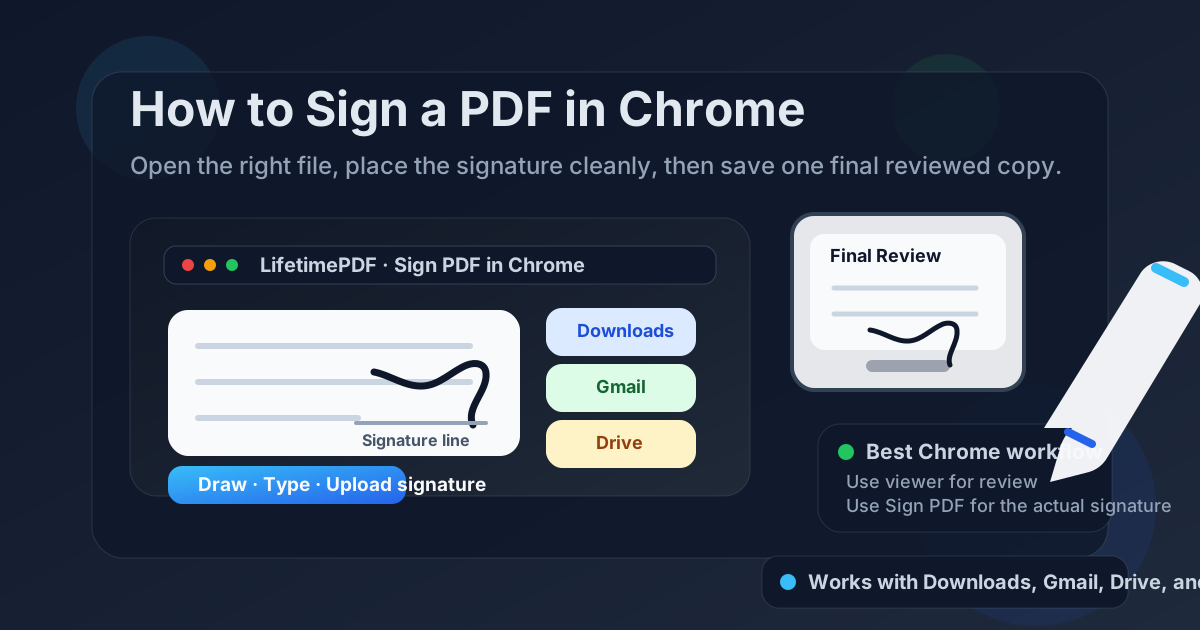
Table of contents
- Quick start: sign a PDF in Chrome in a few minutes
- What Chrome handles well and where signing actually happens
- Step-by-step: sign a PDF in Chrome
- Chrome PDF viewer vs a dedicated signing tool
- How to sign scanned or flattened PDFs in Chrome
- Gmail, Google Drive, Downloads, and portal workflows
- How to keep the signed copy clean and easy to send
- Related LifetimePDF tools and guides
- FAQ
Quick start: sign a PDF in Chrome in a few minutes
If you just need to sign a contract, approval form, HR packet, school document, intake form, or portal PDF and send it back quickly, this is the Chrome workflow most people actually want:
- Open Sign PDF in Chrome.
- Choose the exact file from Downloads, a saved Gmail attachment, Google Drive, or a folder where you intentionally exported it from a portal.
- Create the signature by drawing it, typing it, or uploading an existing signature image.
- Place the signature on the correct page and zoom in before you finalize it.
- Download the finished PDF, reopen it once in Chrome, and confirm the signature sits where you intended before you upload or email it.
What Chrome handles well and where signing actually happens
Chrome is a comfortable starting point for PDF work because many documents already pass through it. A contract opens from Gmail. A form downloads from a portal. A client packet lives in Drive. A policy document appears in a shared workspace. Chrome is where all those files meet.
The limit is the same one people hit with most browsers: opening a PDF is not the same as signing it cleanly. Chrome's built-in PDF viewer is useful for checking the file, scrolling through pages, and confirming whether you grabbed the right version. It is not the whole signing workflow.
The cleaner approach is simple:
- Use Chrome to open, review, and collect the right file.
- Use Sign PDF to place the signature cleanly and export one polished final copy.
- Use PDF Form Filler first if the document also needs typed answers.
- Use Compress PDF after signing only if the finished file is still too large to send comfortably.
| Method | Best for | Where it struggles |
|---|---|---|
| Chrome PDF viewer only | Opening the file, checking page order, and confirming you have the right document | Precise signature placement, scanned PDFs, and saving a cleaner final signed copy |
| Gmail or Drive previews | Fast visual checks before you decide which file is the real source | Easy to confuse with older downloads or stale exported copies |
| Chrome + Sign PDF | Clean signature placement, browser-based signing, and reliable export | You still need one quick final review before sending |
| Print and rescan | Almost never the best choice unless a physical signature is specifically required | Slower, messier, lower quality, and much easier to get wrong |
In other words, Chrome is the workspace. The actual signing should still happen in a tool built for finishing the document cleanly.
Step-by-step: sign a PDF in Chrome
If you want a repeatable Chrome workflow that works for contracts, school forms, onboarding paperwork, approvals, client documents, and routine admin files, use this:
- Start from the exact PDF you intend to send back. Do not assume the open browser tab is the file you should sign. Confirm whether the real source is the Gmail attachment, the Drive file, the downloaded copy, or the version you exported from a portal.
- Open the signing tool. Launch Sign PDF in Chrome.
- Upload the right file. If Chrome has downloaded several similar copies, check the filename before you upload so you do not sign yesterday's version by accident.
- Create the signature. Draw it for a more handwritten look, type it for something fast and tidy, or upload a signature image if you want consistency.
- Place it carefully. Position the signature on the correct line, resize it so it looks natural, and make sure it does not cover dates, checkboxes, or nearby text.
- Download and review the final PDF. Save it somewhere obvious, reopen it once in Chrome, and check the signature at normal zoom before you upload or attach it.
Shortest reliable sequence: pick the right file, sign it once, save one clear final copy, and review the exported PDF before you send it back.
If the document also needs typed fields, fill those first with PDF Form Filler, then return to signing afterward. That usually keeps the layout cleaner and prevents the signature from colliding with form content.
Chrome PDF viewer vs a dedicated signing tool
Chrome's built-in PDF viewer deserves some credit. It is fast, familiar, and useful for opening a document from almost anywhere. If all you need is a quick read-through or a final check, it is perfectly fine.
The trouble starts when the document has to look polished after you sign it. If the PDF came from a portal, if the file is scanned, if you need better control over size and placement, or if you are juggling Gmail, Drive, and Downloads at the same time, the built-in viewer starts feeling too limited.
Use Chrome's viewer when:
- You want to confirm the document is the right one before signing.
- You need to check page count, order, or whether the file opened correctly.
- You are reviewing the final exported PDF before sending it onward.
Use a browser-based signing tool when:
- You need cleaner signature placement.
- The PDF came from Gmail, Drive, a client portal, or a work system with lots of similar copies.
- The file is scanned, flattened, or slightly awkward.
- You want one workflow that works across different computers without relying on a separate desktop app.
How to sign scanned or flattened PDFs in Chrome
A lot of PDFs are not truly interactive. They are scans, flattened exports, or camera-made pages wrapped in a PDF file. That is why you click around and nothing responds.
For signing, that is usually not a disaster. You can still place the signature on top of the page. The main difference is that you should not expect a built-in field to accept it like a perfectly structured digital form would.
- If the document only needs a signature: place it directly on the correct page and review the alignment carefully.
- If the document also needs typed answers: fill those first, then sign after the answers are in place.
- If the scan is too large to send comfortably: use Compress PDF after the signature is already correct.
The common mistake is oversizing the signature because the scan already looks messy. That usually makes the file look worse, not better. Keep the signature proportional and review it at normal zoom.
Gmail, Google Drive, Downloads, and portal workflows
Most Chrome signing problems are not about the signature itself. They come from source confusion. The same PDF might exist as a Gmail attachment, a Drive preview, a portal tab, and two nearly identical downloads with numbers added to the filename.
From Gmail
If the PDF arrived by email, save the attachment intentionally or confirm which version you are using before you upload it into the signing tool. Gmail previews are convenient, but they are not always the copy you will later attach back.
From Google Drive
Drive is useful because the file already lives in the browser, but that convenience can blur the difference between a preview, a downloaded local copy, and a final signed export. Rename the finished copy clearly so you do not upload the unsigned original back by mistake.
From a portal or shared workspace
Portal PDFs often create version chaos because you open one tab, export another copy, and still have an older download sitting in the same folder. If the document matters, use one temporary folder or one clearly named final copy so the signed version is obvious.
From Chrome Downloads
Chrome's download list is convenient, but it also makes numbered duplicates easy to miss. Before signing, check whether you are opening document.pdf, document (1).pdf, or an even older copy. That tiny check prevents a lot of needless rework.
How to keep the signed copy clean and easy to send
Once the signature is in place, the job is not quite done. A clean final PDF depends on a few small habits:
- Keep the signature realistic in size. Bigger rarely looks more official.
- Check the exact page. Multi-page PDFs are easy to sign on the wrong page if you are rushing.
- Review the exported PDF, not just the editor view. The saved file is what the other person actually sees.
- Name the final copy clearly. Something like contract-signed.pdf is much safer than leaving several almost identical filenames in Downloads.
- Compress only if needed. If the file uploads, emails, and opens comfortably, you are done.
| If this happens | What to do next |
|---|---|
| The signed PDF is too large for email or an upload portal | Use Compress PDF after signing |
| The document also needs typed answers or aligned entries | Go back and use PDF Form Filler before signing |
| The PDF is blocked by permissions and you are allowed to work with it | Try Unlock PDF first |
| You are not sure whether the final file is the one you meant to send | Reopen the export in Chrome and confirm the filename, page, and signature placement before sending |
Resist the urge to keep exporting new versions unless something is actually wrong. One clean final copy is much easier to trust than a pile of nearly identical signed files.
Related LifetimePDF tools and guides
Signing often overlaps with one or two other PDF tasks. These are the most useful companions in Chrome workflows:
- Sign PDF — place a signature cleanly and export one finished file.
- PDF Form Filler — enter typed answers before you sign.
- Compress PDF — shrink the final signed PDF if email or upload limits reject it.
- Unlock PDF — remove permission barriers when you are authorized to work with the file.
Related reading on LifetimePDF: How to Add Text to a PDF in Chrome, How to Merge PDFs in Chrome, How to Sign a PDF on Chromebook, How to Sign a PDF on Windows, and How to Sign a PDF on Mac.
Chrome shortcut: verify the real source file, sign it once, review the exported copy, and only then worry about size or extra cleanup if something still needs attention.
FAQ: How to sign a PDF in Chrome
Can I sign a PDF directly in Chrome?
Chrome can open and preview PDFs very well, but the cleanest signing workflow usually comes from a browser-based Sign PDF tool running inside Chrome rather than from the built-in viewer alone.
Is Chrome's built-in PDF viewer enough for signing?
Chrome's built-in viewer is useful for reviewing the file, checking page order, and confirming you opened the right document. For more reliable signature placement, especially on scans or flattened PDFs, a dedicated signing tool is usually easier.
How do I sign a PDF from Gmail or Google Drive in Chrome?
Open the attachment or Drive file in Chrome, save or confirm the exact file you want, upload it into a Sign PDF tool, place the signature, then download the finished copy and attach or upload that final version.
What if the PDF is scanned or will not let me click into fields?
That usually means the PDF behaves more like an image than a true interactive form. You can still place the signature on top of the page, and if the file also needs typed answers, fill those first before signing.
Should I fill the form first or sign first in Chrome?
Usually fill the form first and sign last. That keeps the document cleaner and reduces the chance of covering fields, dates, or checkboxes with the signature.
Published by LifetimePDF — Pay once. Use forever.