How to Redact a PDF in Safari: Remove Sensitive Text from Mail, iCloud Drive, Files, or Downloads Without Leaving the Original Behind
To redact a PDF in Safari, open LifetimePDF's Redact PDF tool in Safari, upload the exact file from Mail, iCloud Drive, Files, or Downloads, mark the sensitive text or images, then apply the redactions and save the cleaned copy.
If the file still carries comments, metadata, or an easy-to-mix-up duplicate, review those too before you share it, because a hidden-looking page is not always a truly redacted document.
That is the short answer. The part that usually causes trouble in Safari is not opening the PDF. It is making sure you cleaned the right Apple-device copy, using a real redaction step instead of markup, and saving one final version that is obviously safer than the original attachment, preview, or download sitting nearby.
Fastest path: confirm the exact PDF, open Redact PDF in Safari, apply the redactions permanently, review the cleaned file for hidden leftovers, then save one clearly named final copy to Files before you upload or send it.
In a hurry? Jump to Quick start: redact a PDF in Safari in a few minutes.
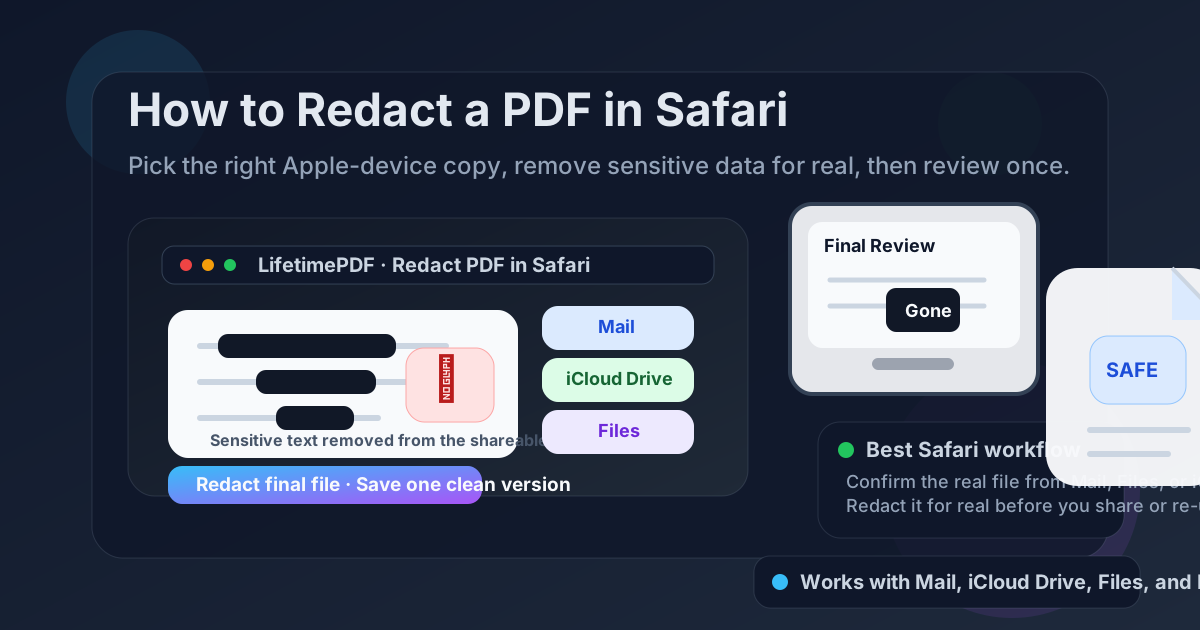
Table of contents
- Quick start: redact a PDF in Safari in a few minutes
- What Safari handles well and where true redaction happens
- Step-by-step: how to redact a PDF in Safari
- Why markup, screenshots, and cropped previews are not real redaction
- Mail, iCloud Drive, Files, and Downloads workflows
- Hidden leftovers to review before you share the file
- How to verify the redacted PDF before you send it
- Related LifetimePDF tools and guides
- FAQ
Quick start: redact a PDF in Safari in a few minutes
If you already know what needs to disappear, this is the Safari workflow most people actually want:
- Open Redact PDF in Safari.
- Choose the exact PDF from Mail, iCloud Drive, the Files app, Downloads, or the folder where you intentionally saved it.
- Mark the names, account numbers, addresses, signatures, images, or notes that should never remain visible.
- Apply the redactions so the content is removed from the shareable copy, not merely covered on screen.
- Download the cleaned PDF with a filename that makes the final redacted version obvious.
- Open it once in Safari, Files, or Preview, search for a removed term if needed, and only then send or upload it onward.
What Safari handles well and where true redaction happens
Safari is where plenty of PDFs already live before cleanup starts. A contract opens from Mail. A statement sits in iCloud Drive. A file preview launches from Files on an iPhone or iPad. A portal export lands in Downloads on your Mac. That makes Safari a practical place to confirm page order, compare filenames, and review the final result.
The limit is simple: opening, previewing, or marking up a PDF is not the same thing as redacting it. Safari helps you identify the right document and inspect the finished result, but the actual redaction step is more reliable in a workflow built to remove the content cleanly.
In practice, the reliable sequence is short:
- identify the exact PDF you really plan to share,
- apply the redactions for real,
- review obvious leftovers like comments, metadata, and duplicate file names,
- save one clearly named final file,
- verify the cleaned copy once before sending it.
| Method | Best for | Where it struggles |
|---|---|---|
| Safari PDF preview only | Opening the file, confirming the right version, and reviewing the final redacted copy | It is not the clearest place to perform full true-redaction work by itself |
| Markup or annotation tools | Temporarily noting what needs attention before you decide what to remove | Can leave the underlying text or image data intact if you mistake markup for finished redaction |
| Safari + Redact PDF | Removing sensitive content while staying inside one browser session and producing one cleaner final file | You still need one verification pass so you do not send the original or overlook hidden leftovers |
| Screenshots and re-exports | Rare visual-only situations where you need a non-editable excerpt fast | Slower, less searchable, and usually a messy substitute for proper document cleanup |
Safari is the workspace. Real redaction should still happen in a workflow built for permanent removal.
Step-by-step: how to redact a PDF in Safari
If the document matters and you do not want to clean the wrong copy, use this sequence:
- Keep an untouched original. Save a clean copy before you change anything. Redaction is exactly the kind of task where you do not want to discover later that your only original is gone.
- Confirm the exact source file. Decide whether the real PDF is the Mail attachment, the iCloud Drive file, the Files handoff, the portal export, or the download already sitting on your device. The first preview Safari shows is not always the copy you should clean.
- Open the redaction tool. Launch Redact PDF in Safari.
- Mark what must disappear. That can include names, addresses, account numbers, signatures, photos, pricing, medical details, or internal notes.
- Apply the redactions permanently. This is the step that matters. A proper apply step removes the content from the file you are going to share instead of leaving it hidden underneath a visual layer.
- Review obvious hidden leftovers. If the PDF moved through a longer Apple-device workflow, also consider comments, metadata, and stale duplicate filenames. Use PDF Metadata Editor if the file still advertises details you no longer want attached to it.
- Download the cleaned copy with a clear name. Something like lease-redacted-final.pdf is much safer than keeping several almost identical copies in Files or Downloads.
- Open the redacted PDF once in Safari, Files, or Preview. Search for a removed term if practical, try selecting around a redacted area, and make sure you are reviewing the final cleaned version rather than the original.
Shortest reliable sequence: verify the source file, redact it for real, review hidden leftovers, then test the cleaned copy before you share it.
Why markup, screenshots, and cropped previews are not real redaction
This is the mistake behind most redaction surprises on Apple devices. If you draw a black box in Markup, crop a page to hide a section, or send a screenshot instead of cleaning the document properly, you can end up with a file that only looks safe.
A real redaction workflow removes the sensitive content from the shareable document. A fake one just makes the page harder to read while leaving clues or underlying data behind.
Visual cover-up methods often fail because:
- the text underneath may still be searchable, selectable, or recoverable,
- comments or annotations can reveal what was discussed internally,
- metadata can still name the person, project, company, or device you meant to hide,
- a screenshot removes searchability but also creates a lower-quality workflow that is harder to store, upload, and reuse.
Mail, iCloud Drive, Files, and Downloads workflows
Most Safari problems here are source problems. The same PDF can exist as a Mail preview, an iCloud Drive copy, a Files item, and a recent download that all feel interchangeable when you are moving quickly.
From Mail
Mail is a fine place to confirm you received the right attachment, but it helps to save or clearly identify the file you actually plan to clean. Otherwise, it is easy to redact one copy and later forward the original attachment thread by habit.
From iCloud Drive
iCloud Drive is convenient because the document is already within your Apple ecosystem, but that convenience can blur the line between a live cloud file, a temporary preview, and the final redacted export. Rename the cleaned version clearly so you do not overwrite or re-share the original.
From Files on iPhone or iPad
Files is often the safest place to park your final version because it gives you one stable copy you can reopen, upload, or AirDrop deliberately. The risk is keeping too many similar names in the same folder. If the file matters, make the final redacted version obvious.
From Downloads on Mac
Downloads is convenient, but it also makes numbered duplicates easy to miss. Before you redact the file, check whether you are working with statement.pdf, statement (1).pdf, or a stale copy from an earlier step.
| Source | Common risk | Safer move |
|---|---|---|
| Sending the original attachment later out of habit | Save or export the exact file you will clean, then rename the finished copy clearly | |
| iCloud Drive | Mixing up the cloud original and the redacted export | Keep the cleaned version in a clearly named location before sharing it onward |
| Files | Too many similar copies across folders or recent items | Store one deliberate final version and open that exact copy for the review pass |
| Downloads | Numbered duplicates or stale old versions | Check the filename first, then redact the copy you truly intend to send or upload |
Hidden leftovers to review before you share the file
The visible page is only part of the story. Even after you remove sensitive text from the page, a rushed Safari workflow can leave behind clues you no longer want attached to the document.
| Possible leftover | Why it matters | What to do |
|---|---|---|
| Metadata | Author, subject, company, and other properties can reveal context you meant to remove | Review with PDF Metadata Editor if the file is sensitive |
| Comments or annotations | Internal notes can leak what was discussed, what was removed, or who handled the file | Check whether the document still contains comments before you send it |
| Wrong file version | The original may still sit next to the cleaned copy with almost the same name | Rename the final file clearly and double-check the upload or attachment before sharing |
| Interactive layers or form fields | Some PDFs carry editable pieces that deserve a final look after cleanup | Review the final export carefully and flatten unrelated leftovers afterward only if needed |
You do not need to become paranoid. You just need one deliberate final review instead of assuming the first successful-looking export is ready to send.
How to verify the redacted PDF before you send it
Verification is what separates a redaction workflow you trust from one you merely hope is fine.
- Open the final copy in Safari, Files, or Preview. Make sure you are checking the redacted file, not the original source.
- Search for an obvious removed term. If a name or number should be gone, try searching for it in the cleaned copy.
- Try selecting around a redacted area. This is a quick sanity check that the content is not simply sitting under a visual box.
- Review filenames before sharing. The attachment or upload mistake is often easier to make than the redaction mistake.
- Add password protection only after cleanup if the file still needs access control. Use PDF Protect on the final redacted copy if you want that extra layer.
Related LifetimePDF tools and guides
Redaction often overlaps with one or two other PDF jobs. These are the most useful companions in Safari workflows:
- Redact PDF — remove sensitive text or images from the file you plan to share.
- PDF Metadata Editor — review or strip identifying document properties after cleanup.
- PDF Protect — add a password after redaction if the cleaned file still needs access control.
- Compress PDF — reduce file size if the final copy is still too large for Mail or a portal.
Related reading on LifetimePDF: How to Redact Sensitive Information in PDF, How to Redact a PDF on Mac, How to Redact a PDF on iPhone, How to Redact a PDF on iPad, and How to Password Protect a PDF in Safari.
Safari shortcut: clean the right file, review the final copy once, and only then worry about where you need to send it.
FAQ: How to redact a PDF in Safari
Can I redact a PDF directly in Safari?
Safari is a practical place to open and review a PDF, but true redaction usually happens in a dedicated browser-based redaction tool running inside Safari. That is what removes the content instead of only covering it visually.
How do I redact a PDF from Mail or iCloud Drive in Safari?
Open or save the PDF from Mail or iCloud Drive, confirm which copy is the one you really need to share, upload that file into a redaction tool in Safari, apply the redactions, save the cleaned copy, and review it once before sending it onward.
Is Apple Markup enough to redact a PDF?
No. Markup can hide text visually while leaving the underlying content searchable or recoverable. True redaction removes the content from the file you plan to share.
Should I save the redacted PDF to Files before sharing it?
Usually yes. Saving the cleaned PDF to Files gives you one stable final copy that is easier to review, rename, upload, and distinguish from the original attachment or download.
Should I password protect the PDF after I redact it in Safari?
If the file is still sensitive after cleanup, that is a good extra step. Redaction removes content, while password protection limits access to the final copy. If you need both, redact first and protect second.
Published by LifetimePDF — Pay once. Use forever.