How to Redact a PDF on Mac: Permanently Hide Sensitive Info Before You Share It
To redact a PDF on Mac, open LifetimePDF's Redact PDF tool in Safari or Chrome, choose the file from Finder, Downloads, Mail, AirDrop, or iCloud Drive, black out every sensitive area, and export the cleaned copy before you share it.
If the file still contains extra pages, revealing metadata, or repeated details in headers, tables, and signatures, fix those too so the final Mac copy is actually safe to send.
That is the short answer. The useful part is knowing how to avoid the common Mac mistake of hiding something visually, feeling good for six seconds, and then sending a file that still reveals context through repeated text, filenames, or document properties. On Mac, the safest workflow is usually simple: start with the exact PDF you plan to share, redact it once carefully, reopen the finished copy in Preview, and only then protect or forward it.
Fastest path: open Redact PDF on your Mac, clean the content first, review the exported copy in Preview once, then use metadata cleanup or password protection only if the remaining file still needs them.
In a hurry? Jump to Quick start: redact a PDF on Mac in 3 minutes.
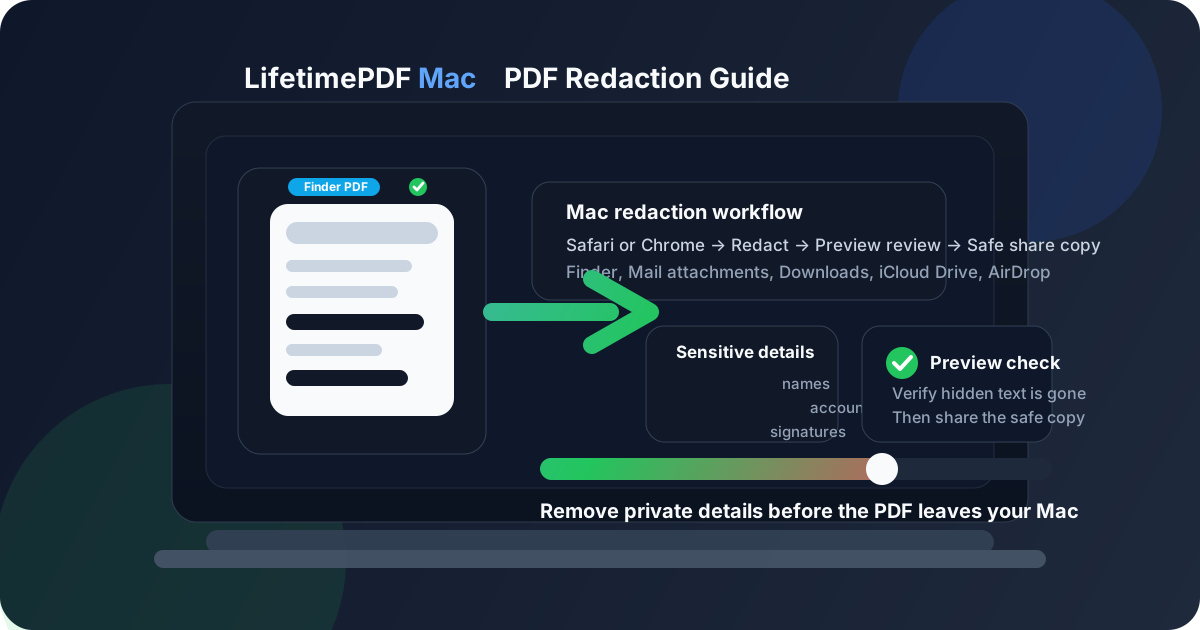
Table of contents
- Quick start: redact a PDF on Mac in 3 minutes
- The safest Mac workflow for redacted PDFs
- Step-by-step: redact a PDF from Finder, Mail, Downloads, AirDrop, or iCloud Drive
- What to redact before you send a file
- Preview markup vs real redaction
- Common Mac PDF sources and the best move for each
- Metadata, passwords, and safer Mac sharing
- Common Mac redaction problems and quick fixes
- Related LifetimePDF tools and guides
- FAQ (People Also Ask)
Quick start: redact a PDF on Mac in 3 minutes
If the PDF is already on your Mac and you just need a safe shareable version, this is the workflow most people actually want:
- Open Redact PDF in Safari or Chrome.
- Choose the file from Finder, Downloads, Desktop, Documents, iCloud Drive, or a saved Mail attachment.
- Black out every sensitive name, number, signature, image, note, or table value that should not appear in the outgoing copy.
- Download the redacted PDF and reopen it once in Preview.
- If the file still reveals context through extra pages or document properties, use Delete Pages or PDF Metadata Editor before you share it.
The safest Mac workflow for redacted PDFs
On Mac, the hard part is rarely drawing a box over a word. The real friction is file handling and verification. The PDF might be sitting in Finder, half-open in Preview, attached to Mail, tucked inside Downloads, or synced through iCloud Drive. Once you know which copy is the true source and which copy is the safe output, the rest becomes much calmer.
A browser-based workflow is often the least annoying route because it gives you one clear sequence: upload, redact, export, reopen in Preview, and only then decide whether the file also needs metadata cleanup or password protection. That is cleaner than juggling several versions named final, final-actual, and final-for-real, which is less a workflow and more a cry for help.
| Situation | Best move | Why it works |
|---|---|---|
| A contract, statement, or report needs partial sharing | Redact the share copy | You keep the useful document while removing the details the recipient should never see |
| The recipient only needs part of the packet | Delete or extract pages first | The safest private page is the one you never send at all |
| The PDF came from Mail, AirDrop, or a portal download | Save the file locally first, then redact | Working from a stable Finder copy reduces the chance of sharing the wrong version later |
| The cleaned PDF is still confidential | Protect the already redacted copy | Passwords control access, but redaction is what removes information permanently from the shared version |
In plain English: redaction works best when you treat the final PDF like a deliberate handoff, not a quick cosmetic tweak.
Step-by-step: redact a PDF from Finder, Mail, Downloads, AirDrop, or iCloud Drive
Here is the practical Mac workflow most people actually need.
1) Start with the file you really plan to send
If the PDF is still inside Mail, sitting in a browser preview, or mixed into a noisy Downloads folder, save it first. Working from a stable file in Finder prevents the classic Mac mistake of carefully cleaning one copy and then attaching the untouched original from somewhere else.
2) Open Redact PDF in Safari or Chrome
Go to LifetimePDF Redact PDF on your Mac. A browser workflow is convenient because it gives you one clear path to upload, redact, export, and inspect the final copy.
3) Redact every place the private detail appears
Do not stop after the first match. Check headers, footers, tables, appendix pages, repeated signatures, and image labels. Names, account numbers, case IDs, invoice references, and internal notes often show up more than once in Mac-generated PDFs.
4) Export the redacted copy
Treat the exported PDF as a new file meant for outside eyes. Give it a clear name so you do not later attach the wrong version from Finder, Desktop, iCloud Drive, or Downloads.
5) Reopen the final PDF in Preview and verify it
Do not judge privacy work from memory. Open the finished file in Preview, search for hidden terms, inspect the blacked-out areas at higher zoom, and review the repeated fields once while you still remember what you meant to hide.
6) Clean metadata or protect the final copy if needed
If the file title, author, subject, or comments still reveal too much, use PDF Metadata Editor. If the remaining content is still confidential, add access control with PDF Protect after the content cleanup is done.
Need the shortest reliable privacy sequence? save locally → redact → export → verify in Preview → clean metadata → protect if needed.
What to redact before you send a file
People tend to notice the obvious big number in the middle of the page and miss the smaller details around it. On Mac, especially with exported business PDFs, the risky pieces often repeat quietly.
- Personal identifiers: addresses, birth dates, ID numbers, employee numbers, account numbers, or partial government IDs.
- Financial details: bank information, payment references, invoice line items, salary figures, or unused pricing notes.
- Contract details: signatures, initials, internal clauses, approval notes, side comments, or unrelated parties.
- Medical or education information: private history, records, student identifiers, or protected notes.
- Embedded context: repeated names in headers, footer references, watermarks, and labels on appendix pages.
Preview markup vs real redaction
This distinction matters because many Mac users already have Preview open and assume the page only needs to look hidden. Privacy work is stronger when the shared copy is built as a safe output, not just a document with dark shapes sitting on top of the page.
| Approach | What it does well | Where it falls short |
|---|---|---|
| Simple visual cover-up | Hides content on screen quickly | It can leave you uncertain about whether the outgoing file is really safe |
| Dedicated redacted share copy | Creates a cleaned file intended for sharing after private details are handled | Still needs a quick verification pass so repeated details and metadata do not get missed |
| Password protection | Controls who can open the file | It does not replace redaction when some content should never appear in the shared document at all |
Preview is great for checking the finished result. It is not a substitute for thinking through whether the recipient should ever receive the underlying information in the first place. The useful mindset is simple: if the recipient should never see it, redact it. If the information may remain but access should be restricted, protect the already redacted file afterward.
Common Mac PDF sources and the best move for each
Mail attachments
Save the attachment to Finder first, redact the saved copy, and then attach the cleaned version. That keeps the workflow obvious and reduces the chance that Mail reuses the original file.
Downloads folder PDFs
Downloads folders get chaotic fast. If you redact a file there, rename the finished copy immediately or move it somewhere clearer before you forget which version is which.
iCloud Drive PDFs
If the document syncs across devices or shared folders, save the safe copy with an unmistakable name before replacing anything. That makes it easier to confirm you are sharing the cleaned version rather than the internal original.
AirDrop files
AirDropped PDFs often land in Downloads or open immediately. Save them in a stable Finder location first so you can control exactly which version gets redacted and which version gets shared.
Scanner or copier exports
These often contain repeated headers, stamps, handwritten notes, and awkward margins. If the scan is sideways or messy, use Rotate PDF or Crop PDF first so the redaction pass is easier to review.
Portal downloads and compliance packets
These are where people get punished for rushing. Repeated names, case numbers, and internal references often appear in headers or footers long after the main text looks clean. Slow down for one extra review pass.
Metadata, passwords, and safer Mac sharing
Page content is not the only thing that can leak information. PDFs may also carry document titles, author fields, subjects, keywords, or filenames that say more than the redacted pages do.
Clean file properties when context matters
Use PDF Metadata Editor if the properties still mention a client name, matter number, internal project, or another identifier that should not follow the file outside your organization.
Protect the already redacted copy if access still matters
Open PDF Protect after redaction when the remaining document is still confidential. That keeps the jobs separate and sane: redaction removes what should never travel, and password protection controls who opens what remains.
Common Mac redaction problems and quick fixes
I redacted the page, but the PDF still feels too revealing
That usually means the file should have been trimmed first or the metadata still gives away context. Remove extra pages and clean the file properties before sharing it.
I keep opening the wrong version
Save the finished copy with a clear name like contract-redacted.pdf or statement-safe-share.pdf. This sounds basic, but on Mac it prevents a surprising number of avoidable mistakes.
The document is a scan and hard to inspect
Fix orientation first with Rotate PDF, crop wasted borders if needed, then redact. If the final shared copy still needs searchable text, use OCR PDF afterward.
I am worried I missed repeated details
Search for the name, ID, account fragment, or project label, then inspect headers, footers, tables, appendix pages, and any repeated side notes. Repetition is where most real-world misses happen.
The cleaned PDF still contains too many pages
Use Extract Pages or Delete Pages so the share copy includes only what the recipient actually needs.
Related LifetimePDF tools and guides
Redacting a PDF on Mac often turns into one or two extra cleanup steps. These are the most useful companion tools:
- Delete Pages — remove pages nobody needs to receive.
- Extract Pages — keep only the exact pages you want to share.
- PDF Metadata Editor — clean title, author, subject, and related file properties.
- PDF Protect — add a password to the already redacted copy.
- Rotate PDF — fix sideways scanned pages before review.
- OCR PDF — make the cleaned scan searchable when appropriate.
Related reading on LifetimePDF: Redact PDF, How to Redact Sensitive Information in PDF Permanently, Remove PII From PDF Metadata, How to Password Protect a PDF on Mac, How to Delete Pages from a PDF on Mac, and How to OCR a PDF on Mac.
Ready to make a safe Mac share copy?
Best Mac privacy order: save locally → redact → verify in Preview → clean metadata → protect if needed.
FAQ: How to redact a PDF on Mac
How do I redact a PDF on Mac without Adobe Acrobat?
Open a browser-based PDF redaction tool in Safari or Chrome on your Mac, choose the file from Finder or a saved Mail attachment, redact the sensitive details, export the cleaned copy, and verify it in Preview before sharing it.
Can I use Preview to redact a PDF on Mac?
Preview is useful for reviewing the finished file, but privacy-sensitive work is safer when you create a dedicated redacted share copy instead of relying on a simple visual cover-up.
Should I password-protect a PDF before or after redacting it on Mac?
Usually after. Redaction removes the information that should never appear in the shared file, while password protection controls access to the already cleaned copy that remains.
What should I check before I send a redacted PDF from Mac?
Reopen the exported file in Preview, search for the hidden terms, inspect headers and footers, review tables and repeated fields, and clean metadata if the title or file properties reveal more than they should.
Can I redact scanned PDFs on Mac?
Yes. Straighten or crop the scan if needed, redact the cleaned version carefully, verify the result, and use OCR afterward only if the final shared copy still needs searchable text.
Published by LifetimePDF — Pay once. Use forever.