How to Password Protect a PDF on Mac: Lock a File Before You Share It
To password protect a PDF on Mac, open a browser-based PDF Protect tool in Safari or Chrome, upload the file from Finder, Mail, Downloads, or iCloud Drive, add and confirm the password, then save the protected copy back to your Mac.
If the document still needs edits or redaction, finish that first and use the password as the final sharing step.
That is the short answer. The useful part is knowing when Preview is enough, how to avoid saving the wrong version from Mail or Finder, how to test the protected file before you send it, and why password protection is helpful but still not the same thing as removing sensitive information. A clean Mac workflow keeps the document safer without turning a simple job into an afternoon of duplicate files and avoidable confusion.
Fastest path: open LifetimePDF's PDF Protect tool in Safari or Chrome, choose the file from Finder, Mail, Downloads, or iCloud Drive, add the password carefully, save the protected copy, then send the password separately.
In a hurry? Jump to Quick start: protect a PDF on Mac in 3 minutes.
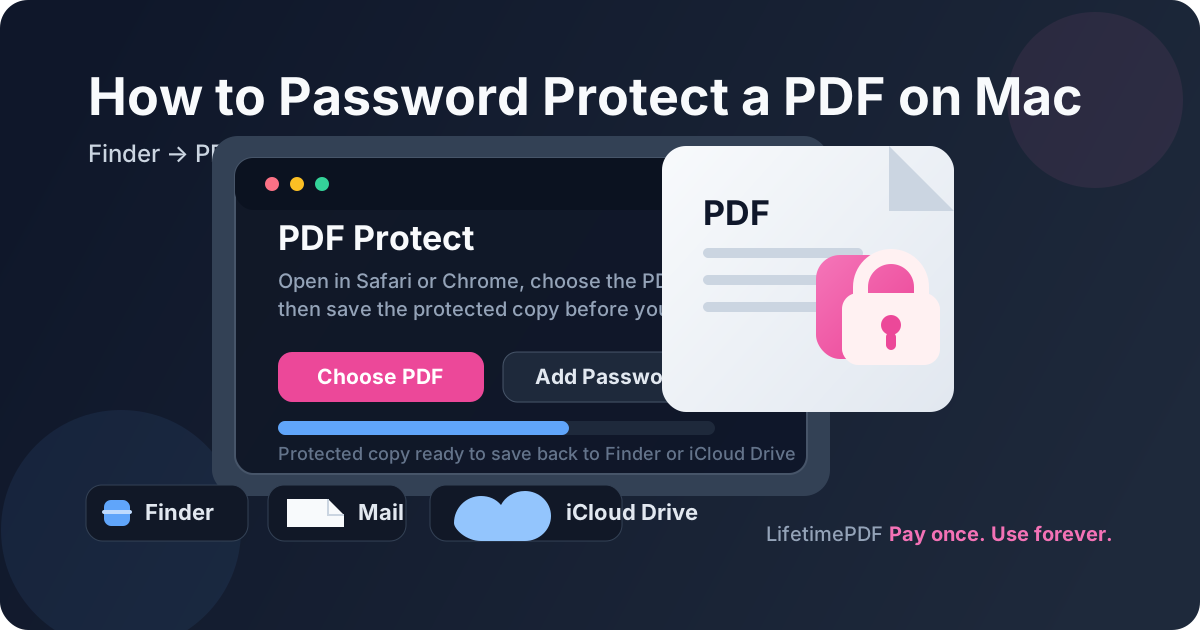
Table of contents
- Quick start: protect a PDF on Mac in 3 minutes
- The easiest Mac workflow for password protecting PDFs
- Step-by-step: add a password to a PDF on Mac
- Preview vs a dedicated PDF protection tool
- How to choose a strong password without creating a mess
- When to redact first instead of relying on a password alone
- How to save and send the protected PDF from Mac
- Common Mac problems and quick fixes
- Related LifetimePDF tools for secure Mac workflows
- FAQ (People Also Ask)
Quick start: protect a PDF on Mac in 3 minutes
If the PDF is final and you simply need to lock it before sending, use this workflow:
- Open PDF Protect in Safari or Chrome on your Mac.
- Choose the PDF from Finder, Downloads, Desktop, Documents, a saved Mail attachment, or iCloud Drive.
- Enter and confirm the password carefully.
- Download the protected PDF and save it to a clear folder with a filename that distinguishes it from the original.
- Open it once in Preview or your browser to confirm the password prompt works.
- Send the password through a separate channel if practical.
The easiest Mac workflow for password protecting PDFs
Mac users usually touch four places during a normal document job: Finder, Mail, Preview, and the browser. The smoothest protection workflow uses each one for what it does best.
- Finder is where you locate the right file, rename the protected copy, and keep the final version organized.
- Mail is often where the PDF first arrives, but it is usually cleaner to save the attachment before you protect it.
- Preview is useful for reviewing the finished file and confirming that the password prompt appears.
- Safari or Chrome is often the fastest place to actually add the password without installing extra software.
This is why many people get stuck when they search for how to password protect a PDF on Mac. They expect one universal button inside every preview window, but real Mac workflows are messier than that. Sometimes the file lives in Mail, sometimes in Downloads, sometimes in iCloud Drive, and sometimes the document still needs signing, page cleanup, or redaction first. A short browser-based workflow is often simpler than trying to force every step through whatever app happened to open the PDF.
| Method | Best for | Where it struggles |
|---|---|---|
| Preview | Reviewing the finished PDF, checking page order, and confirming the password prompt on the final copy | One-off protection workflows can feel less direct when the file came from Mail, cloud storage, or still needs other edits first |
| Safari or Chrome with LifetimePDF | Fast protection from Finder, Downloads, Desktop, Documents, Mail saves, and iCloud Drive | You still need a quick review so you do not send the original unprotected file by mistake |
| Mail only | Receiving the file and attaching the finished version later | Easy to mix up the attachment, temporary preview, and final protected copy if you do not save clearly first |
The goal on Mac is not just to add a password. The goal is to make sure the protected file is the version that actually leaves your computer.
Step-by-step: add a password to a PDF on Mac
Here is the full Mac workflow in the order that creates the least confusion.
1) Make sure the PDF is really final
Before you add the password, ask one boring but important question: am I done editing this file? If the PDF still needs a signature, page cleanup, form filling, page deletion, compression, or redaction, finish that work first. Protecting the document too early is how people end up with folders full of versions like final, final-new, and final-use-this-one.
2) Save the file somewhere obvious in Finder
If the document came from Mail, Messages, or a browser download, save it into a folder you can find instantly such as Downloads, Desktop, or a project folder in Documents. The less mystery around the file location, the lower the chance you protect one copy and send a different one.
3) Open PDF Protect in Safari or Chrome
Go to LifetimePDF PDF Protect in Safari or Chrome. On Mac, the browser route is often faster than searching through app menus when this is an occasional task rather than a full-time document workflow.
4) Choose the PDF from Finder, Downloads, or iCloud Drive
Use the file picker to choose the document from Finder. This works well whether the PDF currently lives in Downloads, Desktop, Documents, or iCloud Drive. If you are working from Mail, save the attachment first so you know exactly which file becomes the protected copy.
5) Add and confirm the password carefully
Enter the password slowly enough that you trust it. That sounds obvious, but many everyday failures come from simple typing mistakes or from reusing a vague password and later forgetting which variation you used. If the file matters, store the password somewhere safe instead of trusting memory alone.
6) Download the protected copy and rename it clearly
Save the finished PDF with a filename that makes the state obvious, such as contract-protected.pdf or medical-records-secure.pdf. That small naming habit prevents the classic Mac mistake where the original and protected files sit next to each other and look almost identical.
7) Test the protected file once in Preview
Open the protected copy right away in Preview or your browser. Confirm the password prompt appears and that the file opens normally after you enter it. This ten-second check is worth more than any long security lecture because it catches the practical mistakes before the document reaches someone else.
8) Share the PDF and password separately
If the file is sensitive, do not send the PDF and the password in the same message thread if you can avoid it. A better pattern is email plus text message, email plus chat, or email plus a quick phone call. That way one forwarded message does not reveal everything at once.
Clean Mac workflow: finish edits first, protect the final copy in the browser, review it once in Preview, then share the file and password separately.
Preview vs a dedicated PDF protection tool
Preview is a good Mac app, but it is not always the smoothest answer to every PDF job. For many people, its best role in this workflow is the final review.
A dedicated PDF protection tool is often easier when you want a clear start-to-finish path: choose the PDF, add the password, save the protected copy, test it, done. That is especially true when the document started as a Mail attachment, a cloud-stored file, or a download from a portal.
- Use Preview when you want to visually review the final file, confirm the password prompt, and make sure every page still looks right.
- Use a dedicated tool when you want the shortest path from unprotected PDF to protected copy without menu hunting or version confusion.
How to choose a strong password without creating a mess
The strongest password is useless if nobody can recover it when the file matters. Everyday PDF protection works best when the password is both reasonably strong and realistically manageable.
Good habits that help on Mac
- Do not rush the confirmation field. A careful ten seconds beats a panicked follow-up email later.
- Store the password safely. A password manager is better than memory for important documents.
- Avoid vague variations. If you use patterns like the same base word with a different punctuation mark each time, you are more likely to guess wrong later.
- Match the password to the document. A casual file and a sensitive HR, legal, or financial file do not deserve the same level of care.
In other words, do not overcomplicate the password, but do treat it like part of the workflow rather than a final afterthought.
When to redact first instead of relying on a password alone
Password protection controls who can open a file. It does not remove information from the document itself. If the PDF contains account numbers, addresses, IDs, signatures, medical details, or any information recipients should never see, the safer move is to remove that content first.
That means the right sequence is often:
- Redact what should never be visible.
- Review the cleaned file.
- Add the password to the final version.
- Share it more carefully.
If you need help with that step, LifetimePDF's Redact PDF tool is the better first stop. For a broader security mindset, you can also read how to redact sensitive information from a PDF and secure PDF sharing practices.
How to save and send the protected PDF from Mac
Once the file is protected, a few small habits make the rest of the workflow much safer.
- Rename the file clearly: make it obvious which copy is protected.
- Keep the original and protected copy separate: if necessary, place the final file in a dedicated folder.
- Test before you attach: open the protected PDF once before you send it.
- Use a second channel for the password: email plus text, chat, or phone call is safer than one combined message.
If the attachment is too large for email, compress it before you protect it whenever possible. That keeps the workflow simpler and avoids repeating the protection step on multiple versions.
Common Mac problems and quick fixes
Most real-world problems here are ordinary workflow problems, not mysterious PDF failures.
I protected the file, but I am not sure which copy is the right one
Rename the protected PDF immediately and move it to a clear folder. Do not leave two nearly identical filenames sitting in Downloads and hope future-you sorts it out.
The PDF came from Mail and I keep reopening the attachment preview
Save the attachment to Finder first. Mail previews are convenient for reading, but a saved file is much easier to protect, rename, test, and attach again without confusion.
I forgot the password after saving the file
Test the PDF immediately after creating it and store the password safely right away. Once the file is sent, this problem gets much more expensive in time and stress.
The file is still too large to email
Use Compress PDF or trim unnecessary pages first. Smaller, cleaner PDFs are easier to send and easier for the recipient to open.
The file contains sensitive details that should not be visible at all
Do not rely on a password alone. Remove or redact the information first, then add the password to the cleaned version.
Related LifetimePDF tools for secure Mac workflows
If you are protecting PDFs on Mac, these tools and guides usually help next:
- PDF Protect - add a password to the final PDF.
- Redact PDF - remove sensitive content before sharing.
- Compress PDF - reduce attachment size before email or portal uploads.
- How to sign a PDF on Mac - finish signature steps before you lock the file.
- How to fill out a PDF form on Mac - complete forms before adding the password.
Protect the final file, not the headache.
Use a simple Mac workflow: finish the edits, lock the PDF, test it once, and send it with confidence.
FAQ (People Also Ask)
How do I password protect a PDF on Mac without installing an app?
Open a browser-based PDF protection tool in Safari or Chrome on your Mac, upload the PDF from Finder, Mail, Downloads, or iCloud Drive, add and confirm the password, download the protected copy, and test it once before sending. That is usually the quickest route when you only need to secure a file and move on.
Can I password protect a PDF from Finder or Mail on Mac?
Yes. The cleanest workflow is to save the file from Mail first if needed, choose it from Finder, add the password, and then rename the protected version clearly so you do not accidentally attach the original file later.
Is password protection enough for sensitive PDFs on Mac?
Not always. Password protection limits access, but it does not remove the content from the document. If the file contains information recipients should never see, redact that information first and then add the password to the final cleaned copy.
Should I compress the PDF before or after protecting it?
Usually before. If the file is too large for email or a portal, compress the final editable copy first, review it, and then add the password to the version you actually plan to send.
What is the safest way to send a protected PDF from Mac?
A safer approach is to send the PDF in one channel and the password in another, such as email plus text message, chat, or a quick call. That way one forwarded message does not expose both at once.