How to Flatten a PDF on Linux: Lock Filled Forms Before You Share, Upload, or Print
To flatten a PDF on Linux, open LifetimePDF's Flatten PDF Form Data or Flatten PDF tool in Firefox or Chrome, choose the file from your file manager, Downloads, Thunderbird, or a shared folder, flatten the finished copy, then review it once in Evince, Okular, or another Linux PDF viewer.
If the document still needs edits, signatures, or missing fields, stop there and finish those first because flattening works best on the true final copy.
That is the short answer. The useful part is avoiding the usual Linux mess where one PDF lives in Downloads, another came from Thunderbird, a third sits in a synced folder, and nobody is fully sure which version is supposed to be the final one. Flattening helps most when you pick the exact copy you plan to send, create one steadier output, and review that output once before it leaves your machine.
Fastest path: finish the form or annotation work first, flatten the exact Linux copy you plan to send, reopen it once in your PDF viewer, and only then email, upload, print, or archive it.
In a hurry? Jump to Quick start: flatten a PDF on Linux in a few minutes.
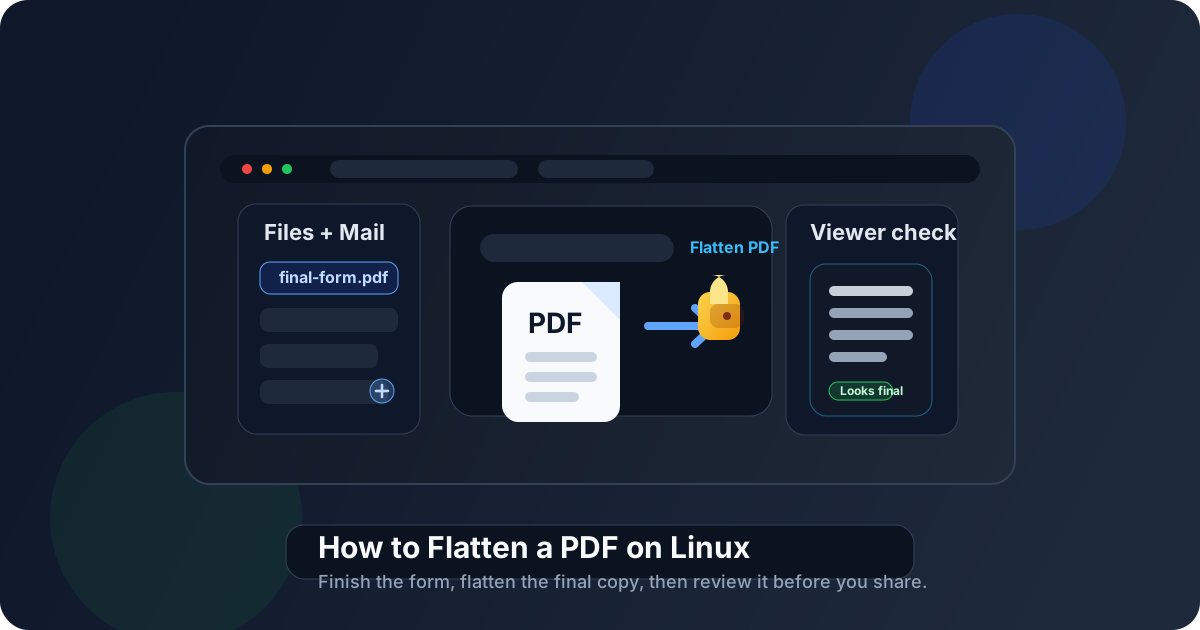
Table of contents
- Quick start: flatten a PDF on Linux in a few minutes
- The safest Linux workflow for flattening PDFs
- When flattening helps and when it does not
- Step-by-step: flatten a PDF from your file manager, Downloads, Thunderbird, or a shared folder
- Flatten PDF Form Data vs Flatten PDF on Linux
- Linux PDF viewers, print-to-PDF workarounds, and dedicated flattening
- Filled forms, signatures, scans, and upload portals
- How to save, rename, and send the final Linux copy
- Related LifetimePDF tools and guides
- FAQ
Quick start: flatten a PDF on Linux in a few minutes
If the PDF is already on your Linux machine and you just want a dependable final version, this is the workflow most people actually need:
- Open Flatten PDF Form Data if the file is a completed fillable form.
- Use Flatten PDF if the whole file needs a broader finalization pass.
- Choose the PDF from your file manager, Downloads, Thunderbird, or a shared folder.
- Flatten the finished copy once, then open it and check the smallest important detail in Evince, Okular, or your preferred Linux viewer.
- If the file is still too large for a portal or email, run that reviewed copy through Compress PDF.
The safest Linux workflow for flattening PDFs
On Linux, flattening is less about a hidden switch and more about finalizing the document at the right moment. The PDF may have started in Thunderbird, arrived through a browser download, lived in a shared Nextcloud or SMB folder, or been opened in Firefox, Chrome, Evince, and Okular before anyone decided it was finally ready. By the time you are thinking about flattening it, the real question is simple: is this now the final sharing copy?
If the answer is yes, a browser-based flattening workflow is usually the least annoying route. You upload the document from wherever it already lives, create one stable output, review it once in your Linux viewer, save it clearly, and use that checked copy for the next step. That is much calmer than juggling print-dialog workarounds, duplicate downloads, and file names like form-final-really-final-v4.pdf.
| Situation | Best move on Linux | Why it helps |
|---|---|---|
| A fillable form is complete and ready to send | Flatten PDF Form Data | Visible field values behave more consistently across Thunderbird, browser previews, and other PDF viewers. |
| The document includes overlays, signatures, or broader finalization needs | Flatten PDF | You get a steadier delivery copy instead of leaving the file half-finished. |
| The PDF is correct but still too large | Compress after flattening | You reduce size on the exact copy you are actually sending. |
| The document still needs edits or another person still needs to fill it out | Do not flatten yet | Flattening is a finishing step, not a drafting step. |
In plain English: flattening works best when the document is already the right document. It is the handoff step, not the planning step.
When flattening helps and when it does not
People usually search for this because something feels unstable. A form looks fine in Evince but odd in Firefox. A PDF that seemed finished still behaves like an editable form when a recipient opens it. A portal preview acts weird. Those are the moments when flattening usually earns its keep.
Flattening is usually the right move when:
- the form is complete and you are sending the final version,
- you want filled fields, checkboxes, or visible answers to behave more like normal page content,
- the PDF will be uploaded to a portal, emailed, printed, or archived,
- you are tired of viewer-specific weirdness and want a calmer delivery copy.
Flattening is usually unnecessary when:
- the document still needs edits,
- someone else still needs to complete fields or sign it,
- you are keeping the file as a reusable blank template,
- the real problem is file size, page order, or scan cleanup rather than editability.
Step-by-step: flatten a PDF from your file manager, Downloads, Thunderbird, or a shared folder
Here is the practical Linux workflow most people actually need.
1) Start with the exact file you plan to send
Before you flatten anything, make sure you are holding the right PDF. On Linux, duplicates pile up fast: one in Downloads, one in Documents, one in a synced folder, and one saved from Thunderbird with a slightly different name. If you are not sure which copy is supposed to leave your machine, pause and sort that out first.
2) Open the right flattening workflow in Firefox or Chrome
Go to Flatten PDF Form Data when the goal is locking completed form fields into the page, or use Flatten PDF when the whole document needs a broader flattening pass. A browser workflow is convenient because it stays consistent whether you are on Ubuntu, Debian, Fedora, Mint, Pop!_OS, Arch, or something else with a modern browser.
3) Choose the file from your file manager or another saved location
Select the document from Nautilus, Dolphin, Nemo, Thunar, Downloads, a saved Thunderbird attachment, or a mounted shared folder. If it came from email, save it first if that makes the handoff clearer. If it lives in a shared folder, consider copying it locally while you work so the original and the outgoing version do not get mixed up.
4) Flatten the final copy once
This is not a step to repeat casually. The point is to create one stable output you can inspect and trust. If you already know the document still needs field changes, a signature, or another round of edits, back out now instead of creating avoidable rework.
5) Open the result in your Linux PDF viewer and check the details that matter
On Linux, do not just glance at the first page. Open the flattened file in Evince, Okular, Firefox, Chrome, or whatever viewer you actually rely on and check the smallest useful thing in the document: a typed name, a date, a signature box, a checkbox, a total, or a narrow line of text. That quick review is what turns flattening from a hopeful step into a reliable workflow.
6) Save the reviewed copy with a clear name
Good filenames solve a surprising amount of Linux chaos. If the original still sits beside the final file, a clear name for the flattened version makes it far less likely that you upload or attach the wrong document later.
Recommended sequence on Linux: save the source, flatten once, review once, then send the reviewed copy.
Flatten PDF Form Data vs Flatten PDF on Linux
These two workflows sound similar, but they solve slightly different problems.
Flatten PDF Form Data is the better choice when the PDF is mainly a completed fillable form and you want the visible field values to become part of the page. That is the common Linux situation for school forms, HR packets, reimbursement paperwork, onboarding documents, and approvals.
Flatten PDF makes more sense when the whole file needs a broader finalization pass. That can help when the document includes more than just interactive form fields or when you want the entire PDF to behave like a steadier final delivery copy.
- Need to lock completed form fields into the page? Use Flatten PDF Form Data.
- Need a broader whole-file flattening workflow? Use Flatten PDF.
- Still entering answers? Finish the document first with PDF Form Filler.
On Linux, choosing the right path first matters because it keeps the workflow short. Shorter workflows usually mean fewer version mistakes.
Linux PDF viewers, print-to-PDF workarounds, and dedicated flattening
Linux users often bounce between three instincts: preview the file in Evince or Okular, use a print-to-PDF workaround, or move to a dedicated flattening workflow in Firefox or Chrome. All three can produce something, but they are not equally clean.
When Evince, Okular, or browser preview is useful
- you need to inspect the final output,
- you want to compare two versions,
- you are checking whether the flattened copy still looks correct before sending it.
When print-to-PDF feels tempting
- you want a quick workaround and do not care about workflow elegance,
- you are trying to force the file into a more static output,
- you are working around a viewer issue in a hurry.
When a dedicated flattener is the cleaner answer
- the document is already complete,
- you want a stable output for email, uploads, printing, or archiving,
- you want visible form results to survive different viewers more gracefully,
- you want to reduce the chance of casual edits or odd portal behavior.
In short: Linux viewers help you inspect the document. Flattening helps you finish the document. Print-to-PDF can create another copy, but it is not the same thing as choosing a purpose-built flattening step.
Best Linux split of labor: flatten in the browser, then use your PDF viewer as the final quality check.
Filled forms, signatures, scans, and upload portals
Filled forms
This is the most common reason to flatten a PDF on Linux. If the form is complete and you do not want fields behaving unpredictably in Thunderbird previews, browser tabs, or somebody else's PDF app, flattening the final copy usually makes the handoff calmer.
Signatures and initials
A visible signature is only helpful if the version you send is the actual final version. Finish the document first, then sign and flatten the exact copy you plan to deliver. If the workflow uses formal digital signatures, be careful about changing the file afterward.
Scanned PDFs
Some scans are already basically static pages, so flattening may add less than people expect. If the real problem is file size, page order, or ugly borders, clean that up instead of treating flattening as a universal repair button. If the scan still needs form answers or signatures first, do that before you flatten the final output.
Upload portals and print-ready copies
Portals and print workflows are exactly where unstable PDF behavior becomes irritating. If the document is truly final, flattening first can help it behave more predictably when it gets previewed, uploaded, or printed by another system.
How to save, rename, and send the final Linux copy
A lot of PDF mistakes on Linux are not technical mistakes at all. They are naming mistakes. You flatten a file called form-final.pdf, then accidentally attach form-final(1).pdf from Thunderbird or upload the older copy from Downloads because both still look close enough.
A cleaner workflow is:
- save the original in a place you can recognize quickly,
- download the flattened copy with an obvious name,
- open that specific copy once and verify it,
- attach or upload the reviewed version, not the older editable file.
If the PDF will also be archived, keeping both versions is fine. Just make sure the flattened delivery copy is unmistakable. File clarity matters even more on Linux because multiple folders, browser downloads, and synced directories can all stay active at once.
Related LifetimePDF tools and guides
Flattening a PDF on Linux is often one step in a bigger workflow. These tools pair well with it:
- Flatten PDF Form Data — lock completed fields into the page.
- Flatten PDF — create a steadier whole-file final copy.
- PDF Form Filler — finish the form before you flatten it.
- Compress PDF — reduce file size after you confirm the final version is correct.
- Rotate PDF — fix sideways pages before sending or printing.
Related reading on LifetimePDF: How to Redact a PDF on Linux, How to Sign a PDF on Linux, How to Compress a PDF on Linux, How to Rotate a PDF on Linux, How to Split a PDF on Linux, and How to Flatten a PDF on Windows.
Need a clean Linux handoff? Fill it, flatten it, review it, then send the checked copy.
FAQ: How to flatten a PDF on Linux
How do I flatten a PDF on Linux without Adobe Acrobat?
Open a PDF flattener in Firefox or Chrome on Linux, choose the file from your file manager or another saved location, flatten the final copy, download it, and review it in your PDF viewer before you share or print it.
Should I flatten a filled PDF form before emailing it from Linux?
Usually yes if the form is complete. Flattening helps visible field values behave more consistently across Thunderbird attachments, browser previews, and other PDF viewers.
Is Print to PDF the same as flattening a PDF on Linux?
No. Print-to-PDF workarounds can create another copy, but flattening is the finishing step that creates a steadier delivery version.
Should I sign a PDF before or after flattening it on Linux?
Usually finish the document first, then sign the exact version you plan to send. If the file uses formal digital signatures, changing it afterward can break or complicate them.
What if the flattened PDF is still too large to upload?
After you confirm the flattened copy looks correct, run that reviewed version through Compress PDF. That way you shrink the file you are actually sending instead of optimizing the wrong copy.
Published by LifetimePDF — Pay once. Use forever.