How to Compress a PDF on iPhone: Make Scans, Notes Files & Attachments Smaller Fast
To compress a PDF on iPhone, open LifetimePDF's Compress PDF tool in Safari or Chrome, upload the file from Files or a saved attachment, compress it once, and download the smaller copy.
If the PDF is still too large, remove blank pages or crop wasted scan borders before compressing again so the file gets smaller without turning the text into mush.
That is the short version. The useful part is knowing what to do when the PDF came from Notes, Mail, Files, or a phone scan; when compression is enough; and when the real problem is not compression at all but extra pages, oversized borders, or a document that should have been cleaned up before you tried to shrink it.
Fastest path: save the PDF somewhere obvious in Files, compress it once on your iPhone, then only use page deletion, cropping, or OCR if the finished file still needs help.
In a hurry? Jump to Quick start: compress a PDF on iPhone in 3 minutes.
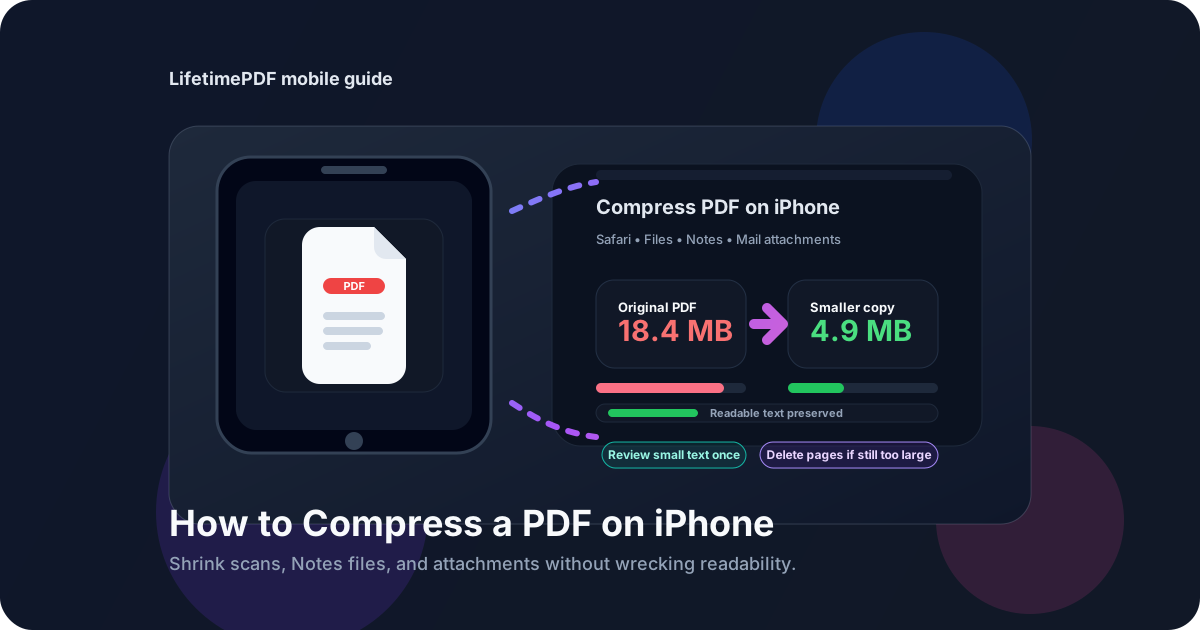
Table of contents
- Quick start: compress a PDF on iPhone in 3 minutes
- The easiest iPhone workflow for smaller PDFs
- Step-by-step: compress a PDF from Files, Mail, or Notes
- When compression is enough and when cleanup works better
- Common iPhone PDF situations and the best move for each
- Common iPhone problems and quick fixes
- Best order for scans, OCR, and compression on iPhone
- Related LifetimePDF tools and guides
- FAQ (People Also Ask)
Quick start: compress a PDF on iPhone in 3 minutes
If the file is already on your phone and you just need it smaller, this is the workflow most people want:
- Open Compress PDF in Safari or Chrome on your iPhone.
- Choose the file from Files, Downloads, iCloud Drive, or a saved Mail attachment.
- Compress the PDF once and download the smaller copy.
- Open the result and check the smallest useful text before you send it anywhere.
- If the file is still too large, remove blank pages with Delete Pages or trim wasted borders with Crop PDF.
The easiest iPhone workflow for smaller PDFs
On iPhone, the hard part is usually not the compression button. It is file handling. The PDF may be sitting in Files, trapped in Mail, exported from Notes, downloaded from Safari, or generated by a scan app. Once you have a clean working copy in a place you can upload easily, shrinking it is straightforward.
A browser-based workflow is usually the least annoying route. You open the file, make one smaller version, save it back to Files, and move on. That is often cleaner than bouncing between previews, duplicate downloads, and half-remembered file names on a small screen.
| Situation | Best move | Why it works |
|---|---|---|
| A normal PDF is slightly above an upload limit | Compress once | You probably only need a lighter copy, not a different document |
| A scan has giant white borders or dark edges | Crop first or immediately after one test pass | Wasted border space often adds size without adding value |
| The file contains blank backs, duplicates, or pages you do not need | Delete extra pages | Removing waste often cuts more size than squeezing the whole file harder |
| You need to send a scan from iPhone by email or WhatsApp fast | Compress the final copy | Smaller files upload and preview faster on mobile connections |
In plain English: compression is best when the document is already the right document. If the document itself is messy, cleanup is the real win.
Step-by-step: compress a PDF from Files, Mail, or Notes
Here is the practical iPhone workflow most people actually need.
1) Start with the file you really plan to send
If the PDF is still attached in Mail or sitting inside Notes, save or export it first. Working from a stable copy in Files prevents the classic mobile mistake of compressing one version and then accidentally sending the larger original.
2) Open Compress PDF in Safari or Chrome
Go to LifetimePDF Compress PDF on your iPhone. A browser workflow is convenient because it gives you one clear place to upload, shrink, download, and compare the result.
3) Upload the PDF from Files or another saved source
Choose the file from Files, iCloud Drive, On My iPhone, Downloads, or another saved location. If it came from Mail or Notes, saving it first usually makes the rest of the job smoother.
4) Compress the PDF once
One good pass gives you something real to judge. Guessing that you need more compression before you see the result is how people end up with fuzzy receipts, weak signatures, and text that suddenly looks tired.
5) Review the smallest useful text
Do not just glance at the first heading. Check the tiny print on a receipt, a date on a form, a signature block, a table value, or the middle of a dense paragraph. If those still look comfortable, the result is usually good enough.
6) Save the smaller copy back to Files with a clear name
Give the output a filename you will recognize quickly, especially if the original and compressed versions are both still on your phone. Good names solve a surprising amount of mobile confusion.
Need the fastest mobile size fix? Compress first, then clean up only if the result still misses your target.
When compression is enough and when cleanup works better
Many people keep recompressing because they assume smaller file size comes only from more compression. On iPhone, that is often the wrong instinct.
Compression is usually enough when:
- the PDF came from Word, Google Docs, a portal, or another digital export,
- the file is only a little over the upload limit,
- the pages are already clean and in the right order,
- you mainly need easier sharing by email, WhatsApp, or a form upload.
Cleanup usually works better when:
- the PDF includes blank scan backs or duplicate pages,
- dark scanner edges or giant white margins waste space,
- only part of the document actually needs to be sent,
- the file came from phone photos or scan apps and is image-heavy from the start.
This distinction matters because cleanup can reduce size while also making the document feel more professional. Removing two useless pages is better than making every useful page look worse.
Common iPhone PDF situations and the best move for each
Mail attachments
Save the attachment to Files first, compress the saved copy, and then send or upload the smaller version. That keeps the workflow clear and reduces the chance that the original large attachment comes back by mistake.
Notes scans
Notes is convenient, but multi-page scans can easily become heavier than they need to be. If the scan is clean, compress it once. If the scan also has bad borders or stray pages, crop or delete those before you chase more size reduction.
Files app documents
If the PDF is already in Files, you are in the easiest situation. Open the compressor, shrink the file, save the smaller copy back to the same folder or a clearly named final folder, and compare the two if needed.
Phone-photo PDFs and camera-based scans
These are often large because every page behaves like an image. Compression helps, but the smartest workflow usually includes cleanup too. If the pages are sideways, fix that first. If the borders are huge, crop them. If the PDF has pages you do not need, remove them before you keep squeezing the whole bundle.
Forms, school uploads, and job portals
These are the moments when file-size limits stop being abstract. You do not need the smallest PDF on earth. You need the smallest PDF that still passes the portal and keeps the text readable.
Common iPhone problems and quick fixes
The file is still too large after compression
Delete blank or irrelevant pages with Delete Pages. If the file is scan-heavy, trim unused borders with Crop PDF before making another smaller copy.
The compressed PDF looks softer than I expected
That usually means the file was image-heavy to begin with. Go back to the cleaner source if possible, remove waste, and compress again more carefully instead of repeatedly shrinking the same weakened copy.
I keep opening the original instead of the smaller version
Save the compressed output with a clear name like invoice-compressed.pdf or application-upload-copy.pdf. This sounds trivial, but on iPhone it matters.
The PDF needs search, copy, or text selection too
If the file is a scan, run OCR PDF after the page set is clean. Searchability and smaller file size solve different problems, so treat them as separate steps.
The document is sideways and oversized
Rotate it first with Rotate PDF, then decide whether it also needs cropping, OCR, or compression. A lot of iPhone scan problems come in clusters.
Best order for scans, OCR, and compression on iPhone
If the PDF started as a mobile scan, the best order is usually not random. This sequence is the safest default:
- save or export the scan to Files,
- rotate pages if orientation is wrong,
- delete blank or duplicate pages,
- crop wasted margins if the scan has dead space,
- run OCR if you need searchable text,
- compress the final delivery copy if size still matters.
That order works because it avoids optimizing the wrong version. You do the structural cleanup first, then searchability if needed, then file-size reduction for the copy you actually plan to send.
Best mobile cleanup order: Rotate → Delete → Crop → OCR → Compress.
Related LifetimePDF tools and guides
Compressing a PDF on iPhone is usually one step in a bigger mobile document workflow. These tools pair well with it:
- Compress PDF — reduce file size for uploads, email, and mobile sharing.
- Delete Pages — remove blank, duplicate, or unnecessary sheets before compressing again.
- Crop PDF — trim oversized scan borders and wasted white space.
- OCR PDF — make cleaned scans searchable and selectable.
- Rotate PDF — fix sideways pages before the final size-reduction step.
Related reading on LifetimePDF: Compress PDF, Compress PDF Online, Scan to PDF on iPhone, How to OCR a PDF on iPhone, How to Rotate a PDF on iPhone, How to Password Protect a PDF on iPhone, and Compress PDF for WhatsApp.
FAQ: How to compress a PDF on iPhone
How do I compress a PDF on iPhone?
Open a browser-based PDF compressor in Safari or Chrome, upload the file from Files or a saved attachment, compress it once, download the smaller copy, and check that the important text still reads clearly.
Can I compress a Notes scan on iPhone?
Yes. Export the Notes scan as a PDF first, then compress that file. If the scan still feels too large afterward, crop oversized borders or delete extra pages before making another smaller version.
Why is my iPhone PDF still too large after compression?
Because the file may be full of image-heavy pages, dark borders, blank backs, or pages you do not really need. Removing waste often helps more than repeatedly shrinking the whole document.
Will compressing a PDF on iPhone reduce quality?
It can if you push too far, especially with scanned PDFs. One careful compression pass is usually safer than repeated passes on the same file.
Should I OCR before or after compressing a PDF on iPhone?
Usually clean up the page set first, OCR if you need searchability, and compress the final delivery copy if it still needs to be smaller. That keeps the workflow more predictable.
Published by LifetimePDF — Pay once. Use forever.