How to Check PDF Encryption on Android: Files, Drive, Gmail, and Password vs Permission Checks Before You Share
To check PDF encryption on Android, save the file locally, open a security-aware properties view, and confirm whether the PDF needs a password to open or only limits printing, copying, editing, comments, or form actions after it opens.
If the protection does not match what the next person actually needs to do, change it before the file leaves your phone or tablet so the PDF is secure without becoming pointlessly difficult to use.
That is the short answer. The useful Android answer is that Files, Drive preview, Gmail attachment preview, Chrome downloads, and chat-app previews can make a PDF feel fine when the real problem is hidden one layer deeper. A file may look ordinary on your screen while still requiring an unknown password, carrying old owner-password restrictions, or blocking the exact next step the recipient expects to work.
Fastest practical path: inspect the security summary, separate password-gated access from ordinary restrictions, test the one action that matters most, then protect or unlock the PDF only if the current setup does not fit the real workflow.
In a hurry? Jump to quick start: check PDF encryption on Android in about 5 minutes.
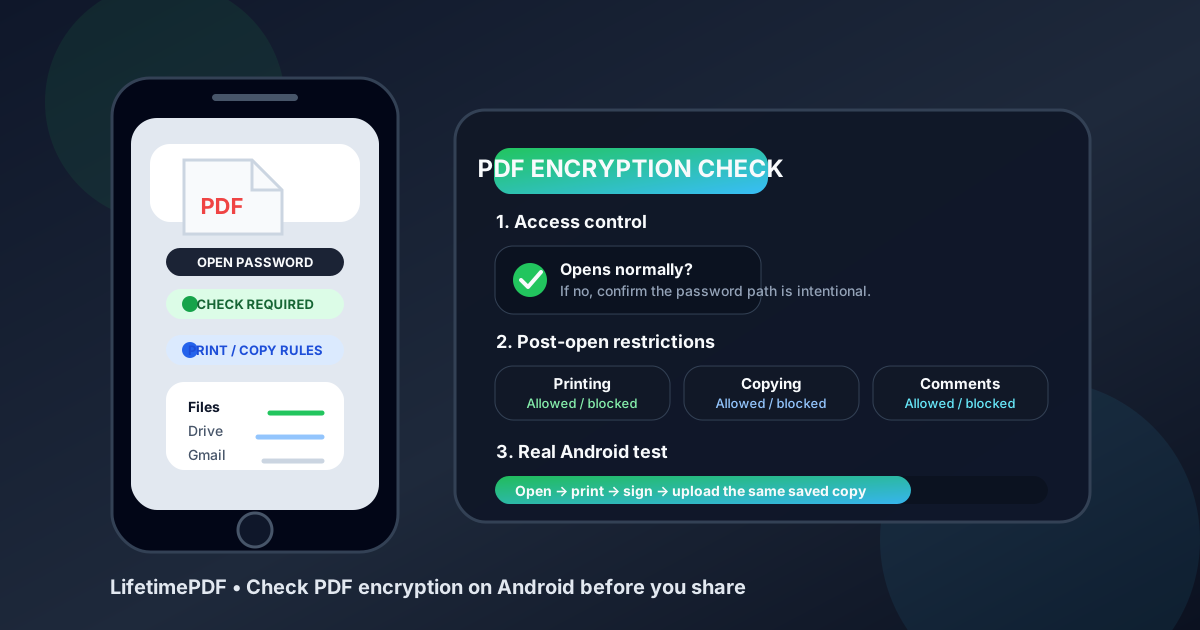
Table of contents
- Quick start: check PDF encryption on Android in about 5 minutes
- What PDF encryption means on Android
- Where Android users get misled
- Step-by-step: how to review PDF encryption on Android
- Common signs the encryption needs attention
- When to keep, change, or remove the protection
- Related LifetimePDF tools and guides
- FAQ
Quick start: check PDF encryption on Android in about 5 minutes
If your real goal is simply make sure this Android PDF will open and behave the right way for the next person, use this order:
- Save the exact PDF you plan to email, upload, print, archive, or send for signature into Files or Files by Google.
- Do not rely only on Drive preview, Gmail preview, Chrome preview, or the fact that the file opened in a quick portal tab.
- Use View PDF Properties or PDF Metadata Editor to inspect the security story directly.
- Confirm whether the file asks for a password before opening or whether it opens normally and only limits actions like printing, copying text, editing, comments, or form filling.
- Test the one action the next person actually needs, such as open, print, sign, comment, or upload to a portal.
- If the file is too tight or too loose, use Protect PDF or Unlock PDF, then reopen the saved copy once.
What PDF encryption means on Android
PDF encryption is the protection layer attached to the file. On Android, that protection may affect access to the document itself, or it may affect what someone can do after the document opens.
| Protection state | What it usually means | Why it matters on Android |
|---|---|---|
| Open-password protection | The PDF requires a password before anyone can view it | Critical for confidential files, but easy to mishandle if a client, teammate, or portal user receives the file without the password context |
| Owner-password restrictions | The file opens, but actions like printing, copying, editing, or comments may be limited | Often misread as “full encryption” even though the real issue is post-open workflow friction on mobile |
| Viewer-specific behavior | One app shows warnings or limits while another behaves differently | Prevents you from misdiagnosing an Android viewer quirk as a true security requirement |
The practical distinction matters. A PDF that blocks opening is a different problem from a PDF that opens normally but refuses to print, copy text, or accept comments. Both are worth reviewing, but they call for different fixes.
Where Android users get misled
Android gives you several fast ways to glance at a PDF, but not every path proves the security setup is healthy. A quick open usually answers does the file render? It does not always answer will the next step actually work?
| Opening path | What it is good for | What it cannot safely prove |
|---|---|---|
| Files or Files by Google preview | Confirming you saved the right file and seeing whether the PDF opens without an obvious access block. | That the outgoing file will still behave the same way for printing, copy-paste, comments, signing, or portal uploads. |
| Gmail, Drive, or chat-app preview | Checking that the attachment or cloud file appears to be the right document. | That the downloaded final copy has the same protection profile or that the real recipient will be able to open and use it cleanly. |
| Chrome or portal preview | Useful for a quick read before saving the file or opening it in another app. | That the file has the right long-term encryption setup for reviewers, signers, or clients using other apps and devices. |
| Acrobat Reader or a dedicated properties workflow | Getting a more useful security picture than a bare preview can show. | You still need to judge whether the current protection matches the workflow rather than just reading labels mechanically. |
Step-by-step: how to review PDF encryption on Android
This workflow gives you a dependable answer without turning a simple security check into a giant mobile project.
Step 1: Save the exact Android copy first
If the PDF is still inside Gmail preview, Drive preview, Chrome, a portal overlay, or a chat attachment card, save it first. The encryption check should apply to the exact file you are about to send, upload, archive, sign, or print. That habit prevents the classic mistake where one version was inspected but a different version was the one that actually left your phone.
Step 2: Read the security story instead of guessing from a lock icon
A lock icon, warning banner, or viewer quirk is not the same thing as a real encryption review. Use View PDF Properties or PDF Metadata Editor so you can see whether the file truly requires a password to open or only carries restrictions around printing, copying, edits, comments, or forms.
Step 3: Start with the access question first
The fastest way to diagnose an Android PDF is to ask one blunt question: does the file block opening or only limit actions after opening? Once you know that answer, the rest becomes much easier.
- If the recipient cannot open the file without a password, you are dealing with access control.
- If the file opens but printing fails, copy-paste is blocked, or comments are missing, you are dealing with post-open restrictions.
- If Drive preview and Acrobat behave differently, you may be looking at a viewer interpretation issue rather than a total security failure.
Step 4: Test the action that matters most
You do not need a perfect theoretical explanation before you know whether the file is ready. Start with the real task:
- If someone needs to open the PDF on arrival, confirm the password path is intentional and documented.
- If someone needs to print it from desktop later, verify the file is not carrying unnecessary print restrictions.
- If someone needs to quote or reuse text, test copy-paste.
- If someone needs to review or approve, test comments or annotations in the workflow you actually use.
- If the file is going into a portal, test whether the upload or downstream process accepts protected PDFs cleanly.
Step 5: Keep, tighten, or remove the protection deliberately
If the file needs stronger access control, use Protect PDF. If the file is overprotected and legitimate users are getting stuck, use Unlock PDF. If the current setup already fits the workflow, leave it alone. The goal is not maximum locking. The goal is the right amount of control.
Step 6: Reopen the saved copy once
This is the part people skip when they are rushing on Android. After you change the file, reopen the saved PDF and test the key action once. That final check catches the annoying failure where the working copy was fixed but the outgoing file still carries the wrong security profile.
Need a faster cleanup flow? Review the encryption state first, then jump straight into the tool that matches the outcome you need.
Common signs the encryption needs attention
These patterns come up repeatedly when an Android PDF looks share-ready on screen but still carries the wrong protection setup.
| What you notice | What it usually means | Best next move |
|---|---|---|
| The PDF opens for you but the recipient says it asks for a password | You may be testing a cached, logged-in, or app-specific path while the real outgoing file still has open-password protection | Verify the exact copy being sent and confirm the password requirement is intentional |
| The file opens, but printing or copying is blocked | The PDF may not be access-locked at all. It may simply carry owner-password restrictions | Review whether those post-open restrictions actually help the workflow |
| A portal or workflow rejects the PDF even though it looks normal on Android | Some upload systems dislike encrypted or restricted files | Check the protection state before the last-minute upload panic starts |
| The file feels strangely locked for an internal draft or review copy | An old password or inherited protection profile may have survived from another workflow stage | Review the security state and remove inherited clutter if the control no longer serves a purpose |
| Drive preview and Acrobat seem to disagree about the file | You may be dealing with a viewer interpretation issue rather than a single simple security story | Compare the results in a clearer properties workflow before changing the file blindly |
Healthy default
If the protection would make a reasonable recipient ask “why can I open this PDF but not do the one task it was obviously meant for?” or “why does this suddenly want a password nobody mentioned?”, the security setup probably deserves another look.
When to keep, change, or remove the protection
A lot of people assume the safest Android workflow is to lock every PDF down as much as possible. Sometimes that is right. Often it just creates friction. The better question is whether the protection matches the next step in the document's life.
Keep the protection when
- the file contains confidential financial, legal, HR, medical, or client-sensitive information,
- the recipient list is limited and the password-sharing process is clear,
- the document should stay stable and tightly controlled after distribution,
- the restrictions support a real policy rather than vague “more security must be better” instincts.
Change the protection when
- the file really needs controlled printing or editing, but not a full password gate,
- the current settings block comments, signatures, or form completion that the workflow actually depends on,
- one protection layer is doing the wrong job and creating support friction.
Remove or relax the protection when
- the restrictions are leftovers from a draft or another workflow stage,
- the PDF is meant for routine internal revision rather than controlled distribution,
- the file keeps generating avoidable “I cannot open this” or “I cannot use this” complaints from authorized users.
For many Android workflows, the best answer is not “fully locked” or “fully open.” It is intentional protection. Keep the control that serves the job. Remove the control that only creates delay, confusion, or extra support work.
Good bias
Protect the document enough to respect the risk, but not so much that the right person cannot complete the reason the PDF exists.
FAQ
How do I check PDF encryption on Android?
Save the PDF into local storage, inspect the file through a security-aware properties workflow, and confirm whether it requires a password to open or only limits actions like printing, copying, editing, comments, or form filling after it opens.
Can Files, Drive, or Gmail show whether a PDF is encrypted on Android?
They are useful for a quick real-world test, especially for whether the PDF opens, but a fuller properties or metadata workflow is better when you want a clearer summary of the protection state.
Is a PDF with blocked printing or copying always password-protected?
No. Many PDFs that users describe as encrypted actually open normally and only apply owner-password restrictions after opening. The practical difference is whether the file blocks access, or only controls what someone can do once they are inside it.
Why should I check PDF encryption before sending an Android file?
Because a PDF can look perfectly normal on your phone or tablet while still failing a portal upload, blocking a client from opening it, or preventing the next person from printing, signing, or commenting the way the workflow requires. A short Android encryption review helps you catch that mismatch before it becomes someone else's problem.
Should I remove PDF encryption on Android?
Only if the protection no longer fits the file's purpose. Keep it when the document is confidential or intentionally controlled, and relax it when the current setup is blocking legitimate review, printing, form filling, signatures, or routine access for authorized users.
Published by LifetimePDF — Pay once. Use forever.