Table of contents
- Quick start: add page numbers to a PDF in Brave in 3 minutes
- What Brave is good at in a page-numbering workflow
- Step-by-step: number a PDF from Downloads, Gmail, Drive, or portal tabs
- How to start on page 2, skip covers, or handle Brave Shields
- How to save the numbered PDF without version confusion
- Common Brave problems and quick fixes
- Related LifetimePDF tools and Brave guides
- FAQ
Quick start: add page numbers to a PDF in Brave in 3 minutes
If the PDF is already final and you mainly want the shortest workable path, use this:
- Open PDF Page Numbers in Brave.
- Choose the exact PDF from Downloads, a saved Gmail attachment, Google Drive, a portal export, or another real source location.
- Pick the number position that fits the page layout, such as bottom center or bottom right.
- Set the numbering style and the start-page logic.
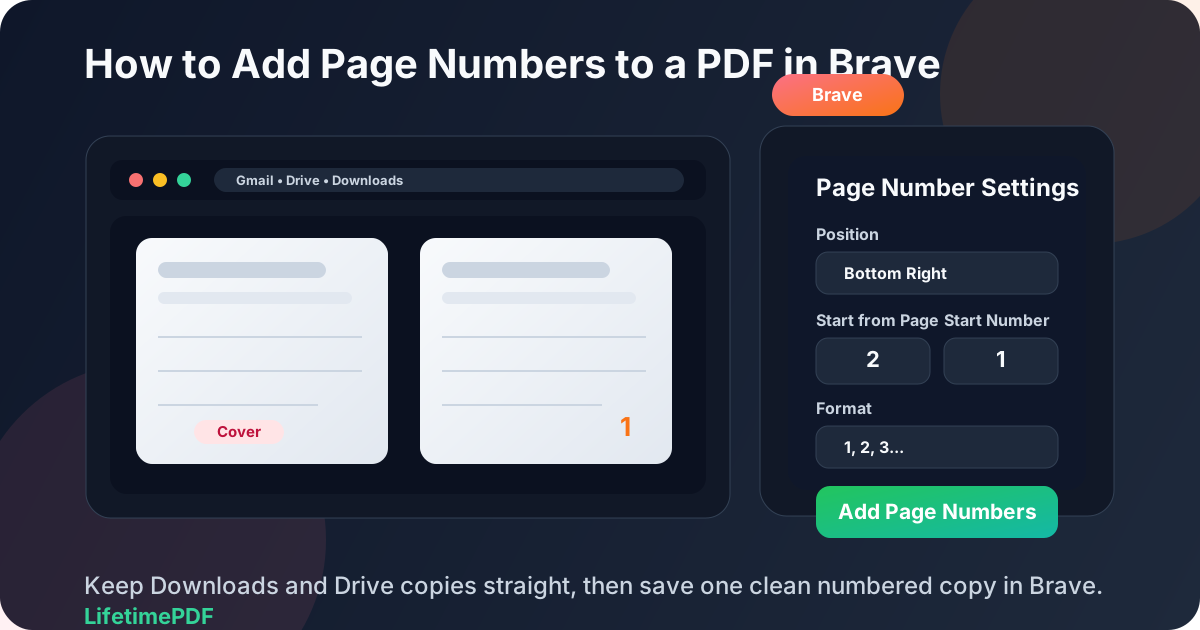
- If the cover page should stay blank, use Start from Page = 2 and Start Number = 1.
- Download the finished PDF with a clear name and open it once in Brave to confirm the numbering looks right.
What Brave is good at in a page-numbering workflow
Brave is a useful PDF front door. A document often reaches you there first through Gmail, Google Drive, a secure portal, a client dashboard, or a normal web download. That makes Brave a natural place to inspect the file before you change anything.
Brave is especially good at helping you review the PDF first: confirm that the footer is not already crowded, decide whether the cover page should stay blank, and make sure you are holding the correct version before you add anything permanent. Where people get stuck is assuming the browser preview alone is the finished workflow. For a clean exported result, you usually want a dedicated page-numbering workflow inside Brave rather than relying on the preview alone.
| Situation | Best Brave-friendly option | Why it works better |
|---|---|---|
| You want to inspect the PDF first | Open it in Brave | Fastest way to spot cover pages, crowded footers, blank pages, and page-order issues before you change anything. |
| You need a numbered copy you can save and send | Use PDF Page Numbers in Brave | Gives you clean controls for placement, numbering style, start page, and export. |
| The PDF still needs cleanup first | Merge, delete pages, rotate, or crop before numbering | Page numbering belongs near the end so you do not repeat the work after other edits. |
| A trusted tool stalls during upload or download | Check Shields for that tab only | Brave's privacy protections can occasionally interrupt the exact site workflow that generates the finished numbered file. |
In plain English: Brave is excellent for opening and reviewing the document. A dedicated page-numbering workflow inside Brave is better for producing the final numbered PDF you actually want to keep.
Step-by-step: number a PDF from Downloads, Gmail, Drive, or portal tabs
1) Start from the real source file
This matters more in Brave than people expect. It is easy to have a PDF open in one tab, a second copy in Downloads, and another copy sitting in Google Drive or an email thread. Before you add page numbers, decide which file is the real source. If the document matters, do not trust vague browser memory.
2) Check whether the PDF is actually final
If the document still needs merging, page deletion, rotation, signatures, or cleanup, do that first. Page numbering is usually one of the last formatting steps because it depends on the final page order. If you number too early, even one small edit can force you to redo the whole step.
3) Open PDF Page Numbers in Brave
Go to LifetimePDF PDF Page Numbers. This is the clean browser route when you want the numbering rules to stick to an exported file rather than stay trapped inside a temporary preview.
4) Choose the PDF from the right location
Most Brave page-numbering jobs come from one of these places:
- Downloads after saving a PDF from the web
- Gmail attachments that were previewed first and then saved
- Google Drive files that need a corrected, numbered output
- Portal or dashboard tabs where the PDF opens in the browser before you save it
- Cloud folders where several local and synced copies may look almost identical
Pick the file you actually intend to keep. A lot of Brave PDF frustration is really source-file confusion wearing a different outfit.
5) Choose a number position that matches the page layout
The right placement depends on the document. Reports, school packets, proposals, and internal handoffs often look clean with bottom numbering. Legal forms or PDFs with busy footers may need the numbers in a top corner instead.
- Bottom center: classic for reports, manuals, and handbooks
- Bottom right: common for business PDFs, proposals, and approval packets
- Top right: useful when the footer already contains dates, signatures, or other visual clutter
6) Set the numbering rules
Standard digits are right for most PDFs, but the real value is the start-page logic. If the second physical sheet should display as page 1, set Start from Page = 2 and Start Number = 1. That one setting solves a huge share of real-world page-numbering requests.
7) Export the PDF, then review the first, middle, and last numbered pages
After downloading the numbered PDF, open the saved output in Brave and check three places: the first numbered page, one page in the middle, and the final page. That quick review catches most real mistakes, including off-by-one numbering, overlap with the footer, or exporting the wrong copy.
Clean sequence: find the right source file → finish edits → add page numbers in Brave → save the output with a clear name → review once before sharing.
How to start on page 2, skip covers, or handle Brave Shields
Most people searching for this topic do not just want numbers somewhere on the page. They want the numbering logic to match the document and the export to work cleanly on the first try.
Start numbering on page 2
This is the classic cover-page workflow. It works well for proposals, school submissions, onboarding PDFs, reports, and client deliverables where page 1 is a title page that should stay visually clean.
Start numbering on page 3
Use this when page 1 is a cover and page 2 is a table of contents, instructions page, or divider page that should also stay unnumbered. The same logic applies: choose the physical page where numbering begins, then set the visible number you want to appear there.
Keep visible numbers aligned with physical pages
Some filing, legal, or compliance workflows do not want page 2 to display as 1. In that case, keep the numbering tied to the actual sheet count so the visible number matches the physical page number.
Use roman numerals for front matter
If the front section should read i, ii, iii and the main document should switch to standard digits, the cleanest path is usually to split the PDF, number the sections separately, then merge them back together. That is usually easier than forcing one numbering pass to do too much at once.
If a trusted PDF tool stalls in Brave
Brave Shields are one reason people use the browser in the first place, so there is no need to weaken them broadly. But if a trusted page-numbering workflow hangs during upload, refuses to generate the file, or never starts the download, check Shields for that current tab. Lower them for that site only, finish the task, and keep working from the saved numbered PDF. You do not need to turn Brave into a different browser just to number one document.
How to save the numbered PDF without version confusion
Brave makes it easy to leave a portal preview open while the finished numbered file lands in Downloads or a synced cloud folder. That is convenient, but it also creates the exact kind of look-alike version confusion that causes mistakes later.
Use a filename that tells the truth
Names like final.pdf or document-new.pdf do not help when there are already several copies around. Better names are things like proposal-numbered.pdf, packet-paged.pdf, or report-cover-skipped.pdf.
Keep one obvious home for the finished copy
Decide whether the numbered PDF should live in Downloads, a work folder, Google Drive, or another cloud location, then put it there intentionally. Scattering copies across tabs, synced folders, and browser downloads is one of the fastest ways to lose track of what is actually ready to send.
Reopen the numbered file once
Before you upload, email, or print anything, reopen the actual numbered output in Brave. That catches the classic mistake where someone successfully creates the new file but then shares the original because it was still sitting in the first tab.
Common Brave problems and quick fixes
The page numbers overlap my footer
Move the numbers to another position, reduce the size slightly, or clean the margins first with Crop PDF. The goal is not just to add numbers. The goal is to make them look like they belong there.
I started numbering on the wrong page
Recheck the difference between the physical page and the visible number. Most numbering mistakes are setup mistakes, not tool failures.
I numbered the wrong Downloads, Gmail, or Drive copy
Go back to the real source file, run the numbering again, and save the corrected output with a clearer name. This is annoying, but it is common enough in Brave that it is worth planning around.
The trusted tool keeps spinning or the download never starts
If the site is trustworthy, check whether Brave Shields are interrupting the workflow for that specific tab. Lower them only as much as needed, finish the numbering, then go back to your saved numbered PDF instead of repeating the whole job from scratch.
The PDF is still messy before numbering
Fix the structure first. Use Rotate PDF for sideways pages, Delete Pages for blanks, and Merge PDF if the packet still lives as separate files.
The PDF is locked or too large
If you are authorized to edit it, unlock the file first with PDF Unlock. After the numbering is correct, shrink the finished copy with Compress PDF if the attachment or upload limit is getting in your way.
Related LifetimePDF tools and Brave guides
Adding page numbers in Brave usually sits inside a bigger PDF workflow. These tools and guides pair especially well with it:
- PDF Page Numbers — add numbering with controls for position, style, start page, and visible start number.
- Merge PDF — combine separate files before you number a final packet.
- Delete Pages — remove blank pages or junk pages before numbering.
- Split PDF — separate front matter and main content when you need different numbering styles.
- Crop PDF — clean oversized margins so footer numbering fits better.
- PDF Protect — lock the final numbered PDF before sending it onward.
Related Brave-specific reading on LifetimePDF: how to edit a PDF in Brave, how to merge PDFs in Brave, how to split a PDF in Brave, how to password protect a PDF in Brave, and how to OCR a PDF in Brave.
Simple order for most Brave users: clean the PDF, add page numbers once, review the output, then protect or share the final file.
FAQ: How to add page numbers to a PDF in Brave
Can I add page numbers to a PDF directly in Brave?
Brave is very useful for opening and reviewing the PDF, but the cleanest way to save a numbered copy is usually a browser-based PDF Page Numbers tool opened in Brave.
How do I start page numbers on page 2 in Brave?
Set the physical start page to 2 and the visible starting number to 1 so the cover page stays blank while the second sheet displays as page 1.
What if the PDF came from Gmail, Google Drive, or Downloads?
Save or identify the real source file first, then number that copy and export a clearly named output. The biggest risk is usually sending the original unnumbered file by mistake.
What should I do if Brave Shields gets in the way?
If a trusted PDF tool stalls during upload or download, lower Shields for that site in the current tab only, finish the job, and keep working from the saved numbered PDF. There is no need to weaken Brave more broadly.
Should I add page numbers before merging, deleting pages, or signing the PDF?
Usually no. Finish those edits first, then add page numbers near the end so you only have to do the numbering step once.
Published by LifetimePDF — Pay once. Use forever.