TIFF to PDF: Best Way to Turn Scans, Archive Images, and Document Pages Into One Clean PDF
To convert TIFF to PDF, upload one or more TIFF files, arrange them in the right order, choose settings that keep scans and document pages readable, and generate one clean PDF.
If the TIFF files came from scanners, archives, or fax-style exports, the smartest workflow is usually convert first, then compress or OCR the finished PDF only if the next step actually needs it.
TIFF is excellent when image fidelity matters. It is far less pleasant when you need to email a packet, upload records to a portal, print a clean review copy, or hand someone one file instead of a stack of images. The conversion itself is straightforward. The part that determines whether the result feels polished or messy is everything around it: page order, portrait versus landscape, whether scanned text is still readable, whether wide pages are cramped, and whether the final document stays manageable enough to send.
Fastest reliable path: gather the right TIFF files, put them in human order, create one PDF, and then compress or OCR the result only if you actually need a smaller or more searchable file.
In a hurry? Jump to Quick start: TIFF to PDF in a few minutes.
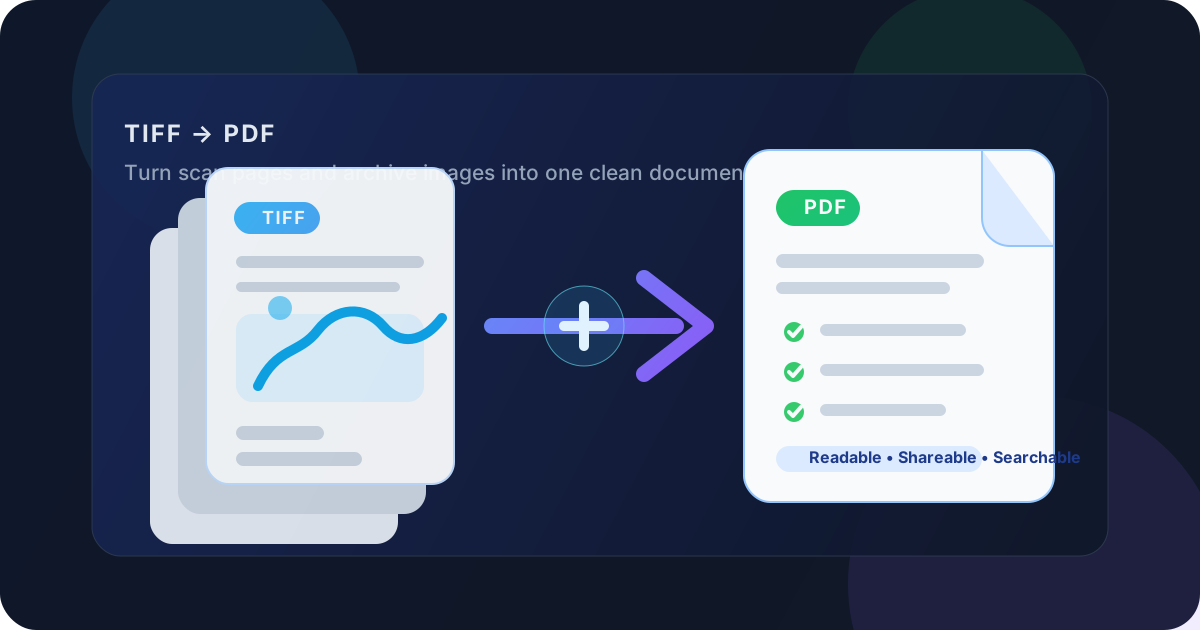
Table of contents
- Quick start: TIFF to PDF in a few minutes
- When TIFF to PDF is the right move
- What to decide before you convert
- Step-by-step: how to convert TIFF to PDF cleanly
- How to combine multiple TIFF files into one PDF
- How to keep scans, records, and archive pages readable
- How to keep the PDF usable without making it huge
- When to use OCR after TIFF to PDF
- Related LifetimePDF tools and useful next steps
- FAQ (People Also Ask)
Quick start: TIFF to PDF in a few minutes
If your files are ready, the clean workflow looks like this:
- Open Images to PDF.
- Upload the TIFF or TIF files you want in the finished document.
- Arrange them in the correct reading order.
- Choose orientation and page sizing that fit the images naturally.
- Create the PDF and review readability before you upload or send it anywhere.
When TIFF to PDF is the right move
TIFF to PDF is useful whenever the source images are important, but the destination needs to behave like a document. That shows up in scanned contracts, archive folders, medical or administrative records, legal review packets, receipts exported by older systems, and fax-style document workflows. TIFF protects detail well. PDF makes the result easier to distribute.
A loose batch of TIFF files is awkward because sequence can break, previews vary by device, and recipients may need to open every image one at a time. One PDF fixes that. It turns the set into something people can read, print, annotate, store, and upload without guesswork.
| What you have | Best first move | Why it helps |
|---|---|---|
| Scanned paperwork or forms | TIFF to PDF, then OCR if needed | Creates one clean packet now and searchable text later |
| Archive image sets | TIFF to PDF | Gives historical or record pages a stable review format |
| Wide reports, ledgers, or exported document images | TIFF to PDF with careful page settings | Keeps details readable instead of awkwardly shrunk |
| Portal, email, or print submission | TIFF to PDF, then Compress PDF if needed | One file is easier to manage and easier to send |
What to decide before you convert
Most weak TIFF-to-PDF results are not caused by the converter. They happen because the input set was messy or nobody thought about how the final document should read.
1. Which TIFF files actually belong in the final document
Do not convert the whole folder just because it came from the same scanner, archive export, or case file. Remove duplicates, skewed pages, accidental test scans, and extra images that do not belong in the packet. Fewer better pages usually beat more random ones.
2. The order readers should see them
The final PDF should read like a document, not like a storage bin. Put overview or cover material first, then the main pages, then any supporting evidence or appendices. Administrative packets, legal bundles, and historical scans all benefit from deliberate sequencing.
3. Whether the pages should stay portrait or landscape
Portrait usually fits letters, forms, and most scanned pages best. Landscape works better when the original image is wide, such as a ledger, site plan, broad table, or long system export. Choosing the right orientation early prevents unnecessary shrinking later.
4. Whether the document needs searchability after conversion
TIFF to PDF creates one clean document, but it does not automatically turn image-based text into selectable text. If you need to search, copy, or extract text later, plan to run OCR PDF after the PDF is built.
Best setup habit: clean the TIFF set first, put the pages in the right order, then create the PDF once instead of rebuilding it after avoidable mistakes.
Step-by-step: how to convert TIFF to PDF cleanly
Once the files are ready, the actual conversion should be straightforward. The dependable workflow is mostly about not rushing past the review points.
1. Upload the TIFF files you actually need
Start with the smallest complete set that serves the job. If you are preparing a record packet, do not mix in unrelated scans. If you are building a document for review, make sure every required page appears once and only once.
2. Arrange the pages in human order
Reordering matters more than people expect. The PDF should make sense even if the recipient never saw the original folder structure. This is especially important when the TIFF pages came from different dates, devices, or departments.
3. Choose sensible page settings
Avoid layouts that over-shrink text-heavy pages or force wide document images into cramped portrait output. The goal is not to make every page identical at any cost. The goal is to make the final PDF easy to review.
4. Generate the PDF and review the first, middle, and last pages
That quick check catches most real-world mistakes: sideways pages, unreadable small text, bad page order, extra margins, or one duplicate image that slipped through.
5. Only add follow-up steps when they solve a real problem
Compress when the file is too heavy. OCR when the pages need selectable text. Protect the file when the contents are sensitive. The best workflow does not stack extra steps just because the tools exist.
Recommended sequence: upload the right TIFF files, order them carefully, choose simple layout settings, generate the PDF, then add compression or OCR only if the finished file still needs something.
How to combine multiple TIFF files into one PDF
Combining several TIFF files into one PDF is one of the main reasons this keyword exists. The trick is to treat the image set like one document before you convert it.
Scanned document batches
Put the pages in page-number order or review order so the final PDF matches how a human will read it. A reviewer should not have to infer whether page 7 belongs before page 3 just because the filenames were messy.
Archive or records folders
Group pages by document first. If one folder really contains three separate records, create three PDFs rather than one confusing mega-file. Smaller, purposeful documents are usually easier to upload and easier to understand.
Wide reports or ledger-style pages
Start with the overview page, then move into the detailed pages. That makes the PDF feel intentional and gives the reviewer context before they hit the fine print.
| Input set | Best ordering method | Good follow-up |
|---|---|---|
| Scanned forms | Page 1 through final signature page | Run OCR if reviewers need searchable text |
| Archive records | Chronological or catalog order | Protect sensitive versions before sharing |
| Receipts or proof images | Date order or claim-form order | Compress if the portal has file-size limits |
| Wide tables or ledger pages | Overview first, detail after | Use landscape when labels feel cramped |
How to keep scans, records, and archive pages readable
When people say their TIFF-to-PDF result looks bad, the problem is often not the PDF step itself. It usually starts with a blurry source page, a sideways scan, unnecessary borders, or a layout choice that shrinks important details too much.
Keep small text readable
Contracts, forms, invoices, labels, and archived letters can become useless fast if the text is too small. If the TIFF contains dense information, prioritize readability over filling the whole page perfectly. Slightly larger margins are less dangerous than illegible text.
Use the orientation that matches the source image
Portrait is usually right for paper-like captures. Landscape is better when the source is wide. A wrong orientation can quietly ruin readability even when the PDF technically looks fine at first glance.
Review the final PDF like a stranger would
Open the file, zoom to a normal viewing level, and check the smallest useful text instead of only the obvious headings or graphics. That is how you catch real problems before a portal rejection, a client complaint, or an internal review round catches them for you.
How to keep the PDF usable without making it huge
TIFF is popular in scan-heavy and archive-heavy workflows because it can preserve a lot of detail. That also means one combined PDF can get bulky fast when you include many pages or very large images. The answer is usually not to destroy the source quality first. It is to build the document properly and then optimize the finished file if the destination demands it.
What usually makes the PDF too large
- high-resolution scans traveling together in one packet
- duplicate or near-duplicate pages
- very large archive images that all live in one file
- mixed wide pages and standard pages bundled without cleanup
What usually makes the PDF hard to use
- text shrunk too much on the page
- the wrong orientation for the source image
- messy ordering that turns one file into a guessing game
- aggressive quality sacrifice before the PDF is even created
In practice, the cleanest route is simple: keep the useful TIFF detail, create the PDF, then use Compress PDF only if the final file is still too heavy for email or an upload limit.
If the final PDF is still too large: compress the finished document instead of sacrificing readability in the source TIFF files.
When to use OCR after TIFF to PDF
TIFF to PDF combines image pages into one document, but it does not magically turn scanned-looking text into selectable text. If the source pages came from a scanner, camera, archive system, or fax-style export and you need search, copy, or text extraction, OCR is the next step.
That matters for contracts, forms, receipts, case files, records, and anything that has to be searchable later. The clean sequence is simple: build the PDF first, then run OCR PDF on the finished file.
Related LifetimePDF tools and useful next steps
TIFF to PDF is often the first step, not the last one. These tools commonly fit around it:
- Images to PDF — combine TIFF, PNG, JPG, WEBP, and other image files into one PDF.
- Compress PDF — reduce file size after conversion.
- OCR PDF — make scanned-looking PDFs searchable.
- Rotate PDF — fix sideways output after conversion.
- Split PDF — break large image packets into smaller files.
- PDF Protect — add a password to sensitive documents.
Related blog guides
- TIFF to PDF Online Free
- TIFF to PDF Without Monthly Fees
- Convert TIFF to PDF Online
- PNG to PDF
- JPG to PDF
- Compress PDF
- OCR PDF
- Browse all LifetimePDF articles
Ready to turn loose TIFF files into one document that is actually easy to use?
Best practical sequence: choose the right TIFF files → order them clearly → create the PDF → review once → compress or OCR only when the final document actually needs it.
FAQ (People Also Ask)
How do I convert TIFF to PDF?
Upload one or more TIFF files to a converter, arrange the page order, choose sensible layout settings, create the PDF, and download the result. If the final file is too large, compress it afterward.
Can I combine multiple TIFF files into one PDF?
Yes. That is one of the most useful TIFF-to-PDF workflows for scan batches, archive records, receipts, case files, and upload packets.
Will TIFF to PDF preserve quality?
A solid workflow usually preserves visible quality well, especially when the source TIFF files are already clean and readable. Review the finished PDF once if fidelity matters.
Why is my TIFF to PDF file so large?
Large output usually comes from high-resolution scans, oversized archive images, or too many pages bundled into one packet. Convert first, then compress the finished PDF if it is still too heavy.
Do I need OCR after converting TIFF to PDF?
Only if the TIFF pages contain image-based text that you want to search, copy, or select. TIFF to PDF makes one document, while OCR makes scanned-looking text more usable afterward.
Published by LifetimePDF — Pay once. Use forever.