Convert Expense Report PDF to Excel: Extract Expense Lines, Categories, and Reimbursement Totals Faster
To convert expense report PDF to Excel, upload the report to LifetimePDF's PDF to Excel tool, export the XLSX, and review employee name, dates, merchants, categories, mileage, tax, and reimbursable totals before trusting the sheet.
If the report is scanned, image-only, or bundled with receipt pages and approval clutter, isolate the real report pages and run OCR first so the spreadsheet comes out cleaner and needs less manual repair.
Most people searching this phrase are not trying to admire a file conversion. They are trying to stop retyping reimbursement data. They need a worksheet they can filter, reconcile, approve, import, or hand to finance without turning one expense packet into an hour of spreadsheet cleanup.
Fastest path: use LifetimePDF's PDF to Excel tool, and split out receipt-heavy pages or run OCR first if the expense report came from a scan.
In a hurry? Jump to Quick start: convert expense report PDF to Excel in about 5 minutes.
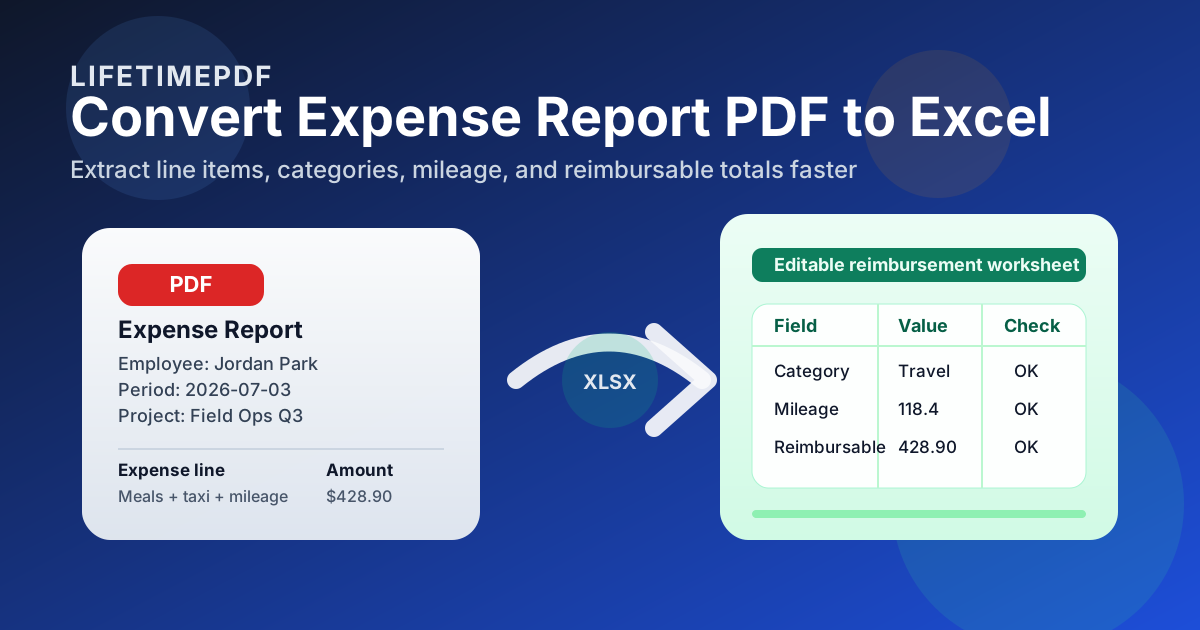
Table of contents
- Quick start: convert expense report PDF to Excel in about 5 minutes
- Why expense reports are trickier than they look
- Which expense report fields matter most
- What converts cleanly and what usually breaks
- Step-by-step: extract expense report data with LifetimePDF
- Review checklist before you trust the spreadsheet
- Excel vs CSV for reimbursement workflows
- Privacy, approvals, and audit hygiene
- Related LifetimePDF tools and companion guides
- FAQ (People Also Ask)
Quick start: convert expense report PDF to Excel in about 5 minutes
If the report already contains selectable text and the layout is reasonably clean, this workflow is usually enough:
- Open PDF to Excel.
- Upload the expense report PDF you want to extract.
- If the file also includes receipt packets, approval pages, policy notes, or email covers, first isolate the actual report pages with Extract Pages or Delete Pages.
- If the report is scanned or image-only, run OCR PDF before converting.
- Export the spreadsheet and review employee name, report period, expense dates, merchants, categories, mileage, tax, and reimbursable totals.
Why expense reports are trickier than they look
Expense reports look structured to humans, but many of them are messy underneath. One PDF may combine an employee summary block, line-item tables, receipts, approval signatures, cost-center codes, reimbursement notes, and totals across several pages. That is awkward for extraction because Excel wants predictable rows and columns, while the PDF was designed for visual review, approval, and printing.
- Reviewing employee reimbursements faster
- Cleaning up travel and entertainment spend
- Comparing categories across many reports
- Preparing imports for finance or ERP systems
- Checking duplicate claims or mismatched totals
- Dates stay in their own column
- Merchants and business-purpose notes remain readable
- Categories, mileage, tax, and totals do not merge
- Repeated headers are easy to remove or never appear
- The reimbursable total still matches the source report
The goal is not to expect magical perfection from every receipt-heavy packet. The goal is to get close enough that cleanup takes a minute instead of retyping every line by hand. For finance teams, founders, admins, and anyone handling recurring reimbursements, that time difference adds up quickly.
Which expense report fields matter most
Expense reports usually contain two layers of information: a report summary that explains who and what the report is for, and line-item data that shows the actual spend. A spreadsheet only becomes useful when both layers survive in a structure you can review without guessing.
| Summary fields to verify | Line-item fields to verify |
|---|---|
| Employee or submitter name | Expense date |
| Report period | Merchant or vendor name |
| Department, project, or cost center | Expense category |
| Currency and approval totals | Subtotal, tax, mileage, tip, or fee amount |
| Reimbursable total | Business-purpose notes or receipt references |
In practice, the hardest part is rarely the final grand total. It is the clutter around it. Expense reports squeeze table rows, explanatory notes, expense-policy labels, and receipt references into the same page, which is exactly where columns start drifting if the source PDF is messy.
What converts cleanly and what usually breaks
Some expense report PDFs behave beautifully in Excel. Others fight back because they were designed for approval workflows, scanning, or archiving instead of clean data extraction. Knowing the difference helps you fix the source before blaming the converter.
| Usually converts well | Usually needs extra cleanup |
|---|---|
| Digital exports from expense software | Scanned paper reports or phone-captured PDFs |
| Reports with selectable text and one clear table | Packets that mix receipts, signatures, and approvals |
| Consistent layouts across every page | Reports with repeated headers, notes, and footers on every page |
| Standalone summary pages | Expense packets where line items and receipt thumbnails share the same page |
| Readable categories and clean amounts | Wrapped descriptions, policy notes, or low-contrast scans |
If your report falls into the second column, that does not mean the workflow is doomed. It usually means the file needs one sensible prep step first: extract the report pages, rotate a crooked scan, crop dead margins, or OCR the image-only pages before you export anything.
Step-by-step: extract expense report data with LifetimePDF
This is the workflow that usually gives the best balance between speed and accuracy.
1) Start with the report pages you actually need
If the PDF also contains approval emails, receipt appendices, policy statements, or unrelated reports, separate those before converting. Smaller, focused input usually means a cleaner spreadsheet.
- Use Extract Pages if you only need certain pages.
- Use Delete Pages if the report is mostly right and just has extras.
- Use Split PDF when one packet needs to become several smaller files.
2) OCR scanned or flattened reports before conversion
Image-only reports often look readable to humans but opaque to a spreadsheet engine. Running OCR PDF first gives the converter a better shot at recognizing dates, merchants, categories, and amounts as real text.
OCR will not rescue every terrible scan. But it is often the difference between “usable with a quick review” and “why did mileage land in the tax column?”
3) Convert the report to Excel
Open PDF to Excel, upload the expense report PDF, and export the spreadsheet. For clean digital reports, this may already get you most of the way there.
4) Review the columns that fail most often
Expense reports usually break in predictable places:
- Merchant or vendor field: logos, receipt references, or long descriptions can spill into the wrong column.
- Category column: travel, meals, lodging, and mileage labels often shift if the table is dense.
- Mileage and tax values: small numeric fields are easy to misread in scanned reports.
- Business-purpose notes: wrapped notes can turn one expense row into two spreadsheet rows.
- Reimbursable total: always verify it against the source PDF before import or approval.
5) Normalize before sharing, importing, or approving
If the spreadsheet is going into finance software, payroll review, or a shared reimbursement workflow, spend one extra minute standardizing headers, removing blank junk rows, and confirming totals. The better habit is not “convert and trust automatically.” It is “convert, review, then use.”
Need the tool stack? Start with conversion, then clean the source only if the spreadsheet still looks messy.
Review checklist before you trust the spreadsheet
Before the Excel file gets sent to a coworker or imported into another system, verify the fields that matter most.
- Employee or submitter name
- Report period and expense dates
- Merchant or vendor field
- Category, tax, mileage, and amount columns
- Currency and reimbursable totals
- Any rows tied to approvals or receipt references
- One expense row becoming two rows
- Receipt notes appearing inside amount columns
- Repeated headers every page
- Tax or mileage imported as text
- Blank rows created from spacing-only areas
- Approval blocks mixed into the line-item table
If a single report is still messy after conversion, sometimes the smarter move is to extract a narrower page range, rerun OCR, or ask for a cleaner export from the expense system rather than fighting one broken spreadsheet row by row.
Excel vs CSV for reimbursement workflows
People often ask whether expense report data should end up in Excel or CSV. The answer depends on what happens next.
Choose Excel when:
- You need to review and clean the data manually.
- You want filters, formulas, comments, or highlighted exceptions.
- You plan to hand the file to finance, payroll, or an accountant.
- You need to compare several reports before import.
Choose CSV when:
- You only need simple rows and columns for a downstream import.
- You do not care about worksheet formatting.
- You want the leanest structured file possible for another system.
Privacy, approvals, and audit hygiene
Expense reports often contain more than dates and totals. They may include employee names, home addresses, card-last-four details, project codes, customer names, approver comments, and receipt images. So conversion quality matters, but document hygiene matters too.
- Only upload the pages you actually need.
- Use Redact PDF when sensitive fields should not travel further.
- Use PDF Metadata Editor if the file carries unnecessary author or software metadata.
- Use Excel to PDF if you need to re-share a cleaned worksheet as a tidy PDF.
- Follow your organization's finance and retention policies before sharing converted output.
This is one of those workflows where being selective up front saves time twice: once during conversion and again when you do not have to clean or explain unnecessary data later. The calmer the input packet, the calmer the spreadsheet review.
Related LifetimePDF tools and companion guides
If you are building a repeatable expense-report workflow, these tools and pages fit naturally with this exact task:
- PDF to Excel for the core extraction step.
- OCR PDF for scanned or flattened reports.
- Extract Pages, Delete Pages, and Split PDF for receipt-heavy packets.
- Redact PDF for sensitive reimbursement documents.
- Excel to PDF when the cleaned sheet needs to go back into PDF form.
- Convert Expense Report PDF to Excel Online Without Monthly Fees if you want the pricing-model angle.
- Convert Receipt PDF to Excel for receipt-only extraction.
- Convert Credit Card Statement PDF to Excel and Convert Bank Statement PDF to Excel for adjacent finance-document workflows.
- Convert Timesheet PDF to Excel Online Without Monthly Fees if you also deal with payroll-supporting PDFs.
Bottom line: the best expense-report-to-Excel workflow is boring in a good way — isolate the useful pages, OCR when needed, review the important columns once, then use the spreadsheet.
FAQ (People Also Ask)
How do I convert an expense report PDF to Excel?
Upload the expense report PDF to a PDF to Excel converter, export the XLSX file, and review employee name, report dates, merchants, categories, mileage, tax, and reimbursable totals before using the spreadsheet. If the report is scanned, OCR first usually improves the result.
Can I convert a scanned expense report PDF to Excel?
Yes, but the cleanest workflow is usually OCR first, then convert. Straight pages, receipt-free report sections, and readable scans make a big difference when the report contains small columns and approval notes.
Why do some expense report PDFs create messy spreadsheets?
Because expense reports often mix summary totals, line-item tables, receipts, approval boxes, policy notes, and repeated headers in one PDF. Scans, wrapped descriptions, and mixed packets are common reasons categories or amounts drift into the wrong column.
Is Excel better than CSV for expense report extraction?
Usually yes if a human still needs to review the output. Excel makes it easier to filter, correct categories, compare totals, highlight exceptions, and hand the file to another person before importing the data elsewhere.
What should I verify after converting an expense report PDF?
Check employee name, report period, expense dates, merchants, categories, mileage, tax, currency, and reimbursable totals. Those are the fields most likely to create downstream finance problems if one column shifts during extraction.
Published by LifetimePDF - Pay once. Use forever.