Convert Credit Card Statement PDF to Excel: Extract Transactions, Payments, Fees, and Balances Faster
To convert a credit card statement PDF to Excel, upload the statement to LifetimePDF's PDF to Excel tool, export the XLSX, and review transaction dates, posted dates, merchant descriptions, charges, refunds, payments, fees, and balances before trusting the sheet.
If the statement is scanned or image-only, isolate the actual statement pages and run OCR first so the spreadsheet comes out cleaner and needs less manual repair.
Most people searching this phrase are not trying to celebrate a file conversion. They are trying to stop retyping card activity by hand. They need a spreadsheet they can reconcile, categorize, audit, or hand to accounting without turning one monthly statement into a long cleanup session.
Fastest path: use LifetimePDF's PDF to Excel tool, and OCR the credit card statement first if it came from a scan, phone photo, or image-only PDF.
In a hurry? Jump to Quick start: convert credit card statement PDF to Excel in about 5 minutes.
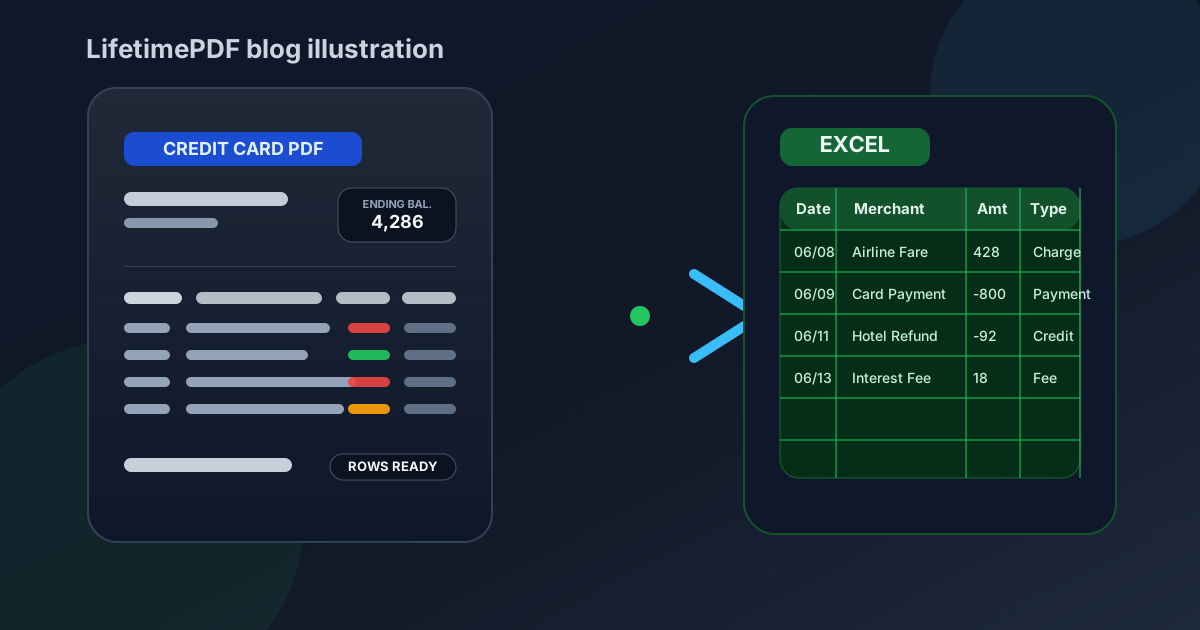
Table of contents
- Quick start: convert credit card statement PDF to Excel in about 5 minutes
- Why teams need credit card statements in Excel
- Which credit card statement fields matter most
- What converts cleanly and what usually breaks
- Step-by-step: extract statement data with LifetimePDF
- Review checklist before you trust the spreadsheet
- Excel vs CSV for statement workflows
- Privacy and financial document hygiene
- Related LifetimePDF tools and companion guides
- FAQ (People Also Ask)
Quick start: convert credit card statement PDF to Excel in about 5 minutes
If the statement already contains selectable text and the layout is reasonably clean, this workflow is usually enough:
- Open PDF to Excel.
- Upload the credit card statement PDF you want to extract.
- If the file also includes rewards summaries, notice pages, or mixed account material, first isolate only the statement pages with Extract Pages.
- If the statement is scanned or image-only, run OCR PDF before converting.
- Export the spreadsheet and review dates, merchants, charges, refunds, payments, fees, interest, and ending balance.
Why teams need credit card statements in Excel
A credit card statement PDF is fine when you only need to read it once. It becomes frustrating when you need to sort transactions, match spending categories, review recurring charges, prepare reimbursement support, reconcile business spend, or compare months side by side. That is where Excel becomes much more useful than the original PDF.
- Month-end bookkeeping and expense categorization
- Finance-team reviews of employee card activity
- Tax prep and accountant handoff
- Recurring charge and subscription cleanup
- Policy checks, disputes, and reimbursement audits
- Transaction dates land in their own column
- Merchant descriptions remain readable
- Charges and credits do not collapse together
- Fees and interest are clearly visible
- Repeated headers are easy to delete or never appear
The point is not to get a perfect spreadsheet on every statement without any review. The point is to get close enough that cleanup takes a minute or two instead of forcing someone to type every line by hand. For finance admins, bookkeepers, operations teams, and small-business owners, that time savings adds up quickly.
Why credit card statements feel different from bank statements
Credit card statements often have more visual clutter. Rewards sections, minimum payment boxes, interest tables, payment due dates, promotional balance notices, and cardholder messages can all live on the same page as the transaction grid. Humans filter that out automatically. Converters have to infer structure from spacing and alignment, which is why pre-cleaning the page set matters so much.
Which credit card statement fields matter most
Not every column matters equally. If you know which fields you actually need, you can review the spreadsheet much faster and catch the errors that create real downstream problems.
- Transaction date
- Posted date if the issuer shows it
- Merchant or transaction description
- Charge amount
- Refund or credit amount
- Payment amount
- Fees and interest
- Statement period
- Currency
- Cardholder or account label if multiple cards are involved
- Ending balance or totals section
- Any notes about foreign transactions or adjustments
- Rows that wrap into multiple lines
If the spreadsheet nails those fields, it is usually useful. If it loses date alignment, merges credits into charges, or splits merchant names into random fragments, you may still save time compared with manual typing, but only if you catch the bad rows early.
Rows that deserve extra attention
- Refunds and charge reversals: negative values can be mistaken for charges if the minus sign or column placement shifts.
- Payments: these may sit in a different section or format from normal purchases.
- Interest and late fees: small financial rows often hide in summary areas rather than the main transaction table.
- Foreign currency lines: statement PDFs may show local amount, converted amount, and fee details together.
- Wrapped merchant descriptions: long travel, marketplace, or processor descriptions can break into two spreadsheet rows.
What converts cleanly and what usually breaks
Statement extraction gets easier when the PDF is already digital, text-based, and consistent across pages. It gets harder when the statement is a scan, a phone photo, or a bundle of unrelated pages.
- Digital statements exported directly from the issuer portal
- Transaction tables with consistent columns across every page
- Files with selectable text
- Simple layouts with fewer promotional or rewards blocks
- Scanned or photographed paper statements
- Pages with heavy rewards or marketing panels
- Statements that repeat payment boxes on every page
- Files mixed with disputes, letters, or card agreements
The phrase convert credit card statement PDF to Excel sounds simple, but the quality of the input still decides how clean the output can be. A good converter saves time. A good workflow saves even more time because it gives the converter a cleaner file to work with in the first place.
Why page isolation helps so much
If your file contains non-transaction content, isolate the pages that actually hold statement data before converting. A tool cannot know that a rewards banner or payment coupon is irrelevant to your spreadsheet. Removing the clutter first often improves row detection more than people expect.
Step-by-step: extract statement data with LifetimePDF
Here is the practical workflow that works best when you want a spreadsheet that is useful fast instead of technically converted but annoying to trust.
1) Start with the right pages
If the statement bundle includes welcome pages, rewards summaries, legal notices, payment slips, or cardholder messages, remove those first. Use Extract Pages to keep only the statement pages you actually need.
2) OCR first if the statement is scanned
Image-only PDFs make everything harder. Before converting, run the file through OCR PDF so dates, merchant names, amounts, and totals are easier to recognize as text. This is especially important for older paper statements, emailed scans, and phone-camera captures.
3) Convert the statement to Excel
Open PDF to Excel, upload the cleaned statement PDF, and export the XLSX file. At this point, the goal is not perfection. The goal is a structured sheet that already has most rows, dates, and values in the right place.
4) Review the high-risk columns first
Check posted date, transaction date, merchant description, charge amount, refund amount, payment rows, fee rows, and statement totals. If those look good, the rest of the spreadsheet is usually easy to clean.
5) Save a reviewed working copy
Once the main rows look right, save a reviewed workbook before sharing it or importing it into bookkeeping software. That gives you one version that preserves the extracted raw structure and another that reflects your cleanup decisions.
Review checklist before you trust the spreadsheet
A quick review catches most of the errors that matter. You do not need to audit every row equally. You need to focus on the rows that are likely to break when PDFs become spreadsheets.
- Confirm the statement period: make sure you converted the month or date range you actually intended to review.
- Check the first five transaction rows: verify dates, merchants, and amounts line up correctly.
- Find one refund or credit row: confirm it did not land in the same direction as charges.
- Find one payment row: confirm it stayed distinct from normal spending.
- Look at fees and interest: these often break because they may live outside the main transaction area.
- Check a wrapped merchant description: long rows are more likely to split incorrectly.
- Compare the ending balance or total due: make sure the spreadsheet still reflects the statement math.
Common cleanup moves after conversion
- Delete repeated header rows that appear once per page
- Merge wrapped merchant descriptions back into a single row
- Standardize date formats for filtering and pivot tables
- Separate charges and credits into consistent numeric columns
- Tag fees, interest, and payments so they are easy to filter later
Excel vs CSV for statement workflows
Both formats can be useful. The better choice depends on what happens after extraction.
- You still need to review and clean the output
- You want filters, formulas, notes, or highlighting
- You are handing the file to a teammate or accountant
- You want a working spreadsheet, not just raw rows
- You only need plain rows and columns for import
- The downstream system already expects CSV
- You do not need formulas, tabs, or workbook formatting
- You want the simplest possible export after cleanup
For most statement workflows, Excel is the better first stop because it gives you room to review and fix the extraction. Once the structure looks right, you can always save a CSV afterward if another system requires it.
Privacy and financial document hygiene
Credit card statements are not ordinary attachments. Even when the full card number is masked, they still reveal names, merchants, travel patterns, subscriptions, balances, payment behavior, and other sensitive financial details. That means the workflow should stay deliberate.
- Upload only the pages you need instead of the entire account packet.
- Store reviewed files carefully if they are being shared inside a team.
- Remove extra pages before conversion so you are not spreading more financial context than necessary.
- Use password protection afterward if the final spreadsheet or PDF will travel by email.
- Redact when appropriate if the data is leaving your finance team and only certain rows actually matter.
If you need to send the original PDF onward after cleaning the workflow, pair this extraction guide with a safer delivery step such as Password Protect PDF for Email.
Related LifetimePDF tools and companion guides
Converting the statement is often only one step in the overall workflow. These related tools and guides help when the raw PDF needs cleanup before or after extraction.
PDF to Excel
Convert structured tables and statement rows into an editable workbook.
Open PDF to ExcelExtract Pages
Remove rewards pages, notices, and unrelated inserts before converting.
Open Extract PagesCompanion guides
Useful adjacent reading for bank statements and pay-once extraction workflows.
Bank Statement GuideWithout Monthly Fees
Need the shortest route? Clean the page set, OCR the statement if needed, convert it to Excel, then review high-risk rows before sharing or importing the sheet.
FAQ (People Also Ask)
How do I convert a credit card statement PDF to Excel?
Upload the statement PDF to a PDF to Excel converter, export the XLSX file, and review dates, merchant descriptions, charges, refunds, payments, fees, and balances before using the spreadsheet. If the statement is scanned, run OCR first for a cleaner result.
Can I extract transactions from a scanned credit card statement PDF?
Usually yes. Scanned statements work better when you run OCR first and isolate only the pages that actually contain transaction data. Cleaner scans and straighter pages usually produce better row detection.
Why do credit card statement PDFs often become messy Excel columns?
Because many statement pages combine rewards content, payment boxes, transaction tables, fees, footers, and repeated headers in the same layout. Wrapped merchant descriptions and mixed non-statement pages also make extraction harder.
Should I use Excel or CSV for credit card statement data?
Excel is better when you still need to review, categorize, and clean the data. CSV is better when you only need plain structured rows for import into another system and do not need worksheet features or formulas.
What should I check before trusting extracted statement data?
Verify statement period, transaction dates, posted dates, merchant names, charges, refunds, payments, fees, interest, and ending balance. Those are the fields most likely to create downstream problems if a row shifts during extraction.