Convert Attendance Sheet PDF to Excel: Extract Employee Names, Dates, Statuses, and Time Entries Faster
To convert attendance sheet PDF to Excel, upload the attendance sheet to LifetimePDF's PDF to Excel tool, export the XLSX, and review employee names, IDs, dates, shifts, present or absent status, check-in and check-out times, leave codes, overtime, and totals before trusting the sheet.
If the attendance sheet is scanned, image-only, or bundled with memos and summary pages, keep only the actual attendance pages and run OCR first so the spreadsheet comes out much cleaner.
Most people searching this phrase are not trying to admire a file conversion. They are trying to stop copying attendance rows by hand, clean up payroll-supporting records faster, summarize absences, reconcile shifts, or build a worksheet they can sort without fighting a static PDF layout.
Fastest path: use LifetimePDF's PDF to Excel tool, keep only the attendance pages, and run OCR first if the file came from a scan, photo, or flattened export.
In a hurry? Jump to Quick start: convert attendance sheet PDF to Excel in about 5 minutes.
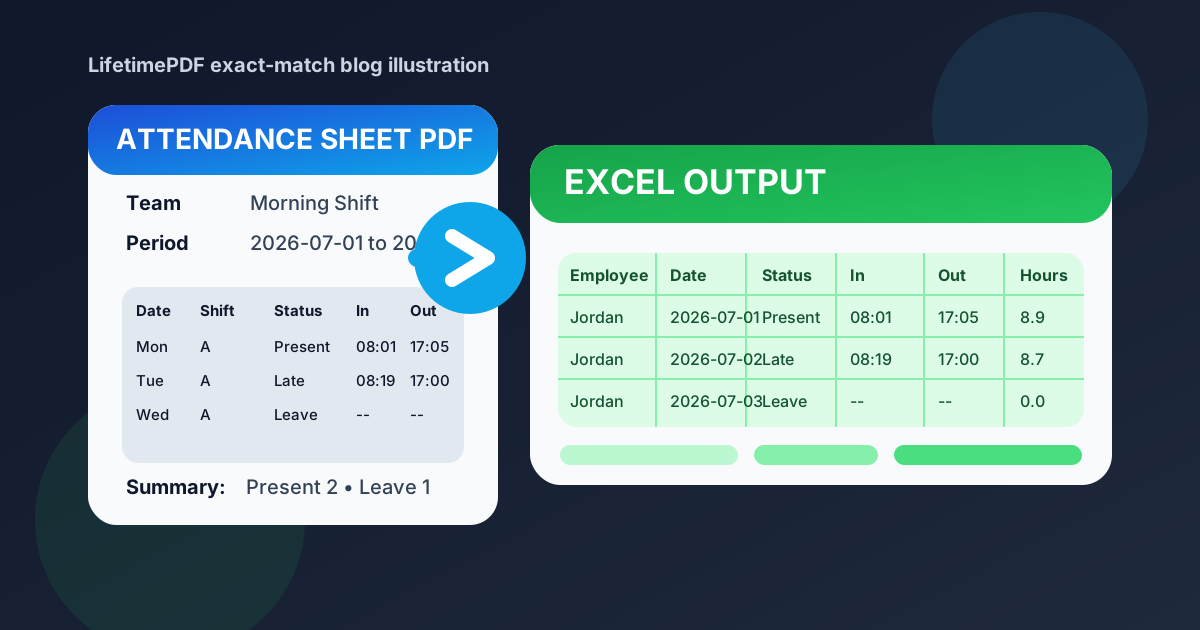
Table of contents
- Quick start: convert attendance sheet PDF to Excel in about 5 minutes
- Why people need attendance data in Excel
- Which attendance fields matter most
- What converts cleanly and what usually breaks
- Step-by-step: extract attendance data with LifetimePDF
- Review checklist before you trust the spreadsheet
- Excel vs CSV for attendance, payroll, and audits
- Privacy and HR-adjacent handling tips
- Related LifetimePDF tools and companion guides
- FAQ (People Also Ask)
Quick start: convert attendance sheet PDF to Excel in about 5 minutes
If the attendance sheet already contains selectable text and a fairly consistent table, this is usually the shortest route:
- Open PDF to Excel.
- Upload the attendance sheet PDF you want to extract.
- If the file is scanned or image-only, run OCR PDF first so names, IDs, dates, shifts, and time fields are easier to recognize.
- If the packet also includes memos, blank forms, summary pages, or approvals, remove those extras first with Extract Pages or Delete Pages.
- Export the XLSX file and review employee names, dates, shifts, attendance status, check-in and check-out times, leave codes, and totals before you use it for payroll, HR reporting, school administration, or audits.
Why people need attendance data in Excel
Attendance sheets are easy to archive as PDFs, but awkward to work with once you need to compare many people, many dates, or many shifts at once. A PDF shows the layout clearly. It does not give you a living worksheet you can sort, filter, total, or reuse without extra effort.
That is why this query matters. People searching it usually need a practical next step: summarize late arrivals, check absence patterns, prepare payroll support, compare planned shifts against actual attendance, or clean up records before an import. The useful outcome is not “an Excel file exists.” The useful outcome is “the attendance data is in a shape someone can actually use.”
Common reasons people convert attendance PDFs
- Check payroll-supporting attendance before processing
- Review absences, leave days, or late arrivals faster
- Compare scheduled shifts against real check-ins and check-outs
- Prepare rows for HR, school, or operations reporting
- Build a clean workbook for filtering, pivots, and audits
Why PDF alone becomes a bottleneck
- Names, dates, and status codes are trapped inside page layout
- Monthly grids are hard to compare across teams or periods
- Scanned pages hide usable text inside images
- Notes, approvals, and summary blocks clutter the table
- Manual copy-paste creates new errors while fixing old ones
In other words, the goal is not to replace one file extension with another. The goal is to turn attendance records into structured rows that are easier to check, summarize, and reuse.
Which attendance fields matter most
An attendance sheet only becomes useful in Excel when the fields that drive payroll, staffing, or reporting survive the move intact. These are the columns worth checking first.
| Field | Why it matters | What often goes wrong |
|---|---|---|
| Employee name or ID | Connects every row to the right person | IDs lose leading zeros or names split across cells |
| Date | Keeps attendance tied to the right day or period | Header dates drift into the first employee row |
| Shift or session | Helps compare scheduled vs actual attendance | Shift labels merge with status or notes fields |
| Present/absent/leave status | Core field for HR, school, and audit review | Status codes drift into adjacent time columns |
| Check-in and check-out time | Needed for lateness review and hour validation | AM/PM markers disappear or times import as plain text |
| Break, overtime, or extra hours | Supports payroll and staffing checks | Numeric values merge into totals or comments |
| Leave code or exception note | Explains why a person was absent, late, or off shift | Abbreviations break across lines or look like separate rows |
| Total hours or day summary | Fastest sanity check before import or reporting | Totals import as text or stop matching the row data |
What converts cleanly and what usually breaks
Some attendance PDFs convert almost effortlessly. Others need cleanup before the spreadsheet becomes useful. The difference usually comes from how the record was produced.
- Digital exports from HR, payroll, or school systems
- Clean daily or weekly tables with consistent headings
- Files with selectable text instead of screenshots
- Layouts that keep names, dates, statuses, and times in predictable columns
- Scanned registers or phone-photo PDFs
- Handwritten marks or signatures over status fields
- Wide monthly grids squeezed into a single page
- Packets that mix attendance pages with memos or summary sheets
The good news is that you usually do not need a perfect source file. You mostly need a disciplined workflow: isolate the useful pages, OCR when needed, convert, then review the handful of fields that drive the next decision.
Step-by-step: extract attendance data with LifetimePDF
A practical attendance extraction workflow looks like this:
- Start with the actual attendance pages. Remove memos, handbook pages, signature covers, or unrelated summaries so the converter sees the attendance table you care about.
- Run OCR if the file is scanned. Image-only attendance sheets convert better after OCR because names, dates, and status fields become selectable text.
- Convert the PDF to Excel. Upload the cleaned file to PDF to Excel and export the XLSX file.
- Review the fields that drive the next action. The sheet is only useful if the important attendance fields landed in the right columns.
- Save the reviewed version clearly. Keep the checked workbook separate from the raw export so the wrong file does not keep circulating.
Useful workflow: Extract Pages → OCR PDF → PDF to Excel. That sequence is usually cleaner than throwing a mixed attendance packet straight into conversion and hoping the status columns survive.
Review checklist before you trust the spreadsheet
Once the attendance sheet is in Excel, review the fields that would actually hurt if they were wrong:
- Employee name or ID
- Date or reporting period
- Shift, class, or session label
- Present, absent, leave, late, remote, or exception status
- Check-in and check-out times
- Breaks, overtime, or total hours if included
- Any leave code, note, or exception field that explains anomalies
If you only need a quick working sheet, validate the employee, date, key status field, and any time or total columns first.
Be more demanding when the spreadsheet will drive payroll, school reporting, labor audits, absence summaries, or downstream system imports. Those workflows punish small row shifts later.
Excel vs CSV for attendance, payroll, and audits
Both formats can be useful, but they serve different next steps.
| If your next step is... | Better format | Why |
|---|---|---|
| Human review, attendance cleanup, or payroll checks | Excel | It is easier to filter dates, compare shifts, and spot broken rows |
| Importing plain rows into another HR or SIS system | CSV | CSV is lighter when you only need structured values and no worksheet features |
| Absence review, shift analysis, or audit support with multiple people involved | Excel | Extra visibility helps when statuses, times, and totals still need checking |
For most searches around this keyword, Excel is the better immediate output because the next job is still review. People usually want a sheet they can inspect before they trust it.
Privacy and HR-adjacent handling tips
Attendance sheets often contain employee names, schedules, leave patterns, work locations, class records, supervisor notes, or approval signatures. That makes them routine documents, but still sensitive documents.
- Only upload the pages you actually need for the task.
- Remove unrelated summary or memo pages before forwarding the converted spreadsheet internally.
- If the document includes information that should not move further downstream, use Redact PDF before sharing it elsewhere.
- Do not assume the converted workbook should automatically go to everyone who can open the original PDF.
- Name the final reviewed workbook clearly so it is easy to distinguish from the raw export.
Related LifetimePDF tools and companion guides
Attendance extraction usually works best as part of a small workflow instead of one magical click. These tools and guides pair well with it:
When the packet includes approvals, summaries, or blank forms, isolate only the useful attendance pages first.
Extract PagesOCR helps when attendance sheets come from scans, photos, or older image-based exports.
OCR PDFUseful adjacent reading for payroll-supporting and spreadsheet-cleanup workflows.
Without Monthly FeesTimesheet Guide
More related guides
- Convert Attendance Sheet PDF to Excel Online Without Monthly Fees
- Convert Timesheet PDF to Excel
- Convert Payslip PDF to Excel
- Convert Expense Report PDF to Excel
- Extract Tables from PDF to Excel
Need the shortest route? Keep only the attendance pages, OCR the file if needed, convert it to Excel, then review names, dates, statuses, time punches, and totals before sharing or importing the sheet.
FAQ (People Also Ask)
How do I convert an attendance sheet PDF to Excel?
Upload the attendance sheet PDF to a PDF to Excel converter, export the XLSX file, and review employee names, IDs, dates, shifts, present or absent status, check-in and check-out times, leave codes, and totals before using the spreadsheet. If the file is scanned, OCR first usually improves the result.
Can I convert a scanned attendance sheet PDF to Excel?
Usually yes. Scanned attendance sheets convert better when you run OCR first and isolate only the pages that actually contain the attendance table. Straight pages, readable contrast, and fewer summary extras usually improve extraction.
Why do attendance PDFs often create messy spreadsheets?
Because many attendance sheets combine names, IDs, dates, shifts, status codes, time punches, notes, signatures, and totals on the same page. Wide monthly grids, repeated headers, and low-quality scans make extraction harder too.
Is Excel better than CSV for attendance extraction?
Usually yes if a person still needs to review the result. Excel makes it easier to filter dates, compare statuses, fix row shifts, and hand the workbook to payroll, HR, school, or operations teams before importing data elsewhere.
What should I verify after converting attendance data?
Check employee name, employee ID, date, shift, present or absent status, check-in time, check-out time, leave code, overtime, and totals. Those are the values most likely to create downstream payroll or reporting mistakes if one row shifts during extraction.