Compress PDF for SysAid: Keep Ticket Attachments, Service Records, and Knowledge PDFs Small Without Losing Clarity
To compress a PDF for SysAid, upload the final ticket attachment, service record, approval PDF, asset document, scanned form, or knowledge file to LifetimePDF's Compress PDF tool, start with Medium compression, and keep the smaller copy only if screenshots, ticket references, asset IDs, signatures, and instructions still read clearly.
For most SysAid workflows, under 2MB is a strong target for text-heavy files, while screenshot-heavy, scan-heavy, and mixed support packets usually land better around 2MB to 5MB after light cleanup.
SysAid PDFs rarely stay with one person for long. A technician adds incident evidence, a manager reviews an approval packet, a requester downloads a portal handout, or someone reopens a service record weeks later. The goal is not the tiniest file possible. It is a smaller PDF that still feels dependable when the next person opens it in a hurry.
Fastest path: run the SysAid PDF through LifetimePDF's Compress PDF tool on Medium, then do one quick readability check before you attach, share, archive, or publish the smaller copy.
Need the short version? Jump to Quick start: compress a PDF for SysAid in under 2 minutes.
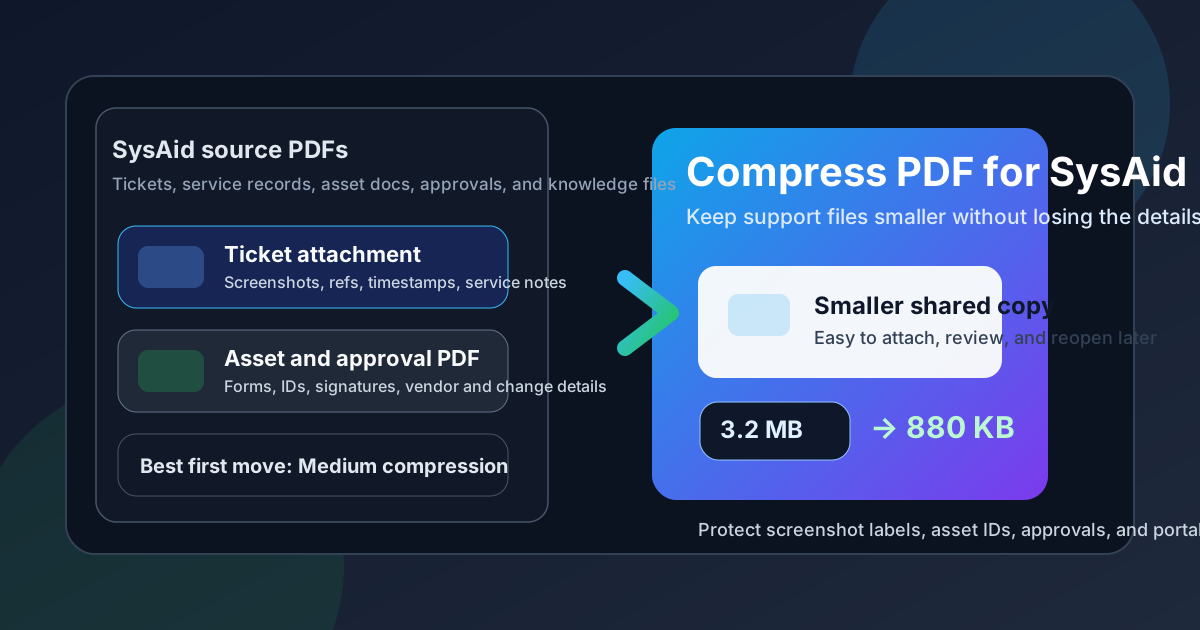
Table of contents
- Quick start: compress a PDF for SysAid in under 2 minutes
- Why smaller PDFs help in SysAid workflows
- What file size should you aim for?
- Which compression level should you choose?
- Step-by-step: shrink a SysAid PDF with LifetimePDF
- Best strategy for common SysAid PDF types
- What if the PDF is still too large?
- How to keep support details readable
- Workflow habits that reduce PDF bloat
- Related LifetimePDF tools and useful reading
- FAQ (People Also Ask)
Quick start: compress a PDF for SysAid in under 2 minutes
If your real goal is simply make this SysAid PDF smaller so it is easier to attach, review, or share, this workflow is usually enough:
- Open Compress PDF.
- Upload the ticket attachment, service record, approval packet, scanned form, asset document, or knowledge file you actually plan to use.
- Choose Medium compression first.
- Download the smaller result and compare the new size with the original.
- Open it once and check the details that matter most: screenshot text, ticket references, timestamps, asset IDs, signatures, dates, and form fields.
- If the file is still bulky, use Extract Pages, Delete Pages, or Crop PDF before trying stronger compression.
Why smaller PDFs help in SysAid workflows
SysAid attachments are often part of a longer support chain. A screenshot pack becomes part of an escalation, an approval PDF moves through a manager review, a scanned form sits inside a service record, or a knowledge document gets downloaded long after the original upload. Heavy files add friction every time the document moves. They upload slower, feel awkward on mobile, and make routine reviews more annoying than they need to be.
Compression matters most when the PDF is useful but overweight. That is common with screenshot-heavy incident evidence, scan-based forms, approval packets, asset records, vendor paperwork, and exported knowledge documents that include more pages than the next person actually needs. A smaller file keeps the workflow moving, provided the important details still look easy to trust.
Why lighter PDFs work better in SysAid
- Faster ticket updates: helpful when a technician needs to attach evidence without slowing down active work.
- Smoother approvals and handoffs: managers and other technicians can reopen lighter PDFs faster.
- Better portal experience: requesters are more likely to open cleaner, lighter handouts and instructions.
- More usable knowledge files: smaller downloads are friendlier on phones, tablets, and slower connections.
- Less repeat friction: if the same document gets reused in tickets, service records, approvals, and portal content, trimming it once pays off every time.
What file size should you aim for?
There is no single perfect number because a one-page service note behaves differently from a screenshot-rich troubleshooting packet, a signed approval form, or a long exported knowledge guide. Still, practical targets help because they tell you when a PDF has become heavier than the job really requires.
| SysAid PDF type | Useful target | Why |
|---|---|---|
| Short ticket notes, portal handouts, internal summaries | Under 2MB | These are usually text-heavy and can stay lightweight without much quality risk. |
| Approval packets, scanned forms, asset records, vendor files | 2MB to 5MB | These need enough clarity for signatures, dates, IDs, forms, and review notes to stay easy to trust. |
| Screenshot-heavy incident evidence and knowledge PDFs | 2MB to 5MB | These need image and text clarity so labels, steps, and interface details remain useful. |
| Large mixed packets with appendices and archive pages | Split when possible | One file doing multiple jobs is often the real problem, not just raw size. |
If your SysAid PDF is far above these ranges, do not assume you need harsher compression first. Many oversized support files improve more when you remove duplicate pages, separate customer-facing sections, or crop dead scan borders.
Which compression level should you choose?
In most SysAid workflows, the real question is not can this be compressed? It is how small can I make it without weakening the file when someone has to rely on it later? That is why the safest answer is usually to start in the middle.
Low compression
Use Low when the PDF includes tiny screenshots, dense forms, asset labels, approval signatures, or any support detail that must stay especially crisp. The file may remain a little heavier, but the review experience is safer.
Medium compression
Medium is the best default for most SysAid files. It normally cuts enough size to make the attachment easier to handle while preserving screenshot text, ticket references, signatures, dates, asset IDs, and support instructions. If you do not want to overthink the first pass, choose this.
High compression
High is useful when the PDF is scan-heavy, image-heavy, or still much larger than the workflow can tolerate. It can work well for long archives and bulky reference packs, but you should always review the weakest details before replacing the original file.
Step-by-step: shrink a SysAid PDF with LifetimePDF
- Open Compress PDF.
- Upload the exact file you intend to use in SysAid, not the larger working draft or export with extra appendix pages.
- Choose Medium compression first.
- Download the smaller result.
- Open the result at normal zoom and then zoom into the smallest important details.
- Check screenshot labels, ticket numbers, timestamps, form fields, asset IDs, signatures, and approval notes.
- If the file is still too large, remove unnecessary pages or split the packet before trying a stronger compression pass.
This order matters. Many people jump directly to aggressive compression when the better fix is simply not carrying extra pages forward. A cleaner packet usually beats a blurrier one.
Best strategy for common SysAid PDF types
Incident attachments with screenshots
Start with Medium compression and review the smallest visible text. If the evidence depends on tiny labels, timestamps, device names, or error details, keep the lighter file only if those details still feel effortless to read.
Service records and approval packets
These often mix forms, sign-offs, routing notes, internal comments, and supporting evidence. Medium compression is usually the safest first move, but always review signatures, dates, approver names, and key decision notes before sharing the smaller version.
Knowledge PDFs and portal guides
Text-heavy guides usually compress well. Under 2MB is a realistic target in many cases, especially when the document does not rely on oversized screenshots or dense diagrams. If the file is still large, it often contains repeated appendix pages that should not travel with the main instructions.
Asset documents and scanned forms
Scan-heavy PDFs usually contain more waste than expected. Empty borders, skewed pages, and blank backs add size fast. Use compression, then follow with Crop PDF or OCR PDF if the file still feels clumsy.
Mixed support packets
If one PDF includes internal notes, requester instructions, approvals, and long reference appendices, splitting it usually works better than forcing stronger compression across everything. SysAid workflows are smoother when each PDF has one clear job.
What if the PDF is still too large?
If the file remains heavy after the first pass, that does not automatically mean the compression setting was too gentle. It often means the document structure is doing too much.
- Delete duplicate or blank pages: use Delete Pages to remove obvious waste.
- Extract the useful section: use Extract Pages when the ticket, approval, or knowledge article only needs part of a longer packet.
- Split one oversized file: use Split PDF if requester-facing pages and internal appendices should not live together.
- Crop dead borders: scanned forms and paperwork often shrink well after Crop PDF.
- Run OCR when appropriate: OCR PDF can make scan-based documents easier to search and reuse later.
- Redact sensitive details first: if the file contains personal data, internal comments, pricing, or information that should not travel widely, use Redact PDF before sharing.
In support workflows, a smaller and cleaner file is almost always better than one giant attachment nobody wants to open twice.
How to keep support details readable
The safest habit is to review the details most likely to break first. In SysAid, that usually means the smallest visible evidence, not the big headline text.
- Zoom into the smallest screenshot labels and interface text.
- Check ticket numbers, service references, timestamps, device names, and asset IDs.
- Review signatures, initials, dates, and approval notes.
- Confirm forms still look natural and easy to complete or review.
- Make sure callouts, highlights, and arrows still point to the right thing.
- Open the result on mobile if staff or requesters often read the document on phones.
If any of those details feel uncertain, keep the original or rerun the file with a lighter compression setting. Trust matters more than winning a few extra megabytes.
Workflow habits that reduce PDF bloat
The easiest way to keep SysAid PDFs manageable is to avoid building oversized source files in the first place.
- Export the final version only: do not carry old drafts and repeated pages into the attachment.
- Keep one audience per PDF: requester instructions and internal notes often belong in separate files.
- Prefer focused evidence packs: attach the pages that solve the issue, not every related document.
- Clean scanner waste early: blank backs and giant borders add size without adding value.
- Remove hidden clutter: use PDF Metadata Editor if the file carries stale titles or document properties you do not want to pass along.
- Keep a master and a shared copy: that way you can preserve the original without forcing every ticket, approval, or portal download to carry the heavier version.
These habits save time far beyond SysAid. The same smaller PDF usually behaves better in email, chat, approvals, and archive storage too.
Related LifetimePDF tools and useful reading
SysAid document prep usually turns into a few follow-on tasks. These tools pair especially well with compression:
- Compress PDF for the first size-reduction pass.
- Extract Pages when only part of the packet needs to travel.
- Delete Pages to strip duplicate or blank pages.
- Split PDF when one file is serving two audiences.
- Crop PDF to trim dead scan borders.
- OCR PDF for scan-based forms and paperwork.
- Redact PDF to remove sensitive information before sharing.
If you want adjacent reading, these guides fit the same workflow family: upload-focused SysAid guide, Compress PDF for HaloITSM, Compress PDF for ManageEngine ServiceDesk Plus, Compress PDF for SolarWinds Service Desk, Compress PDF for TOPdesk, Compress PDF for Freshservice, and Compress PDF for Zendesk.
Bottom line: if the SysAid PDF is too large, start with Medium compression, protect the details that matter, and clean the packet structure before you force the file any harder.
FAQ (People Also Ask)
How do I compress a PDF for SysAid?
Upload the SysAid-ready PDF to a PDF compressor, start with Medium compression, and keep the smaller copy only after checking screenshots, ticket references, asset IDs, signatures, dates, and approval notes. For most support workflows, Medium is the safest starting point because it reduces file size without weakening review clarity.
What file size should I aim for before using a PDF in SysAid?
Short text-heavy ticket notes, portal handouts, and internal summaries often work well under 2MB. Screenshot-heavy evidence, scanned forms, approval packets, and knowledge PDFs usually land better around 2MB to 5MB as long as the smallest useful details remain easy to read.
Will compression make screenshots or forms blurry in SysAid?
It can if you compress too aggressively. That is why Medium compression is usually the best first move. Always review the smallest screenshot text, form labels, signatures, dates, ticket references, and asset details before you keep the smaller file.
Should I split a large SysAid PDF instead of compressing it harder?
Often, yes. If one PDF mixes requester instructions, internal notes, repeated evidence, approvals, and long appendices, splitting it usually works better than forcing stronger compression across the whole document.
Which LifetimePDF tools pair best with SysAid workflows?
Compress PDF is the main starting point. Extract Pages, Delete Pages, Split PDF, Crop PDF, OCR PDF, PDF Metadata Editor, and Redact PDF are especially useful when you want smaller, cleaner SysAid documents without carrying extra pages, scan waste, or hidden document details forward.