Compress PDF for Keyword Surfer Without Monthly Fees: Shrink Keyword Research Exports, SERP Snapshots, and Client PDFs Without Another Subscription
If you need to compress a PDF for Keyword Surfer without monthly fees, use a pay-once PDF tool, start with Medium compression, and keep the smaller copy only if keyword rows, SERP screenshots, and notes still look clear.
For most Keyword Surfer workflows, that is enough to shrink keyword research exports, browser-based SERP recaps, and client PDFs without turning routine file cleanup into another subscription.
Keyword Surfer is often part of a fast research workflow. You spot terms, compare ideas, grab a few screenshots, and send the findings to a writer, strategist, or client. The friction usually shows up at the end, when a useful PDF becomes heavier than it needs to be for email, a shared drive, or a quick review on mobile. The goal is not to crush the file until it looks cheap. The goal is to make it lighter while keeping the details that make the research useful: keyword labels, volume estimates, screenshot evidence, and the short notes that explain why a term deserves attention.
Fastest path: export the Keyword Surfer file you actually need, run it through LifetimePDF's Compress PDF tool at Medium, and split or extract pages only if the pack still feels heavier than the next reader needs.
In a hurry? Jump to Quick start: compress a Keyword Surfer PDF in under 2 minutes.
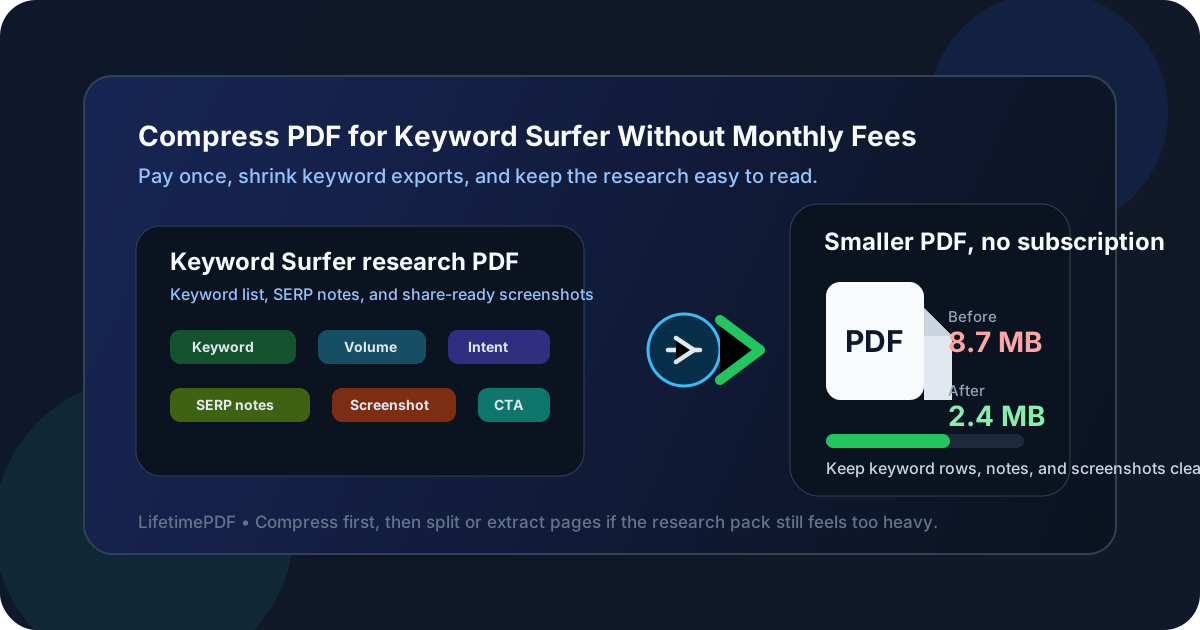
Table of contents
- Quick start: compress a Keyword Surfer PDF in under 2 minutes
- Why “without monthly fees” matters here
- Why smaller PDFs help in Keyword Surfer workflows
- What size should a Keyword Surfer PDF be?
- Which compression level should you choose?
- Step-by-step: use LifetimePDF to shrink the file
- Common Keyword Surfer PDFs that benefit from compression
- What to do if the PDF is still too large
- How to keep keyword rows and screenshots readable
- Workflow habits that reduce PDF bloat
- Related LifetimePDF tools and internal links
- FAQ (People Also Ask)
Quick start: compress a Keyword Surfer PDF in under 2 minutes
If your real goal is simply make this Keyword Surfer PDF smaller so it is easier to share, this workflow is usually enough:
- Open Compress PDF.
- Upload the Keyword Surfer export, SERP snapshot recap, writer handoff, or client-ready research PDF you want to shrink.
- Choose Medium compression first.
- Download the smaller result and compare the new size.
- Preview the parts that matter most: keyword rows, volume estimates, screenshot labels, headings, notes, and any action items.
- If the PDF is still bulky, use Extract Pages, Split PDF, or Delete Pages instead of repeatedly crushing the whole file.
Why “without monthly fees” matters here
This search intent is practical, not glamorous. The research is already done. The shortlist already exists. The only remaining job is turning the PDF into something easier to send. That is exactly the kind of task people do not want to rent forever.
Many SEO workflows already include paid tools for research, content, analytics, and reporting. Adding another recurring fee just to shrink exported PDFs feels like the least interesting kind of software sprawl. A pay-once workflow is a better fit because compression is usually finish-line work. You run it when you need it, review the result, and move on.
There is also the familiar frustration of upload-first PDF sites that only reveal a paywall when you try to download the smaller file. If you are trying to finish a writer brief, prepare a content recommendation, or send a SERP recap before a meeting, that friction is worse than the oversized file you started with. A straightforward pay-once workflow is simply cleaner.
Keyword Surfer already does the research work. Your PDF cleanup step does not need to become another monthly line item.
Why smaller PDFs help in Keyword Surfer workflows
Keyword Surfer PDFs usually exist because the research needs to leave the browser and become useful to somebody else. Maybe a writer needs the shortlist. Maybe a strategist needs SERP evidence. Maybe a client needs a clean recap with only the most important screenshots and notes. In each case, file size becomes a delivery problem rather than a research problem.
Large PDFs are slower to upload, more awkward to forward, and easier for busy readers to ignore. The extra weight often comes from repeated screenshots, broad appendices, unused comparison pages, or one oversized pack trying to serve every audience at once. Compression helps, but the bigger win is keeping the useful parts easy to open and easy to trust.
- Writers can open the brief faster and start drafting sooner.
- Strategists can review the reasoning without digging through unnecessary appendix pages.
- Clients get a cleaner, lighter PDF that feels more intentional.
- Your archive stays easier to search and store when every research handoff is not bloated by default.
What size should a Keyword Surfer PDF be?
There is no perfect number because a one-page shortlist behaves differently from a screenshot-heavy research deck. Still, these targets work well for most Keyword Surfer handoffs:
| Keyword Surfer PDF type | Practical target | Why it works |
|---|---|---|
| Focused keyword shortlist or quick writer handoff | Under 2MB | Usually easy to email, upload, and review quickly |
| SERP recap or standard research summary | 2MB to 4MB | Leaves enough room for screenshots and notes without feeling bulky |
| Client-ready pack with appendix pages | Up to about 5MB | Realistic when several evidence pages still need to travel together |
| Over 5MB | Usually worth trimming or splitting | Often a sign the file includes more pages than the next reader actually needs |
These ranges are not hard rules. They are useful stopping points. If the file opens quickly, sends easily, and still preserves the smallest useful text at normal zoom, you are probably in the right range.
Which compression level should you choose?
Most Keyword Surfer PDFs should start with Medium compression. It is usually strong enough to matter while still gentle enough to preserve keyword rows, screenshot labels, and short notes.
- Low compression: best when the file is only slightly too large and visual sharpness matters most.
- Medium compression: the safest default for most Keyword Surfer exports because it trims size while keeping the research readable.
- High compression: useful only when the file is still too heavy after cleanup and you are willing to review every dense section carefully.
Step-by-step: use LifetimePDF to shrink the file
- Export only the Keyword Surfer pages you actually plan to share. Do not package every draft screenshot and backup note by default.
- Open Compress PDF.
- Upload the file. This could be a keyword shortlist, SERP snapshot, research recap, writer brief appendix, or client summary PDF.
- Select Medium compression. This is the safest first pass for most workflows.
- Download the smaller copy.
- Check the high-risk details. Review keyword labels, volume estimates, screenshot text, notes, and any action items.
- If the file is still too large, reduce page count before increasing pressure. Use Extract Pages, Split PDF, or Delete Pages.
Good workflow: compress first, then decide whether you also need page extraction, splitting, cropping, or metadata cleanup.
Common Keyword Surfer PDFs that benefit from compression
Focused keyword shortlists
These usually compress well because they are mostly text and tables. Medium compression is often enough. The main check afterward is whether the smallest keyword rows and headings still scan comfortably.
SERP snapshots with screenshots
These can grow faster because images add weight quickly. Compression helps, but do not blur the screenshot details that explain why a keyword matters. If the evidence is more important than the appendix, trim the file before you push compression harder.
Writer briefs and content planning PDFs
These often mix tables, screenshots, and short guidance notes. They usually respond well to Medium compression, especially if you remove repeated screenshots and unused research pages first.
Client-ready research packs
These need to feel polished and easy to trust. A slightly larger PDF that still reads cleanly is usually better than a smaller file that makes the evidence look muddy. If the document includes a deep appendix, a shorter summary PDF plus a separate evidence pack is often the better move.
What to do if the PDF is still too large
If Medium compression helps but not enough, the next answer is usually not “compress harder immediately.” It is usually “share less PDF.”
- Extract only the shortlist or summary pages.
- Split the main recommendation file from the appendix.
- Remove repeated screenshots or stale research pages.
- Delete notes, covers, or draft sections that do not matter to the next reader.
- Crop oversized margins if screenshots carry too much empty space.
In real research workflows, the summary usually does most of the communication. The appendix exists to support it, not overwhelm it. Sharing a tighter PDF often works better than crushing one oversized export harder.
Still too heavy? Keep the concise research summary for sharing and move the appendix into a second file.
How to keep keyword rows and screenshots readable
A compressed Keyword Surfer PDF only helps if people can still use it. Your review should be specific, not vague.
- Can you still read the smallest keyword rows without zooming aggressively?
- Do volume estimates and table headings remain easy to scan?
- Are screenshot labels and SERP details still clear enough to support the recommendation?
- Do highlights, tags, or short notes still look dependable at normal zoom?
- Would the next reader understand the takeaway quickly from the shared version?
Workflow habits that reduce PDF bloat
The easiest Keyword Surfer PDFs to compress are the ones that were packaged thoughtfully in the first place. A few habits make a real difference:
- Export audience-specific versions instead of an everything-for-everyone pack.
- Keep the short summary separate from the deeper appendix whenever possible.
- Use only the screenshots that actually support the recommendation.
- Trim repeated commentary and stale pages before export.
- Archive the full pack if you need it, but share the lighter working copy by default.
Smaller PDFs often feel more professional because they respect the reader's time as well as their inbox. That matters just as much as the raw file size.
Related LifetimePDF tools and internal links
If you work with Keyword Surfer exports regularly, these tools pair well with the main compression workflow:
- Compress PDF for the first size-reduction pass.
- Extract Pages when only the shortlist or summary needs to travel.
- Split PDF when the main recommendation and appendix should become separate files.
- Delete Pages for duplicate covers, stale notes, or repeated screenshots.
- Crop PDF to trim wasted margins around screenshot-heavy pages.
- PDF Metadata Editor if you want a cleaner external-facing file.
- Compare PDFs if several research versions are circulating.
Suggested internal reading
- Compress PDF for Keyword Surfer
- Compress PDF for KWFinder Without Monthly Fees
- Compress PDF for Keywords Everywhere Without Monthly Fees
- Compress PDF for Keyword Insights Without Monthly Fees
- Compress PDF for LowFruits Without Monthly Fees
- Compress PDF for AnswerThePublic Without Monthly Fees
- Browse all LifetimePDF articles
Want the short version? Compress the Keyword Surfer PDF first, then split or extract pages only if the file is still bigger than your delivery channel likes.
FAQ (People Also Ask)
How do I compress a PDF for Keyword Surfer without monthly fees?
Use a pay-once PDF tool like LifetimePDF, upload the Keyword Surfer export, start with Medium compression, and review the smaller result before sharing it. If the file is still too large, split or extract the pages people actually need instead of over-compressing the entire pack.
What file size is best for Keyword Surfer PDFs?
Under 2MB is a practical target for focused keyword shortlists and single-topic handoffs. Broader research packs, screenshot recaps, and client-ready briefing PDFs usually work better around 2MB to 4MB as long as keyword rows and screenshot details still look clear.
Will compressing a Keyword Surfer PDF make tables blurry?
Usually not if you start with Medium compression and review the result once. The main risk is with the smallest keyword rows, screenshot annotations, and brief notes, so those are the parts worth checking first.
Why look for a Keyword Surfer PDF compressor without monthly fees?
Because the research work is already done. Shrinking the exported PDF is a routine finish-line task, and a pay-once workflow makes more sense than adding another recurring subscription just to make the file smaller.
What if my Keyword Surfer PDF is still too large after compression?
Extract the shortlist pages, split the appendix, remove repeated screenshots, and delete stale support pages before pushing compression harder. In many Keyword Surfer workflows, sharing a smaller focused PDF works better than crushing one oversized export.
Published by LifetimePDF - Pay once. Use forever.