Compress PDF for KWFinder Without Monthly Fees: Shrink Keyword Research Exports, SERP Snapshots, and Client PDFs Without Another Subscription
If you need to compress a PDF for KWFinder without monthly fees, upload the export to LifetimePDF's Compress PDF tool, start with Medium compression, and keep the smaller copy only if keyword metrics, SERP snapshots, and shortlist notes still look clear.
For most KWFinder keyword lists, screenshot-backed research summaries, and client PDFs, that is enough to reduce file size without adding another recurring subscription to your SEO workflow.
KWFinder already did the useful part: it helped you narrow the keyword set, compare difficulty, and capture the SERP context that explains why a phrase matters. The PDF step should stay simple. Most people searching this keyword are not looking for one more platform. They just need a lighter file that opens quickly, moves easily through email or client portals, and still preserves the details that make the research trustworthy.
Fastest path: run the KWFinder export through LifetimePDF's Compress PDF tool at Medium, then split or extract pages only if the file is still bulkier than the next reader needs.
In a hurry? Jump to Quick start: compress a KWFinder PDF in under 2 minutes.
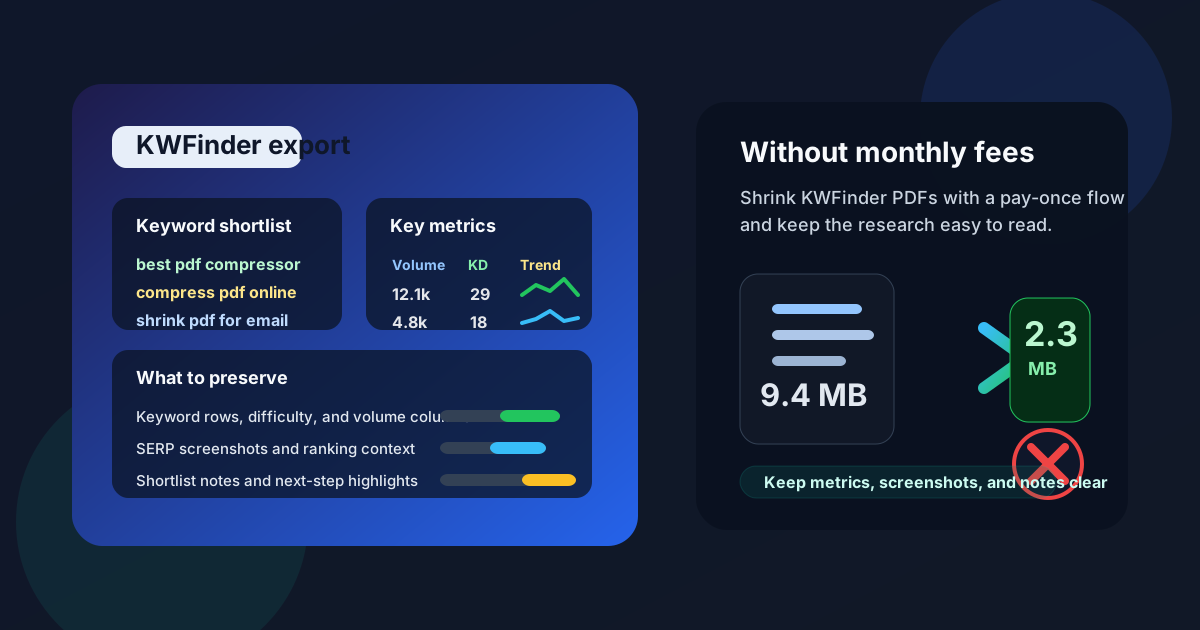
Table of contents
- Quick start: compress a KWFinder PDF in under 2 minutes
- Why "without monthly fees" matters for KWFinder exports
- Why smaller PDFs work better in KWFinder workflows
- What size should you aim for?
- Which compression level should you choose?
- Step-by-step: use LifetimePDF to shrink the file
- Best approach for common KWFinder PDFs
- What to do if the PDF is still too large
- How to keep keyword tables and SERP snapshots readable
- Workflow habits that reduce PDF bloat
- Related LifetimePDF tools and internal links
- FAQ (People Also Ask)
Quick start: compress a KWFinder PDF in under 2 minutes
If your real goal is simply make this KWFinder PDF smaller so it is easier to share, this workflow is usually enough:
- Open Compress PDF.
- Upload the KWFinder export, SERP snapshot, shortlist, or client-ready keyword summary you want to shrink.
- Choose Medium compression first.
- Download the smaller result and compare the new size.
- Preview the parts that matter most: keyword columns, search volume, difficulty scores, trend lines, SERP screenshots, notes, and any priority tags.
- If the PDF is still bulky, use Extract Pages, Split PDF, or Delete Pages instead of repeatedly crushing the whole file.
Why "without monthly fees" matters for KWFinder exports
This search intent is practical. You already have the keyword research. You already know which terms matter. Now you just need a cleaner file for the next step. That is why the "without monthly fees" angle matters so much.
If you already pay for keyword research, rank tracking, content tools, or other SEO software, another recurring bill just to shrink a PDF feels unnecessary fast. Compression is usually a finish-line task. It should feel quick, boring, and dependable. A pay-once workflow fits that job much better than turning document cleanup into its own subscription.
There is also the common frustration of tools that act free until the moment you need the file back. You upload the research pack, wait, and then hit a paywall at download time. That is exactly the kind of friction people are trying to avoid when they search for a no-subscription KWFinder PDF workflow.
KWFinder already handles the research work. Your PDF cleanup step does not need to become another monthly line item.
Why smaller PDFs work better in KWFinder workflows
KWFinder exports usually exist because the research needs to leave the original tab and become useful to someone else. Maybe you are sending a shortlist to a writer. Maybe you are packaging keyword options for a client. Maybe you are storing SERP evidence with notes for later. In each case, a smaller PDF helps because it lowers friction without changing the actual research.
Heavy keyword PDFs often happen for ordinary reasons: too many screenshots, repeated SERP views, long appendices, multiple audience versions bundled together, or one oversized research pack trying to serve everybody at once. Compression helps, but the real win is giving each reader a file that feels easier to open, easier to trust, and easier to act on.
- Writers can open the shortlist faster and start drafting sooner.
- Clients get a cleaner deliverable that feels less bulky and more intentional.
- SEO teammates can review the reasoning without digging through an oversized appendix.
- Your future self gets lighter archives that are easier to reopen later.
- Delivery channels like email and client portals are less likely to reject the file.
What size should you aim for?
There is no perfect universal number because a one-page keyword shortlist behaves differently from a screenshot-heavy research deck. Still, practical targets make the decision easier.
| KWFinder PDF type | Recommended target | Why it works |
|---|---|---|
| Focused keyword shortlists and quick handoffs | Under 2MB | Easy to email, upload, and review quickly |
| Typical keyword research packs and client-ready summaries | 2MB to 5MB | Usually the best balance between readability and convenience |
| Screenshot-heavy SERP evidence packs or long appendices | 5MB+ | Still workable internally, but often a sign the file should be trimmed or split |
Audience matters too. A strategist may want deeper evidence. A writer often only needs the target list plus a little context. A client usually benefits from a tighter story-first summary. If the next reader does not need every screenshot and filter view, a smaller focused PDF is usually better than a heavily compressed everything-file.
Which compression level should you choose?
Most KWFinder PDFs should start with Medium compression. It is usually strong enough to matter while still gentle enough to preserve the columns, trends, and screenshots people actually inspect.
- Low compression: best when the file is only slightly too large and you want the gentlest change possible.
- Medium compression: the safest default for most KWFinder exports because it trims size while keeping keyword metrics, search volume, difficulty, CPC, and note clarity intact.
- High compression: worth considering only when the PDF is still too heavy after cleanup and you are willing to review every dense section carefully.
The main risk of jumping straight to the strongest setting is that the smallest useful details degrade first. Difficulty scores, search-volume columns, trend graphs, keyword tags, and SERP screenshot labels are exactly the parts readers still need. That is why a medium-first workflow is safer.
Step-by-step: use LifetimePDF to shrink the file
- Export only the KWFinder pages you actually plan to share. Do not package every draft view, screenshot, and backup note by default.
- Open Compress PDF.
- Upload the file. This could be a keyword shortlist, SERP snapshot, grouped research pack, content-planning handoff, or client summary PDF.
- Select Medium compression. This is the safest first pass for most KWFinder workflows.
- Download the smaller copy.
- Check the high-risk details. Review keyword text, volume columns, difficulty scores, CPC values, trend graphs, SERP screenshots, highlights, URLs, and action notes.
- If the file is still too large, reduce page count before increasing pressure. Use Extract Pages, Split PDF, or Delete Pages.
That order matters. Compress first, review once, and then trim excess pages if needed. Most of the time, that gets you where you need to go without turning ordinary keyword research delivery into a document-management project.
Good workflow: compress first, then decide whether you also need page extraction, splitting, metadata cleanup, or margin trimming.
Best approach for common KWFinder PDFs
1) Focused keyword shortlists
These usually compress well because they are mostly text and tables. Medium compression is often enough. The key check afterward is whether the smallest keyword rows, scores, and quick notes still scan comfortably.
2) SERP snapshots with screenshots
These can grow faster because images add weight quickly. Compress first, but be careful not to blur the screenshot details that explain why the keyword is attractive or difficult. If the evidence matters more than the extra supporting pages, trim the file before you push compression harder.
3) Grouped research packs
These often include several keyword clusters, notes for multiple pages, and context for more than one stakeholder. If different people only need different sections, splitting the pack usually works better than forcing stronger compression across the whole document.
4) Client-ready keyword summaries
These need to feel polished and easy to trust. A smaller PDF helps, but only if it still keeps the keyword logic readable. If the file includes a long appendix, a short summary PDF plus a separate evidence pack is often the better move.
What to do if the PDF is still too large
If Medium compression helps but not enough, the next answer is usually not "compress harder immediately." It is usually "share less PDF."
- Extract only the shortlist or summary pages.
- Split the main recommendation file from the appendix.
- Remove repeated screenshots or outdated research pages.
- Delete cover pages, drafts, or note sections that do not matter to the next reader.
- Crop oversized margins if screenshots carry too much empty space.
In real keyword workflows, the summary usually does most of the communication. The appendix exists to support it, not overwhelm it. Sharing a tighter PDF often works better than crushing one oversized export harder.
Still too heavy? Keep the concise research summary for sharing and move the deep appendix into a second file.
How to keep keyword tables and SERP snapshots readable
A compressed KWFinder PDF only helps if people can still use it. Your review should be specific, not vague.
- Can you still read the smallest keyword rows without zooming aggressively?
- Do search volume, difficulty, CPC, and trend values remain easy to scan?
- Are screenshot labels and SERP details still clear enough to support the recommendation?
- Do any highlights, tags, or notes still look dependable at normal zoom?
- Would a writer or client understand the takeaway quickly from the shared version?
You do not need perfect print-poster quality. You need a file that still communicates the keyword decision clearly. If the compressed copy still tells that story cleanly, it is doing its job.
Workflow habits that reduce PDF bloat
The easiest KWFinder PDFs to compress are the ones that were packaged intelligently in the first place. A few habits make a real difference:
- Export audience-specific versions instead of an everything-for-everyone deck.
- Keep the short keyword summary separate from the deeper appendix whenever possible.
- Use only the screenshots that actually support the recommendation.
- Trim repeated commentary and stale research pages before export.
- Archive the full pack if you need it, but share the lighter working copy by default.
Smaller PDFs often feel more professional because they respect the reader's time as well as their inbox. That matters just as much as the raw file size.
Related LifetimePDF tools and internal links
If you work with KWFinder exports regularly, these tools pair well with the main compression workflow:
- Compress PDF for the first size-reduction pass.
- Extract Pages when only the shortlist or summary needs to travel.
- Split PDF when the main recommendation and appendix should become separate files.
- Delete Pages for duplicate covers, stale notes, or repeated screenshots.
- Crop PDF to trim wasted margins around screenshot-heavy pages.
- PDF Metadata Editor if you want a cleaner external-facing file.
- Compress PDF for KWFinder for the broader workflow without the no-subscription angle.
- Compress PDF for SERPChecker Without Monthly Fees, Compress PDF for SERPWatcher Without Monthly Fees, and Compress PDF for Mangools if you are standardizing a wider Mangools reporting workflow.
Want the short version? Compress the KWFinder PDF first, then split or extract pages only if the pack is still bigger than your delivery channel likes.
FAQ (People Also Ask)
How do I compress a PDF for KWFinder without monthly fees?
Use a pay-once PDF tool like LifetimePDF, upload the KWFinder export, start with Medium compression, and review the smaller result before sharing it. If the file is still too large, split or extract the pages people actually need instead of over-compressing the entire research pack.
What file size is best for KWFinder PDFs?
Under 2MB is a practical target for focused keyword shortlists and single-topic handoffs. Broader research packs, SERP snapshots, and client-ready briefing PDFs usually work better around 2MB to 5MB as long as keyword columns and screenshot details still look clear.
Will compressing a KWFinder PDF make keyword tables blurry?
Usually not if you start with Medium compression and review the result once. The main risk is with the smallest metric columns, trend graphs, tags, and screenshot annotations, so those are the parts worth checking first.
Why look for a KWFinder PDF compressor without monthly fees?
Because the research work is already done. Shrinking the exported PDF is a routine finish-line task, and a pay-once workflow makes more sense than adding another recurring subscription just to make the file smaller.
What if my KWFinder PDF is still too large after compression?
Extract the shortlist pages, split the appendix, remove repeated screenshots, and delete stale support pages before pushing compression harder. In many KWFinder workflows, sharing a smaller focused PDF works better than crushing one oversized export.
Published by LifetimePDF - Pay once. Use forever.