Compress PDF for SERPWatcher Without Monthly Fees: Shrink Rank Tracking Reports, Visibility Trends, and Client PDFs Without Another Subscription
If you need to compress a PDF for SERPWatcher without monthly fees, use a pay-once PDF tool, start with Medium compression, and keep the smaller file only if keyword rows, trend charts, and notes still look clear.
For most SERPWatcher exports, that is enough to shrink rank tracking reports, visibility trend recaps, and client PDFs without adding another recurring charge to your SEO workflow.
SERPWatcher already did the important work: it captured ranking movement, visibility changes, and the snapshot you need to share. The PDF step should be simple. Most people searching this keyword are not shopping for another platform. They just need the export to upload faster, open cleanly, and feel less bulky in email, Slack, client portals, or shared drives. The goal is not the tiniest file possible. The goal is a smaller file that still preserves the ranking story.
Fastest path: run the SERPWatcher export through LifetimePDF's Compress PDF tool, begin with Medium compression, and split or extract pages only if the report is still heavier than you want.
In a hurry? Jump to Quick start: compress a SERPWatcher PDF in under 2 minutes.
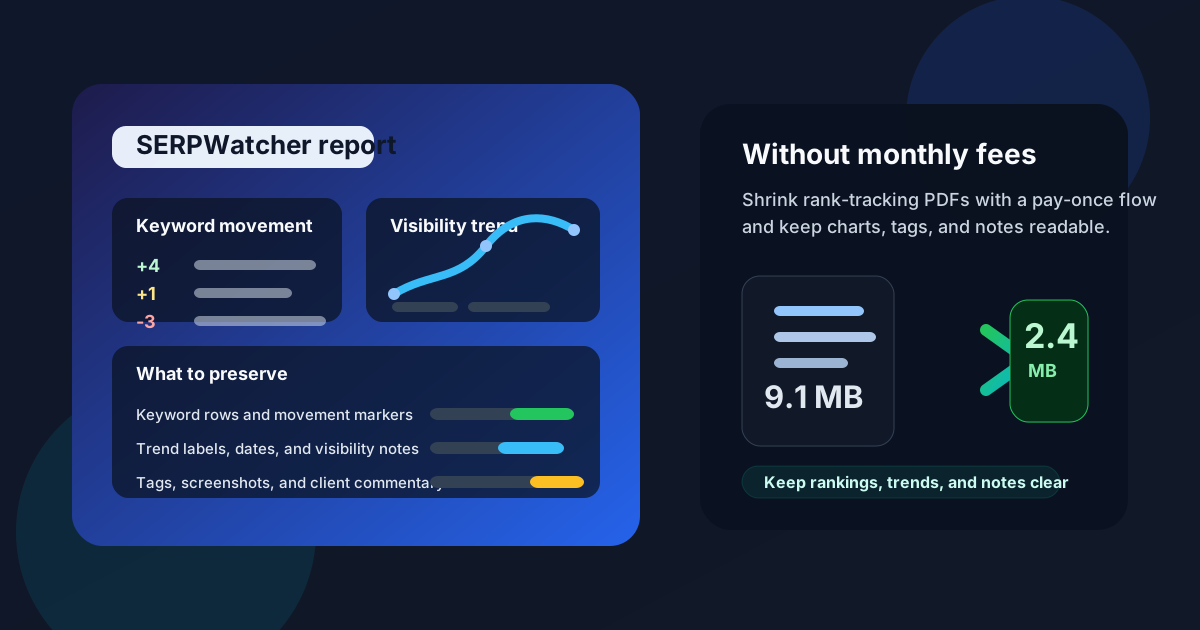
Table of contents
- Quick start: compress a SERPWatcher PDF in under 2 minutes
- Why "without monthly fees" matters for SERPWatcher exports
- Why smaller PDFs work better in SERPWatcher workflows
- What size should you aim for?
- Which compression level should you choose?
- Step-by-step: use LifetimePDF to shrink the file
- Best approach for snapshots, visibility reports, and client packs
- What to do if the PDF is still too large
- How to keep rankings and trend charts readable
- Workflow habits that reduce PDF bloat
- Related LifetimePDF tools and internal links
- FAQ (People Also Ask)
Quick start: compress a SERPWatcher PDF in under 2 minutes
If your real goal is simply make this SERPWatcher PDF smaller so it is easier to share, this workflow is usually enough:
- Open Compress PDF.
- Upload the SERPWatcher export you want to shrink.
- Choose Medium compression first.
- Download the smaller file and compare the new size.
- Preview the details that matter most: keyword rows, positions, movement arrows, visibility charts, date ranges, tags, notes, and screenshots.
- If the PDF is still bulky, use Extract Pages, Split PDF, or Delete Pages instead of repeatedly crushing the whole report.
Why "without monthly fees" matters for SERPWatcher exports
The search intent here is practical, not abstract. You already have access to the ranking data. You are not looking for another all-in-one SEO suite just to finish the last step. You want the exported PDF to become lighter without paying a second recurring bill for a job that takes a few minutes.
That is why the no-subscription angle matters. If you already pay for rank tracking, audits, keyword research, analytics, or reporting tools, another monthly charge just to shrink a file feels unnecessary fast. PDF cleanup is finish-line work. A pay-once workflow fits the task better than stacking one more SaaS subscription onto the stack.
There is also the common trap of tools that look free until the download step. You upload the report, wait for processing, and then hit a paywall right when you need the file back. For routine reporting work, that kind of friction is worse than the oversized PDF you started with.
SERPWatcher already handles the ranking work. The PDF cleanup step does not need to become another recurring subscription.
Why smaller PDFs work better in SERPWatcher workflows
SERPWatcher exports usually exist because someone needs a fixed, shareable view of ranking movement outside the live tool. Maybe it is a client recap. Maybe it is a weekly visibility trend update. Maybe it is proof that a page gained or lost ground after a content change. In every case, the value comes from how quickly somebody can open the file and understand the story.
Large SERPWatcher PDFs usually happen for ordinary reasons: long date ranges, repeated location or device views, grouped keyword sections, appendix pages for several audiences, or screenshot-heavy commentary. Compression helps, but the bigger win often comes from keeping the report focused. The best PDF is not the smallest possible PDF. It is the smallest file that still lets someone trust the rankings, read the notes, and interpret the chart.
- Faster sharing: lighter files move through email, chat, and client portals more easily.
- Faster review: teammates and clients open smaller PDFs with less friction.
- Cleaner archives: recurring rank snapshots take up less space when you save them every week or month.
- Less back-and-forth: one good compression pass avoids the "file too large" follow-up.
- Better client experience: a focused compact report feels more deliberate than a huge attachment stuffed with every possible export.
What size should you aim for?
There is no perfect universal number because a one-page keyword snapshot behaves differently from a long multi-market visibility pack. Still, practical targets help.
| Use case | Recommended target | Why it works |
|---|---|---|
| Single-keyword snapshots, quick client proofs, short ranking updates | < 2MB | Easy to send, quick to preview, and low-friction for busy readers |
| Weekly or monthly rank-tracking recaps, visibility trend reports, grouped keyword sections | 2MB to 5MB | Usually the best balance between readability and convenience |
| Large appendix packs, multi-location comparisons, screenshot-heavy evidence archives | 5MB+ | Still workable internally, but often a sign the document should be split or trimmed before wider sharing |
The audience matters too. An SEO specialist may accept a denser appendix. A client, executive, or writer usually benefits from a shorter summary that highlights the key movement first. If the reader only needs the story plus a few proof points, a smaller focused PDF often beats a heavily compressed version of everything.
Which compression level should you choose?
Most SERPWatcher PDFs should start with Medium compression. It is usually strong enough to matter while still gentle enough to preserve the small details people actually inspect.
- Low compression: best when the file is only slightly too large and you want the gentlest possible change.
- Medium compression: the safest default for most SERPWatcher exports because it trims size while keeping keyword rows, chart labels, tags, dates, and notes readable.
- High compression: worth trying only when the file is still too large after cleanup and you are willing to review every dense section carefully.
The main risk of jumping straight to the strongest setting is that the most valuable details degrade first. Small movement arrows, chart legends, location labels, URLs, and note callouts are often the first things to become annoying. That is why a medium-first workflow is safer.
Step-by-step: use LifetimePDF to shrink the file
- Export only the SERPWatcher view you actually need. Do not bundle every keyword group, device, and location variation by default.
- Open Compress PDF.
- Upload the PDF. This might be a keyword snapshot, visibility recap, grouped ranking report, or client-ready summary pack.
- Choose Medium compression. This is the safest first pass for most SERPWatcher documents.
- Download the smaller copy.
- Check the high-risk areas. Review keyword positions, movement indicators, chart labels, date ranges, location or device tags, and any annotations.
- If the file is still too large, reduce page count before increasing pressure. Use Extract Pages, Split PDF, or Delete Pages.
That order matters. Compress first, review once, and then trim excess pages if needed. Most of the time, that gets you where you need to go without turning a quick ranking handoff into a document-management project.
Good workflow: compress first, then decide whether you also need page extraction, splitting, cleanup, margin trimming, or metadata cleanup.
Best approach for snapshots, visibility reports, and client packs
1) One-page keyword snapshots
These usually compress well. If the PDF is mostly one keyword view with a few comments, Medium compression is often enough to get the file comfortably below common sharing limits without hurting readability.
2) Visibility trend recaps
These reports depend on charts, date ranges, and context. Compression helps, but be careful not to overdo it. If the trend line, time labels, or comparison notes become fuzzy, the whole point of the report weakens.
3) Grouped keyword or multi-location packs
These can grow quickly because each section adds more tables, repeated headers, and supporting screenshots. If the audience only needs one market, one group, or one device view, split the pack instead of forcing stronger compression across everything.
4) Client explanation PDFs
These often pick up extra weight from cover pages, commentary slides, screenshots, and appendix sections. Compress the file, but also ask whether the client really needs every raw ranking page in the same PDF as the summary.
What to do if the PDF is still too large
If compression alone does not get the file where you want it, do not assume the next answer is stronger compression. Often the better move is smarter packaging.
- Split the summary report from the long appendix.
- Extract only the pages relevant to the reader.
- Remove repeated screenshots or near-identical ranking captures.
- Delete stale support pages, duplicate covers, or extra context nobody needs in the handoff.
- Keep the short client-ready file lean and move the deeper reference material into a second PDF.
In real workflows, the summary file usually does most of the communication. The appendix exists to support it, not to overwhelm it. Sharing less PDF often works better than crushing one oversized attachment harder.
Still too heavy? Keep the concise report for sharing and move the deeper evidence pack into a second file.
How to keep rankings and trend charts readable
A compressed SERPWatcher PDF only helps if people can still use it. Your quality check should be specific, not vague.
- Can you still read keyword positions and movement markers without zooming aggressively?
- Do chart labels, date ranges, and visibility percentages remain easy to scan?
- Are device, location, or tag labels still clear?
- Can somebody follow the context that explains why rankings moved?
- Do the summary notes still feel clear enough to act on?
You do not need the PDF to look perfect at extreme zoom. You need it to feel dependable at the size people actually use. If the compressed copy still communicates the ranking story cleanly, it is doing its job.
Workflow habits that reduce PDF bloat
The easiest SERPWatcher PDFs to compress are the ones that were packaged intelligently in the first place. A few habits make a real difference:
- Export the audience-specific version instead of the everything-for-everyone version.
- Keep the short client summary separate from the deeper appendix whenever possible.
- Use screenshots selectively instead of stacking several examples that show the same point.
- Trim duplicate cover pages, repeated commentary, or stale support sections.
- Archive the full evidence pack if you need it, but share the lighter story-first PDF by default.
Smaller PDFs often feel more professional because they respect the reader's time as well as their inbox. That matters just as much as the raw file size.
Related LifetimePDF tools and internal links
If you work with SERPWatcher exports regularly, these tools pair well with the main compression workflow:
- Compress PDF for the first size reduction pass.
- Extract Pages when only the summary or a few ranking views need to travel.
- Split PDF when the summary and appendix should become separate files.
- Delete Pages for duplicate covers, stale support pages, or repeated screenshots.
- Crop PDF to trim wasted margins around screenshot-heavy pages.
- PDF Metadata Editor if you want a cleaner external-facing file.
- Compress PDF for SERPWatcher for the broader workflow without the no-subscription angle.
- Compress PDF for SERPChecker Without Monthly Fees, Compress PDF for KWFinder, and Compress PDF for Mangools if you are standardizing a wider Mangools reporting workflow.
Want the short version? Compress the PDF first, then split or extract pages only if the pack is still bigger than your delivery channel likes.
FAQ (People Also Ask)
How do I compress a PDF for SERPWatcher without monthly fees?
Use a pay-once PDF tool like LifetimePDF, upload the SERPWatcher export, start with Medium compression, and review the smaller result once before sharing it. If the file is still too large, split or extract the pages people actually need instead of over-compressing the entire report.
What file size is best for SERPWatcher reports?
Under 2MB is a practical target for quick keyword snapshots and short client updates. Broader rank-tracking recaps and visibility trend reports usually work better around 2MB to 5MB as long as keyword rows, chart labels, and notes still look clear.
Will compressing a SERPWatcher PDF make rankings or charts blurry?
Usually not if you start with Medium compression and review the result once. The biggest risk is with small movement markers, chart labels, dates, location tags, and annotations, so those are the parts worth checking first.
Why look for a SERPWatcher PDF compressor without monthly fees?
Because the ranking work is already done. Shrinking the exported PDF is a routine finish-line task, and a pay-once workflow makes more sense than adding another recurring subscription just to make reports smaller.
What if my SERPWatcher PDF is still too large after compression?
Split the appendix, extract the summary pages, remove duplicate screenshots, and delete stale support pages before pushing compression harder. In many SERPWatcher workflows, sharing a smaller focused PDF works better than crushing one oversized report.
Published by LifetimePDF - Pay once. Use forever.