Compress PDF for SERPWatcher: Share Smaller Rank Tracking Reports, Keyword Snapshots, and Client PDFs Faster
To compress a PDF for SERPWatcher, export or print the report as PDF, upload it to Compress PDF, start with Medium compression, and keep the smaller copy only if keyword rows, movement arrows, visibility charts, and notes still look clear.
For most SERPWatcher PDFs, under 2MB works well for short weekly ranking updates and stakeholder snapshots, while broader tag-based recaps, location or device views, and client-ready reporting packs usually work best around 2MB to 4MB.
If the file is still heavy, split long appendices, remove repeated chart pages, or extract only the keyword groups your next reader actually needs before you try stronger compression.
SERPWatcher PDFs usually show up when live ranking data needs to leave the dashboard and become something another person can scan quickly. That might be a weekly keyword movement update, a monthly visibility recap, a tagged campaign report for a client, or a location-by-location snapshot before a strategy call. Smaller PDFs make those handoffs smoother. They upload faster, feel lighter in email and project tools, and create less friction when the real goal is deciding what changed, what deserves attention, and what to do next. The best result is not the tiniest possible file. The best result is a lighter PDF that still feels dependable when someone checks keyword rows, ranking changes, date labels, visibility trends, and the notes that explain the story behind the movement.
Fastest path: Run the SERPWatcher export through LifetimePDF's Compress PDF tool at Medium, then do one quick readability check before you email, upload, or archive the smaller copy.
Short on time? Jump to Quick start: compress a PDF for SERPWatcher in under a minute.
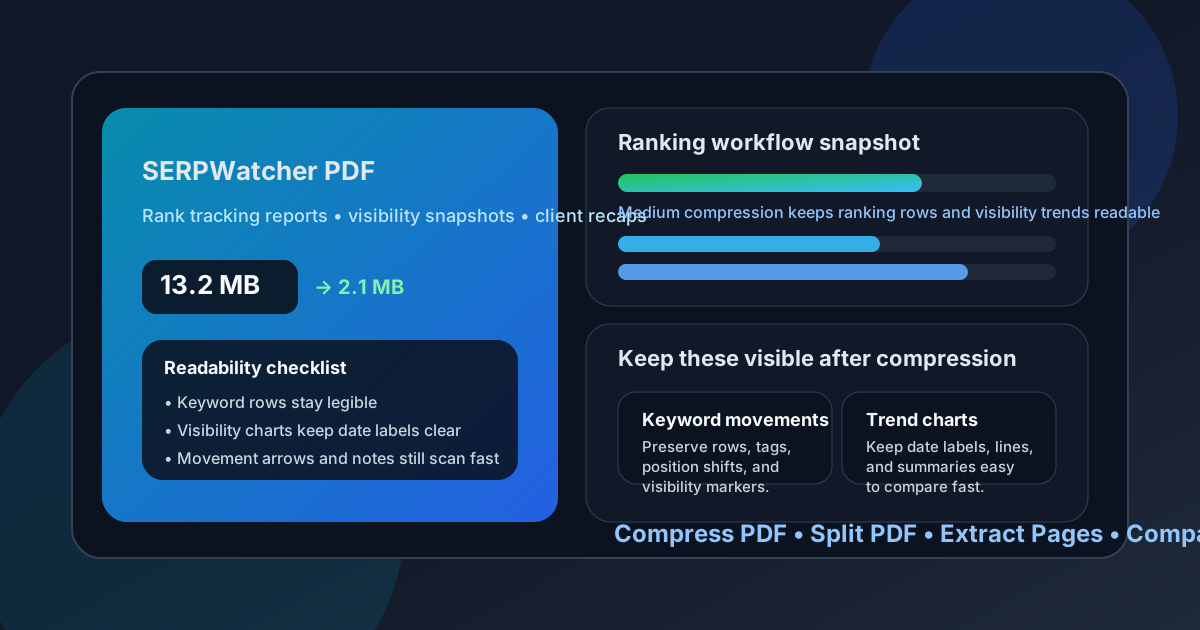
Table of contents
- Quick start: compress a PDF for SERPWatcher in under a minute
- Why smaller PDFs help in SERPWatcher workflows
- What file size should you aim for?
- Which compression level should you choose?
- Step-by-step: shrink a PDF with LifetimePDF
- Best strategy for different SERPWatcher PDF types
- What if the PDF is still too large?
- How to keep rankings, charts, and notes readable
- Workflow habits that reduce PDF bloat
- Related LifetimePDF tools and internal links
- FAQ (People Also Ask)
Quick start: compress a PDF for SERPWatcher in under a minute
If your real goal is simply make this SERPWatcher PDF smaller so it is easier to send, review, and save, this is the shortest reliable workflow:
- Open Compress PDF.
- Upload the SERPWatcher ranking recap, visibility snapshot, tag-based report, device comparison, or client-ready PDF you want to shrink.
- Choose Medium compression first.
- Download the smaller file and compare the new size with the original.
- Open it once to check keyword rows, movement arrows, visibility charts, date labels, filters, and summary notes.
- If the file is long, use Split PDF or Extract Pages to keep only the pages the next reader actually needs.
- If the pack includes repeated chart pages, duplicate snapshots, or appendix sections for markets the recipient does not need, trim that weight before trying a stronger compression level.
Why smaller PDFs help in SERPWatcher workflows
SERPWatcher reports usually exist because someone needs a fixed version of rank-tracking data outside the app. Maybe you are sharing a weekly rankings recap with a client, comparing winners and losers before a strategy meeting, or attaching a visibility report to a ticket so everyone is looking at the same snapshot. That is where file size starts to matter.
Heavy PDFs are slower to upload, more annoying to forward, and easier for busy readers to postpone. In practice, the extra weight often comes from long keyword tables, multiple date-range charts, repeated branded pages, or one oversized report trying to serve several audiences at once. Good compression is not about crushing every file to the smallest possible number. It is about trimming waste while keeping the details people still rely on, such as keyword rows, ranking movement, visibility trends, tags, date ranges, and concise recommendations.
When a PDF feels lighter and cleaner, people are more likely to actually use it. That matters whether you are delivering a quick leadership update or a deeper client report exported from SERPWatcher.
Why compression usually helps
- Faster client delivery: smaller PDFs are easier to email, upload into dashboards, and attach to recap messages.
- Smoother internal handoffs: lighter files are easier for analysts, account managers, and content teams to open when they only need the latest ranking evidence.
- Cleaner archives: recurring ranking exports take up less space when they are not bloated with duplicate chart sections and stale appendix pages.
- Better mobile review: managers and clients are more likely to scan a lighter PDF on a laptop or tablet without friction.
What file size should you aim for?
The right target depends on what the PDF is for. A short keyword update does not need the same amount of detail as a location-by-location comparison or a monthly client pack.
- Under 2MB: usually a good target for short ranking updates, visibility snapshots, and quick stakeholder recaps.
- 2MB to 4MB: usually realistic for broader keyword-group comparisons, tag-based reports, and client-ready monthly packs.
- Over 4MB: often a sign the file includes too many appendix pages, repeated charts, or several audiences that should receive separate PDFs.
Do not chase the smallest number if the file becomes harder to use. If a client cannot read the movement arrows or a strategist cannot follow the date labels on a visibility chart, the file is smaller but not better.
Which compression level should you choose?
Start with Medium compression first. It is usually the best fit for SERPWatcher exports because it lowers file size without flattening the useful details that make a rank-tracking report actionable.
- Low compression: good when the PDF already looks clean and only needs a modest size reduction.
- Medium compression: the best default for most SERPWatcher PDFs because it balances smaller files with readable keyword rows, trend charts, and notes.
- High compression: better as a fallback only when delivery limits are strict and you are willing to double-check every chart legend, keyword row, and date range carefully.
Step-by-step: shrink a PDF with LifetimePDF
- Export the SERPWatcher file as PDF. Save the ranking summary, tagged report, visibility recap, or client update you actually need to share.
- Upload it to Compress PDF. Use LifetimePDF's compressor in your browser.
- Choose Medium compression. This is usually the safest first pass for mixed ranking reports.
- Download the smaller PDF. Compare the file size before and after compression.
- Check the most important details. Review keyword rows, movement arrows, date labels, visibility charts, filters, and summary notes.
- Trim extras if needed. If the file is still large, use Delete Pages, Extract Pages, or Split PDF before trying stronger compression.
Best strategy for different SERPWatcher PDF types
Not every SERPWatcher export should be compressed the same way. Use the report's job to guide how aggressive you are.
Weekly ranking updates
These usually compress well. If the PDF is mostly keyword movements, position changes, and one or two charts, Medium compression is often enough to get the file comfortably below common sharing limits without hurting readability.
Visibility trend reports
These often combine charts, tag filters, and commentary about gains or losses. Keep an eye on narrow chart labels and short date markers. If the smallest text starts to blur, it is better to keep a slightly larger file than to sacrifice the context that explains what actually changed.
Location, device, or tag-based recaps
These tend to grow quickly because each segment adds more tables and more charts. Compression helps, but splitting one oversized report into clearer sections by market, device, or keyword tag often helps more.
Monthly client ranking packs
These usually pick up extra weight from branded covers, commentary pages, screenshots, and appendix sections. Compress the file, but also ask whether the client really needs every raw keyword group in the same PDF as the executive summary.
What if the PDF is still too large?
If Medium compression does not get you far enough, the problem is often the document structure rather than the compression setting itself.
- Split the file by audience: one PDF for the executive summary, another for the full keyword appendix.
- Extract only the necessary pages: keep the pages the next reader actually needs and drop the rest for the current handoff.
- Delete duplicate pages: repeated chart sections, branded covers, and stale appendix pages add weight without adding value.
- Crop oversized margins: this can help chart-heavy pages look tighter and cleaner.
- Re-export a leaner source PDF: if possible, reduce unneeded keyword tags or date ranges before you create the PDF in the first place.
In other words, if the file is still bulky after one reasonable compression pass, think like an editor, not just a compressor.
How to keep rankings, charts, and notes readable
Before you send the smaller PDF, do one quick quality pass. It only takes a moment, and it prevents the common mistake of creating a lighter file that no one enjoys reading.
- Check that keyword rows and ranking movements are still easy to scan.
- Make sure date labels and chart legends do not blur together.
- Review tag, device, and location labels so the context remains obvious.
- Open any page with side-by-side charts or screenshots and make sure the smallest useful text still feels readable.
- Confirm the main summary page still looks clean enough for a client or manager to understand without extra explanation.
Workflow habits that reduce PDF bloat
A lot of oversized SERPWatcher PDFs are created long before compression starts. A few simple habits make future exports easier to share.
- Export only the keyword groups you need: avoid printing every segment when the audience only needs one campaign, tag, or market view.
- Separate summary from appendix: keep leadership-level takeaways apart from long raw ranking tables.
- Trim repeated charts: use one clear trend view instead of several nearly identical screenshots.
- Archive the full source separately: share a lean PDF while keeping the heavier original for internal reference.
- Name files clearly: use clean titles and metadata so people can find the right version later.
Related LifetimePDF tools and internal links
Compressing the file is usually the first step, but not always the only one. These tools pair especially well with it:
- Compress PDF - shrink file size for easier sharing and quicker review
- Split PDF - break oversized ranking packs into audience-specific files
- Extract Pages - keep only the pages the next reader actually needs
- Delete Pages - remove duplicate, blank, or unnecessary appendix pages
- Crop PDF - trim oversized chart margins and empty space
- Compare PDFs - review reporting revisions more easily
- PDF Metadata Editor - clean document properties before client delivery
Suggested internal reading
- Compress PDF for Mangools
- Compress PDF for KWFinder
- Compress PDF for LinkMiner
- Compress PDF for Rank Tracker
- Compress PDF for AccuRanker
- Compress PDF for Nightwatch
- Compress PDF for SE Ranking
- Compress PDF Online
- How to Reduce PDF File Size for Email
- Browse all LifetimePDF articles
Ready to make your SERPWatcher PDF lighter? Start with compression, then trim pages or metadata only if you actually need to.
FAQ (People Also Ask)
How do I compress a PDF for SERPWatcher?
Export the SERPWatcher report as a PDF, upload it to an online PDF compressor, start with Medium compression, and preview the smaller result before you send it or archive it. Medium is usually the safest first pass because it cuts file size while keeping keyword rows, ranking changes, visibility charts, and summary notes readable.
What file size should I aim for before sharing a SERPWatcher PDF?
A practical target is under 2MB for short weekly ranking updates and quick stakeholder snapshots. For broader tag-based recaps, visibility trend reports, and client-ready monthly packs, 2MB to 4MB is usually more realistic.
Will compression make SERPWatcher charts or keyword tables blurry?
It can if you compress too aggressively. That is why Medium compression is usually the safest default. Always check keyword rows, movement arrows, date labels, chart legends, and notes before you keep the compressed copy.
Should I split a large SERPWatcher PDF instead of compressing it harder?
Often, yes. If one PDF combines an executive summary, raw keyword tables, location segments, screenshot evidence, and appendix pages for different readers, splitting it usually works better than forcing stronger compression across the whole file.
Which LifetimePDF tools pair best with SERPWatcher exports?
Compress PDF is the main starting point. Split PDF, Extract Pages, Delete Pages, Crop PDF, Compare PDFs, and PDF Metadata Editor all help create cleaner, smaller, client-ready SERPWatcher PDFs.
Need a smaller SERPWatcher-ready PDF right now?
Published by LifetimePDF - Pay once. Use forever.