Compress PDF for Keyword Insights Without Monthly Fees: Shrink Keyword Clusters, Search Intent Reports, and Client PDFs Without Another Subscription
If you need to compress a PDF for Keyword Insights without monthly fees, use a pay-once PDF tool, start with Medium compression, and keep the smaller copy only if cluster labels, intent notes, and screenshots still look clear.
For most Keyword Insights exports, that is enough to shrink keyword clusters, search intent reports, content brief packs, and client PDFs without adding another recurring subscription to your workflow.
Keyword research is already expensive in time and tools. The final PDF cleanup step should not be where another monthly charge sneaks in. If the report opens quickly, uploads easily, and still lets people read the useful details, you have solved the real problem.
Fastest path: export the Keyword Insights report, run it through LifetimePDF's Compress PDF tool, begin with Medium compression, and split or extract pages only if the file is still heavier than you want.
In a hurry? Jump to Quick start: compress a Keyword Insights PDF in under 2 minutes.
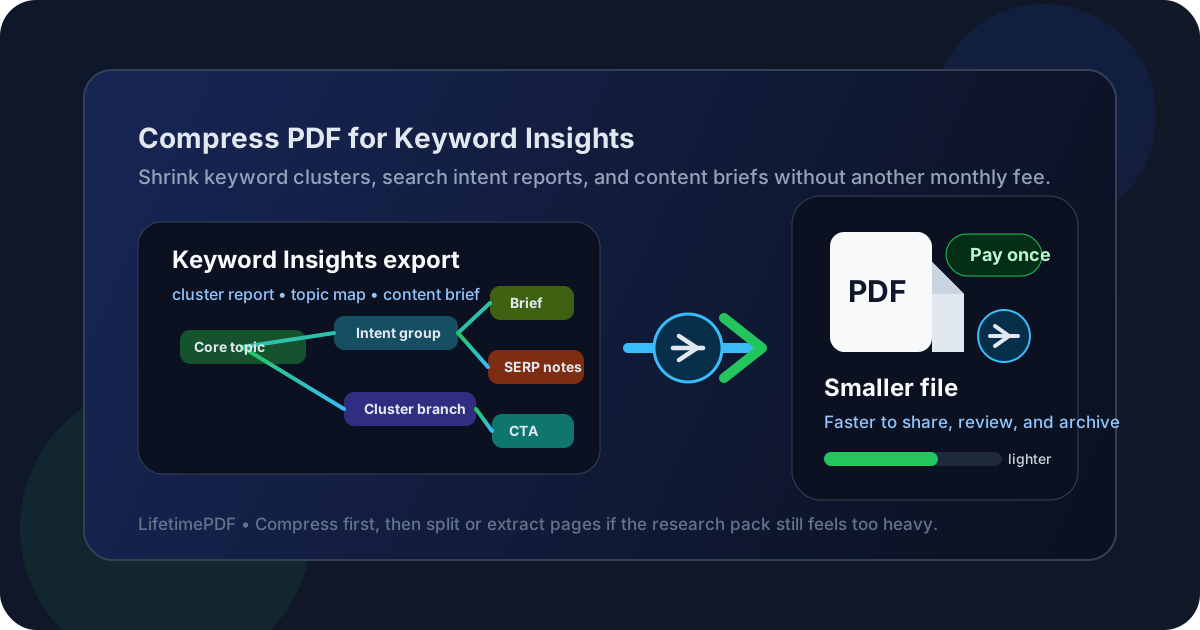
Table of contents
- Quick start: compress a Keyword Insights PDF in under 2 minutes
- Why "without monthly fees" matters for Keyword Insights exports
- Why smaller PDFs work better in Keyword Insights workflows
- What size should you aim for?
- Which compression level should you choose?
- Step-by-step: use LifetimePDF to shrink the file
- Best approach for common Keyword Insights report types
- What to do if the PDF is still too large
- How to keep clusters, screenshots, and notes readable
- Workflow habits that reduce PDF bloat
- Related LifetimePDF tools and useful reading
- FAQ (People Also Ask)
Quick start: compress a Keyword Insights PDF in under 2 minutes
If your real goal is simply make this Keyword Insights PDF smaller so it is easier to send, this workflow is usually enough:
- Export only the Keyword Insights file you actually need to share.
- Open Compress PDF.
- Upload the Keyword Insights PDF.
- Choose Medium compression first.
- Download the smaller file and compare the new size.
- Preview the parts that matter most: cluster labels, search-intent groupings, screenshots, topic branches, brief headings, and action notes.
- If the report is still bulky, use Extract Pages, Split PDF, or Delete Pages before you try stronger compression.
Why "without monthly fees" matters for Keyword Insights exports
The search intent here is practical. People are not looking for another research platform. They are trying to finish one narrow task after the real research work is already done.
Keyword Insights sits upstream from the PDF problem. It helps with clustering, search intent analysis, topical planning, and content decisions. But when it is time to hand that work to a client, writer, editor, or stakeholder, the handoff often becomes a PDF. That is when file size suddenly matters.
Paying another subscription just to shrink a finished export is hard to justify, especially when the task is repetitive and narrow. A pay-once workflow fits better. Use the research tool for research, then use a straightforward PDF tool to make the deliverable lighter.
Why smaller PDFs work better in Keyword Insights workflows
Keyword Insights exports often mix cluster logic with visuals, supporting notes, and brief-ready direction. That is useful, but it also creates heavy PDFs quickly. A single file may include search-intent groupings, topic maps, screenshots, writer notes, appendix material, and client commentary all at once.
Smaller PDFs help because they reduce friction exactly when the report needs to move. That could mean emailing a condensed cluster summary, attaching an intent report to a content brief, dropping a lighter file into a client portal, or archiving research packs without bloating your storage. When the file opens quickly and sends easily, the conversation stays on the content plan instead of the attachment.
- Keyword cluster summaries are easier to forward when they fit normal email and upload limits.
- Search intent reports feel more useful when writers can open them quickly during outlining.
- Topic maps and planning packs are easier to archive when recurring PDFs do not stack up as oversized files.
- Client PDFs look more polished when they are compact but still readable.
What size should you aim for?
There is no universal magic number, but there are practical targets that work for most Keyword Insights exports.
- Under 2MB: ideal for focused keyword clusters, writer handoffs, and compact search-intent summaries.
- 2MB to 5MB: usually right for broader topic maps, content brief packs, and client-ready strategy PDFs.
- Over 5MB: often means the file includes more appendix material, repeated screenshots, or extra support pages than the reader actually needs.
The right goal depends on where the file is going. If the PDF supports a quick handoff or email update, smaller is usually better. If it is a richer archive or workshop reference, preserving readability matters more than chasing the lowest possible number.
Which compression level should you choose?
Most people should begin with Medium compression. It is usually the safest balance for Keyword Insights reports because these PDFs often mix small text, dense tables, screenshots, topic branches, and recommendation notes.
- Low compression: best when the file is only slightly too large and you want the gentlest change possible.
- Medium compression: the default for most Keyword Insights exports because it reduces size while keeping cluster labels, screenshots, intent groups, and notes readable.
- High compression: only worth trying when the file is still too large after cleanup and you are willing to inspect every dense section carefully.
If you jump straight to the strongest setting, the first things to degrade are usually the exact details people still need: small cluster names, screenshot callouts, subtle topic branches, and short action notes. That is why a medium-first workflow is safer.
Step-by-step: use LifetimePDF to shrink the file
- Export only the Keyword Insights view you actually need. Avoid packaging every related section into one file by default.
- Open Compress PDF.
- Upload the PDF. This might be a keyword cluster report, search-intent summary, topic map, content brief pack, or client-ready handoff.
- Choose Medium compression. This is the best first pass for most research documents.
- Download the smaller copy.
- Review the high-risk areas. Check cluster labels, screenshot callouts, branch names, headings, supporting notes, and recommendations.
- If the file is still too big, reduce page count before increasing pressure. Use Extract Pages, Split PDF, or Delete Pages.
That order matters. Compress first, review once, then trim excess pages if needed. Most of the time, that gets you where you need to go without turning one small reporting task into document-management busywork.
Best approach for common Keyword Insights report types
Some Keyword Insights exports are naturally easier to compress than others. These are the common categories where a lighter PDF helps immediately:
- Keyword cluster summaries for writers or strategists who mainly need the grouping logic and next action.
- Search-intent reports where the big pattern matters more than every appendix page.
- Topic maps used to show content gaps, supporting subtopics, and cluster relationships.
- Content brief packs where the essential value is the summary plus a few proof pages.
- Client-ready strategy PDFs where the recommendation should move quickly and the raw backup can live in a second file.
The more a file leans toward summary plus supporting detail, the more likely it is that you can shrink it without hurting the reading experience. The riskiest files are the ones where every page is dense with tiny labels, side notes, or screenshot annotations. Those are the exports where review matters most.
What to do if the PDF is still too large
If compression alone does not get the file where you want it, do not assume the answer is stronger compression. Often the better move is smarter packaging.
- Split the executive summary from the full appendix.
- Extract only the cluster or topic sections relevant to the next reader.
- Remove repeated screenshots that prove the same point twice.
- Delete stale support pages, duplicate covers, or internal notes that do not need to travel.
- Keep the short client file lean and move the deeper research material into a second PDF.
In real content workflows, the summary file often does most of the communication. The supporting evidence can live in a second file or stay inside the research platform. That usually creates a better experience than forcing one giant all-in-one attachment through aggressive compression.
Still too heavy? Keep the concise report for sharing and move the evidence pack into a second file.
How to keep clusters, screenshots, and notes readable
The details worth protecting in a Keyword Insights PDF are usually small. That is why your quality check should be specific instead of vague.
- Can you still read the smallest useful cluster labels without zooming excessively?
- Are search-intent groupings and topic branches still obvious at a glance?
- Do screenshot callouts and page examples remain clear?
- Are headings, writer notes, and summary recommendations still easy to scan?
- If you added action points or next steps, are those comments still easy to compare?
You do not need the PDF to look perfect at extreme zoom. You need it to look dependable at the size real people will use. If the compressed copy still communicates the content plan cleanly, it is doing its job.
Workflow habits that reduce PDF bloat
The easiest PDFs to compress are the ones that were packaged intelligently in the first place. A few habits make a real difference:
- Export the audience-specific version instead of the everything-for-everyone version.
- Keep the short client summary separate from the deeper appendix whenever possible.
- Use screenshots selectively instead of stacking several examples that show the same point.
- Trim repeated covers, methodology pages, or duplicate internal notes.
- Archive the full research pack if you need it, but share the lighter story-first PDF by default.
That last point matters most. Writers, stakeholders, and clients usually want clarity, not maximum page count. Smaller PDFs often feel more professional because they respect the reader's time as well as their inbox.
Related LifetimePDF tools and useful reading
If you work with Keyword Insights exports regularly, these tools pair well with the main compression workflow:
- Compress PDF for the first pass.
- Extract Pages when only the summary or key sections need to travel.
- Split PDF when the report and appendix should become separate files.
- Delete Pages for duplicate covers, stale support pages, or unnecessary screenshots.
- Crop PDF for oversized screenshots with wasted margins.
- Lifetime Access if you want the pay-once route instead of adding another monthly PDF subscription.
- Compress PDF for Keyword Insights for the broader workflow without the no-subscription angle.
- Compress PDF for AlsoAsked, Compress PDF for AnswerThePublic, and Compress PDF for Content Harmony if you are standardizing a broader research workflow.
Want the short version? Compress the PDF first, then split or extract pages only if the research pack is still bigger than your delivery channel likes.
FAQ (People Also Ask)
How do I compress a PDF for Keyword Insights without monthly fees?
Use a pay-once PDF tool like LifetimePDF, upload the Keyword Insights export, start with Medium compression, and preview the smaller result before sharing it. If the report is still bulky, split or extract the pages people actually need instead of over-compressing the whole file.
What file size is best for Keyword Insights reports?
Under 2MB is a strong target for focused keyword clusters and concise intent summaries. Larger topic maps, content brief packs, and client-ready strategy PDFs usually work better around 2MB to 5MB as long as the smallest useful label or branch still looks clear.
Will compressing a Keyword Insights PDF make screenshots or cluster labels blurry?
Usually not if you start with Medium compression and review the result once. The biggest risk is with small labels, screenshot annotations, topic branches, and short notes, so those are the parts worth checking first.
Why look for a Keyword Insights PDF compressor without monthly fees?
Because shrinking exported reports is routine finish-line work, not something most teams want to rent forever. A pay-once workflow makes more sense when you need dependable compression without adding another recurring subscription to your stack.
What if my Keyword Insights PDF is still too large after compression?
Extract only the summary pages, split long appendix sections, remove repeated screenshots, and delete stale support pages before pushing compression harder. In many Keyword Insights workflows, sharing less PDF works better than crushing the whole file harder.