Compress PDF for Keywords Everywhere Without Monthly Fees: Shrink Keyword Research Exports, SERP Snapshots, and Client PDFs Without Another Subscription
To compress a PDF for Keywords Everywhere without monthly fees, export or print the report as PDF, upload it to Compress PDF, start with Medium compression, and keep the smaller copy only if keyword tables, CPC values, and SERP screenshots still look clear.
That gives you a lighter file you can share, store, or send to a client without adding another recurring subscription just to shrink research PDFs.
Need the fastest route? Use LifetimePDF's compressor first, then split or extract pages only if the research pack is still heavier than it needs to be.
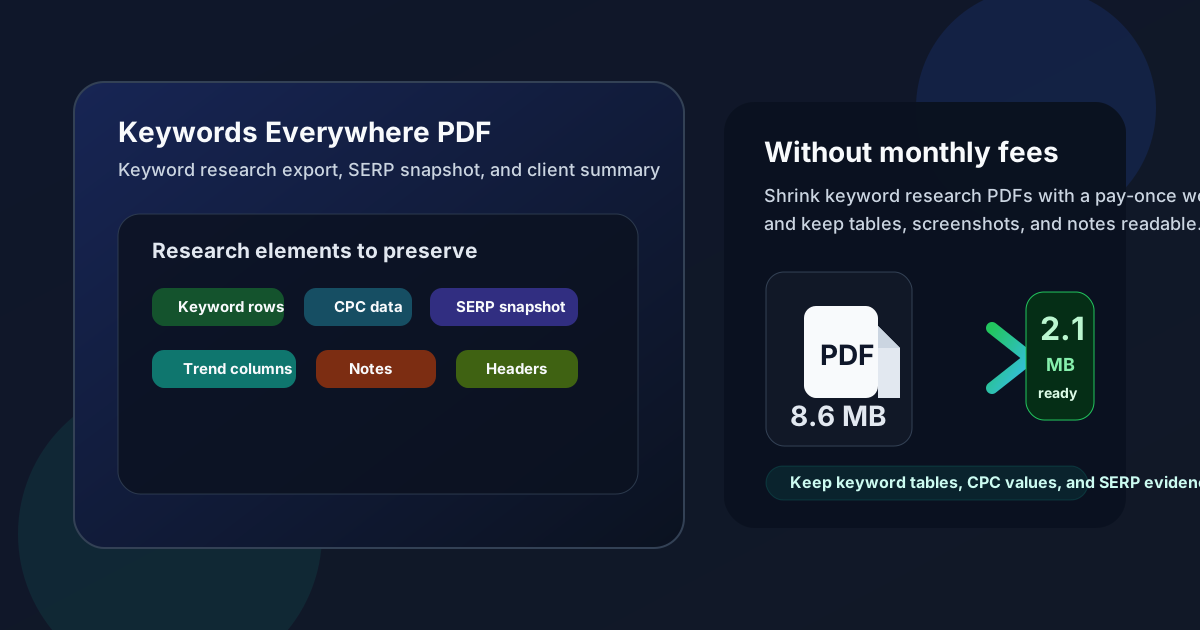
Table of contents
- Quick start: compress a Keywords Everywhere PDF without monthly fees
- Why the no-subscription angle matters
- What file size should you aim for?
- Which compression level should you choose?
- Step-by-step: shrink a Keywords Everywhere PDF with LifetimePDF
- Best strategy for exports, SERP snapshots, and client handoffs
- What if the PDF is still too large?
- How to keep keyword tables and screenshots readable
- Build a no-monthly-fee PDF workflow
- Related LifetimePDF tools and internal links
- FAQ (People Also Ask)
Quick start: compress a Keywords Everywhere PDF without monthly fees
If your real goal is simply make this Keywords Everywhere PDF smaller without adding another subscription, the shortest reliable workflow looks like this:
- Open Compress PDF.
- Upload the keyword research export, SERP snapshot recap, saved report, content planning summary, or client-ready PDF you want to shrink.
- Choose Medium compression first.
- Download the smaller file and compare it with the original once.
- Check the smallest useful details: keyword labels, search volume, CPC values, headings, notes, and screenshot text.
- If the file is still bulky, use Extract Pages or Delete Pages before trying a more aggressive setting.
Why the no-subscription angle matters
A lot of Keywords Everywhere PDFs are not everyday production assets. They are occasional research handoffs: a keyword shortlist for a writer, a SERP evidence pack for a strategist, a saved export for a client call, or a compact archive copy for future reference. In that kind of workflow, paying a monthly fee just to squeeze a few PDFs smaller can feel like unnecessary overhead.
The practical need is usually simple. You want the document to upload faster, open faster, and feel easier to share without damaging the parts that matter most. Those parts are not decorative. They are the actual decision-making details: keyword rows, search volume columns, CPC values, ranking intent notes, SERP captures, and any short explanation you added for context.
That is why a pay-once PDF workflow makes sense here. Instead of stacking another recurring tool onto an already crowded SEO setup, you can compress the report when you need to, trim unnecessary pages, and move on. It keeps the workflow lean without turning a simple file-size problem into another monthly software bill.
What file size should you aim for?
There is no perfect universal number because one-page keyword shortlists behave very differently from screenshot-heavy SERP recaps or longer client research packs. Still, useful size targets make it easier to decide whether a file is already practical or still carrying extra weight.
| Keywords Everywhere PDF type | Practical target | Why it works |
|---|---|---|
| Focused keyword shortlist | < 2MB | Easy to forward, quick to open, and usually enough for internal handoffs. |
| SERP snapshot recap | 1.5MB to 3MB | Leaves room for screenshots while still keeping the file comfortable to share. |
| Content planning summary | 2MB to 4MB | Works well when the document mixes tables, screenshots, and short commentary. |
| Client-ready research pack | 3MB to 5MB | More realistic when the PDF includes visual proof, context, and recommendations. |
| Archive copy with appendix pages | Flexible | Storage matters, but clarity usually matters more than chasing the absolute smallest number. |
The best target is the smallest size that still lets a normal reader understand the report without zooming into every line. If keyword headers look fuzzy, CPC values blur together, or SERP screenshots stop being useful, the file is smaller than it should be.
Which compression level should you choose?
The right compression level depends on what the PDF contains and how carefully someone needs to read it.
Low compression
- Best when the original file is only slightly too large.
- Useful if the PDF contains dense tables or smaller screenshot text.
- A good choice when clarity matters much more than saving the last bit of space.
Medium compression
- The best starting point for most Keywords Everywhere workflows.
- Good for keyword exports, SERP recaps, saved reports, and client summaries.
- Usually reduces size enough without making important details frustratingly soft.
High compression
- Best when file size matters more than perfect visual fidelity.
- Helpful for long screenshot-heavy packs that stay awkward after a Medium pass.
- Always review the smallest important text before you replace the original.
Quick win: if only part of the research matters, shorten the document first and then compress the smaller version.
Step-by-step: shrink a Keywords Everywhere PDF with LifetimePDF
Here is a reliable workflow if you want a smaller Keywords Everywhere-ready document without adding another monthly tool just to handle file size.
- Export the PDF you actually plan to share: use the final recap, final shortlist, or client-facing version instead of a working draft packed with unused extras.
- Open Compress PDF: drag in the file or choose it manually.
- Choose Medium compression: it is the safest first pass for most keyword research PDFs.
- Download the result: save the smaller version with a clear filename so you still know which copy is final.
- Open and review: check keyword labels, search volume, CPC values, screenshot headings, and short notes.
- Only then send it: a quick preview now is much easier than discovering later that the smallest labels became hard to read.
If the file is unexpectedly heavy, the problem is often structural rather than technical. Maybe the report contains repeated SERP captures, long appendix pages, extra screenshots for internal discussion, or multiple mini-reports that should have been separate files. Compression helps, but the best result often comes from combining compression with basic cleanup.
Best strategy for exports, SERP snapshots, and client handoffs
Not every Keywords Everywhere PDF should be handled the same way. The smartest approach depends on what kind of document you are sharing and who it is for.
Keyword research exports
These files often live or die on table readability. Search volume, CPC, competition signals, and labels have to stay easy to scan. Medium compression is usually enough, but always check the smallest columns before you keep the compressed version.
SERP snapshots
Screenshot-heavy reports can bloat quickly. Compression helps, but you get better results when you remove duplicate captures, unnecessary browser chrome, or oversized margins first. If only three screenshots matter, do not make the reader drag around fifteen.
Content planning summaries
These are often mixed documents with tables, notes, and brief screenshots. They usually respond well to Medium compression because the content is varied but still fairly structured. The main risk is losing crispness in subheadings or small annotations.
Client-ready PDFs
Client handoffs need clarity more than aggressive size reduction. A slightly larger PDF that feels polished is usually better than a smaller file that makes charts, tags, or commentary look muddy. If size is still an issue, split appendices away from the core summary instead of crushing the entire document harder.
What if the PDF is still too large?
If a Medium pass does not get you close enough, do not jump straight to the strongest setting and hope for the best. There are usually cleaner ways to reduce size first.
- Split the report: keep the main summary separate from screenshot appendices or backup notes.
- Extract only relevant pages: if the next reader only needs a few sections, give them only those sections.
- Delete duplicate pages: repeated exports, blank separators, and outdated drafts add weight without adding value.
- Crop oversized captures: wide margins and unnecessary blank space increase size more than most people expect.
- Then try stronger compression: once the report is cleaner, a higher setting tends to work better with fewer quality tradeoffs.
How to keep keyword tables and screenshots readable
The most common compression mistake is judging success by size alone. A file that drops dramatically but becomes annoying to read is not actually better.
After compression, review the smallest things a real reader would need to trust the document:
- keyword labels and column headers
- search volume and CPC values
- small screenshot text
- brief interpretation notes
- section dividers and summary headings
If those still look clean at normal reading size, you are probably in good shape. If they require constant zooming or second-guessing, the file may be technically smaller but functionally worse.
Build a no-monthly-fee PDF workflow
If you use Keywords Everywhere regularly, the goal is not just to compress one file. It is to avoid repeated PDF cleanup problems without bolting on another recurring expense.
- Export the final version only: keep rough research notes out of the shareable PDF.
- Separate internal and client material: internal notes can live elsewhere instead of bloating the presentation copy.
- Trim visual excess early: oversized screenshots and repeated result captures compound fast.
- Use one toolkit for cleanup: compression, splitting, cropping, and metadata cleanup work better as one simple workflow than as a pile of subscriptions.
- Keep the original until review is done: that gives you a safe fallback if a stronger setting turns out too aggressive.
Over time, this matters more than the size of any single file. A small, repeatable workflow saves time, reduces clutter, and keeps PDF tasks from becoming another mini software stack you have to justify every month.
Related LifetimePDF tools and internal links
Compressing a PDF for Keywords Everywhere is often only one step in a broader research handoff workflow. These tools pair especially well with it:
- Compress PDF - shrink file size for easier sharing and quicker review
- Split PDF - break oversized research packs into audience-specific files
- Extract Pages - keep only the pages the next reader actually needs
- Delete Pages - remove duplicate, blank, or unnecessary appendix pages
- Crop PDF - trim oversized captures and wasted margins
- PDF Metadata Editor - clean document properties before client delivery
- Compare PDFs - review research revisions more easily
Suggested internal reading
- Compress PDF for Keywords Everywhere
- Compress PDF for KWFinder Without Monthly Fees
- Compress PDF for Keyword Insights Without Monthly Fees
- Compress PDF for AnswerThePublic Without Monthly Fees
- Compress PDF for WriterZen Without Monthly Fees
- Compress PDF for AlsoAsked
- Browse all LifetimePDF articles
Ready to make your Keywords Everywhere PDF lighter without another subscription? Start with compression, then trim pages or metadata only if you actually need to.
FAQ (People Also Ask)
How do I compress a PDF for Keywords Everywhere without monthly fees?
Export the Keywords Everywhere report as a PDF, upload it to an online PDF compressor, start with Medium compression, and preview the smaller result before you share it. If you only need to shrink research PDFs occasionally, a pay-once workflow is usually cleaner than adding another recurring subscription.
What file size should I aim for before sharing a Keywords Everywhere PDF?
A practical target is under 2MB for a focused keyword shortlist and roughly 2MB to 4MB for broader research packs or client summaries. The exact number matters less than whether the important text still reads clearly.
Will compression make Keywords Everywhere tables or SERP screenshots blurry?
It can if you compress too aggressively. That is why Medium compression is usually the safest default. Always check keyword labels, CPC values, screenshot text, and short notes before you keep the compressed copy.
Should I split a large Keywords Everywhere research pack instead of compressing it harder?
Often, yes. If one PDF combines the main report, screenshot appendix, internal notes, and several audience-specific sections, splitting it usually works better than forcing strong compression across the whole file.
Which LifetimePDF tools pair best with Keywords Everywhere PDFs?
Compress PDF is the main starting point. Split PDF, Extract Pages, Delete Pages, Crop PDF, and PDF Metadata Editor all help create cleaner, smaller, share-ready research PDFs.
Need a smaller Keywords Everywhere-ready PDF right now?
Published by LifetimePDF - Pay once. Use forever.