Compress PDF for Discord: Keep Server Uploads, DM Docs, and Community PDFs Small Without Losing the Details
To compress a PDF for Discord, upload the file to LifetimePDF's Compress PDF tool, start with Medium compression, and keep the smaller copy only if small text, screenshots, tables, and scans still look clear in channels and DMs.
For most Discord PDFs, under 2MB feels especially light for quick sharing, while community guides, study notes, portfolios, and longer document packs usually work best around 2MB to 5MB.
Discord is full of PDFs that matter for a moment and then become shared reference material. A server guide gets pinned. A study packet lands in a class channel. A proposal, rate card, event brief, rulebook, onboarding packet, or scanned form gets dropped into a DM. Smaller PDFs help because they upload faster, download faster, and feel less annoying on mobile, but the real goal is not to crush every file into mush. The goal is to make the document lighter while keeping the useful details easy to trust.
Fastest path: run the Discord PDF through LifetimePDF's Compress PDF tool on Medium, then extract pages, split long packets, or crop scan waste only if the result is still heavier than the channel or recipient needs.
Short on time? Jump to Quick start: compress a Discord PDF in about 2 minutes.
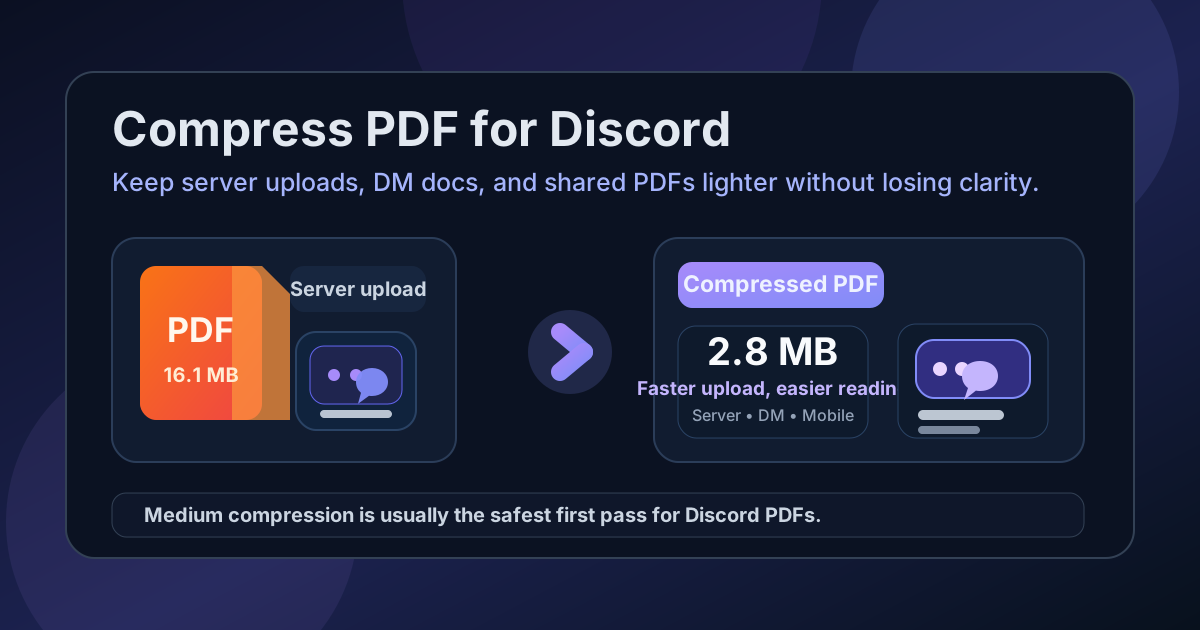
Table of contents
- Quick start: compress a Discord PDF in about 2 minutes
- Why smaller PDFs help on Discord
- What file size should you aim for?
- Which compression level should you choose?
- Step-by-step: shrink a Discord PDF with LifetimePDF
- Best strategy for common Discord PDF types
- What if the PDF is still too large?
- How to protect readability and privacy
- Workflow habits that reduce PDF bloat
- Related LifetimePDF tools and useful reading
- FAQ (People Also Ask)
Quick start: compress a Discord PDF in about 2 minutes
If your real goal is simply make this file lighter so I can share it without drama, this workflow is usually enough:
- Open Compress PDF.
- Upload the PDF you actually plan to share, not the bloated draft that still includes old scans, duplicate pages, or appendix material nobody needs.
- Choose Medium compression first.
- Download the smaller result and compare the new size with the original.
- Open it once and check the weak points: small text, table columns, screenshots, schedule times, rule details, signatures, and the busiest page in the file.
- If the PDF is still heavier than you want, extract the needed pages, split the packet, or crop scanner waste before trying harsher compression.
Why smaller PDFs help on Discord
Discord may feel casual, but plenty of serious documents move through it. Clubs share event packs. creators send media kits and contracts. moderators post policy updates. students trade notes and handouts. freelancers send proposals, invoices, and portfolios. In every case, a bloated PDF adds friction the second somebody tries to upload, download, or open it from a phone.
Compression is not only about saving space. It is about making the file easier to use in the actual conversation. Smaller PDFs feel lighter in busy channels, easier to re-share in DMs, and less annoying when someone is opening them on weak Wi-Fi, mobile data, or an older device. The best Discord PDF is usually the one that gets the point across quickly without making the recipient work for it.
What usually makes Discord PDFs heavier than necessary
- Scan-heavy pages: each page behaves more like an image than a regular text document.
- Long mixed-purpose packets: the actual useful pages are buried inside backup material.
- Oversized screenshots or graphics: helpful, but often exported much larger than a Discord reader needs.
- Duplicate versions: old revisions or repeated pages still sitting in the same PDF.
- Empty scan borders and shadows: visual clutter that increases file size without adding meaning.
What file size should you aim for?
There is no single magic number for every Discord PDF, but these practical ranges help you avoid over-compressing:
| Type of Discord PDF | Good target | Why it helps |
|---|---|---|
| Very lightweight sharing | Under 2MB | Feels quick for server uploads, DM sends, and mobile opening |
| Everyday notes, guides, forms, and proposals | 2MB to 5MB | Usually the best balance of readability, speed, and convenience |
| Scan-heavy packs or visual portfolios | 5MB to 10MB | Still workable, but often worth cleaning up if several people need to open it |
| Over 10MB | Compress again or split it | Often bulkier than a chat-first workflow really needs |
These are comfort targets, not rigid rules. If the file will be opened directly from a Discord thread, the smallest useful file usually wins. If the PDF contains tiny charts, signatures, or image detail that people must inspect carefully, a slightly larger file is often the smarter choice.
Which compression level should you choose?
LifetimePDF keeps the choice simple: Low, Medium, or High. For Discord, most people are not trying to preserve print-brochure perfection. They are trying to make the file noticeably lighter while keeping it trustworthy when somebody opens it in the app, in a browser, or on a phone.
Low compression
- Best when visual crispness matters more than aggressive size reduction.
- Useful for portfolios, polished proposals, visual handouts, and design-heavy PDFs.
- Usually not the best first choice unless the file is already close to the size you want.
Medium compression
- Best starting point for most users.
- Reduces size meaningfully while keeping text, screenshots, diagrams, and normal scans readable.
- Good for server rules, study notes, event packets, contracts, invoices, and routine team documents.
High compression
- Useful when the file is still too heavy after a sensible cleanup pass.
- More likely to soften small text, screenshot labels, and scan detail.
- Best used after you have already removed unnecessary pages or scanner waste.
Step-by-step: shrink a Discord PDF with LifetimePDF
- Start with the final shareable version. Remove obvious draft pages before you compress anything.
- Open Compress PDF. Upload the Discord file you actually plan to share.
- Choose Medium compression. That is the safest default for most Discord workflows.
- Download the smaller copy. Compare the size so you know whether the change was meaningful.
- Do a readability pass. Check small text, screenshot labels, schedule times, diagram notes, signatures, and page numbers.
- Clean the structure if needed. Use Extract Pages, Delete Pages, or Crop PDF before trying stronger compression.
- Keep the right version for the thread. Your archive copy can stay fuller, but the Discord-facing copy should be focused and easy to open.
The biggest mistake is treating every Discord share like it needs the full packet. It usually does not. A lighter PDF with the right pages is often more useful than a giant export that contains everything just in case.
Best strategy for common Discord PDF types
Server guides, rulebooks, and onboarding packets
These are usually text-heavy and compress well. Medium compression is often enough. The main thing to protect is structure: headings, bullet points, tiny policy notes, linked references, and page numbers should stay easy to read.
Study notes, class handouts, and shared reference docs
These often contain a mix of text, screenshots, tables, and scanned pages. Compression helps, but you should review the densest page once. If half the packet is appendix material, extracting the useful pages usually beats forcing stronger compression across everything.
Portfolios, proposals, and media kits
These files depend on looking polished. Start conservatively. Low or Medium compression is often the better choice, especially if the PDF relies on clean typography, image detail, or careful layout. A tiny file is not a win if the portfolio suddenly looks cheap.
Scanned forms, signed documents, and admin paperwork
These are the PDFs most likely to stay bulky. They also punish aggressive compression fastest because signatures, initials, stamps, and fine print become soft first. Crop empty borders, delete blank backs, and split unrelated pages before you compress harder.
What if the PDF is still too large?
If Medium compression does not bring the file down far enough, do not jump straight to the harshest setting. Discord PDFs usually get smaller faster when you remove unnecessary pages and repeated visual sections first.
Try these fixes before pushing compression harder
- Split the appendix: keep the main guide, proposal, or packet in one file and the backup material in another.
- Extract only the needed pages: many channels and DMs do not need the full document.
- Delete duplicates: repeated scans, repeated screenshots, and cover pages add size quickly.
- Crop wasted margins: oversized white borders, scan edges, and shadows increase weight without helping the reader.
- Run OCR on image-only scans: use OCR PDF if you also want a cleaner, searchable copy.
If you still need a smaller file after that, then try a stronger compression pass. But do it on the cleaned-up version, not the original bloated packet. That is usually how you get a better result without sacrificing clarity.
When compression alone is not enough: do a cleanup step before you try High compression.
How to protect readability and privacy
The file is only better if it still works and still shares only what you intended to share. Before you upload the compressed copy to Discord, check the details most likely to fail:
- names, dates, totals, and schedule times
- signatures and initials
- chart labels and table columns
- screenshot callouts and annotations
- page numbers and tiny headers
- the busiest scan in the file
Then do one more check: should the whole file be shared at all? In chat platforms, people often overshare because sending one big PDF feels easier than preparing a cleaner version. If the recipient only needs three pages, extract three pages. If the document contains extra personal or financial information, remove or redact it before compression instead of assuming the conversation will stay private forever.
If privacy matters, pair compression with Redact PDF, PDF Protect, or PDF Metadata Editor so the final file is not only lighter, but also safer to circulate.
Workflow habits that reduce PDF bloat
The easiest file to compress is the one that was prepared with the handoff in mind. A few habits make Discord PDFs easier to shrink and easier to use later:
- Share only what the channel or DM actually needs.
- Separate main context from backup context.
- Avoid repeated screenshots and duplicate scans.
- Keep a lightweight thread-friendly version.
- Think about the recipient opening the file on an average phone, not your best desktop display.
- Trim extra personal or financial pages before the file enters a busy conversation.
These habits matter because compression works best as the final tidy step, not as a rescue plan for a document that tried to do too many jobs at once.
Related LifetimePDF tools and useful reading
If you share PDFs in Discord regularly, these tools and guides pair well with this workflow:
- Compress PDF for the first size-reduction pass.
- Extract Pages when the recipient only needs part of the file.
- Split PDF for long packets with summaries and appendices.
- Delete Pages to remove duplicate or unnecessary sections.
- Crop PDF to remove empty scanner borders.
- Compress PDF for Discord: Share Smaller Files in Servers and DMs if you want a companion guide focused on the broader Discord sharing workflow.
- Compress PDF for Discord Without Monthly Fees if subscription friction is part of the search.
- Compress PDF for WhatsApp, Compress PDF for Slack, and Compress PDF for Telegram if your document sharing jumps across multiple chat apps.
Bottom line: for most Discord PDFs, start with Medium compression, review the smallest useful details once, and trim page weight before using stronger compression.
FAQ (People Also Ask)
How do I compress a PDF for Discord?
Upload the PDF to a compressor, start with Medium compression, and keep the smaller copy only if small text, screenshots, tables, and scans still look clear. Medium compression is usually the safest first pass because it lowers file size without making the document frustrating to read in channels or DMs.
What file size should I aim for on Discord?
Under 2MB feels especially light for quick server and DM sharing. Longer study notes, community guides, portfolios, and event packs usually land best around 2MB to 5MB as long as the details people need still read clearly.
Will compression make my Discord PDF blurry?
It can if you compress too aggressively, especially with scan-heavy or image-heavy PDFs. That is why Medium compression is usually the safest starting point. Always review small text, screenshot labels, signatures, and table columns before you keep the smaller file.
Should I split a Discord PDF instead of compressing it harder?
Often, yes. If one PDF combines the main guide, form, proposal, or packet with a long appendix, repeated screenshots, or backup pages, splitting it usually works better than forcing stronger compression across the whole document.
Which LifetimePDF tools pair best with Discord sharing?
Compress PDF is the main starting point. Extract Pages, Split PDF, Delete Pages, Crop PDF, OCR PDF, Redact PDF, and PDF Protect are especially useful when you want smaller, cleaner Discord uploads without sending the entire working packet every time.