Scan to PDF on Chromebook: Best Ways to Capture Paper Pages and Save One Clean File
To scan to PDF on Chromebook, use your scanner, printer workflow, or phone to capture the pages, then save them as a PDF or combine page images into one PDF with LifetimePDF.
If the result is image-only, run OCR so the file becomes searchable, then compress or protect it before you send it anywhere important.
That is the short answer, but Chromebook users usually run into the same second-half problems: the scan lands as loose JPG files instead of one PDF, the file looks readable but search does not work, the upload portal rejects it for size, or the final document is sitting in Downloads with an unhelpful name right next to the wrong version. ChromeOS is perfectly fine for this job. The trick is treating scanning as a small workflow instead of expecting the first export to be the finished file.
Fastest path: capture the pages on Chromebook or phone, build one clean PDF, then add OCR or compression only if the file actually needs it.
In a hurry? Jump to Quick start: scan to PDF on Chromebook in 5 minutes.
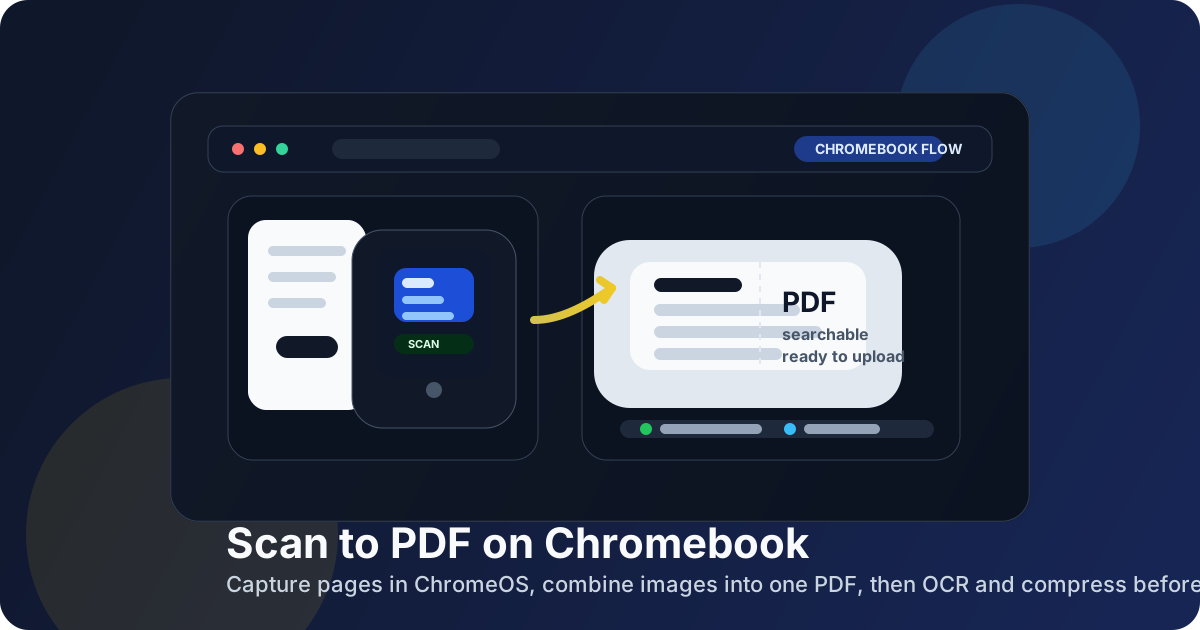
Table of contents
- Quick start: scan to PDF on Chromebook in 5 minutes
- Best ways to scan to PDF on Chromebook
- Step-by-step: scanner or printer to Chromebook PDF
- Step-by-step: phone capture to Chromebook PDF
- Downloads, Files, and Google Drive: keep the workflow tidy
- How to make a scanned Chromebook PDF searchable
- Simple scan settings that work well
- Common Chromebook PDF scanning problems and fixes
- Related LifetimePDF tools and guides
- FAQ (People Also Ask)
Quick start: scan to PDF on Chromebook in 5 minutes
If you want the simplest reliable workflow, use this:
- Scan the pages with your scanner or printer workflow, or capture them with your phone.
- If the output is already a multi-page PDF, review it and keep going.
- If the output is a folder full of JPG or PNG images, open Images to PDF and combine them in the correct order.
- If you cannot search or highlight the text, run the file through OCR PDF.
- If the file is too large for Gmail, school, HR, government, or client portals, shrink it with Compress PDF.
- If the document is sensitive, protect the final copy before sharing it.
Best ways to scan to PDF on Chromebook
Chromebook users usually get to the final PDF through one of three routes:
| Method | Best for | What to do next |
|---|---|---|
| Scanner or all-in-one printer workflow | Letters, forms, records, signed documents, and longer multi-page jobs | Review the PDF, fix page order, then OCR or compress if needed |
| Phone capture sent to Chromebook | Receipts, homework, quick admin paperwork, and anything urgent | Combine separate images into one PDF, then clean it up before upload |
| Existing image files already in Downloads or Drive | When the pages already exist as JPG or PNG and you just need one clean PDF | Use Images to PDF, then OCR if search does not work |
My practical take: use the capture method that is already easiest on your Chromebook. The important part is not whether the first page came from a scanner bed, a printer feeder, or your phone. The important part is whether the finished PDF is clean, correctly ordered, searchable when needed, and small enough to upload without friction.
Need one proper file from scattered scan images? Start by combining everything into a single PDF before you worry about anything else.
Step-by-step: scanner or printer to Chromebook PDF
If your Chromebook is talking to a scanner or all-in-one printer already, you are most of the way there. The part worth slowing down for is the handoff from “the hardware created files” to “I now have one PDF I can safely upload or send.”
- Scan the pages with clear edges and readable text.
- If the device exports directly as a multi-page PDF, save that version first and review each page once.
- If the device exports separate images instead, upload them to Images to PDF.
- Arrange the pages in the correct order and download one proper PDF instead of keeping the document as scattered pictures.
- If the document needs search, copy, or archive value, run OCR PDF before you send it.
This route is usually best for school forms, ID paperwork, contracts, tax records, onboarding packets, and anything that needs to feel tidy instead of improvised. Chromebook handles the browser side well. The cleanup side is what makes the result look professional.
Step-by-step: phone capture to Chromebook PDF
A lot of people searching for scan to PDF on Chromebook are not really scanning on the Chromebook itself. They are using a phone because it is faster, then finishing the job on Chromebook because that is where the email, class portal, Drive folder, or upload form lives. That is a perfectly sensible workflow.
- Capture the pages with your phone in good light.
- Send the images or exported PDF to your Chromebook through Downloads, email, or Google Drive.
- If you received separate page images, combine them with Images to PDF.
- If a page is sideways, duplicated, or obviously wrong, fix it with Rotate PDF or Delete Pages.
- If the file behaves like a photo instead of a document, run OCR before you archive or submit it.
This is often the fastest path for homework sheets, receipts, permission slips, identity documents, reimbursement paperwork, and the page you suddenly need to upload before a deadline. Capture can be casual. The finished PDF should not feel casual.
If you also do this from your phone directly, the platform guide for Android is a useful companion.
Downloads, Files, and Google Drive: keep the workflow tidy
ChromeOS makes it very easy to end up with three nearly identical versions of the same document: the original image files, a combined PDF, and the final OCR or compressed copy. The scanning step is only half the job. The other half is keeping the file trail clean enough that you upload the right version.
- Name the final file clearly: something like lease-application-final.pdf is much safer than scan(7).pdf.
- Keep one working folder: Downloads is fine for quick jobs, but Files or a dedicated Drive folder keeps the final copy easier to find.
- Do cleanup before sharing: rotate, delete blanks, OCR, and compress before you attach the file to Gmail or a portal.
- Test the actual final copy: open the PDF you plan to send, not the one you think you fixed five minutes ago.
This matters more than people expect. Most scan problems on Chromebook are not mysterious technical failures. They are ordinary workflow mistakes: sending the wrong file, keeping pages in the wrong order, or realizing too late that the searchable version was never the one uploaded.
Handling sensitive paperwork? Clean up the document first, then protect the final PDF before sending it out.
How to make a scanned Chromebook PDF searchable
Chromebook users often run into one especially annoying issue: the PDF looks fine, but search, copy, and text selection do not work. You can read the page with your eyes, but the file behaves like a photograph.
That happens because most scanned PDFs start as image-only files. OCR fixes that by recognizing the text on each page and adding a real text layer to the PDF.
- Open OCR PDF.
- Upload the Chromebook PDF you created.
- Run OCR and download the searchable result.
- Test it with search or text selection before you archive it or send it anywhere important.
If this is a regular problem, the deeper guide at How to Check If a PDF Is Searchable is worth saving.
Simple scan settings that work well
Better capture habits save cleanup time later. You do not need perfection. You need readable pages that survive upload limits and still work when opened on school or office devices.
- Use 300 DPI for most text documents: it is the safest balance between clarity and file size.
- Use grayscale for ordinary paperwork: color is useful when color carries meaning, not just because it exists.
- Check the page edges: clipped corners and heavy shadows make the PDF feel rough and can weaken OCR.
- Stay consistent on multi-page jobs: similar lighting and orientation make the final file look much cleaner.
- Aim for practical file size: a giant scan is not automatically a better scan.
Higher resolution is not automatically smarter. A Chromebook PDF that opens slowly, stalls in Gmail, or misses a portal limit by a few megabytes is not more professional just because it was captured at excessive settings.
Common Chromebook PDF scanning problems and fixes
The file is too large
This usually comes from color-heavy scans, oversized images, or too many pages. Run the finished file through Compress PDF after scanning.
The text looks readable but search does not work
That is the classic sign that OCR has not been applied yet. Run the document through OCR and test again.
Some pages are sideways or upside down
Fix the orientation before you share the file. It feels small, but it changes how finished the document looks.
The scan exported as images instead of one PDF
That is common on Chromebook and phone-first workflows. Combine the images into one PDF first, then keep cleaning from there.
I uploaded the wrong version
This is a ChromeOS workflow problem more than a PDF problem. Rename the final file clearly, keep it in one folder, and open that exact copy once before you attach or upload it.
Related LifetimePDF tools and guides
A good Chromebook scan workflow usually uses two or three tools, not ten. These are the ones that matter most:
- Images to PDF - best when your Chromebook workflow produced separate page images.
- OCR PDF - best when the file needs searchable text.
- Rotate PDF - best for fixing sideways pages before you share them.
- Delete Pages - best for removing blanks, duplicates, or mistakes.
- Compress PDF - best when the file is too large for email or portals.
- PDF Protect - best when the document contains private or sensitive information.
Related guides that fit the same Chromebook workflow:
- Scan to PDF on Android
- Scan to PDF on Linux
- Scan to PDF on Mac
- Scan to PDF on Windows
- How to Fill Out a PDF Form on Chromebook
- How to Sign a PDF on Chromebook
Best simple stack: capture pages → build one PDF → OCR if needed → compress if needed.
FAQ (People Also Ask)
How do I scan to PDF on Chromebook?
Use your scanner, printer workflow, or phone to capture the pages, then save them as a PDF or combine page images into one PDF. If the result is image-only, run OCR so the file becomes searchable before you send it anywhere important.
Can I scan to PDF on Chromebook without installing heavy software?
Yes. Many Chromebook workflows are browser-first. You can capture pages with existing scanner or phone tools, then use browser-based PDF tools to combine images, run OCR, compress the file, or protect it before sharing.
Why is my scanned Chromebook PDF not searchable?
Because it is probably still image-only. OCR adds a text layer so search, copy, and text selection work like they should.
How do I turn Chromebook photos into one PDF?
Save the page images from your phone or Chromebook, upload them to an Images to PDF tool in the correct order, and download one combined PDF instead of keeping a folder full of separate pictures.
What is the best way to send a scanned PDF from Chromebook?
Review the PDF once, compress it if it is large, and protect it if it contains sensitive information. A clean final copy is much easier to upload to school, HR, legal, and client portals without avoidable problems.
Published by LifetimePDF - Pay once. Use forever.