How to Merge PDFs in Arc: Combine Downloads, Sidebar Tabs, and Cloud Files Without Losing Order
To merge PDFs in Arc, open LifetimePDF's Merge PDF tool in Arc, choose the files from Downloads, saved attachments, portal exports, or cloud folders, arrange them in the correct order, then save the combined PDF.
If one source is still a screenshot, scan, or image instead of a proper PDF, convert it first so the final merged file is easier to review, upload, and share.
That is the short answer. The part that actually saves time in Arc is avoiding stale sidebar previews, pinned-tab duplicates, older downloads, and wrong file order before you create the final file someone else has to read.
Fastest path: open Merge PDF in Arc, add only the exact PDFs you want, put them in reading order, merge once, then compress or tidy up the finished file only if the destination still rejects it.
In a hurry? Jump to Quick start: merge PDFs in Arc in a few minutes.
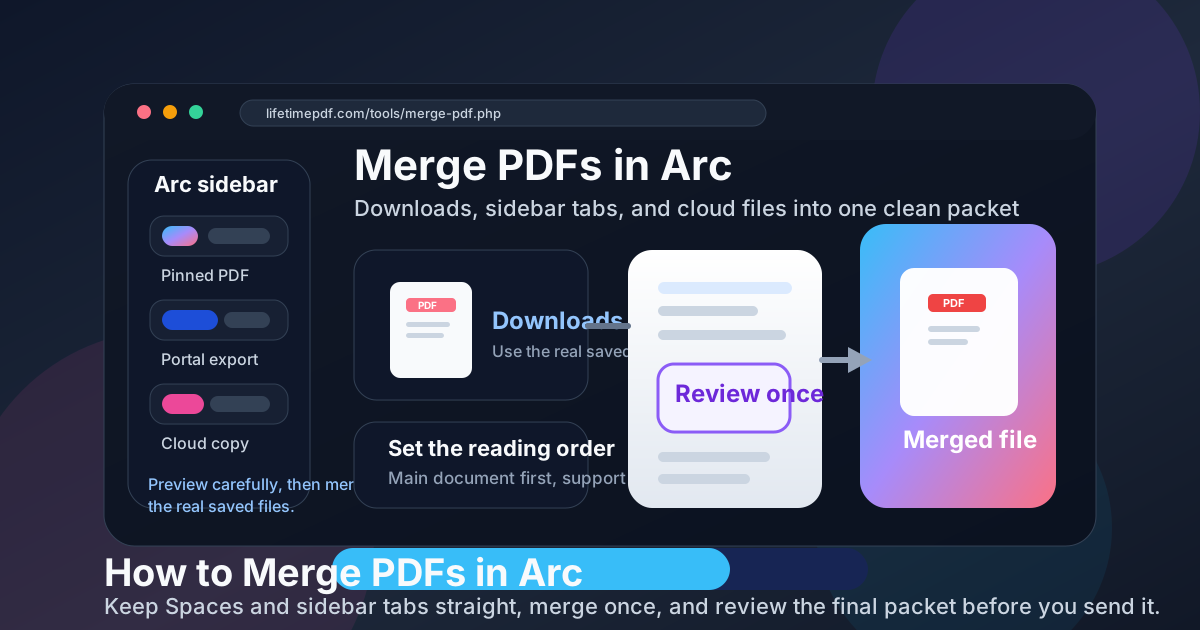
Table of contents
- Quick start: merge PDFs in Arc in a few minutes
- What Arc handles well and where merging actually happens
- Step-by-step: merge PDFs in Arc
- How to gather files from Downloads, sidebar tabs, cloud folders, and portals
- What to do with scans, screenshots, and image-based files
- How to avoid wrong versions across Spaces, pinned tabs, and local downloads
- What to do if the merged PDF is too large or still messy
- Related LifetimePDF tools and guides
- FAQ
Quick start: merge PDFs in Arc in a few minutes
If the files are already proper PDFs and you simply need one finished document, this is the Arc workflow most people actually want:
- Open Merge PDF in Arc.
- Choose the source files from Downloads, a local folder, saved attachments, or exported copies from a portal or cloud drive.
- Arrange the files in the exact order another person should read them.
- Run the merge and download the combined PDF.
- Open the final file once and check the beginning, one middle section, and the ending before you upload or send it.
What Arc handles well and where merging actually happens
Arc is a comfortable place to begin PDF work because many files already pass through the browser. A contract opens from email. A bank statement downloads from a portal. A form sits in Google Drive, Dropbox, or iCloud. Arc makes it easy to keep those files nearby.
The limit is the same one you hit in most browsers: viewing a PDF is not the same as combining several PDFs into one polished final document. Arc's built-in PDF viewer is useful for checking whether you opened the right file. It is not the part that actually merges the files.
The cleaner workflow is simple:
- Use Arc to gather, review, and download the right files.
- Use Merge PDF to combine them into one final packet.
- Use Images to PDF if one source is still a photo or screenshot.
- Use Compress PDF only after the merged packet is already correct.
| Method | Best for | Where it struggles |
|---|---|---|
| Arc PDF viewer only | Opening one file quickly and checking whether it is the right document | It can preview PDFs, but it does not combine several files into one finished PDF by itself |
| Sidebar tabs, pinned tabs, and previews | Fast visual checks while you move between sources | Easy to confuse an old preview with the real final file you meant to merge |
| Arc + Merge PDF | Combining several PDFs while staying inside a browser-first workflow | You still need to choose the correct sources and set the order deliberately |
| Merge first, compress after | Keeping the process fast and predictable | Only works if you actually review the finished PDF before sharing it |
In other words, Arc is the workspace, not the whole solution. Once you accept that, the task becomes calmer: collect the final PDFs, merge them once, and judge the result afterward instead of improvising across Spaces, pinned tabs, and duplicate downloads.
Step-by-step: merge PDFs in Arc
If you want a repeatable Arc routine for school packets, application materials, onboarding paperwork, proposals, signed agreements, receipts, or client deliverables, use this:
- Open the merge tool. Launch Merge PDF in Arc.
- Pick only the files that belong together. Do not throw every related download into the same packet just because it came from the same conversation or portal.
- Set the reading order deliberately. Put the main document first, supporting pages after it, and receipts, appendices, or proof pages last.
- Run the merge once. Download the finished file somewhere obvious so it does not disappear into a stack of similar files.
- Review the final packet. Open the merged PDF and check the first pages, one middle section, and the ending before you attach it, upload it, or share it.
Useful rule: the correct order is the order a stranger should read the packet, not the order Arc happened to show tabs, previews, or Downloads.
If the merged file looks wrong, do not keep patching it blindly. Go back to the source list, replace the stale sidebar preview with the real saved copy, swap out the older download, export the correct portal version, or fix the order and rerun the merge once. A clean rerun is usually faster than rescuing a messy packet afterward.
How to gather files from Downloads, sidebar tabs, cloud folders, and portals
The most common Arc merge problem is not technical. It is source confusion. You might have one file open in a sidebar tab, another pinned in a Space, and a third already saved to Downloads with almost the same filename. If you merge the wrong combination, the finished PDF becomes unreliable fast.
A cleaner approach is to identify the final version of each document before you merge:
- Downloads: useful for recent files, but often full of duplicates with added numbers at the end.
- Sidebar previews: convenient for a quick look, but not ideal as your source of truth when you need a dependable merge workflow.
- Portal exports: often the real source of truth, but easy to confuse with older versions you already downloaded.
- Cloud folders: helpful if you move between devices, but confirm you are taking the correct revision from Drive, Dropbox, or iCloud.
- Local folders: usually the simplest place to keep the final versions together before you merge them.
If you want the least confusing method, create one temporary folder and place the exact PDFs you intend to merge inside it first. That tiny bit of organization prevents a surprising number of mistakes because it separates the real inputs from everything Arc merely happens to remember.
This matters even more if you use several Spaces or keep research pinned for days. Arc is excellent at helping you return to open work, but that strength can blur the line between a useful preview and the exact file you meant to send. When the packet matters, merge from deliberate saved copies.
What to do with scans, screenshots, and image-based files
Not every file you open in Arc begins as a clean PDF. Sometimes it is a phone photo, a screenshot, a scan from a printer, or an exported image from a portal. Those files can still belong in the final packet, but they usually need one quick normalization step first.
The simplest rule is this: if the source is not already a proper PDF, convert it into PDF before the merge. That makes the combined document more predictable and prevents the final packet from feeling like a stack of mismatched file types stitched together at the last second.
If a page is scan-based and the text is hard to read or search, run OCR before you worry about the final combined file. A scan that becomes a cleaner PDF is easier to review, easier to search later, and less likely to create weird surprises once everything is merged.
Use Images to PDF for image files before the merge. If the finished combined document ends up larger than expected, use Compress PDF after you confirm the content and order are right.
How to avoid wrong versions across Spaces, pinned tabs, and local downloads
The easiest way to ruin a merged PDF in Arc is to assume your open tabs or download timestamps reflect the correct order. They usually do not. Tabs reflect what you clicked. Pinned pages reflect what you wanted to keep nearby. Downloads reflect what arrived last. None of them automatically reflect how another person should read the final document.
Before you merge, answer one question: What should page one of the final packet be? Once that is clear, everything else gets easier. Put the main document first, then any required support pages, then receipts, signature confirmations, evidence, or appendices after that.
- Keep the primary document first.
- Do not bury the important file behind supporting attachments just because that is how they were opened.
- Double-check filenames that look nearly identical, especially if Arc or the operating system created numbered duplicate downloads.
- Open the finished file once and spot-check the beginning, middle, and end.
That review matters. A merge can technically succeed while still being wrong in a human way. One attachment may be outdated. A portal export may be incomplete. A duplicate page may slip in. Catching that before you send the file is much better than explaining later why the packet feels scrambled.
What to do if the merged PDF is too large or still messy
Once the combined PDF is correct, only then decide whether it needs more work. The most common follow-up problems are file size, extra pages, and pages that arrived sideways because of scans or mobile exports.
| If this happens | What to do next |
|---|---|
| The merged PDF is too large for email or an upload form | Use Compress PDF after the merge is already correct |
| The packet contains one blank or unnecessary page | Remove it with Delete Pages |
| One scanned page is sideways | Fix it with Rotate PDF |
| One source is still a picture rather than a PDF | Convert it first with Images to PDF, then rerun the merge if needed |
Resist the urge to pre-fix everything. A lot of merged files are perfectly fine once the content and order are right. If the final PDF opens cleanly, reads properly, and uploads without complaint, you are done.
Related LifetimePDF tools and guides
Merge is usually the center of the job, but browser-based PDF work often touches one or two related tools too:
- Merge PDF — combine files into one finished packet.
- Images to PDF — convert screenshots, photos, or scans before merging.
- Compress PDF — shrink the finished PDF for email or upload limits.
- Delete Pages — remove blank sheets or extra pages from the final packet.
- Rotate PDF — fix pages that arrived sideways.
Related reading on LifetimePDF: How to Merge PDFs in Chrome, How to Merge PDFs in Edge, How to Merge PDFs in Firefox, How to Merge PDFs in Safari, How to Merge PDFs in Vivaldi, and How to Merge PDFs on Mac.
Arc shortcut: save the exact files, merge them once, review the result, and only then fix size or stray pages if something still needs work.
FAQ: How to merge PDFs in Arc
How do I merge PDFs in Arc?
Open a browser-based Merge PDF tool in Arc, choose the files from Downloads, saved attachments, cloud folders, or portal exports, arrange them in the right order, merge them, and save the finished PDF.
Can Arc merge PDFs by itself?
Arc can preview PDFs in tabs and the sidebar, but its built-in viewer does not combine several files into one final document by itself. Use a merge tool inside Arc for the actual merge.
Should I merge from Arc sidebar previews or downloaded files?
Downloaded files are safer because you can confirm the exact versions and filenames. Sidebar previews are useful for a quick check, but they are easier to mix up with pinned tabs, Spaces, or older local copies.
What if one of my files is still a scan or screenshot?
Convert the image into PDF first, or run OCR if the file is scan-based, then merge the cleaned-up files. That usually creates a more predictable final document.
Should I merge first or compress first in Arc?
Usually merge first. Once the final combined PDF is correct, compress it only if the file size still causes trouble when you email, upload, or share it.
Published by LifetimePDF — Pay once. Use forever.