How to Convert HEIC to PDF on iPad: Turn Photos, Scans, and Homework Pages Into One Shareable File
To convert HEIC to PDF on iPad, open a browser-based Images to PDF tool in Safari, choose the HEIC files from Photos or Files, arrange them in the right order, then create one clean PDF.
If the images came from class notes, receipts, worksheets, or photographed paperwork, the smartest workflow is usually convert first, then compress or OCR the finished PDF only if the next step actually needs it.
That is the short answer. The useful part on iPad is knowing how to move smoothly between Photos, Files, Safari, and cloud folders without losing order, how to keep the final document readable instead of awkwardly oversized, and when several HEIC images should become one PDF instead of a pile of attachments. A good iPad workflow saves time because it turns scattered images into one file that is easier to upload, print, archive, email, or hand to a teacher, client, coworker, or portal.
Fastest path: open LifetimePDF's Images to PDF tool in Safari, choose the HEIC files you actually need, put them in the right order, create the PDF, then review it once before sharing it.
In a hurry? Jump to Quick start: convert HEIC to PDF on iPad in a few minutes.
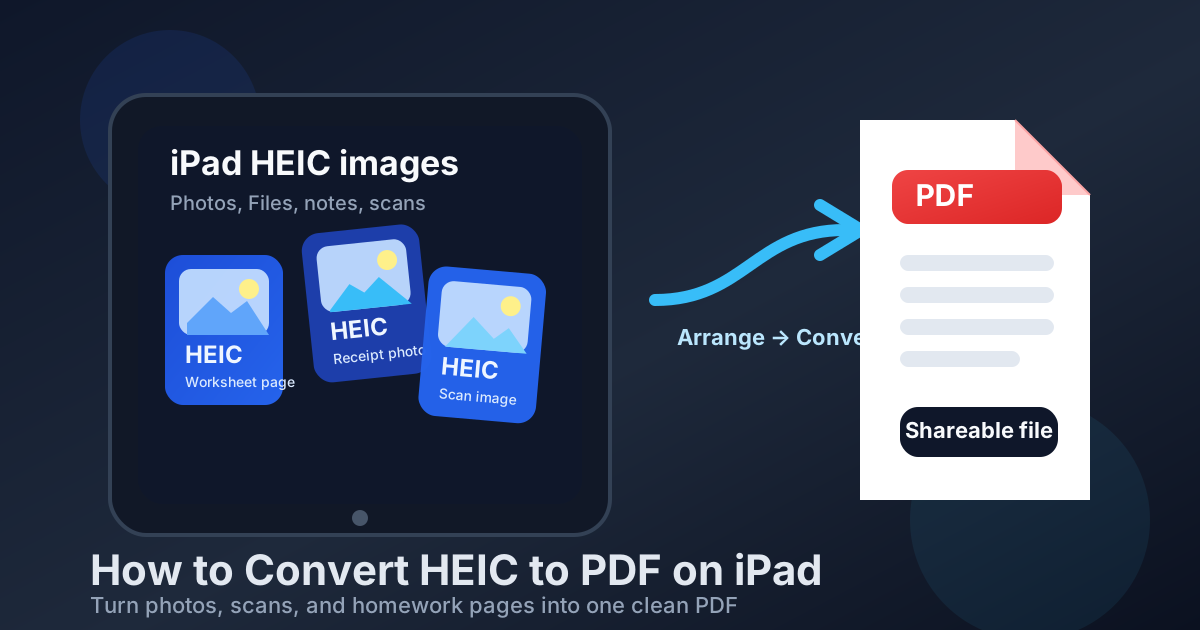
Table of contents
- Quick start: convert HEIC to PDF on iPad in a few minutes
- Why HEIC on iPad keeps turning into a sharing problem
- The easiest iPad workflow for HEIC to PDF
- Step-by-step: make one clean PDF from HEIC files on iPad
- When to combine multiple HEIC images into one PDF
- How to keep the PDF readable without making it huge
- When to compress or OCR after converting
- Common iPad HEIC-to-PDF problems and quick fixes
- Related LifetimePDF tools and guides
- FAQ (People Also Ask)
Quick start: convert HEIC to PDF on iPad in a few minutes
If your HEIC files are ready and you just need the finished PDF, this is the simplest dependable workflow:
- Open LifetimePDF Images to PDF in Safari on your iPad.
- Choose the HEIC images from Photos, Files, iCloud Drive, or another folder on the device.
- Put the images into the order you want another person to read them.
- Create the PDF and preview page order, orientation, and readability once.
- If the file is too large, use Compress PDF. If the images contain photographed text you want to search later, run OCR PDF afterward.
Why HEIC on iPad keeps turning into a sharing problem
HEIC is excellent for image quality and storage efficiency. It is not always excellent for real-world document workflows. The trouble starts when a teacher, expense portal, school upload form, client, coworker, or application system expects one document instead of several separate image files.
On your iPad, a set of HEIC images in Photos or Files can feel organized enough. For anyone else, it is often just a stack of pictures with no obvious order. PDF fixes that by turning scattered HEIC files into one document with a beginning, middle, and end. That is why this workflow matters: it makes the content easier to review, upload, print, archive, and trust.
| What you have on iPad | Best first move | Why it helps |
|---|---|---|
| Photos of worksheets, notes, or homework pages | HEIC to PDF | One uploadable document instead of loose images |
| Pictures of paper forms or scanned pages | HEIC to PDF, then OCR if needed | Easier sharing first, searchable text only if required later |
| Receipts, invoices, or expense evidence | Combine into one PDF | Keeps the packet easier to upload and review |
| A large image set for email or a portal | HEIC to PDF, then Compress PDF | One cleaner document plus better odds of fitting size limits |
The easiest iPad workflow for HEIC to PDF
The smoothest route is usually Safari plus Photos or Files. That keeps the process short and predictable whether the images came from the iPad camera, synced from iPhone, arrived through AirDrop, were saved from Mail, or already live in iCloud Drive.
Start by deciding which images actually belong in the document
Do not convert everything just because it sits in the same album or folder. Remove duplicates, blurry shots, accidental extras, and retakes. A clean PDF starts with a clean image set.
Use document order, not camera-roll order
People read PDFs top to bottom. Camera rolls do not think that way. If the final document needs to support a claim, show a sequence, recreate multi-page paperwork, or tell a simple story, arrange the HEIC files in the order a human should actually read them.
Decide what the finished PDF is for
Uploads care about file size. Printing cares about framing. On-screen reading cares about clarity and page order. Knowing the real destination makes the conversion cleaner from the start.
Best setup habit: clean the image set first, put it in the right order, and create the PDF once instead of rebuilding it repeatedly after avoidable mistakes.
Step-by-step: make one clean PDF from HEIC files on iPad
Once the images are ready, the actual conversion should feel straightforward. The clean workflow is mostly about not skipping the review points.
1. Open the converter in Safari on iPad
Open Images to PDF in Safari. A browser-based workflow is usually the calmest option on iPad because it works well with Photos, Files, and cloud folders without turning the job into a desktop-only task.
2. Choose the HEIC files you actually need
Select the photos, scanned pages, screenshots, worksheet images, or form photos that belong in the final PDF. If you have rough and final versions mixed together, choose the cleanest set now instead of hoping the PDF will somehow fix a messy input pile later.
3. Put the pages into the right reading order
Reordering matters more than most people expect. If the first page should introduce the packet, make sure it actually appears first. If the images are receipts, use date order or expense-form order. If they are class notes or photographed paperwork, restore the original page sequence before you generate anything.
4. Generate the PDF and preview it once
Before you send or upload anything, check the first page, one middle page, and the last page. That quick glance catches the usual avoidable mistakes immediately: wrong order, sideways pages, unreadably small text, or one extra image that should never have made it into the document.
5. Add follow-up steps only when they solve a real problem
If the PDF is too heavy, compress it. If the HEIC images contain photographed text that needs to become searchable, run OCR. If neither problem exists, stop there. A clean two-step workflow is better than a needlessly complicated five-step one.
Recommended sequence: choose the right HEIC files, order them carefully, create the PDF, verify it once, then compress or OCR only if the finished document still needs something.
When to combine multiple HEIC images into one PDF
Combining several HEIC images into one PDF is one of the main reasons people search for this workflow in the first place. The trick is to treat the image set like one document before you convert it.
Homework, worksheets, and school packets
Keep the pages in assignment order. A PDF that matches the teacher's expected flow is easier to submit and easier to check later.
Receipt and expense packets
Keep receipts in date order or claim-form order. One tidy PDF is easier to review than separate images scattered across an upload form.
Photos of multi-page paperwork
If you photographed a contract, worksheet, signed packet, or paper archive page by page, the PDF should restore the original sequence. That matters far more than any clever file-format setting.
| Input set | Best ordering method | Useful follow-up |
|---|---|---|
| Homework or worksheets | Assignment order | Compress if the school portal is strict |
| Receipts | Date order or expense-form order | Compress if the upload limit is tight |
| Document photos | Original page sequence | OCR if you want searchable text later |
| Evidence or support images | Chronological order | Protect the PDF if it contains private information |
How to keep the PDF readable without making it huge
The best HEIC-to-PDF result is not the one with the most aggressive settings. It is the one that stays readable while still being easy to upload, email, or store.
- sharp source images instead of blurry retakes
- upright pages with natural orientation
- only the images that belong in the final document
- a sane reading order before conversion
- compression only after you see the finished PDF size
- including duplicate images or unnecessary extras
- mixing portrait and landscape pages without checking the result
- sending a giant PDF without testing the portal limit
- assuming photographed text is searchable by default
- skipping the preview step because you are in a rush
If the converted PDF feels larger than expected, that does not automatically mean the conversion was wrong. High-resolution HEIC images simply carry a lot of detail. The cleaner habit is to convert first, review the actual document, and only then decide whether to shrink it with Compress PDF.
When to compress or OCR after converting
HEIC to PDF is often the packaging step, not the final destination. What happens next depends on the problem you still need to solve.
Use compression when the PDF is too heavy
If a portal rejects the upload or email sends slowly, use Compress PDF. That is especially helpful for large photo packets, school submissions, reimbursement claims, and multi-page scan sets.
Use OCR when the PDF contains photographed text
If the HEIC images came from paper documents and you want to search, copy, or highlight the words later, use OCR PDF after conversion. The images may look readable to you, but they still behave like pictures until OCR adds a text layer.
Protect the final document if the contents are sensitive
If the PDF contains grades, IDs, signatures, contracts, invoices, or private records, use PDF Protect before wider sharing. Packaging the file neatly does not automatically make it safe to circulate.
Useful mental model: HEIC to PDF creates the document. Compression trims the weight. OCR makes photographed text usable. Protection controls access.
Common iPad HEIC-to-PDF problems and quick fixes
The images are in the wrong order
Reorder them before you create the PDF whenever possible. It is faster to fix page order before conversion than to explain a confusing packet afterward.
The final PDF is too large for the portal
Convert first, then run Compress PDF on the finished file. That gives you a smaller version of the exact document you plan to upload.
The text in the images still is not searchable
That is normal. HEIC to PDF combines images into a document, but it does not automatically make photographed words machine-readable. Use OCR PDF if the text needs to behave like text.
I only need a few pages from a larger set
Make the smaller document first instead of carrying unrelated images into the final PDF. Focus is almost always better than bulk.
I need to share the PDF, but it contains private information
After conversion, lock the final file with PDF Protect if it is leaving your own device or team.
Related LifetimePDF tools and guides
HEIC to PDF usually sits inside a bigger iPad document workflow. These tools pair naturally with it:
- Images to PDF — turn one or more HEIC files into a single document.
- Compress PDF — reduce the size of the finished PDF for upload or email.
- OCR PDF — make photographed text searchable after conversion.
- PDF Protect — lock the final file before wider sharing.
- Organize PDF — reorder or clean up pages after the first conversion if needed.
- HEIC to PDF — the broader guide for turning Apple image files into one shareable document.
- How to Convert HEIC to PDF on iPhone — the companion workflow if the files are still on your phone.
- How to Convert HEIC to PDF on Mac — the companion workflow when you move the job to desktop.
- How to OCR a PDF on iPad — what to do next when the finished PDF contains photographed text.
Best order for most iPad users: choose the right HEIC files, convert them into one PDF, verify readability once, then compress, OCR, or protect the document depending on the real next step.
FAQ: How to Convert HEIC to PDF on iPad
How do I convert HEIC to PDF on iPad without installing another app?
Open a browser-based Images to PDF tool in Safari on your iPad, choose the HEIC files from Photos or Files, arrange them in the right order, create the PDF, and save the result back to your device. That is usually the fastest no-extra-install workflow.
Can I combine multiple HEIC photos into one PDF on iPad?
Yes. You can select multiple HEIC images, place them in the order you want, and turn them into one PDF for homework packets, receipts, scanned paperwork, applications, reports, or client handoffs.
Why would I convert HEIC to PDF on iPad instead of sharing the images directly?
HEIC is great for storage, but PDF is easier to upload, print, archive, email, and review. One PDF is usually cleaner than several separate image files.
Will converting HEIC to PDF on iPad reduce image quality?
A good workflow preserves visible quality well, especially when you start with clear source images and review the finished PDF once before sending it anywhere important.
Should I compress or OCR after converting HEIC to PDF on iPad?
Compress the PDF if it is too large for your upload or email workflow. Use OCR if the HEIC images contain photographed text that you want to search, copy, or highlight afterward.