How to Check PDF Modification Date on Mac: Preview, Finder, and Last-Updated Clues Before You Share
To check PDF modification date on Mac, save the real file from Mail, Safari, Finder, or iCloud Drive, inspect the hidden Modification Date or ModDate in Preview, Acrobat Reader, or a metadata editor, and compare it with what actually changed in the share-ready PDF.
If the timestamp only reflects a quiet resave, OCR pass, signature workflow, sync event, or cleanup step instead of a meaningful revision, correct or remove it before the file leaves your Mac.
Mac workflows make PDFs feel finished early. A file can look polished in Quick Look, open cleanly in Preview, and slide into Mail, Messages, AirDrop, or iCloud Drive in seconds while the hidden modification date still tells the wrong story. The useful goal is not collecting more timestamps. It is making sure the last-updated signal inside the PDF still supports how the document will be reviewed, shared, archived, or trusted by the next person.
Fastest practical path: save the final Mac copy, read the embedded modification date once, compare it with the real reason the PDF was last touched, then decide whether the timestamp should stay, be standardized, or disappear before you share the file.
In a hurry? Jump to quick start: check PDF modification date on Mac in about 5 minutes.
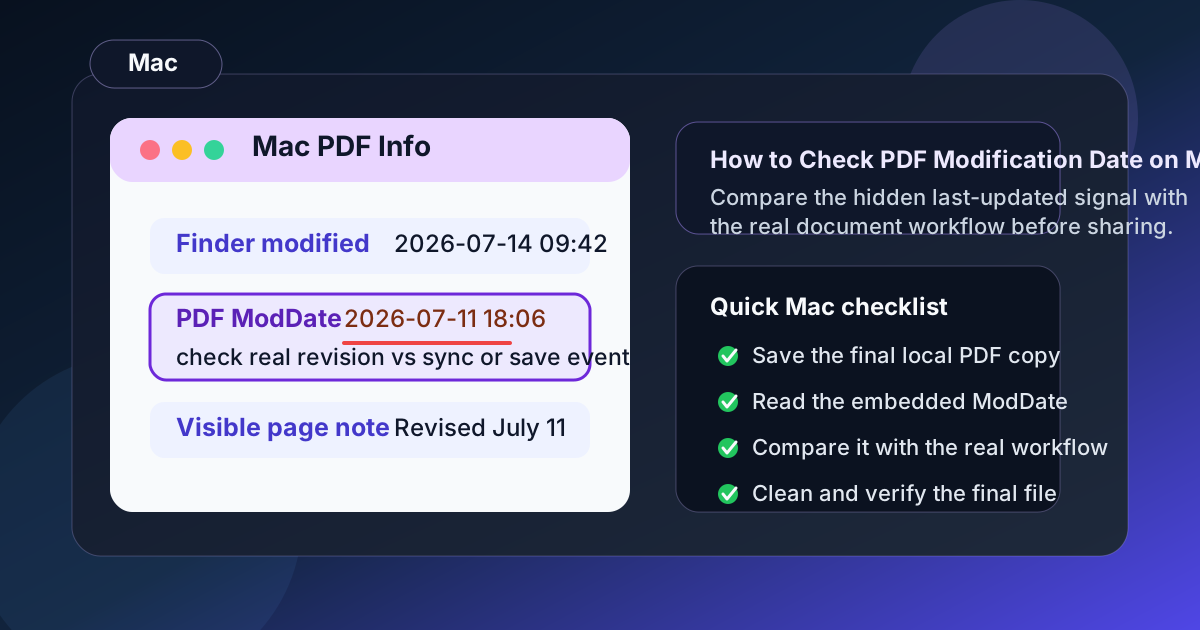
Table of contents
- Quick start: check PDF modification date on Mac in about 5 minutes
- What you are really checking when you review PDF modification date on Mac
- Where Mac users misread last-updated signals
- Step-by-step: how to check PDF modification date on Mac
- Warning signs the modification date needs a second look
- When to keep, correct, or remove the modification date
- Related LifetimePDF tools and guides
- FAQ
Quick start: check PDF modification date on Mac in about 5 minutes
If your real question is does this Mac PDF still carry a believable last-updated timestamp before I send or archive it?, use this order:
- Save the exact PDF you plan to email, upload, archive, AirDrop, or publish from Mail, Safari, iCloud Drive, or your real project folder.
- Inspect the embedded Modification Date with a metadata-friendly workflow like PDF Metadata Editor or View PDF Properties.
- Compare that value with what actually happened last: a meaningful revision, a merge, a signature, an OCR run, a metadata cleanup, a compression step, or just a save-and-sync cycle.
- Ask whether the timestamp reflects the kind of update a teammate, client, reviewer, or auditor would assume happened if they opened the PDF properties.
- Keep the date if it still makes sense, or fix / clear it if it would confuse a reader or expose workflow detail that should stay hidden.
- Save the cleaned file and reopen it once so you verify the embedded date really stuck to the Mac copy you are about to share.
What you are really checking when you review PDF modification date on Mac
The PDF modification date is hidden metadata stored inside the document. It is not automatically the same thing as the Date Modified value you see in Finder, and it is definitely not the same as the visible revised date printed on page one. Think of it as a timeline clue inside the PDF itself. That clue can be accurate, stale, routine, or misleading depending on how the file was exported, edited, signed, compressed, flattened, synced, or cleaned.
On Mac, the confusion usually starts because one PDF can collect several overlapping histories. A file may begin in Pages, Word, or Google Docs, get exported to PDF, open in Preview, pass through iCloud Drive, pick up a signature, be attached in Mail, and finally land in a Downloads or Desktop folder. Every one of those steps can change a visible date around the file. The embedded modification date only helps if you know which event it is actually describing.
| Date field | What it usually means | Typical Mac mistake |
|---|---|---|
| Finder Date Modified | When that Mac copy last changed in the current folder, drive, or synced location. | People assume it proves when the PDF itself was meaningfully revised. |
| PDF Modification Date | Hidden metadata inside the PDF that points to the last recorded update to the document package. | It may still reflect a save, OCR pass, signature, flattening step, or metadata cleanup instead of the timeline readers assume. |
| PDF Creation Date | Hidden metadata about when the PDF says it was first created. | It gets confused with modification date even though the two fields answer different questions. |
| Visible revised date on the page | A date printed in the content itself for readers. | It gets treated as proof that the hidden metadata must match, even when the file tells two different stories. |
Where Mac users misread last-updated signals
Mac interfaces are great at keeping document work calm and invisible. The downside is that a quiet preview or sync badge can feel more authoritative than it really is. A Quick Look panel, a Finder column, or a Mail preview may help you locate the file fast, but none of those views automatically proves the embedded modification date inside the PDF still tells the right story.
| Mac path | What it is good for | What it cannot safely prove |
|---|---|---|
| Finder list view or Get Info | Great for locating the exact file and checking when that Mac copy changed. | It cannot prove the hidden ModDate matches the real meaning of the last edit inside the PDF. |
| Preview or Quick Look | Helpful for opening the right document and spotting obvious visible changes. | It cannot guarantee the embedded metadata is aligned with what the page looks like. |
| Mail or Safari preview | Useful for a fast glance before downloading or forwarding. | It cannot prove whether the attachment's metadata belongs to the source file, the local cache, or the exact share-ready copy. |
| iCloud Drive sync history | Good for understanding when a file moved between devices or finished syncing. | It cannot tell you whether the PDF's embedded modification date changed because of a meaningful content revision or a background workflow step. |
| AirDrop or copied desktop file | Useful when you need a local working copy before cleaning metadata. | It cannot prove the last-updated signal inside the PDF belongs to that handoff rather than an earlier edit, merge, or save. |
Healthy default
If the embedded modification date would make a reviewer misunderstand what really changed in the PDF, the file deserves one more Mac metadata pass before you send it.
Step-by-step: how to check PDF modification date on Mac
The fastest Mac workflow is not complicated. You just need to inspect the right copy, read the hidden field directly, and decide whether the timestamp still helps the final file make sense.
1. Save the exact Mac copy you plan to share
Do not rely on a thumbnail, browser preview, or attachment preview alone. Save the PDF locally from Mail, Safari, Messages, iCloud Drive, or a shared folder so you are inspecting the same file that will actually leave your Mac. That small step matters because copied attachments, synced folders, and browser downloads can all create visible date noise around the document.
2. Read the embedded modification date directly
Open a metadata-aware view such as PDF Metadata Editor, View PDF Properties, Preview document info, or Acrobat Reader. What you want is the field stored inside the PDF, usually named Modification Date or ModDate. This is the value that can travel with the file when it gets uploaded, emailed, archived, or shared outside your device.
3. Compare the timestamp with what actually happened last
Ask a boring but important question: what event does this timestamp really describe? On Mac, the answer might be a true content revision, but it could also be a signature save, an OCR pass after scanning, a merge, a compression step, a flattening action, or a cleanup pass right before upload. If the field only records a technical touch while the page content stayed functionally the same, readers may over-trust it if you leave it as-is.
4. Decide whether to keep, correct, or remove it
Keep the date when it genuinely reflects the final meaningful revision of the document. Correct it when the wrong workflow step wrote a misleading last-updated signal. Remove it when it adds no value, exposes unnecessary process detail, or creates a false impression about the document's history. If the real timeline matters for contracts, compliance, or records, preserve that history in the surrounding system of record too.
5. Save the cleaned file and verify once
After you make any metadata changes, reopen the finished PDF and confirm the updated field stuck to the exact copy you are about to send. This last check prevents the classic Mac problem where a user cleans one copy, then attaches an older version from Downloads, Desktop, or iCloud Drive by mistake.
Warning signs the modification date needs a second look
Some PDFs advertise that their hidden timeline deserves skepticism. If you notice any of these patterns, stop treating the modification date as self-explanatory.
| Warning sign | What it usually means | Safer next move |
|---|---|---|
| The PDF looks unchanged, but the date is much newer | A save, sync, OCR pass, signature, compression step, or metadata edit may have updated the package without changing visible content much. | Compare the ModDate with what actually changed before treating it as a meaningful revision. |
| The file came from Pages, Word, Google Docs, or a scan workflow | Several export and cleanup steps may have touched the PDF after the original document work finished. | Decide whether the final share-ready PDF should carry that workflow detail forward. |
| A signed or flattened PDF suddenly looks newer | The security or finalization step may have updated metadata even when the visible wording barely changed. | Judge whether the latest timestamp helps a recipient understand the file or simply adds noise. |
| Finder and PDF metadata tell different stories | The storage-layer date and the hidden embedded date are describing different events. | Trust neither by default until you identify which event each one reflects. |
| The visible revised date on the page does not match the hidden ModDate | The page content and metadata are describing different “latest” moments. | Bring the visible and hidden timeline back into alignment before you share. |
Simple test
If a client opened the PDF properties and assumed the modification date represented the last meaningful document revision, would they be right? If not, the metadata needs cleanup.
When to keep, correct, or remove the modification date
Not every Mac PDF needs the same answer. The useful question is whether the timestamp helps the final file make sense or only drags workflow noise into a place where readers will over-trust it.
Keep it
Best when the embedded date still reflects the true latest meaningful revision of the final PDF and helps the file feel trustworthy.
Correct it
Useful when a technical save, merge, signature, sync, or cleanup step wrote a timeline that is clearly tied to the wrong event.
Remove it
Smart when the date adds no value, causes privacy concerns, or creates the wrong impression once the PDF leaves your Mac.
Preserve the real record elsewhere
Important when legal, compliance, or project history depends on accurate documentation beyond what one PDF metadata field can safely prove.
In practice, the best choice is the one that leaves the fewest hidden surprises for the next person. A share-ready PDF often needs simpler metadata than an internal working file. If the modification date matters for a regulated process, preserve that timeline in your document system, ticket history, or archive workflow rather than expecting one hidden PDF field to carry the whole burden.
- Keep the date when it cleanly matches the final PDF's true latest meaningful revision.
- Correct the date when it obviously belongs to the wrong processing step or routine save.
- Remove the date when it only creates confusion, churn, or privacy risk.
- Document critical history elsewhere when the timeline has legal or operational consequences beyond casual sharing.
FAQ
How do I check PDF modification date on Mac quickly?
Save the final PDF locally on your Mac, inspect the hidden Modification Date or ModDate in Preview, Acrobat Reader, or a metadata editor, compare it with what really changed, and fix it if the value is stale or misleading.
Is PDF modification date the same as the Date Modified field in Finder?
No. Finder dates describe the current Mac copy in the folder or synced location, while PDF modification date is hidden metadata inside the file itself. They can match, but often they reflect different events.
Can Preview show PDF modification date on Mac?
Preview can help you inspect document information, but a fuller metadata workflow such as Acrobat Reader or a PDF metadata editor is more reliable when you need to confirm the embedded timestamp with confidence.
Should I change a wrong PDF modification date?
Only when the timestamp is clearly misleading, inherited from the wrong workflow, or creates a problem for the final share-ready file. If the timeline matters for compliance or evidence, preserve the real record elsewhere too.
Why does my PDF modification date look newer than the actual content change?
Because PDFs often update the field during merges, OCR runs, signatures, flattening, compression, sync workflows, or metadata edits. The timestamp can be technically real while still describing the wrong moment for your reader.
Check the hidden last-updated signal before the PDF leaves your Mac.
A clean Mac workflow is simple: inspect the embedded modification date, compare it with the document's real latest meaningful revision, keep only the timeline details that help the file make sense, and verify the final copy once before you send it.
Published by LifetimePDF — Pay once. Use forever.