How to Check PDF Modification Date on Chromebook: Chrome, Files, and Last-Updated Clues Before You Share
To check PDF modification date on Chromebook, save the real file from Chrome, Files, Drive, or Gmail, inspect the hidden Modification Date or ModDate in a metadata-aware view, and compare it with the actual last meaningful change to the share-ready PDF.
If the timestamp only reflects a browser download, OCR pass, annotation save, compression step, merge, print-to-PDF export, or sync event instead of a real revision, correct or remove it before the file leaves your Chromebook.
Chromebook workflows make PDFs feel finished quickly. A file opens cleanly in a Chrome tab, sits neatly in Files, and previews smoothly in Drive or Gmail, so it is easy to assume the hidden last-updated story must also be fine. Often it is not. A polished PDF can still carry a modification date from a scan cleanup, browser export, merge step, signature layer, or optimization pass that no longer explains the document the next person will actually receive. The useful goal is not collecting more timestamps. It is making sure the one embedded inside the PDF still tells a believable story once someone downloads, reviews, uploads, archives, or forwards the file.
Fastest practical path: save the final Chromebook copy, inspect the embedded modification date once, compare it with the real reason the document was last touched, then decide whether the timestamp should stay, be standardized, or disappear before you share the file.
In a hurry? Jump to quick start: check PDF modification date on Chromebook in about 5 minutes.
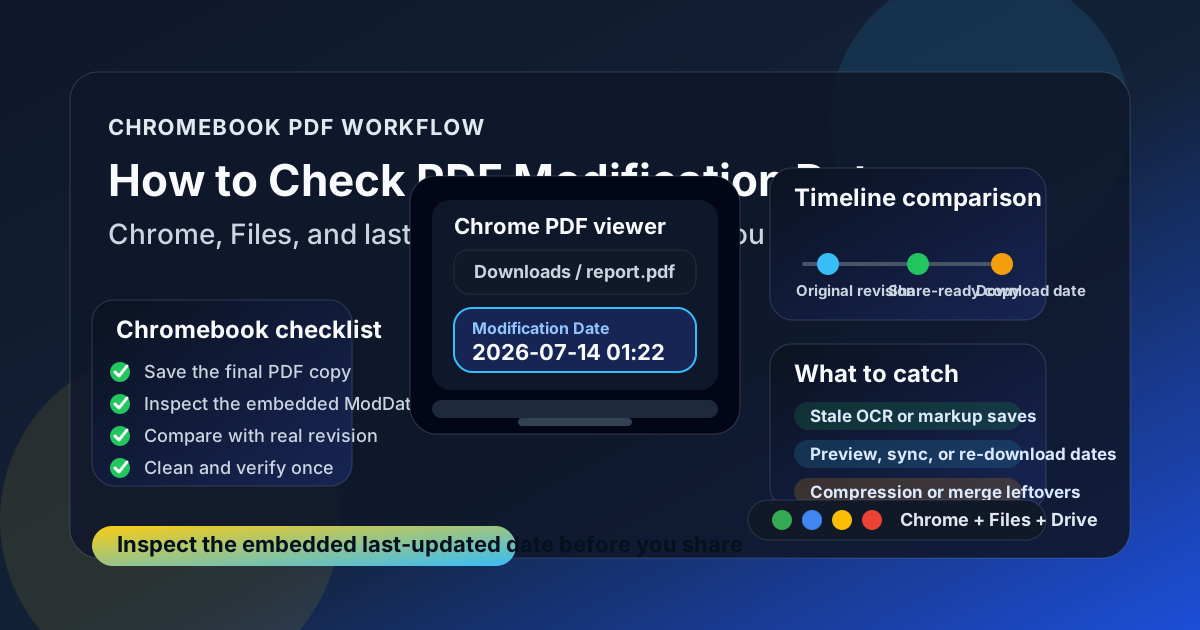
Table of contents
- Quick start: check PDF modification date on Chromebook in about 5 minutes
- What you are really checking when you review PDF modification date on Chromebook
- Where Chromebook users misread last-updated signals
- Step-by-step: how to check PDF modification date on Chromebook
- Warning signs the modification date needs a second look
- When to keep, correct, or remove the modification date
- Related LifetimePDF tools and guides
- FAQ
Quick start: check PDF modification date on Chromebook in about 5 minutes
If your real question is does this Chromebook PDF still carry a believable last-updated timestamp before I send, upload, archive, or submit it?, use this order:
- Save the exact PDF you plan to email, upload, message, archive, or submit from Files, Drive, Gmail, Chrome downloads, or your real project folder.
- Inspect the embedded Modification Date with a metadata-aware workflow like PDF Metadata Editor or View PDF Properties.
- Compare that value with what actually happened last: a meaningful revision, an annotation save, a signature step, an OCR cleanup, a merge, or only a routine browser or cloud handoff.
- Ask whether the timestamp reflects the kind of update a teammate, customer, reviewer, or auditor would assume happened if they opened the PDF properties.
- Keep the date if it still makes sense, or fix or clear it if it would confuse a reader or expose workflow detail that should stay hidden.
- Save the cleaned file and reopen it once so you verify the embedded date really stuck to the Chromebook copy you are about to share.
What you are really checking when you review PDF modification date on Chromebook
The PDF modification date is hidden metadata stored inside the document. It is not automatically the same thing as the date shown in Chromebook Files, the timestamp attached to a Drive item, or the time you received an attachment in Gmail. Think of it as a timeline clue embedded inside the PDF itself. That clue can be accurate, stale, routine, or misleading depending on how the file was exported, signed, annotated, compressed, merged, OCR-processed, or re-downloaded before it ever reached your Chromebook.
On Chromebook, the confusion usually starts because one PDF can collect several parallel histories. A document may begin in Docs, Word, a scanner app, a browser form, or a desktop export path, then get uploaded to Drive, downloaded to ChromeOS, previewed in Chrome, saved again from Gmail, and forwarded through a portal or classroom handoff. Every step can create a visible date around the file. The embedded modification date only helps if you know which event it is actually describing.
| Date field | What it usually means | Typical Chromebook mistake |
|---|---|---|
| Files app date | When that Chromebook copy was downloaded, moved, or updated in local storage or a synced location. | People assume it proves when the PDF itself was meaningfully revised. |
| Drive or Gmail date | When the file was uploaded, synced, received, or refreshed in that service. | It gets confused with the actual last update stored inside the PDF. |
| PDF Modification Date | Hidden metadata inside the PDF that points to the last recorded update to the document package. | It may still reflect a markup save, OCR pass, signature layer, metadata cleanup, or compression step instead of the revision readers assume. |
| PDF Creation Date | Hidden metadata about when the PDF says it was first created. | It gets confused with modification date even though the two fields answer different questions. |
Where Chromebook users misread last-updated signals
ChromeOS makes PDFs feel trustworthy quickly. Files previews, Drive previews, Chrome tabs, and fast sharing paths make it easy to believe you already understand the file. The trap is that a smooth viewing experience is not proof that the hidden last-updated story still makes sense.
| Chromebook path | What it is good for | What it cannot safely prove |
|---|---|---|
| Files app or Downloads folder | Confirming which copy you are about to send and seeing the device-level dates on that copy. | That the embedded modification date still matches the true latest meaningful update to the PDF itself. |
| Drive preview or Gmail attachment view | Showing how the file appears in a normal Chromebook sharing workflow. | Whether the stored last-updated timestamp is accurate, useful, or stale unless you inspect metadata directly. |
| Chrome PDF viewer | Opening the real Chromebook copy for a first visual review. | That the hidden timestamp still describes the right revision rather than a technical handoff or re-save. |
| Portal, LMS, or classroom upload | Reflecting the version that actually leaves your device in day-to-day work. | Whether the embedded date still points to the right update instead of a browser or sync event. |
| Metadata editor or full properties view | Giving you the clearest look at the embedded modification date itself. | You still have to decide whether the date describes a meaningful document revision or just technical workflow noise. |
That last point matters most. Tools can reveal the stored timestamp. They cannot decide for you whether the date reflects a meaningful update or only the moment another app happened to save, sign, compress, or repackage the PDF.
Step-by-step: how to check PDF modification date on Chromebook
This workflow is quick enough for everyday Chromebook use and detailed enough to catch the revision-history mistakes that most often survive into shared PDFs.
Step 1: Start with the exact Chromebook copy you plan to share
Open the real file from the folder, Drive location, Gmail draft, classroom upload, or project directory that actually matters. If the PDF has been downloaded again, re-exported, annotated, merged, signed, or reopened through several apps, make sure you inspect the final share-ready copy rather than a nearby earlier draft with a similar name.
Step 2: Inspect the embedded Modification Date directly
Use PDF Metadata Editor, Acrobat document info, or another metadata-friendly path like View PDF Properties. Do not rely on Files or Drive dates alone. On Chromebook, those values may only tell you when the current copy appeared in Downloads, got pinned for offline use, or synced through Google Drive, not when the hidden PDF record last changed.
Step 3: Compare the timestamp with the real revision story
Ask one simple question: what event should this PDF's last-updated signal really point to? Maybe it is the moment a report was revised. Maybe it is the signature step that turned a draft into the final document. Maybe it is only a compression pass that did not change the visible content at all. If the embedded modification date points to a different event than the one readers will assume, you have found the real problem.
Step 4: Look for the usual Chromebook workflow distortions
Modification dates often go sideways when a PDF is re-saved after markup, regenerated through print-to-PDF, cleaned during OCR, compressed for upload, signed in another app, or quietly replaced after a browser download. In those cases the timestamp may be technically real but practically misleading. The point of the review is not to chase perfect forensic certainty. It is to catch the dates that quietly tell the wrong story after the file leaves your Chromebook.
Step 5: Decide whether to keep, correct, or remove the date
If the timestamp still reflects the document's real latest meaningful revision, keep it. If it clearly belongs to a technical save, sync, transfer, or cleanup step, update it as part of a broader metadata cleanup. If the date adds more confusion than value, or if the PDF is privacy-sensitive, continue with Remove Metadata From PDF.
Step 6: Save and verify once
Reopen the saved PDF and confirm the embedded modification date now matches the final file you are about to send. This catches classic Chromebook mistakes such as editing the wrong copy, trusting a preview instead of the saved file, or checking one version while Drive, Gmail, or a portal uses another.
Reliable sequence: inspect the embedded modification date, compare it with the real reason the file was last touched, clean up misleading timestamps, then verify the final Chromebook copy once before the PDF travels anywhere else.
Warning signs the modification date needs a second look
These patterns show up constantly in Chromebook workflows built around repeated downloads, Drive sync, scanner apps, browser exports, quick uploads, and shared handoff folders.
| What you notice | What it usually means | Best next move |
|---|---|---|
| The modification date is newer than the real content change | The PDF was probably re-saved, compressed, signed, OCR-processed, or cleaned after the meaningful revision was already finished. | Check the source workflow and decide whether the timestamp should be standardized or removed. |
| The date matches a download, sync, or browser handoff rather than the document's real revision | The metadata points to a technical event instead of the milestone readers will care about. | Keep it only if that technical event is the right record; otherwise clean the metadata. |
| Files, Drive, and the embedded date tell different stories | The PDF has moved enough times that the timeline is split across systems. | Document which date actually matters for the handoff and strip any metadata that confuses the recipient. |
| The timestamp would create the wrong impression in a client review or audit | The date may be technically real but contextually misleading. | Preserve the true record elsewhere and make the share-ready PDF's metadata intentional. |
| The visible document date and hidden modification date feel out of sync | The page content and metadata are describing different “latest” events. | Bring the visible and hidden timeline story back into alignment before sharing. |
Healthy default
If the embedded modification date would make a reviewer misunderstand what really changed in the PDF, the file deserves one more Chromebook metadata pass before you send it.
When to keep, correct, or remove the modification date
Not every Chromebook PDF needs the same answer. The useful question is whether the timestamp helps the final file make sense or only drags workflow noise into a place where readers will over-trust it.
Keep it
Best when the embedded date still reflects the true latest meaningful revision of the final PDF and helps the file feel trustworthy.
Correct it
Useful when a technical save, upload, download, sign, merge, or cleanup step wrote a timeline that is clearly tied to the wrong event.
Remove it
Smart when the date adds no value, causes privacy concerns, or creates the wrong impression once the PDF leaves your device.
Preserve the real record elsewhere
Important when legal, compliance, or project history depends on accurate documentation beyond what one PDF metadata field can safely prove.
In practice, the best choice is the one that leaves the fewest hidden surprises for the next person. A share-ready PDF often needs simpler metadata than an internal working file. If the modification date matters for a regulated process, preserve that timeline in the surrounding system of record rather than expecting one hidden PDF field to carry the whole burden.
- Keep the date when it cleanly matches the final PDF's true latest meaningful revision.
- Correct the date when it obviously belongs to the wrong processing step or routine handoff.
- Remove the date when it only creates confusion, churn, or privacy risk.
- Document critical history elsewhere when the timeline has legal or operational consequences beyond casual sharing.
FAQ
How do I check PDF modification date on Chromebook quickly?
Save the final PDF on your Chromebook, inspect the embedded Modification Date in a metadata editor or document-properties view, compare it with what really changed, and fix it if the value is stale or misleading.
Is PDF modification date the same as the date shown in Chromebook Files?
No. Chromebook file-manager dates describe the current local or Drive-backed copy, while PDF modification date is hidden metadata inside the document itself. They can match, but they often reflect different events.
Can Chrome or Drive prove the PDF modification date is correct?
Not by themselves. Chrome and Drive are useful for opening the right file and reviewing it in a normal workflow, but you still need a metadata-aware view to confirm the embedded timestamp rather than just the surrounding handoff dates.
Should I change a wrong PDF modification date?
Only when the timestamp is clearly misleading, inherited from the wrong workflow, or creates a problem for the final share-ready file. If the revision history matters for compliance or evidence, preserve the real record elsewhere too.
Why does my PDF modification date look newer than the actual content change?
Because PDFs often update the field during signatures, OCR runs, merges, compression, metadata edits, browser exports, and simple re-saves. The timestamp can be technically real while still describing the wrong moment for your reader.
Check the hidden last-updated signal before the PDF leaves your Chromebook.
A clean Chromebook workflow is simple: inspect the embedded modification date, compare it with the document's real latest meaningful revision, keep only the timeline details that help the file make sense, and verify the final copy once before you share it.
Published by LifetimePDF — Pay once. Use forever.