How to Check PDF File Size on Mac: Finder, Get Info, and Upload Limits Before You Share
To check PDF file size on Mac, select the PDF in Finder and press Command-I or right-click and choose Get Info to read the real size in KB or MB.
If the document is close to your Mail, iCloud, LMS, or portal limit, compress it or split it before the upload fails.
That is the short Mac answer. The practical answer is that file-size trouble usually appears late: the PDF opens fine in Preview, looks harmless in Quick Look, and then a send button stalls, an attachment bounces, or a portal quietly rejects the upload. A 20-second size check on Mac tells you whether the file is comfortably safe, sitting on the edge, or already too heavy for the workflow you are about to use.
Fastest practical path: read the real MB count in Finder or Get Info, compare it with the actual destination limit, then compress, split, or leave the file alone based on the number instead of guesswork.
In a hurry? Jump to quick start: check PDF file size on Mac in about 5 minutes.
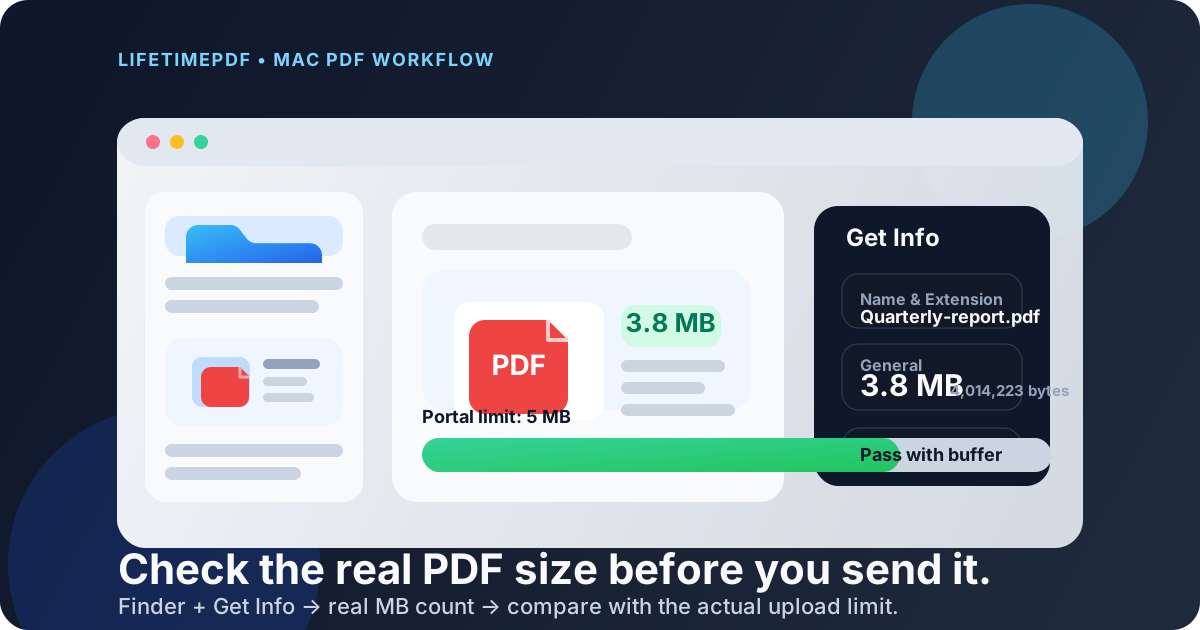
Table of contents
- Quick start: check PDF file size on Mac in about 5 minutes
- What you are really checking on Mac
- Where Mac users get misled
- Step-by-step: how to check PDF file size on Mac
- Common Mac PDF size problems and what to do next
- When to compress, split, rebuild, or leave the PDF alone
- Related LifetimePDF tools and guides
- FAQ
Quick start: check PDF file size on Mac in about 5 minutes
If your real question is will this Mac PDF actually make it through the next step?, use this order:
- Open the exact PDF you plan to send from Downloads, Desktop, Documents, iCloud Drive, Mail downloads, or a shared folder.
- Select the file in Finder and press Command-I, or right-click and choose Get Info.
- Read the real size in KB or MB.
- Compare that number with the actual upload or attachment limit that matters right now.
- If the file is too close to the ceiling, use Compress PDF. If one heavy appendix is the real issue, use Split PDF.
- Test one final upload, email, or share action so you know the corrected file really clears the limit.
What you are really checking on Mac
Checking PDF file size on Mac is not just asking whether the document seems small enough. You are confirming whether the exact file sitting on your machine fits the exact workflow it needs to pass through next.
In practice, that means answering three blunt questions:
- How big is the final PDF right now?
- What limit does the next Mac workflow actually enforce?
- Is the better fix compression, splitting, a cleaner source export, or no change at all?
Good outcome
The PDF is comfortably under the real limit, still looks clean, and does not need extra processing just for the sake of it.
Warning outcome
The file is technically under the limit but sits so close to the ceiling that one portal rule, attachment wrapper, or sync quirk may still cause trouble.
Typical root cause
Oversized scans, heavy embedded images, repeated exhibits, or a source export that preserved far more detail than the destination actually needs.
My practical opinion: if a Mac workflow fails because the file is too large, the mistake was usually not checking late enough. It was not checking early enough.
Where Mac users get misled
macOS makes PDFs feel calm and polished, but that smoothness creates false confidence. A file can open instantly in Preview, look harmless in Quick Look, and still be too large for the place you need to send it.
| Mac path | What it is good for | What it cannot safely prove |
|---|---|---|
| Finder list view | A fast first answer about the real size in KB or MB. | Why the file is heavy or which fix is best. |
| Get Info | Confirming the exact stored size of the PDF you are about to use. | Whether the destination limit is stricter than you assumed. |
| Quick Look or Preview | Checking that you grabbed the right file version. | That Mail, a portal, or a client upload will accept it once it leaves the preview. |
| Mail or iCloud preview | Seeing whether the PDF still looks right after compression or splitting. | The actual stored size unless you also check the file details. |
| Real upload or send test | Proving the corrected file actually passes the workflow. | Why it failed if you never checked the size first. |
Step-by-step: how to check PDF file size on Mac
This workflow gives you a dependable answer without turning a basic Mac check into a giant cleanup project.
Step 1: Start with the final Mac copy
Measure the exact PDF that will actually leave your machine. If you are still looking at an older Desktop copy while the real version sits in iCloud Drive, arrived as a new Mail download, or came through AirDrop a minute ago, the number you trust is already stale.
Step 2: Read the size directly in Finder or Get Info
In Finder, switch to a view that shows file details, or press Command-I to open Get Info for the PDF. That gives you the real size in KB or MB. This is faster and more reliable than guessing from how many pages the PDF has or how quickly Preview opens it.
Step 3: Compare the number with the actual limit
A PDF that is totally fine in iCloud Drive can still fail in a learning portal, a government form, a job application system, or a client-side document upload. Match the number against the exact limit that matters for this use case, not a vague memory of what similar systems usually allow.
Step 4: Give yourself a little buffer
If the portal allows 10 MB and your PDF is 9.9 MB, do not congratulate yourself too early. Mac workflows behave better when the file is comfortably under the line instead of balanced on it. A small safety margin saves a surprising amount of pointless retrying.
Step 5: Figure out what is making the PDF heavy
File-size problems are usually not mysterious. They tend to come from image-heavy scans, photos inserted at oversized resolution, merged packets with repeated assets, or a source export that kept far more detail than the destination requires. Knowing the cause helps you choose a cleaner fix.
Step 6: Choose the right fix for the real problem
Use Compress PDF when the whole file must stay together. Use Split PDF when one appendix or exhibit is making the whole package too large. If the source export is clearly bloated, rebuilding the file can produce a cleaner result than repeatedly squeezing the final PDF harder.
Reliable sequence: final Mac copy → Finder or Get Info → real MB count → actual destination limit → compress, split, rebuild, or no change → final test upload.
Common Mac PDF size problems and what to do next
| What you notice | What it usually means | Best next move |
|---|---|---|
| The PDF has only a few pages but is still huge | The weight is probably coming from scans, screenshots, or high-resolution images rather than page count. | Compress first, then check whether one or two images are doing most of the damage. |
| Mail resists the attachment or sync feels slow | The file is near or over the practical sharing limit for that workflow. | Reduce the size or split the PDF before retrying the send. |
| A portal rejects the upload even though the file “looks normal” | The visual appearance was never the issue. The stored file size was. | Read the exact MB count and compare it with the portal's limit, then create buffer. |
| One appendix makes the whole packet too large | The main document may be fine, but one heavy section is pushing it over the line. | Split the heavy section out instead of compressing every page harder than necessary. |
| The file keeps growing every time someone re-exports it | The source workflow is preserving more image detail or duplicate assets than the destination needs. | Rebuild from a cleaner source if repeated compression is starting to damage quality. |
Healthy default
If the PDF is already comfortably under the real limit and looks good, do not keep shrinking it just because you can. Smaller is only better when the workflow actually benefits.
When to compress, split, rebuild, or leave the PDF alone
Not every Mac size problem needs the same response. The useful question is whether the problem is the whole document, one section, or the source workflow upstream.
Compress when the document should stay together
Compression is the cleanest first move when the full PDF needs to remain one file and only needs to become smaller. This is common for resumes, signed forms, proposals, invoices, scanned packets, and client deliverables.
Split when one section is causing the problem
Splitting makes sense when a large exhibit, appendix, photo section, or scan bundle is the real reason the PDF is too heavy. That is often better than squeezing the entire file harder than necessary.
Rebuild when the source workflow is bloated
If the PDF keeps coming out heavy because of wasteful scan settings or oversized export choices, a cleaner source rebuild is often better than repeated compression on the finished file. Rebuilding is especially worth it when the document will be reused many times.
Leave it alone when the file is already safe
If the PDF is already well under the limit, opens cleanly, and looks right for the audience, you may already be done. Extra processing is not a virtue by itself.
FAQ
How do I check PDF file size on Mac quickly?
Select the PDF in Finder, press Command-I, or right-click the file and choose Get Info. That gives you the real number you need before you upload, email, or share it.
Can a PDF look small in Preview but still be too large for a portal?
Yes. A PDF can appear simple and still carry a large file size because of scans, screenshots, photos, or bloated export settings. Preview appearance is not the same thing as the stored file size.
What is the fastest Mac warning sign that a PDF is risky to send?
If the file is very close to the stated limit, treat it as risky. A little buffer is safer than trusting a PDF that is hovering right under the ceiling.
Should I compress or split the PDF?
Compress when the document needs to remain one file. Split when one heavy appendix or exhibit is the reason the whole PDF is too large and the destination can accept multiple files.
Does page count tell me whether a PDF is safe to upload?
No. Page count can be misleading. A three-page scanned PDF with huge images can outweigh a forty-page text-only PDF by a wide margin.
Published by LifetimePDF — Pay once. Use forever.