How to Check if a PDF Has Bookmarks on Linux: Okular, Evince, and Quick Outline Checks
To check if a PDF has bookmarks on Linux, open the saved file in a viewer that exposes the outline, such as Okular, Evince, or another full PDF app, then look for the bookmark sidebar and test a few important jumps.
If a browser preview or lightweight viewer shows no outline, compare the same PDF in a fuller Linux PDF app before assuming the file has no bookmarks.
That is the short answer. The practical Linux answer is that a PDF can render perfectly in Firefox, Chromium, an email preview, or a file manager preview while still hiding weak navigation, stale jump targets, or an outline that another viewer would reveal immediately. If the document matters, you want to confirm both things: do bookmarks exist, and do they still help a real reader move through the file efficiently?
Fastest practical path: save the exact Linux copy, open it in an outline-aware viewer, confirm whether the bookmark list exists, then test the chapter, appendix, exhibit, pricing, or signature-related entries people are most likely to use.
In a hurry? Jump to quick start: check whether a Linux PDF has bookmarks in about 5 minutes.
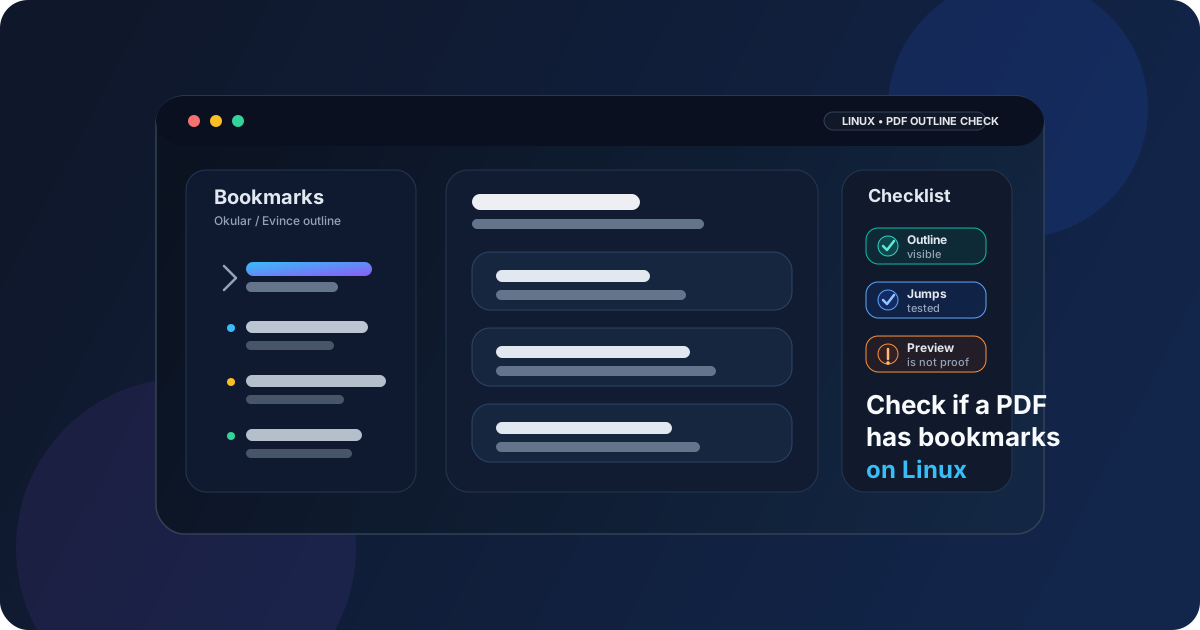
Table of contents
- Quick start: check whether a Linux PDF has bookmarks in about 5 minutes
- What counts as PDF bookmarks on Linux
- Where Linux users get misled
- Step-by-step: how to review PDF bookmarks on Linux
- Common signs the bookmark outline needs cleanup
- When to keep the outline, fix it, or add bookmarks from scratch
- Related LifetimePDF tools and guides
- FAQ
Quick start: check whether a Linux PDF has bookmarks in about 5 minutes
If your real goal is simply tell me whether this PDF has bookmarks and whether they are worth trusting on Linux, use this order:
- Save the exact PDF you plan to send, upload, archive, or review into a local folder on your Linux machine.
- Do not rely on a browser tab, mail preview, or any lightweight attachment preview alone.
- Open the same file in a PDF viewer that clearly exposes the bookmarks, contents, or outline panel.
- If entries appear for chapters, appendices, exhibits, or major headings, the PDF has bookmarks.
- Click the entries readers are most likely to use first: summary, pricing, appendix, exhibits, or the signature page.
- If the labels feel vague or the jumps land on the wrong page, fix the outline before the file leaves your Linux workflow.
What counts as PDF bookmarks on Linux
PDF bookmarks are the outline entries that let readers jump to the major parts of the document without scrolling page by page. They may point to chapters, appendices, exhibits, schedules, policies, reports, or a signature section. In plain language, they are the PDF's built-in navigation layer.
| What you see | What it usually means | Why it matters on Linux |
|---|---|---|
| An outline or contents list with entries | The PDF contains a bookmark structure | That structure makes long documents much faster to navigate across desktop viewers and mixed-window workflows |
| No visible bookmark panel in the current preview | The PDF may have no bookmarks, or the current Linux viewer may simply not be surfacing them clearly | One quiet preview is not strong proof either way |
| Bookmarks exist but land on the wrong page | The outline is stale, shifted, or damaged after editing, merging, or OCR work | Bad jumps waste time quickly when readers are cross-checking long files on desktop |
| Bookmark labels do not match visible headings | The outline probably reflects an older draft or careless packet cleanup | Readers stop trusting the sidebar as soon as the document and the outline disagree |
The important distinction is that a Linux PDF can have bookmarks without having good bookmarks. Presence is the first question. Reliability is the second one.
Where Linux users get misled
Linux gives you plenty of ways to glance at a PDF, but not every path tells you much about the outline. A quick preview answers whether the file opens. It does not always answer whether the bookmark structure is present, visible, or worth trusting.
| Opening path | What it is good for | What it cannot safely prove |
|---|---|---|
| Firefox or Chromium PDF preview | Confirming you saved the right file and doing a fast visual pass. | That the PDF definitely has no bookmarks just because the outline is not obvious in the current browser view. |
| File manager or attachment preview | Checking that the local copy opens and looks like the expected document. | That the bookmark structure is present, complete, or ready for a client, filing, or archive workflow. |
| Okular, Evince, Acrobat Reader, or another fuller PDF app | Surfacing the outline panel and testing whether the main jumps still work. | It still does not decide for you whether the outline is clear enough. You still have to judge whether real readers will trust it. |
| Merged or OCR-processed desktop copies | Showing whether the current file is the right final version. | That earlier bookmarks survived page inserts, deleted sheets, rescans, or reordered exhibits without drifting. |
Step-by-step: how to review PDF bookmarks on Linux
This workflow gives you a dependable answer without turning a simple bookmark check into a technical rabbit hole.
Step 1: Save the real Linux copy first
If the PDF is still sitting inside webmail, Slack, Teams, a cloud tab, or another browser attachment preview, save it first. The check should apply to the exact file you are about to share, archive, upload, print, or review. That sounds obvious, but it is one of the easiest ways to avoid judging the wrong copy.
Step 2: Open the file where the outline is visible
Use a PDF viewer that clearly exposes a bookmark, contents, or outline sidebar. Okular is often the fastest practical choice on Linux because it makes the navigation panel easy to inspect, but any viewer that clearly surfaces the outline can work. Do not treat the first browser or lightweight preview as your only evidence.
Step 3: Skim the top-level entries before clicking everything
A healthy outline should show the main shape of the document clearly: overview, chapters, appendices, exhibits, schedules, annexes, or signature sections. If the first layer already looks cryptic, repetitive, or strangely over-detailed, the PDF may technically have bookmarks without being pleasant to use.
Step 4: Test the high-value jumps
You do not need to click every bookmark in a 180-page packet to get a useful answer. Start with the entries readers are most likely to revisit on Linux: executive summary, table of contents, key contract sections, pricing, appendix tabs, exhibits, or the signature page. If those fail, the rest of the outline deserves skepticism too.
- Does the bookmark jump to the right page?
- Does the page heading match the bookmark label?
- Does the hierarchy help you scan the file quickly, or does it bury the main structure?
- Do the labels sound like the final document, or like an older draft?
- Was the PDF merged, reordered, or updated in a way that could have shifted destinations?
Step 5: Compare the outline with the visible structure
If the PDF already has a visible table of contents, divider pages, or strong page labels, compare them with the bookmark list. On Linux, mismatches stand out quickly because desktop users often jump between multiple windows and expect navigation to behave predictably. If the page says Appendix D but the bookmark still says Appendix C, you already know the outline is stale.
Step 6: Fix, rebuild, or add bookmarks before sharing
If the outline is clear and the important jumps work, you are done. If the PDF has no bookmarks, confusing bookmark names, or dead jumps, fix it before it goes out. On Linux, bookmark quality is not cosmetic. It is often the difference between a document feeling efficient and feeling clumsy.
Reliable sequence: save the exact Linux file → open the outline panel → confirm whether a bookmark list exists → test the important jumps → compare with visible headings → clean the outline before sharing if needed.
Common signs the bookmark outline needs cleanup
These patterns come up repeatedly when a Linux PDF technically has bookmarks, but the outline is not ready for real use.
| What you notice | What it usually means | Best next move |
|---|---|---|
| The bookmark list exists, but the labels are vague | The outline was added mechanically or preserved from an older draft | Rename the key entries so they match the visible document structure |
| Bookmarks jump one page early or late | Pages were inserted, deleted, or merged after the outline was built | Retarget the main bookmarks before sharing |
| The first few bookmarks work, but later ones drift | The PDF was stitched together from multiple sources | Test the high-value sections deeper in the packet, not just the opening pages |
| The visible table of contents disagrees with the outline | The navigation layer no longer reflects the final version | Update both so the PDF feels coherent |
| The PDF has no bookmarks at all, but it is long and sectioned | The file is navigable only by scrolling or search | Add bookmarks before the document reaches readers who will depend on it |
When to keep the outline, fix it, or add bookmarks from scratch
Not every Linux PDF needs the same treatment. The smart move depends on the file's length, complexity, and audience.
Keep the outline when it is clear and trustworthy
If the bookmark labels match the visible headings and the main jumps land correctly, keep the structure as is. A clean outline is already doing valuable work for the reader.
Fix the outline when the bones are good but the details are stale
Sometimes the PDF clearly has bookmarks, but a few entries were never updated after edits, merges, or page reordering. In that case, a targeted cleanup is usually enough. You do not need a perfect editorial overhaul to make the file feel dramatically more dependable.
Add bookmarks from scratch when the document is long and the list is empty
If you are sending a long report, contract packet, proposal, manual, board book, or exhibit bundle from Linux and the file has no outline at all, adding one is often worth the effort. Desktop readers notice immediately when navigation is missing from a document that clearly needs it.
Healthy default
If a PDF is long enough that you dread scrolling through it on a Linux desktop, it is probably long enough to deserve a usable bookmark outline.
Bottom line: the best Linux bookmark check is not just “are bookmarks present?” It is “will a reader actually trust this navigation?”
FAQ
How do I check if a PDF has bookmarks on Linux?
Open the saved PDF in a Linux viewer that exposes the outline, such as Okular or another full PDF app, then look for bookmark entries and test a few important jumps.
Can a browser preview tell me whether a PDF has bookmarks on Linux?
Sometimes, but not reliably enough for an important file. Browser previews are fine for a quick glance, but they do not always prove whether the full bookmark outline exists or works well.
Which Linux PDF viewers are best for checking bookmarks?
Okular is often the clearest first stop because it usually surfaces the outline well. Evince or another viewer can help too, as long as it actually exposes the bookmark panel and lets you test jumps.
What if my Linux viewer shows no bookmark sidebar?
The PDF may have no bookmarks, or the current viewer may not be surfacing them. Compare the same file in another outline-aware PDF app before deciding the document has no navigation.
Should I fix bookmarks before sharing a PDF from Linux?
Yes if the labels are vague, the jump targets drift, or the document is long enough that readers will depend on the outline to move around quickly.
Published by LifetimePDF — Pay once. Use forever.