How to Check if a PDF Has Attachments on iPad: Files, Mail, Safari, and Safer Review Steps
To check if a PDF has attachments on iPad, save the file to Files, open the exact copy, and look for any paperclip, embedded-file, or portfolio clue—but assume a normal-looking preview can still hide bundled files.
If the document matters, confirm it with Validate PDF or a fuller desktop viewer before you forward, archive, or trust the package.
That is the short answer. The more useful answer is understanding where iPad creates false confidence. Because the screen is larger than an iPhone and the PDF often looks clean in Files, Mail, Safari, or a portal preview, it is easy to assume you have already seen the whole document. Sometimes you have only seen the visible pages. The embedded-file layer may still contain spreadsheets, exhibits, ZIP files, source documents, or other extras that matter more than the cover pages suggest.
Fastest practical path: save one clear copy in Files, inspect it on iPad for attachment clues, then switch to a more definitive checker if the workflow is sensitive or the preview stays suspiciously quiet.
In a hurry? Jump to quick start: check PDF attachments on iPad in about 5 minutes.
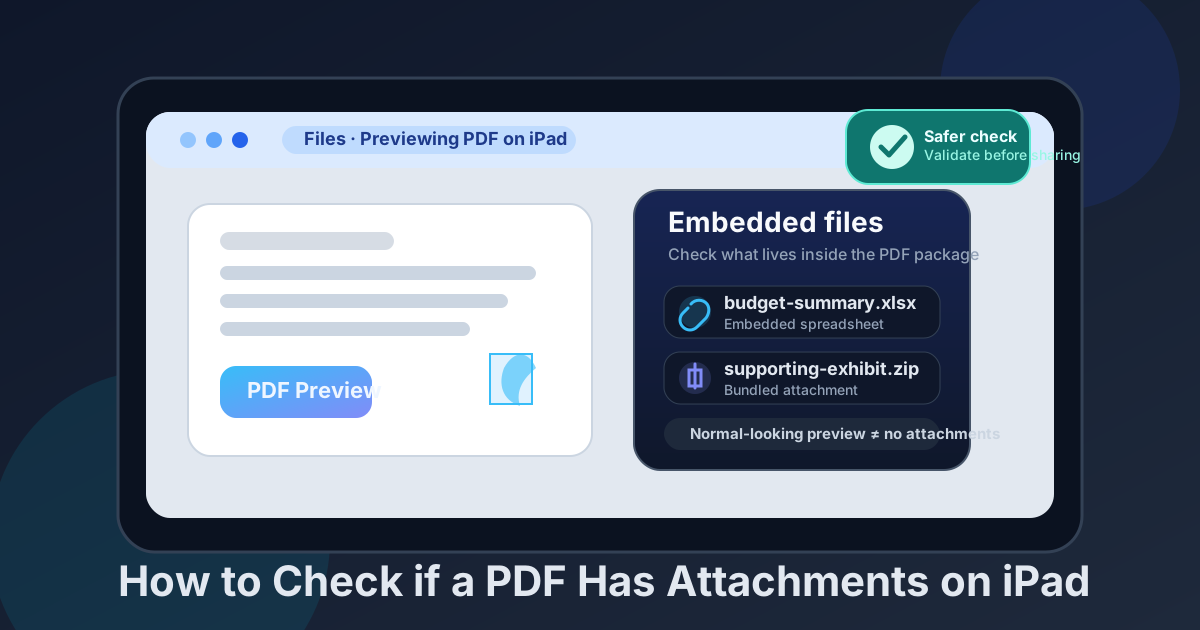
Table of contents
- Quick start: check PDF attachments on iPad in about 5 minutes
- What counts as a PDF attachment on iPad
- Step-by-step: how to check a PDF for attachments on iPad
- What Files, Mail, Safari, and portal previews can miss
- Signals that a PDF may contain embedded files
- When an iPad preview is not enough
- What to do next if the PDF matters
- Related LifetimePDF tools and guides
- FAQ
Quick start: check PDF attachments on iPad in about 5 minutes
If you want the shortest reliable workflow, use this order:
- Save the exact PDF from Mail, Safari, Messages, Google Drive, or another app into Files.
- Open that saved copy and look for any clue that the document is more than visible pages: a paperclip, attachment list, portfolio behavior, or contained-file panel.
- If the sender mentioned exhibits, spreadsheets, source files, or exports, treat that as evidence even if the iPad preview looks ordinary.
- Use Validate PDF or a fuller desktop viewer when you need a definite answer.
- Only forward, archive, upload, or trust the PDF after you know whether the embedded files are intentional and appropriate.
What counts as a PDF attachment on iPad
A PDF attachment is a separate file embedded inside the PDF package. It is not the same as a highlight, comment, form field, annotation, or normal link. On iPad, attachments may be spreadsheets, Word files, ZIP archives, XML exports, project exhibits, images, or other support material that travels with the PDF even though it does not appear as a normal page.
Embedded files
Separate documents packed inside the PDF rather than displayed in the visible page flow.
PDF portfolios
Container-style PDFs that behave more like a bundle of files than one flat reading copy.
Support material you may miss
Draft source docs, stale exports, duplicate exhibits, or extras that create trust and privacy problems.
Some attachments are completely legitimate. A legal filing may include exhibits, a finance packet may bundle a workbook, and a technical handoff may carry source data or logs. The problem is not that attachments exist. The problem is treating an uninspected package as harmless because the first iPad preview looked tidy.
Step-by-step: how to check a PDF for attachments on iPad
This workflow helps you reach a confident answer without pretending every iPad viewing path is equally informative.
1) Save the exact file you are actually going to use
Start by moving the PDF into Files. If the document is still living in a Mail preview, browser tab, chat thread, or cloud-app wrapper, you can easily inspect one copy and later forward another. Saving the exact file first removes that confusion.
2) Check context before you trust the visible pages
If the sender says the PDF includes exhibits, spreadsheets, supporting files, or a portfolio, believe that clue more than the first preview. A large file size for a short document is another reason to keep checking.
3) Open the saved copy in Files and look for attachment cues
On iPad, start with the saved file in Files because it is the cleanest way to inspect the exact document package. Look for any paperclip-style indicator, list of contained files, or portfolio-like behavior. If you see those cues, great—you already know the PDF carries more than pages.
4) Treat a normal preview as inconclusive when the workflow is sensitive
This is where many people stop too early. Because iPad has a larger screen and more desktop-like browsing than a phone, a clean preview feels authoritative. It still may not expose the embedded-file layer clearly. In other words, the interface can look complete while the structural answer is still missing.
5) Switch to a stronger checker when certainty matters
If the PDF affects a client send, a school submission, a legal packet, a contract, a procurement flow, or a records copy, use Validate PDF or confirm the file in a fuller desktop viewer. That is faster than guessing from repeated taps in the same limited preview.
6) Decide whether the attachments belong before you share the PDF
Once you confirm whether embedded files exist, ask the practical question: should these files really travel with this PDF for this recipient and this stage of the workflow? Some should. Others will be stale drafts, duplicate exhibits, or support files that were never meant to leave your team.
Best next move after the check: if the PDF contains embedded files, decide whether they belong before you upload it, message it, email it, or store it as a final record.
What Files, Mail, Safari, and portal previews can miss
iPad gives you several comfortable ways to open a PDF. That is useful, but it also makes it easy to mistake convenience for certainty.
| iPad view | Best for | Where it can mislead you |
|---|---|---|
| Files | Inspecting the exact saved copy you might later keep, upload, or forward | The PDF can still contain embedded files even if no obvious attachments control appears |
| Mail preview | Fast first look at a received document | Convenient viewing can make you forget you have not actually checked the document package |
| Safari or portal viewer | Quick access before download | Browser or portal wrappers can hide useful structural clues about what the PDF contains |
| Dedicated checker or desktop viewer | Getting a more definitive answer when hidden files would matter | Takes one extra step, but usually saves time compared with guessing from the preview alone |
The key point is simple: the larger iPad interface does not automatically mean the PDF viewer is revealing everything. A professional-looking preview can still leave the embedded-file layer mostly invisible.
Signals that a PDF may contain embedded files
These clues do not prove attachments, but they are strong enough that you should not stop at a quick preview.
| What you notice | What it usually suggests | Best next step |
|---|---|---|
| The sender mentions exhibits, spreadsheets, or support files inside the PDF | The package may contain real embedded files even if iPad preview looks plain | Validate the PDF before forwarding or trusting it |
| The file size feels large for the number of visible pages | Extra content may be bundled beyond what you can read on the page layer | Check for attachments instead of assuming the file is only image-heavy |
| A desktop user sees a paperclip or embedded-files panel that you cannot find on iPad | Your iPad viewing path is probably hiding useful structure | Trust the fuller inspection path, not the quieter preview |
| The PDF behaves more like a package than a flat document | You may be dealing with a portfolio or bundled-file workflow | Inspect the file structure before you archive or share it |
| You are about to send the PDF outside your team or school | Even harmless attachments can create privacy, version, or retention problems | Confirm the package contents first |
When an iPad preview is not enough
There is nothing wrong with starting on iPad. The mistake is treating the first pass as final proof.
- The PDF is headed into a legal, finance, compliance, records, or procurement workflow.
- You did not create the PDF yourself and do not fully trust the sender or packaging.
- The sender says the file includes supporting material, but iPad preview shows nothing obvious.
- You are about to forward the PDF to a client, recruiter, teacher, vendor, or public-facing recipient.
- Hidden extras would be embarrassing, confusing, or risky if someone opened them first.
In those situations, the right move is not spending longer in the same preview window. It is switching to a path that can answer the question properly.
What to do next if the PDF matters
Once you know the iPad preview is not enough, choose the next step based on what you actually need from the file.
If you only need to confirm whether extra files exist
Start with Validate PDF. It is the fastest way to move from a vague visual impression to a more dependable structural check.
If you need to share the PDF safely
Pair the attachment check with related trust reviews such as permissions and JavaScript when the document came from an unfamiliar workflow. Attachments are only one part of the package story.
If the embedded files are intentional and important
Keep them only if they are current, relevant, and expected by the recipient. If the PDF is supposed to act as a bundle, make sure the bundle is deliberate rather than a side effect of a rushed export.
If you cleaned the package and want to verify the outgoing copy
Use Compare PDFs to help confirm the visible document stayed intact while you removed or changed the parts that should not travel.
Related LifetimePDF tools and guides
These are the most useful follow-up pages when your iPad attachment check turns into action.
If you want the device-agnostic workflow first and the iPad nuance second, start with Check PDF Attachments and then come back to this page when Files, Mail, or Safari leaves you uncertain.
FAQ
How do I check if a PDF has attachments on iPad?
Save the PDF to Files on your iPad, open the exact copy, and look for any paperclip, embedded-file cue, or portfolio-style file list. If the preview looks normal but the document still matters, confirm it with Validate PDF or a fuller desktop viewer.
Can the iPad Files app hide PDF attachments?
Yes. A PDF can contain embedded files even when Files shows the visible pages normally and never exposes an obvious attachments panel.
Are PDF attachments the same as comments, highlights, or links?
No. Attachments are separate files embedded inside the PDF package. Comments, links, and annotations live on the page layer instead.
Why would someone embed files inside a PDF?
To keep supporting spreadsheets, exhibits, source docs, XML exports, or other reference material bundled with the main document. That can be helpful, but it also means you should inspect what is inside before you share the package.
What should I do before forwarding a suspicious PDF from iPad?
Confirm whether the PDF contains embedded files, review any related trust issues such as permissions or active content, and avoid forwarding the document until you know the package is appropriate for the recipient.
Bottom line: on iPad, a PDF that looks polished and harmless can still carry embedded files you never intended to pass along. Check the package, not just the pages.
Published by LifetimePDF — Pay once. Use forever.