How to Check if a PDF Has a Text Layer on iPad: Quick Files, Notes, and OCR Tests
To check if a PDF has a text layer on iPad, save the file in Files, search for a visible word, then long-press and copy one short line into Notes.
If search misses obvious text, the page behaves like one flat image, or the pasted result looks messy, the PDF has a weak or missing text layer and probably needs OCR.
That is the fast answer. The useful answer is knowing how to test the exact iPad copy you plan to keep, how to separate a truly usable text layer from weak OCR, and how to avoid trusting a PDF that only looks readable on a larger tablet screen. A document can look crisp in Mail, Safari, Files, or Split View while still falling apart when you search, extract, summarize, or ask questions about it.
Fastest path: save one local copy, test search, copy one line into Notes, then use PDF to Text or OCR only if the evidence is weak.
In a hurry? Jump to Quick start: tell if an iPad PDF has a text layer in under 2 minutes.
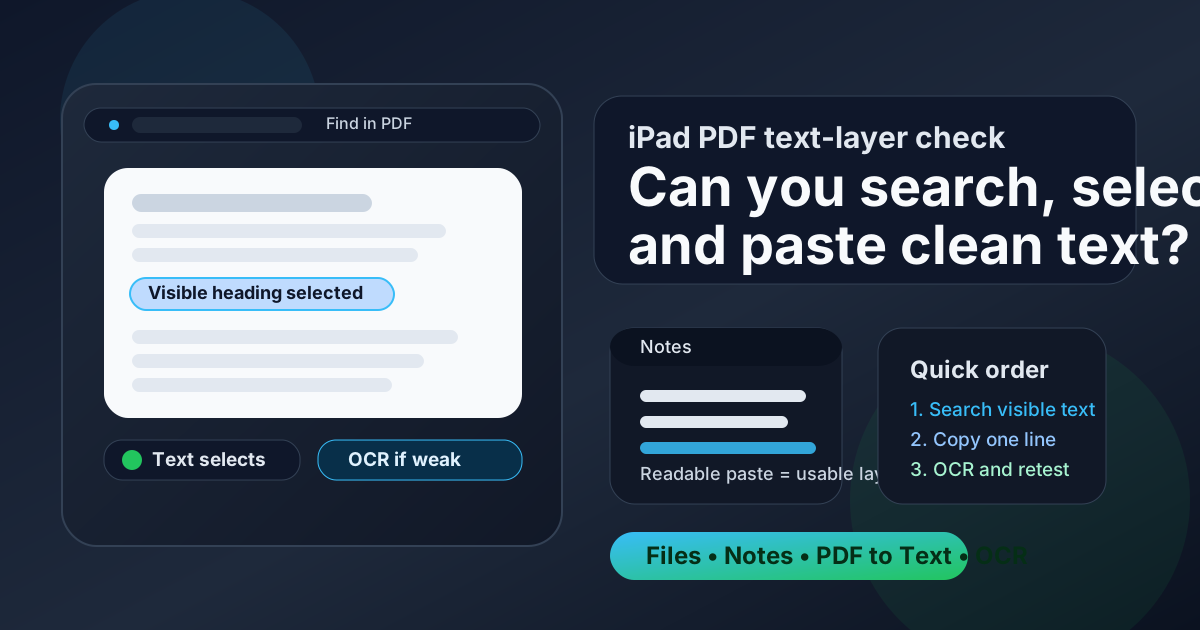
Table of contents
- Quick start: tell if an iPad PDF has a text layer in under 2 minutes
- The easiest iPad workflow for checking a text layer
- What a PDF text layer actually means on iPad
- Step-by-step: check a PDF from Files, Mail, Safari, Messages, or iCloud Drive
- Fast warning signs that the text layer is weak or missing
- When to run OCR and when to export a cleaner source file
- iPad habits that lead to cleaner text layers
- Related LifetimePDF tools and guides
- FAQ (People Also Ask)
Quick start: tell if an iPad PDF has a text layer in under 2 minutes
If you already have the file on your iPad and just need a quick answer, use this order:
- Save the exact PDF from Mail, Safari, Messages, or iCloud Drive into one obvious folder in Files.
- Search for a word you can clearly see on the page, such as a heading, total, invoice number, date, or clause label.
- Long-press one short line, copy it, and paste it into Notes.
- If you want a stronger check, run the file through PDF to Text and see whether the extracted text stays readable.
- If those tests fail or only work on some pages, run OCR PDF and repeat the same checks on the new version.
The easiest iPad workflow for checking a text layer
On iPad, the most common mistake is testing the wrong copy. People open one version from Mail, another from Safari, then share a third out of Files and assume the PDF is fine because one preview seemed to behave. That creates false confidence fast.
A cleaner workflow is simple: work from one saved file in Files, test search and selection first, and only move into deeper extraction or OCR when the quick checks raise doubts. That keeps healthy PDFs fast and messy PDFs manageable.
| iPad situation | Best move | Why it helps |
|---|---|---|
| The PDF came from Mail, Safari, Messages, or iCloud Drive | Save one local copy first | You avoid testing one version and sharing another |
| The PDF came from Pages, Word, Google Docs, or another source app | Run search and copy-paste first | Native PDFs often already contain a clean text layer |
| The PDF came from a scanner, copier, or phone camera | Expect OCR to be the likely next step | Scans can look readable while still acting like pictures |
| The file is a mixed packet with inserts, forms, or photographed pages | Test more than one page | Some pages may have text while others do not |
In plain English: checking a text layer on iPad is mostly about resisting shortcuts. If the PDF is headed into review, quoting, school, legal, finance, accessibility, or AI workflows, one minute of testing saves a lot of cleanup later.
What a PDF text layer actually means on iPad
A PDF text layer is the machine-readable text sitting behind the visible page image or layout. That hidden layer is what makes search, highlighting, copying, extraction, summarizing, and PDF question-answering work properly. Without it, your iPad is mostly looking at a picture of words.
Most PDFs fall into one of four buckets:
Native PDF
Exported from Pages, Word, Docs, Numbers, or another app with real text already built in.
Scanned PDF
A picture of paper pages, usually with no usable text layer yet.
Hybrid PDF
Part native and part scanned, so some pages work and others fail.
Weak OCR PDF
Search may partly work, but copied text comes out wrong, incomplete, or out of order.
The tricky part is that all four can look fine on a tablet screen. That is why behavior tests beat visual guesswork.
Step-by-step: check a PDF from Files, Mail, Safari, Messages, or iCloud Drive
Here is the practical iPad workflow that covers most everyday situations.
1) Start with the exact file you plan to keep or share
If the PDF is still sitting inside a Mail preview, a Safari tab, or a share-sheet overlay, save it first if that makes the workflow cleaner. One obvious copy in Files reduces version mistakes and makes retesting much easier.
2) Search for a visible word or phrase
Pick something distinctive: a heading, invoice number, section label, or uncommon phrase. If search returns nothing on obvious text, the file may be image-only or the text layer may be too weak to trust. Search working is a good sign, but not the final answer.
3) Long-press one line and paste it into Notes
This is one of the best iPad reality checks. If the line selects cleanly and pastes into Notes in readable order, the PDF probably has a usable text layer. If the whole page behaves like one photo or the pasted result becomes blanks, random symbols, or scrambled spacing, the layer still needs work.
4) Use PDF to Text or PDF Q&A when you want a stronger answer
Send the file through PDF to Text when the quick tests are mixed. If the extracted result stays readable, the text layer is likely solid enough for real work. If you want to pressure-test whether the file can support targeted questions, PDF Q&A is a useful follow-up once the text layer looks healthy.
5) OCR and retest if the file is scanned or only partly readable
If the PDF came from a printer scanner, copier, photographed page, or old archive, run OCR PDF next. After OCR, repeat the same search and copy-paste tests. Do not assume the first pass solved everything. Retesting is what tells you whether the new text layer is actually usable.
Recommended iPad sequence: save the file, search one visible phrase, paste one line into Notes, test extraction if needed, then OCR and retest only when the text layer is weak.
Fast warning signs that the text layer is weak or missing
You do not need a long forensic session to spot a weak iPad PDF. A few signals show up quickly:
- Search misses obvious text that is clearly visible on the page.
- Text selection grabs the whole page or behaves like dragging across a photo.
- Notes paste comes out broken with missing letters, merged words, strange spacing, or symbols.
- Only some pages work, which usually means the PDF is a mix of native and scanned content.
- Names, totals, or dates copy incorrectly, which is especially dangerous in business, school, and legal workflows.
- Rotated pages, dark borders, or skewed scans make OCR and extraction noticeably worse.
None of those warning signs automatically means the PDF is useless. They do mean you should slow down before trusting the file for quoting, summarizing, automation, or AI analysis.
One easy iPad trap
A larger screen can make a weak PDF look more convincing than it really is. That is why the copy-paste test matters so much: it exposes the underlying text quality instead of the presentation.
When to run OCR and when to export a cleaner source file
OCR and source repair solve different problems. OCR is the right first move when the PDF is basically an image of text, such as a copier scan, photographed page, handwritten packet, or legacy archive file. It adds a text layer so your iPad can start searching and copying the content.
A cleaner export from the source is often better when the PDF came from Pages, Word, Google Docs, Numbers, or another editable document and still behaves badly. If the file was produced through a rough print-to-PDF workflow, a rebuild from the source can outperform repeated after-the-fact fixes.
Run OCR when
- the text cannot be selected at all,
- search fails on obvious content,
- the file came from a scanner, copier, or camera,
- some pages are clearly just images, or
- you need the document for extraction, summarizing, translation, or AI Q&A.
Re-export from the source when
- the PDF came from Pages, Word, Docs, or Numbers and should already have real text,
- copy-paste order is consistently messy even though the source still exists,
- slides, tables, or forms were flattened through a print workflow, or
- you control the original file and can produce a cleaner PDF in a few minutes.
iPad habits that lead to cleaner text layers
The easiest way to get dependable text layers on iPad is to reduce avoidable damage before the file becomes a PDF.
- Export from the source app when possible. A direct export from Pages, Word, Docs, Numbers, or another document app usually preserves text better than screenshots or awkward print workflows.
- Avoid using screenshots as document substitutes. A screenshot of a page looks readable but usually destroys the text layer completely.
- Fix rotation before OCR. If the page is sideways, use Rotate PDF first so recognition has cleaner input.
- Trim ugly scan borders. Dark edges and wasted margins can hurt OCR quality. Crop PDF helps clean those up.
- Retest after OCR instead of trusting it blindly. Search one key term, copy one line, and paste it into Notes again.
- Check the parts that matter most. Names, dates, totals, references, and clause numbers are where weak text layers cause the most real-world damage.
Simple cleanup stack: rotate if needed, crop rough borders, run OCR, then recheck search and copy-paste before you move on.
Related LifetimePDF tools and guides
Checking whether an iPad PDF has a text layer is usually the first step in a bigger workflow. These tools and guides fit naturally around it:
If you want the broader explanation before narrowing down by device, the generic guide How to Check if a PDF Has a Text Layer is the best companion read. If your next priority is structure rather than raw readability, How to Check if a PDF Is Tagged on iPad is a smart follow-up once the text layer looks healthy.
FAQ (People Also Ask)
How do I check if a PDF has a text layer on iPad?
Open the PDF on your iPad, search for a visible word, long-press one short line, and paste it into Notes. If those tests work cleanly, the file has a usable text layer. If they fail, the PDF probably needs OCR.
Is a searchable PDF the same thing as a PDF with a text layer?
Usually yes in normal workflows, but the quality still matters. A PDF can be technically searchable while the hidden text layer is weak enough to produce bad copy-paste, messy extraction, or unreliable answers.
Can a PDF have a text layer on some iPad pages but not others?
Yes. Mixed PDFs often combine native document pages with scans, photographed receipts, signatures, or flattened inserts. Some pages behave perfectly while others still act like images.
What is the fastest iPad test for a weak text layer?
Search for a visible phrase, then copy one line into Notes. If search misses obvious text or the pasted line looks broken, the text layer is weak enough to justify OCR or a cleaner export.
Should I OCR the PDF or export a new one from Pages, Word, or another app?
If the file is a scan or photo-based document, OCR is usually the right first step. If it came from Pages, Word, Docs, or another editable source and still behaves badly, a cleaner export from the source is often better than repeated patching.
Ready to test the file for real?
Good default workflow: save one copy → search one visible phrase → paste one line into Notes → OCR only if needed → retest before you move on