How to Annotate a PDF on Linux: Highlight, Comment & Mark Up Files Without Printing
To annotate a PDF on Linux, open LifetimePDF's Edit PDF tool in Firefox or Google Chrome, choose the file from Downloads, your home folder, a shared drive, or synced storage, then add highlights, comments, notes, arrows, or drawings and save the marked-up copy.
If the file is a scan and the text will not select cleanly, run OCR first so your highlights, comments, and review notes land on a PDF that is easier to read and work with.
That is the short answer. The useful part is knowing when a quick viewer note is enough, when a cleaner browser-based annotation workflow is better, how to avoid editing the wrong copy from Downloads, and how to handle contracts, forms, proofs, research papers, and scanned PDFs on Linux without printing them or creating version chaos.
Fastest path: open Edit PDF in Firefox or Chrome on Linux, upload the file from Downloads or its real project folder, add the highlights and comments you need, then save the annotated copy with a clear new filename.
In a hurry? Jump to Quick start: annotate a PDF on Linux in 3 minutes.
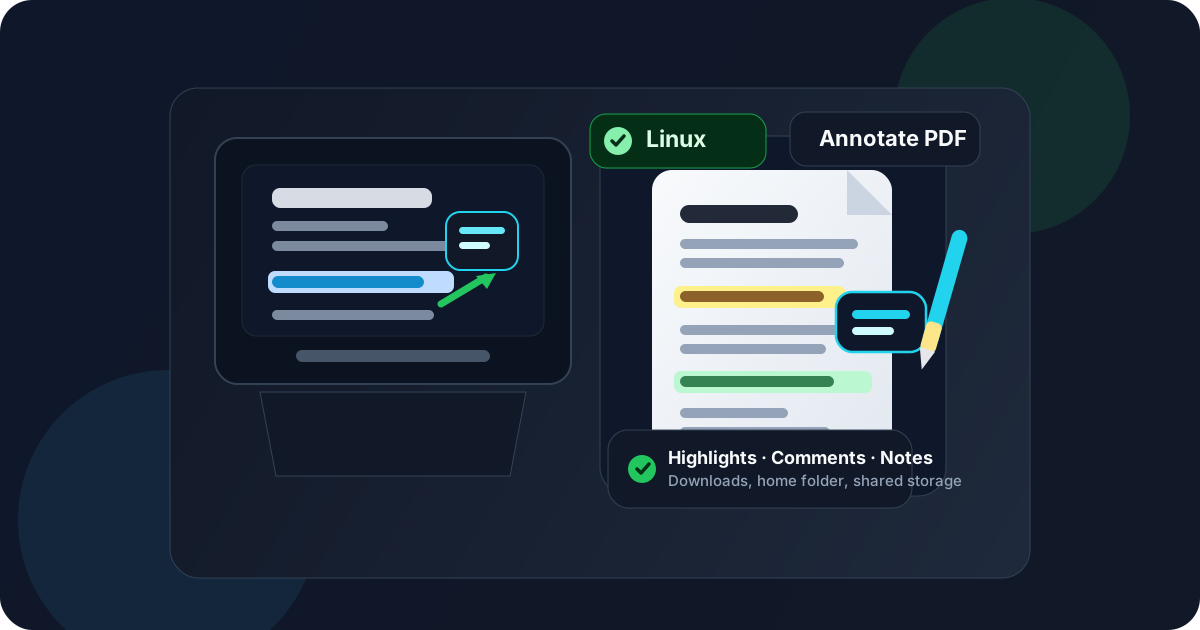
Table of contents
- Quick start: annotate a PDF on Linux in 3 minutes
- The best Linux workflow for PDF annotation
- Step-by-step: annotate a PDF from Downloads, your home folder, or shared storage
- Highlights, comments, notes, arrows, and drawings on Linux
- Okular, Evince, browser tabs, or a dedicated PDF annotation workflow
- Scanned PDFs, OCR, and searchable text on Linux
- Working with PDFs from Downloads, project folders, synced storage, and shared drives
- How to save, share, and protect the annotated copy
- Common Linux annotation problems and quick fixes
- Related LifetimePDF tools and guides
- FAQ
Quick start: annotate a PDF on Linux in 3 minutes
If the PDF is already on your Linux computer and you just need to review or mark it up, this is the workflow most people actually want:
- Open Edit PDF in Firefox or Google Chrome on Linux.
- Choose the file from Downloads, your home folder, a shared project folder, or synced storage such as Nextcloud or Dropbox.
- Add the highlights, comments, text boxes, arrows, circles, or freehand notes you need.
- If the file is a scan and you cannot select the text cleanly, use OCR PDF first.
- Download the annotated PDF with a clear new filename and review it once in your usual Linux PDF viewer or browser before sharing it.
The best Linux workflow for PDF annotation
On Linux, annotation goes smoothly when you separate three jobs that people often blur together:
- Reading: opening the PDF and understanding what needs attention.
- Marking up: highlighting, commenting, circling, underlining, or adding notes that someone else can act on.
- Sharing: saving the reviewed copy with a filename and location that still make sense later.
Linux gives you plenty of ways to open a PDF, but speed is not the same thing as control. If you are reviewing a contract, an academic paper, a design proof, an invoice, a technical document, or a scan that needs real feedback, a dedicated annotation workflow usually feels calmer than trying to squeeze every note into whatever viewer happened to open first.
The cleanest setup is simple: start with the exact source file, annotate in a browser tool that gives you better control over comments and placement, then save a separate reviewed copy before the file goes back to email, chat, shared storage, or a client portal.
Step-by-step: annotate a PDF from Downloads, your home folder, or shared storage
1) Start with the exact file you plan to review
Before you add a single comment, make sure you are working on the real source file. On Linux, it is easy to open a PDF from Downloads, make notes, then later discover the version everyone else cares about is sitting in a different project folder or synced share.
If the file arrived by email, chat, or a web portal, save it somewhere obvious first. A named folder in your project directory is better than trusting a generic Downloads pile or a temporary browser location you will forget about later.
2) Open Edit PDF in Firefox or Chrome
Open Edit PDF in Firefox or Google Chrome. Both work well for a browser-based PDF workflow on Linux and avoid the friction of switching into a heavyweight desktop editor just to leave a few practical notes.
Upload the PDF from the folder where you deliberately saved it. If the file lives in a synced folder or mounted share, let the sync or network write finish before you reopen or resend the annotated version.
3) Add the markup that actually helps the next person
Good annotation is not about decorating the page. It is about making the next action obvious. Highlight the sentence that matters. Add a short note that explains the problem. Use an arrow when the issue is visual or layout-based. Keep comments specific enough that someone else can resolve them without needing a second call or chat thread.
If you are reviewing a draft, try to keep each note focused on one fix. That makes long PDFs much easier to work through when the recipient opens the file later on another Linux machine, a Mac, a Windows PC, or a tablet.
4) Zoom in and work page by page
Linux desktops often give you plenty of room to be precise. Use that advantage. Zoom in before placing arrows, text boxes, or small highlight ranges, especially on contracts, tables, invoices, forms, plans, and academic PDFs with tiny footnotes.
A note that lands neatly beside the issue is much easier to trust than one floating halfway across the page.
5) Save the annotated PDF as a separate copy
When you finish, save the reviewed version with a filename that says what changed. Examples like proposal-review-comments.pdf, vendor-contract-redlines.pdf, or chapter-4-notes.pdf are much better than yet another vague document-final.pdf.
That naming habit matters on Linux because many people bounce between local folders, synced folders, and shares. A clear filename keeps the right copy obvious later.
6) Reopen the final PDF and verify it
Open the saved copy once before sharing it. Confirm the comments are present, the arrows landed where you intended, and the file opens from the location you expect. This last check catches a surprising number of avoidable mistakes.
Highlights, comments, notes, arrows, and drawings on Linux
Different annotation types solve different problems. The fastest workflow usually mixes only the ones you actually need:
Highlights
Highlights are best when the text itself is the issue. Use them for clauses that need review, figures that look wrong, deadlines, payment terms, missing words, or passages a teammate should answer.
Comments and notes
Comments are where the real value lives. A short note like “Please update this number to match the revised invoice” is more useful than a bright highlight with no explanation.
Arrows, circles, and shapes
Visual markup helps when the problem is layout rather than text: a logo too close to the edge, a missing signature line, a table row that broke awkwardly, a figure that belongs elsewhere, or a screenshot that needs replacing.
Freehand drawing on Linux
Freehand notes can work well when you are using a stylus-enabled device or just need fast visual emphasis, but typed comments are usually easier for coworkers, clients, and teachers to read. Use drawing when it truly clarifies the issue, not as the default for every note.
Okular, Evince, browser tabs, or a dedicated PDF annotation workflow
Linux users often have more than one PDF viewer available. Maybe your system opens files in Document Viewer / Evince, maybe you prefer Okular, maybe you review fast inside a browser tab. All of those are useful for reading.
The limits show up when the review matters to someone else. Dense comment threads, multiple note types, cleaner placement, and a more controlled save path usually feel better in a dedicated annotation workflow.
- Use Evince, Okular, or your default viewer for quick personal review and a few light marks.
- Use a dedicated PDF annotation workflow when the file is going back to a client, teacher, vendor, designer, team, or signer.
In other words, Linux viewers are great for convenience. A dedicated tool is better when clarity, consistency, and a presentable review copy actually matter.
Scanned PDFs, OCR, and searchable text on Linux
If you try to highlight text and nothing behaves like text, the PDF is probably image-only. That is common with scanned contracts, receipts, forms, old handouts, printed packets, and camera-made copies saved as PDF.
In that case, run the file through OCR PDF first. OCR makes the text searchable and usually much easier to highlight, quote, and review cleanly.
Even when you can technically draw on a scan, OCR often makes the final result feel far more usable because your highlights and comments are anchored to text instead of fighting against a flat picture of a page.
Working with PDFs from Downloads, project folders, synced storage, and shared drives
The source of the file changes how disciplined you need to be:
- Downloads: move important PDFs out of the generic Downloads folder before the versions start blurring together.
- Project or home folders: keep both original and reviewed copies together so the next step stays obvious.
- Synced storage: wait for sync after saving if the file lives in Nextcloud, Dropbox, or another folder shared across devices.
- Shared drives: save the annotated version with a clear filename so teammates know which copy is ready for review.
Most Linux annotation mistakes are not really annotation mistakes. They are file-location mistakes. A good folder habit solves half the problem before you even start marking pages.
How to save, share, and protect the annotated copy
Save the marked-up PDF with a new name
Keep the original untouched whenever possible. Save the reviewed file with a name that signals status, such as draft-commented.pdf, invoice-review.pdf, or notes-for-approval.pdf.
Compress the file if it needs to travel
If the PDF grew after annotation or already started large because of scans or images, use Compress PDF before you attach it to email, upload it to a portal, or send it through a chat app with size limits.
Sign the final copy if approval is part of the workflow
Some review cycles end with a signature rather than another comment round. If that is your situation, move from annotation into Sign PDF after the comments are settled.
Protect a private review copy when needed
If the file includes sensitive pricing, legal notes, HR details, or personal information, add a password with PDF Protect before you send the reviewed copy onward.
Common Linux annotation problems and quick fixes
I cannot select the text I want to highlight
The PDF is probably scanned or flattened. Run OCR first, then try again.
My comments looked fine on my Linux machine but messy somewhere else
That usually means the note placement was too cramped or the page was not checked after saving. Reopen the final file yourself once before sending it, especially if you used arrows, shapes, or tight margin notes.
I keep opening the wrong copy from Downloads or a synced folder
Create a single named working folder and move the real source PDF there first. Do not rely on your browser's default download path if the file matters.
The file is too large to send after annotation
Compress it before sharing. Large files are especially common when the PDF contains scans, photos, diagrams, or presentation-style pages.
I need to point out a layout problem, not just a text issue
Use arrows, boxes, circles, or a short note placed close to the visual problem. Highlights alone are usually not enough for design or formatting feedback.
I want the same result no matter which Linux viewer someone uses later
A browser-based annotation workflow plus one final reopen check is the safest approach. It keeps the reviewed copy more predictable when it moves between different distros, viewers, and operating systems.
Related LifetimePDF tools and guides
Annotating a PDF on Linux often turns into one or two extra cleanup steps. These are the most useful companion tools:
- Edit PDF — add highlights, comments, notes, shapes, and markup in a cleaner review workflow.
- OCR PDF — make scanned PDFs searchable before you annotate them.
- Sign PDF — add a signature or initials after the review is complete.
- Compress PDF — shrink large reviewed files for email or upload limits.
- PDF Protect — add a password when the reviewed copy still contains private information.
Related reading on LifetimePDF: Annotate PDF, How to Sign a PDF on Linux, How to Fill Out a PDF Form on Linux, How to OCR a PDF on Linux, How to Rotate a PDF on Linux, and How to Password Protect a PDF on Linux.
FAQ: How to annotate a PDF on Linux
How do I annotate a PDF on Linux without Adobe Acrobat?
Open a browser-based PDF annotation workflow in Firefox or Chrome on Linux, choose the PDF from Downloads, your home folder, or shared storage, add the highlights and comments you need, then save the annotated copy back to your computer.
Can I highlight and comment on a PDF from Downloads on Linux?
Yes. Start with the PDF stored in Downloads, then open it in a dedicated annotation workflow so you can add clearer highlights, comments, arrows, notes, or drawings and save a separate marked-up copy when needed.
What if the PDF is scanned and I cannot select any text on Linux?
That usually means the file is image-only. Run OCR first to make the text searchable and selectable, then come back to annotation if you want cleaner text highlights and easier review.
Is Okular or Evince enough for annotating PDFs on Linux?
Okular, Evince, and other Linux PDF viewers are fine for quick reading or a few simple notes, but a dedicated PDF annotation workflow is usually easier when you want cleaner comments, more precise placement, or a review copy meant for another person.
How do I save an annotated PDF on Linux without overwriting the original?
Download the finished file with a clear new filename such as contract-review-comments.pdf or proposal-v2-annotated.pdf, then keep the original untouched in its project folder so you always know which version is the source.
Published by LifetimePDF — Pay once. Use forever.