How to OCR a PDF on Linux: Make Scans Searchable from File Manager, Firefox, and Browser Tools
To OCR a PDF on Linux, open a browser-based OCR PDF tool in Firefox or Chrome, choose the file from your file manager, Downloads, or home folder, run OCR, then save the searchable result back to your Linux machine.
If the PDF behaves like a picture instead of selectable text, OCR is the fastest way to make it searchable, copyable, and easier to reuse in Linux document workflows.
That is the short answer. The useful part is knowing how to confirm a Linux PDF truly needs OCR, which cleanup steps improve recognition before you run it, and how to check the finished file before you send it to someone else. A good OCR workflow does not just produce another copy of the document. It turns a dead scan into something you can search, quote, archive, translate, and reuse with much less friction.
Fastest path: open the file once on Linux, confirm it really needs OCR, send it through LifetimePDF's OCR PDF tool in Firefox or Chrome, verify the important details, then keep the searchable PDF or move straight into text extraction.
In a hurry? Jump to Quick start: OCR a PDF on Linux in a few minutes.
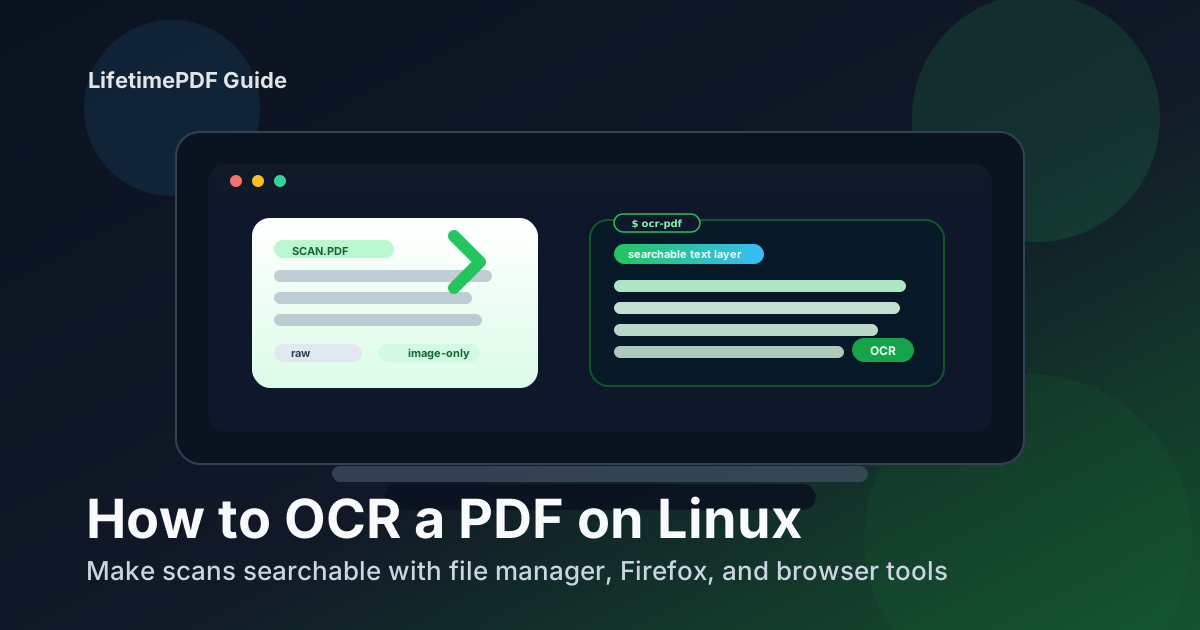
Table of contents
- Quick start: OCR a PDF on Linux in a few minutes
- The easiest Linux workflow for OCR
- Step-by-step: make a scanned PDF searchable on Linux
- How to tell when your Linux PDF needs OCR
- How to improve OCR accuracy on Linux scans
- What to do after OCR on Linux
- Common Linux OCR problems and quick fixes
- Related LifetimePDF tools for Linux document work
- FAQ (People Also Ask)
Quick start: OCR a PDF on Linux in a few minutes
If the file came from a scanner, copier, phone photo, email attachment, cloud folder, or old archive and you just need it to behave like normal text again, this is the simplest dependable route:
- Open the PDF once in your usual Linux viewer and try selecting or searching a visible word.
- If it acts like one flat image, open LifetimePDF's OCR PDF tool in Firefox or Chrome.
- Choose the file from your file manager, Downloads, Desktop, home folder, or synced cloud folder.
- Fix obvious rotation or border problems first if the scan is messy.
- Run OCR, save the processed file, then reopen it and test search again.
That alone solves most real-world Linux OCR jobs. The rest of this guide is about doing it cleanly when the scan is crooked, oversized, sensitive, or important enough that you want to avoid preventable mistakes.
The easiest Linux workflow for OCR
The most practical Linux workflow is not "open random packages and hope the PDF becomes searchable." It is a short sequence:
- Use your PDF viewer for a quick reality check. Before OCR, test whether you can highlight text, search visible words, or copy a sentence. If not, the PDF probably needs OCR.
- Use Firefox or Chrome to run OCR. A browser-based workflow is often faster than installing extra desktop software when the real job is simply to add a searchable text layer.
- Use normal Linux file habits again after OCR. Once the PDF is searchable, it becomes much easier to review, search, quote, store, and share from your home folder, cloud sync folder, or project directory.
This matters because OCR is not the end goal. The end goal is a working document: a searchable contract, a readable archive, a quote you can paste into an email, a school handout you can search, or a report you can translate later. Good OCR removes friction from everything that comes after.
It is also worth separating being able to read the page from having a searchable PDF. A file can look readable on screen and still fail when you try to search, copy, or extract text reliably. OCR helps by giving the document a text layer so the file works more normally across Linux workflows.
Step-by-step: make a scanned PDF searchable on Linux
1) Check the file once before OCR
Open the PDF and do a quick test before changing anything:
- Drag across a line to see whether text highlights cleanly.
- Use search to look for a visible word on the page.
- Zoom in and check whether the page is skewed, washed out, or surrounded by dark scanner borders.
If search fails and the page behaves like a photograph, you almost certainly need OCR. If the scan is messy, fix the obvious issues first because OCR quality depends heavily on the source.
2) Open OCR PDF in Firefox or Chrome
Go to LifetimePDF's OCR PDF tool in Firefox or Chrome. On Linux, browser-based OCR is usually the cleanest route when the file already exists and you simply need it to become searchable.
If the PDF came from Thunderbird, a webmail download, a scanner app like Document Scanner, or a synced folder, save it somewhere obvious first. Downloads, Desktop, Documents, or a clearly named working folder is much better than trying to remember where a temporary preview landed.
3) Choose the file from your file manager, Downloads, Desktop, home folder, or cloud folder
Select the PDF from wherever you stored it on your Linux machine. This sounds minor, but naming and placement matter because OCR often creates a better second copy of the file. A filename like invoice-searchable.pdf is much easier to trust later than scan-final-3.pdf.
4) Fix rotation, borders, or page clutter before OCR if needed
OCR works best when the page looks orderly. If the scan is sideways, heavily bordered, or padded with blank junk pages, clean that up first. Two quick helpers are:
- Rotate PDF for sideways pages
- Crop PDF for heavy edges, copier shadows, and wasted white margins
This is especially useful for receipts, photographed forms, camera-captured pages, and old archive scans where the visible text takes up only part of the page.
5) Run OCR and save the searchable result
Once the file is uploaded and reasonably clean, run OCR and save the result back to your Linux machine. Store it somewhere obvious, then reopen it and search for a few words you can see with your own eyes. Highlight a short sentence. Copy one line into a notes app or text editor if the document matters.
That small verification step is worth it. OCR is usually very helpful, but names, totals, dates, serial numbers, and low-quality scan text deserve one human glance before you assume the output is perfect.
How to tell when your Linux PDF needs OCR
A surprising number of PDFs look normal while still behaving like images. On Linux, the clearest warning signs are:
- You cannot highlight words.
- Search finds nothing even though the text is visibly right there.
- Copy and paste produces gibberish or nothing useful.
- The document came from a scanner, copier, or phone camera rather than a digital export.
- Every page looks like one flat picture when you zoom in.
This matters for more than convenience. Without OCR, you lose speed when reviewing records, quoting from documents, preparing translations, checking invoices, or searching an archive later. OCR is what turns a passive scan into a usable file.
How to improve OCR accuracy on Linux scans
Good OCR starts before the OCR button. If you want cleaner recognition on Linux, focus on the source file first.
Use sensible scan quality
For ordinary text documents, around 300 DPI is usually the safe default. Very low-resolution scans make letters blur together, while oversized scans create heavier files without always improving readability enough to justify the extra weight.
Straighten the page and remove visual noise
OCR engines perform better when text lines are level and clear. Skewed pages, copier shadows, thick borders, and fingers or desk edges in phone photos all make recognition harder than it needs to be.
Split the job when the document is huge
If you have a very long scan, it can be smarter to isolate the section you need first with Extract Pages. That gives you a smaller file to review and reduces the chance that one bad page slows down the whole job.
Always recheck high-risk details
OCR is excellent for making a document workable, but it is still worth rechecking names, legal clauses, invoice totals, IDs, product codes, dates, and addresses. The more sensitive the document, the more important that final glance becomes.
What to do after OCR on Linux
Once the PDF is searchable, you can actually do something useful with it. Common next steps on Linux include:
- Extract text with PDF to Text when you need quotes, notes, or copy-ready content.
- Translate the document with Translate PDF if the content needs to be understood across languages.
- Compress the file with Compress PDF before uploading it to a portal or emailing it.
- Protect the final copy with PDF Protect if the document contains private or high-stakes information.
This is where OCR becomes more than a technical step. It unlocks the rest of your workflow. A searchable PDF is easier to review in meetings, easier to archive in folders, easier to quote in emails, and easier to find months later when you need one specific sentence from page 27.
Common Linux OCR problems and quick fixes
The PDF still is not searchable after OCR
Reopen the processed file and search for a simple visible word. If it still behaves badly, the original scan may have been too low-quality or too cluttered. Clean the page first, then rerun OCR.
The text is searchable, but accuracy is uneven
That usually points back to the source scan. Faint print, unusual fonts, page curvature from phone photos, or dark copier edges can all reduce accuracy. Better source material usually helps more than repeated OCR passes on the same messy file.
The file is too large
Long color scans can become heavy. If you only need part of the document, extract those pages first. If you need the whole thing, compress the finished searchable PDF before sharing it.
You only need a few pages OCRed
Do not process a 200-page bundle when you only need pages 8 through 15. Trim the job down first. Smaller inputs are faster to review and easier to trust afterward.
You are unsure whether to keep the original and OCRed versions
If the document matters, keep both. Store the original scan as a raw backup and save the OCRed version with a clear suffix such as -searchable. That gives you a safe fallback while keeping the working copy obvious.
Need the fastest Linux cleanup flow? Run OCR first, then choose the next step based on the real job: extract text, translate, compress, or protect.
Related LifetimePDF tools for Linux document work
OCR is usually the middle of the job, not the end. These tools fit naturally around it:
- OCR PDF for turning image-only scans into searchable working PDFs
- PDF to Text for copying or reusing the recognized content
- Rotate PDF when Linux scans come in sideways
- Crop PDF to remove scanner shadows and wasted page edges
- Scan to PDF on Linux if you are starting from paper rather than an existing PDF
- How to Check if a PDF Is Searchable if you want a quick test before OCR
- Lifetime Access if you want a durable PDF toolkit without recurring subscription pressure
If your PDF work on Linux tends to come in batches, this combination saves time because each step stays small, predictable, and easy to verify.
FAQ (People Also Ask)
How do I OCR a PDF on Linux without Adobe Acrobat?
Open a browser-based OCR PDF tool in Firefox or Chrome on your Linux machine, choose the file from your file manager, run OCR, then save the searchable PDF back to your computer. That is usually the cleanest no-install route when the goal is simply to make the file searchable and selectable.
How can I tell whether my Linux PDF needs OCR?
If you cannot highlight text, search does not find visible words, or the page acts like a flat image, the PDF probably needs OCR before text-based workflows will work properly.
Will OCR change how the PDF looks on Linux?
Usually no. OCR mainly adds a text layer behind the visible page, so the document should still look very similar while becoming easier to search, copy, and reuse.
What scan settings help OCR work better on Linux?
For most text documents, a clean scan around 300 DPI with straight pages, readable contrast, and minimal dark borders gives OCR much better source material than low-resolution or skewed scans.
What should I do after OCR on Linux?
Verify the important details once, then keep the searchable PDF, extract plain text, translate the content, compress the file, or protect it depending on what you need next.