Google Sheets to PDF Without Monthly Fees: Export Readable Spreadsheet Reports Without Paying for Another Subscription
Yes — you can turn Google Sheets to PDF without monthly fees by using File → Print inside Google Sheets, choosing the exact sheet or range you need, and exporting the layout as a PDF.
If the file still needs help after that, the smartest no-subscription backup is usually to adjust the print setup or download XLSX and use LifetimePDF only for the one finishing step the PDF still needs.
Most people searching for this are not trying to buy another spreadsheet platform. They are usually trying to send a readable report, archive a budget sheet, share a dashboard snapshot, upload a finance summary, or print a clean record for someone who never needs the live spreadsheet. The useful answer is not a mysterious premium converter. It is choosing the right export scope, keeping the layout readable, and adding only the one PDF step that genuinely improves the handoff.
Fastest practical path: export directly from Google Sheets first, then use LifetimePDF only for the final step the PDF still needs.
In a hurry? Jump to Quick start: save a Google Sheet as PDF without another subscription.
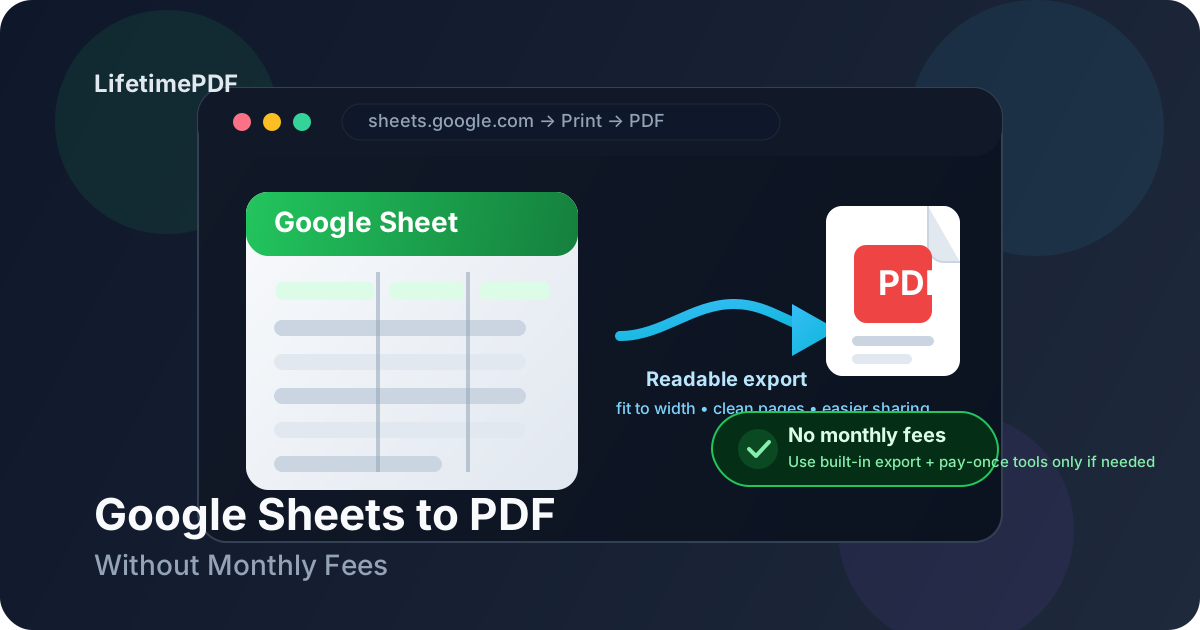
Table of contents
- Quick start: save a Google Sheet as PDF without another subscription
- Why “without monthly fees” matters for spreadsheet PDF workflows
- What should you export: one sheet, selected cells, or the whole workbook?
- Step-by-step: Google Sheets to PDF without monthly fees
- How to keep the PDF readable without paying for more software
- When XLSX plus Excel to PDF is the better route
- What to do after the PDF is created
- Common mistakes that make Google Sheets PDFs worse than they need to be
- Related LifetimePDF tools and guides
- FAQ (People Also Ask)
Quick start: save a Google Sheet as PDF without another subscription
If you want the shortest useful workflow, this handles most situations well:
- Open the finished spreadsheet in Google Sheets.
- Choose whether the PDF should include the current sheet, a selected range, or the whole workbook.
- Use File → Print.
- Set orientation, scale, page breaks, and margins so the output stays readable.
- Export the PDF and review it once before you send it anywhere.
- If the file is too large, use Compress PDF. If it contains sensitive numbers or internal data, use PDF Protect.
Why “without monthly fees” matters for spreadsheet PDF workflows
This keyword usually comes from repeated admin work, not from one dramatic conversion. Teams export weekly KPI reports, monthly finance packs, staff schedules, invoice summaries, inventory tables, client dashboards, and operations trackers again and again. That is exactly why the without monthly fees part matters.
Many of these jobs do not justify another recurring bill. Google Sheets already prints to PDF. The browser already handles the download. The only thing people usually still need afterward is a smaller file, a protected copy, or a cleaner spreadsheet-to-PDF fallback when the first export looks awkward. A pay-once workflow fits that reality much better than piling a subscription on top of a task that is already mostly solved.
| Need | Best no-subscription starting point | What to add only if needed |
|---|---|---|
| One clean report tab | Export the current sheet from Google Sheets | Compress the PDF if email or portal limits get in the way |
| A printable summary section | Export a selected range | Merge it into a packet if it belongs with supporting documents |
| A wider workbook handoff | Export the workbook only if every tab belongs in the final file | Protect the PDF if it contains private numbers |
| A second spreadsheet-to-PDF route | Download XLSX first | Use Excel to PDF without adding another monthly service |
In practice, the money-saving move is not forcing every export through the same rigid process. It is starting with the free built-in path and improving only the part that still needs help.
Useful mindset: export for free first, then fix only the exact problem the PDF still has.
What should you export: one sheet, selected cells, or the whole workbook?
The phrase Google Sheets to PDF sounds simple, but the output changes completely depending on what you include. A monthly dashboard tab, a selected pricing table, and a 12-tab workbook are not the same document. A lot of bad spreadsheet PDFs are really scope problems disguised as conversion problems.
| Export scope | Best when | Why it works |
|---|---|---|
| Current sheet | You need one tab as a report, schedule, invoice summary, or dashboard | Keeps the PDF focused and avoids burying the useful page inside extra workbook clutter |
| Selected cells | You only need one polished table, summary block, or printable section | Often the cleanest route when the rest of the tab contains helper columns or working data |
| Workbook | You genuinely need several related tabs in one final packet | Useful for formal handoffs, but only when every tab belongs in the finished PDF |
If the recipient only needs one clean output page, exporting the full workbook often makes the file larger, harder to review, and more annoying to share. Narrow scope usually produces a better PDF faster.
Step-by-step: Google Sheets to PDF without monthly fees
Once you know what belongs in the export, the actual workflow is straightforward.
- Open the finished spreadsheet in Google Sheets.
- Hide or remove columns, tabs, or notes that should not appear in the final document.
- Choose the exact scope: current sheet, selected cells, or workbook.
- Use File → Print.
- Set orientation, scale, margins, and page breaks on purpose instead of accepting whatever the preview guessed.
- Download the PDF and review it once like a recipient would.
For everyday reports
If the sheet already looks organized, the built-in export is often enough. That includes status reports, summary dashboards, attendance sheets, expense trackers, and many finance or operations exports.
For wider tables
Switch to landscape first. Then fit the content to page width rather than forcing the entire sheet onto one page. A two-page PDF with readable text is much better than a one-page PDF that technically fits but nobody wants to read.
For recurring archive jobs
Use the same view and export scope each time. Consistency matters when these files become part of a monthly folder, a client handoff pattern, or a compliance record.
Need a second spreadsheet-to-PDF route? Download XLSX and finish the conversion without paying for another subscription stack.
How to keep the PDF readable without paying for more software
The main frustration is not “how do I make a PDF?” It is “how do I keep this spreadsheet readable after it becomes a PDF?” That problem is usually solved with better export choices, not more subscriptions.
Start with landscape for wider reports
Budget sheets, KPI tables, inventory reports, and anything with many columns usually behave better in landscape. Portrait still works for narrow sheets, but it is rarely the best default for wide business reports.
Fit to width is usually better than fit everything to one page
If you force the whole spreadsheet onto one page, the text often shrinks until the PDF stops being useful. Fit to width usually gives a better result because it preserves readable columns and lets the document flow vertically across more than one page.
Trim the export range
Extra empty columns, helper calculations, hidden admin fields, and rough notes make the PDF worse more often than they make it better. A selected range can outperform a full-tab export when the real deliverable is only one clean section.
Watch totals, headers, and chart placement
If later pages lose context, the PDF becomes harder to trust. Repeated headers, obvious totals, and charts that do not cross ugly page breaks make the export feel intentional instead of accidental.
| Problem | Usually happening because | Best practical fix |
|---|---|---|
| Columns are cut off | The sheet is wider than the page setup allows | Switch to landscape and fit to width |
| Text is tiny | Everything was forced onto one page | Allow more pages tall and reduce the export scope |
| Large blank areas | The exported range is bigger than the useful content | Print only the sheet or cell range that matters |
| Charts land awkwardly | The visual crosses page breaks | Resize or move the chart before export |
When XLSX plus Excel to PDF is the better route
Direct export from Google Sheets should be your first move most of the time. But some files genuinely benefit from downloading XLSX and using Excel to PDF instead.
- You want a second route: sometimes a spreadsheet simply behaves better when exported a different way instead of endlessly adjusting the same print preview.
- The file is moving into a broader PDF workflow: for example, you already know it will be compressed, protected, merged, or archived right away.
- The direct export is serviceable but not polished: a second route can be calmer than over-tuning the original layout.
- You need an offline deliverable anyway: if the final handoff is meant to leave Google entirely, the XLSX route can be a more deliberate finish.
The point is not to make every workflow longer. Start with the built-in Google export. Reach for XLSX plus Excel to PDF only when the first export gives you a real reason.
What to do after the PDF is created
Creating the PDF is often the middle of the task, not the end. The better question is what the finished file still needs in the real world.
- Need a smaller upload? Use Compress PDF.
- Need a safer share version? Use PDF Protect if the report includes private numbers, HR data, or internal planning.
- Need one final packet? Use Merge PDF.
- Need a different spreadsheet-to-PDF route? Download XLSX and use Excel to PDF.
Practical sequence: choose the right range, export once, review once, then add only the one PDF step the file truly needs.
Common mistakes that make Google Sheets PDFs worse than they need to be
| Mistake | What it causes | Better move |
|---|---|---|
| Exporting the whole workbook by default | A bigger, slower, less focused PDF | Export only the sheet or range the reader actually needs |
| Forcing everything onto one page | Tiny text and miserable readability | Fit to width and allow the file to run across multiple pages |
| Leaving helper columns in place | Noise, clutter, and possible accidental oversharing | Hide or remove internal-only columns before export |
| Skipping the PDF review step | Cut-off columns, awkward chart breaks, or blank pages go unnoticed | Open the final PDF once before sending it onward |
| Paying first, testing later | More recurring cost than the job requires | Use the built-in export first, then improve only what is still wrong |
Most Google Sheets PDF problems are not really PDF problems. They are layout, scope, or handoff problems. Once you notice that, the workflow becomes much calmer.
Related LifetimePDF tools and guides
These are the most useful follow-up pages when your Google Sheets export still needs one more step:
- Excel to PDF — useful when downloading XLSX creates a cleaner spreadsheet-to-PDF route.
- Compress PDF — shrink large spreadsheet exports for email, uploads, or faster sharing.
- PDF Protect — secure reports that contain finance, HR, pricing, or internal operations data.
- Merge PDF — combine the spreadsheet PDF with support documents, cover pages, or appendices.
- Google Sheets to PDF — the broader practical guide for the same workflow.
- Google Sheets to PDF Online — useful when your main concern is the browser-based export path.
- Google Docs to PDF — helpful if the spreadsheet belongs with a document handoff.
- Convert PDF to Google Sheets Online — useful when the workflow also goes the other direction.
Ready to build a cleaner spreadsheet PDF without another recurring tool?
Best practical flow: choose the right range → export to PDF → review once → compress, protect, or reconvert only if the final handoff actually needs it.
FAQ (People Also Ask)
How do I save Google Sheets as PDF without monthly fees?
Open the sheet in Google Sheets, choose File → Print, adjust the layout so it stays readable, and export the result as a PDF. For most people, that built-in route already does the job without another subscription.
How do I keep Google Sheets columns readable in a PDF?
Use landscape for wider reports, fit the content to page width rather than one page total, and export only the sheet or range someone actually needs to read.
Should I export directly from Google Sheets or use XLSX first?
Export directly first because it is faster and usually good enough. Use XLSX plus Excel to PDF when you want a second route or already know the file is moving into a bigger PDF workflow.
Why does my Google Sheets PDF look tiny or cut off?
That is usually a page-setup problem. The range may be too wide, the orientation may be wrong, or the sheet may have been squeezed onto one page when it should have flowed across more than one.
What should I do after exporting a Google Sheets PDF?
Review it once, then use only the next step the file actually needs: compress it for size limits, protect it for private sharing, or merge it with related PDFs if the final handoff belongs in one packet.
Published by LifetimePDF — Pay once. Use forever.