Convert Inspection Report PDF to Excel: Extract Findings, Checklist Results, and Corrective Actions Faster
To convert inspection report PDF to Excel, upload the report to LifetimePDF's PDF to Excel tool, export the XLSX, and review the report ID, site or asset, inspector, checklist items, pass-fail results, severity, corrective actions, and due dates before trusting the sheet.
If the report is scanned, image-only, or bundled with certificates, photos, or service paperwork, keep only the actual inspection-report pages and run OCR first so the spreadsheet comes out much cleaner.
Most people searching this phrase are not trying to admire a file conversion. They are trying to stop retyping findings by hand, build open-item trackers, compare inspections across sites, or move checklist data into a spreadsheet that can actually be filtered, sorted, and reviewed.
Fastest path: use LifetimePDF's PDF to Excel tool, isolate only the checklist pages, and run OCR first if the file came from a scan, a phone photo, or an image-only export from inspection software.
In a hurry? Jump to Quick start: convert inspection report PDF to Excel in about 5 minutes.
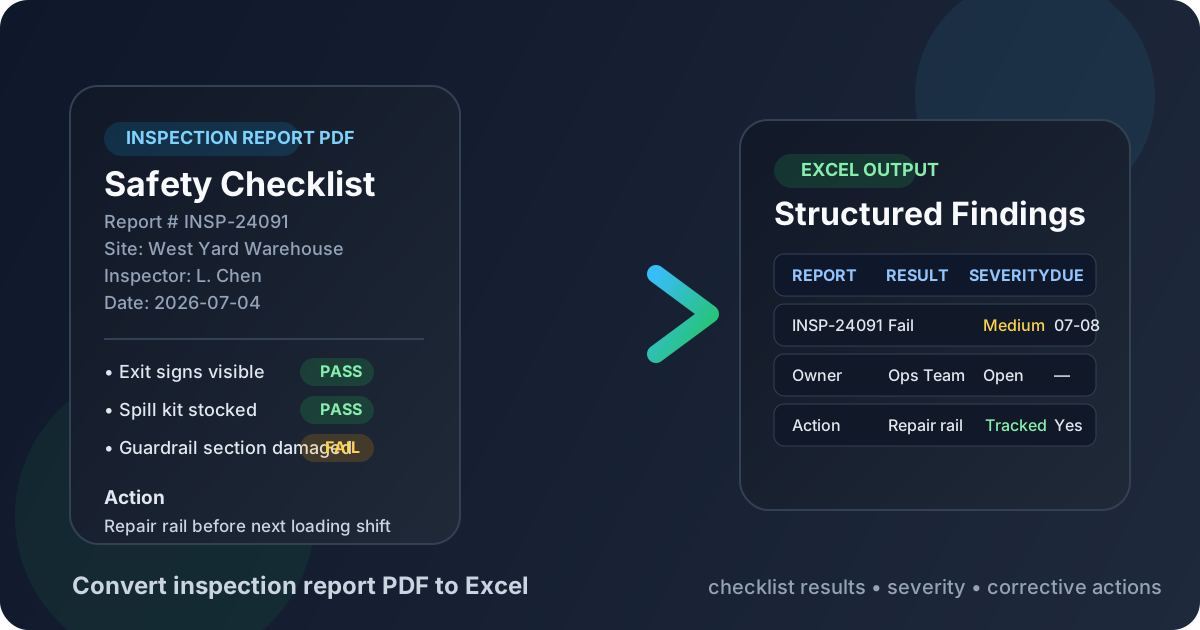
Table of contents
- Quick start: convert inspection report PDF to Excel in about 5 minutes
- Why teams need inspection report PDFs in Excel
- Which inspection-report fields matter most
- Inspection report vs service report vs work order
- Step-by-step: extract inspection report data with LifetimePDF
- What converts cleanly and what usually breaks
- Review checklist before you trust the spreadsheet
- Excel vs CSV for inspection workflows
- Privacy and document-handling tips
- Related LifetimePDF tools and companion guides
- FAQ (People Also Ask)
Quick start: convert inspection report PDF to Excel in about 5 minutes
If the inspection report PDF already contains selectable text and a reasonably consistent layout, this is the shortest route:
- Open PDF to Excel.
- Upload the inspection report PDF you want to extract.
- If the file is scanned or image-only, run OCR first so checklist rows, findings, and due dates are easier to recognize.
- Export the file as XLSX.
- Review the report number, site or asset, inspector, result, severity, corrective action, and due date before you reuse the data.
Why teams need inspection report PDFs in Excel
Inspection reports are where follow-up work begins. They capture what was checked, what passed, what failed, what needs correction, and how urgent the problem is. That is useful in PDF when one person is reading one report. It becomes much less useful when a team needs to compare dozens of reports, assign actions, track overdue items, or summarize recurring issues across sites or assets.
Excel matters because it turns a static layout into structured rows. Instead of opening reports one by one, you can line up inspection dates, inspectors, sites, checklist items, results, severity, action owners, and deadlines across multiple reports. That is where the time savings come from.
Common reasons people convert inspection report PDFs
- Build open-action lists from many reports
- Track failed items, severity, and due dates across sites
- Support QA, safety, compliance, or facilities reviews
- Move checklist data into CMMS, EHS, ERP, or spreadsheet workflows
- Spot repeat defects and recurring non-compliance faster
Why PDF alone becomes a bottleneck
- Checklist rows are hard to compare across reports
- Comments, signatures, and photos clutter the layout
- Scanned pages trap useful data inside images
- Mixed packets bury the actual findings
- Manual copy-paste creates new mistakes while fixing old ones
In other words, the goal is not simply to change file formats. The goal is to turn checklist and findings data into something people can review, assign, escalate, and report from without making someone babysit every row by hand.
Which inspection-report fields matter most
Inspection report layouts vary by industry, but the same practical checks keep showing up. These are the fields worth reviewing before you trust the spreadsheet:
| Field | Why it matters | What often goes wrong |
|---|---|---|
| Report number | Links the spreadsheet back to the exact inspection record | Prefixes, slashes, or leading zeros disappear or split |
| Site, asset, or location | Shows where the finding belongs and who must act on it | Address lines and asset labels blend together |
| Inspection date and inspector | Supports audit trails, escalation timing, and accountability | Dates shift into comments or names break into separate cells |
| Checklist item or category | Keeps findings grouped by what was actually checked | Repeated headers or wrapped text split one item into several rows |
| Result or status | Separates passed items from failed or pending ones | Checkboxes, symbols, and OCR noise create inconsistent values |
| Severity or risk level | Helps teams prioritize follow-up work | Severity labels merge with notes or move into the wrong column |
| Corrective action | Defines what needs to happen next | Long descriptions wrap across rows and break alignment |
| Owner and due date | Needed for tracking open items and overdue follow-up | Dates lose formatting or owners drift into notes fields |
| Comments or defect notes | Adds context for reinspection, repair, or compliance review | Multi-line notes spill into nearby columns |
| Closure status | Shows whether the finding is still open or already resolved | Status values detach from the original finding row |
Inspection report vs service report vs work order
These documents overlap, but they are not the same thing. Knowing the difference helps you choose the right extraction goal.
| Document | Usually answers | Typical fields |
|---|---|---|
| Inspection report | What condition or compliance result was observed? | Checklist items, pass-fail results, severity, defect notes, corrective actions, due dates |
| Service report | What happened during the visit? | Findings, labor used, parts installed, technician notes, completion details, sign-off |
| Work order | What job was requested or assigned? | Job number, site, requested task, schedule, priority, assigned technician, parts, totals |
If the PDF mainly records pass-fail observations, deficiencies, and follow-up actions, inspection-report extraction is the right fit. If it records work performed after a visit, that is usually closer to a service report workflow. If it records what was assigned, scheduled, or billed, it may be closer to a work-order workflow.
Step-by-step: extract inspection report data with LifetimePDF
A practical inspection-report extraction workflow looks like this:
- Start with the actual inspection pages. Remove certificates, standards references, cover emails, service records, photo appendices, or approval pages if they are not needed for the spreadsheet.
- Run OCR if the file is scanned. Image-only reports convert better after OCR because labels, dates, and checklist rows become selectable.
- Convert the PDF to Excel. Upload the report to PDF to Excel and export the XLSX file.
- Review the fields that drive follow-up work. The spreadsheet is only useful if the important findings landed in the right columns.
- Save the reviewed version clearly. Use a filename that distinguishes the checked workbook from the raw export so the wrong copy does not keep circulating.
Useful workflow: Extract Pages → OCR PDF → PDF to Excel. That sequence is usually cleaner than throwing a mixed packet straight into conversion and hoping the checklist rows, result marks, and due dates survive.
What converts cleanly and what usually breaks
Some inspection report PDFs convert almost effortlessly. Others need cleanup before the export becomes useful. The difference usually comes from how the report was created.
- Digital exports from inspection, QA, EHS, or facilities systems
- Reports with clear labels for item, result, severity, and action
- Multi-page reports that keep the same checklist structure
- PDFs with selectable text instead of screenshots or low-quality scans
- Scanned paper forms or phone photo PDFs
- Reports with heavy handwriting, check marks, or stamps
- Packets that combine checklists with certificates, photos, or service pages
- Layouts with long comments, repeated headers, or dense footer text
The good news is that you usually do not need a perfect source file. You mostly need a disciplined workflow: isolate the useful pages, run OCR when needed, convert, then review the handful of fields that drive safety, compliance, maintenance, or QA follow-up.
Review checklist before you trust the spreadsheet
Once the inspection report is in Excel, review the fields that would actually hurt if they were wrong:
- Report number, inspection date, and inspector
- Site, building, asset, vehicle, or unit reference
- Checklist item, category, or section
- Pass-fail result and severity level
- Corrective action, owner, and due date
- Notes, closure status, and any high-risk finding details
If you only need a fast action list, validate the report ID, top-severity findings, owner, and due date first.
Be more demanding when the spreadsheet will support regulatory follow-up, client reporting, contractor accountability, or imports into another system. Those workflows punish small row shifts later.
Excel vs CSV for inspection workflows
Both formats can be useful, but they serve different next steps.
| If your next step is... | Better format | Why |
|---|---|---|
| Human review, cleanup, or escalation tracking | Excel | It is easier to filter findings, sort deadlines, and hand off a workbook |
| Importing plain rows into another operational system | CSV | CSV is lighter when you only need raw structured rows |
| Audit summaries, compliance reports, or site reviews | Excel | Extra visibility helps when high-risk findings and action dates must be checked carefully |
For most searches around this keyword, Excel is the better immediate output because the next task is usually review, not blind import. People want to inspect the findings before they trust them.
Privacy and document-handling tips
Inspection reports often contain site addresses, asset identifiers, defect photos, safety notes, access details, contractor names, and internal comments. That makes them routine operational documents, but still sensitive documents.
- Only upload the pages you actually need for the task.
- Remove unrelated certificates, photos, or attachments before forwarding the export internally.
- If the document includes information that should not move further downstream, use Redact PDF before sharing it elsewhere.
- Do not assume the converted spreadsheet should automatically go to everyone who can open the original PDF.
- Name the final workbook clearly so the reviewed copy is easy to distinguish from the raw export.
Related LifetimePDF tools and companion guides
Inspection-report extraction usually works best as part of a small workflow instead of one magical click. These tools and guides pair well with it:
When the packet includes certificates, photos, or reference pages, isolate only the useful inspection pages first.
Extract PagesOCR helps when inspection reports come from scans, photos, or older image-based exports.
OCR PDFUseful adjacent reading for nearby compliance and operations extraction workflows.
Without Monthly FeesService Report Guide
More related guides
- Convert Service Report PDF to Excel
- Convert Work Order PDF to Excel
- Convert Inspection Report PDF to Excel Online Without Monthly Fees
- Convert Inventory List PDF to Excel
Need the shortest route? Keep only the inspection pages, OCR the file if needed, convert it to Excel, then review the report number, result, severity, action, owner, and due date before sharing or importing the sheet.
FAQ (People Also Ask)
How do I convert an inspection report PDF to Excel?
Upload the inspection report PDF to a PDF to Excel converter, export the XLSX file, and review the report ID, site or asset, inspector, checklist results, severity, corrective actions, and due dates before using the spreadsheet. If the file is scanned, OCR first usually improves the result.
Can I convert a scanned inspection report PDF to Excel?
Usually yes. Scanned inspection reports convert better when you run OCR first and isolate only the pages that actually contain the checklist or findings data. Cleaner scans, straighter pages, and fewer extra attachments usually improve field recognition.
Why do inspection report PDFs often create messy spreadsheets?
Because many inspection reports combine header fields, checklist rows, pass-fail marks, long comments, signatures, and footer text on the same pages. Mixed packets, checkboxes, and low-quality scans make extraction harder too.
Is Excel better than CSV for inspection-report extraction?
Usually yes if a person still needs to review the result. Excel makes it easier to filter findings, compare severity, track due dates, and hand the workbook to operations, compliance, safety, QA, or maintenance teams before importing data elsewhere.
What should I verify after converting inspection report data?
Check the report number, site or asset name, inspection date, inspector, checklist item, result, severity, corrective action, owner, due date, and closure status. Those are the fields most likely to create downstream compliance or maintenance mistakes if one row shifts during extraction.