Compress PDF for WooCommerce: Speed Up Product Manuals, Size Charts, and Downloadable Files
To compress a PDF for WooCommerce, upload the final file to LifetimePDF's Compress PDF tool, start with Medium compression, and replace the live file only after it opens cleanly from your product page, downloadable product link, order email, or My Account area.
For most WooCommerce PDFs, under 3MB is a comfortable target for size charts, care guides, and short customer handouts, while longer manuals, image-heavy guides, and downloadable packs usually work best around 3MB to 8MB after light cleanup.
In WooCommerce, the problem is rarely that a PDF exists. The problem is that a file that felt fine in WordPress or your design app becomes slow once a shopper opens it on mobile, a customer pulls it from an email, or someone downloads it from My Account on average Wi-Fi. The goal is not the tiniest possible file. The goal is a lighter PDF that still feels trustworthy when someone actually uses it.
Fastest path: run the WooCommerce PDF through LifetimePDF's Compress PDF tool on Medium, then test the smaller file from the exact live product, email, or downloadable-product path your customers will use.
In a hurry? Jump to Quick start: compress a WooCommerce PDF in about 2 minutes.
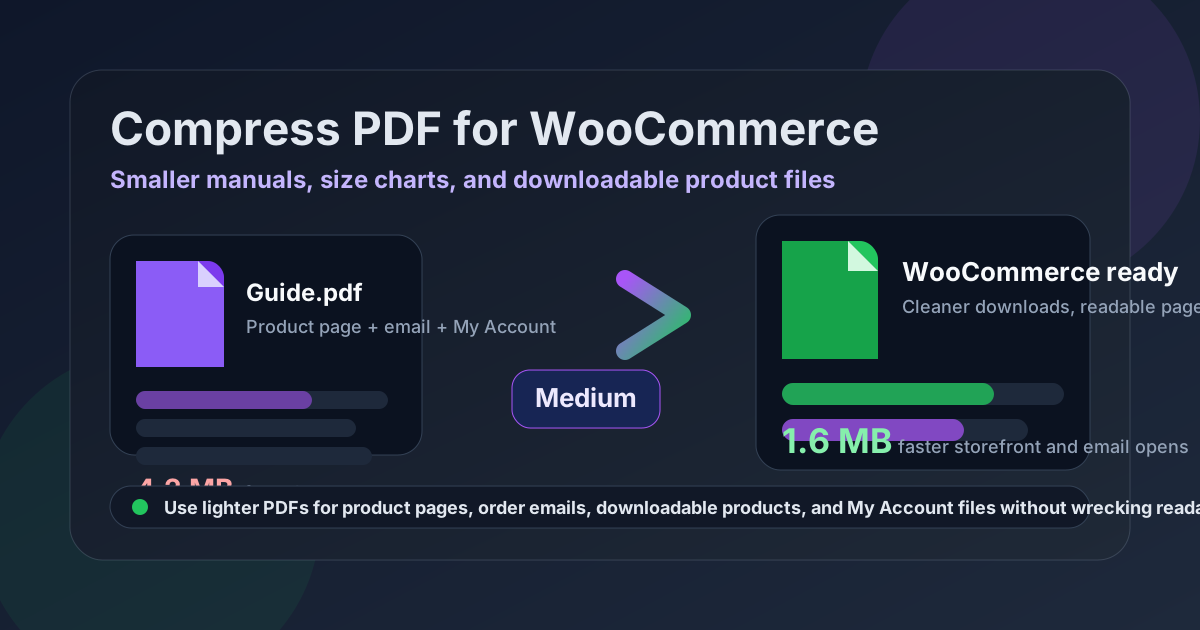
Table of contents
- Quick start: compress a WooCommerce PDF in about 2 minutes
- Why WooCommerce PDFs get heavy so quickly
- Where large PDFs slow WooCommerce down
- What file size should you aim for?
- Which compression level should you choose?
- Step-by-step: shrink a WooCommerce PDF with LifetimePDF
- Best strategy for common WooCommerce PDF types
- What if the file is still too heavy?
- How to keep text, charts, and diagrams readable
- Workflow habits that keep WooCommerce PDFs lighter
- Related LifetimePDF tools and useful internal reading
- FAQ (People Also Ask)
Quick start: compress a WooCommerce PDF in about 2 minutes
If your real goal is simply make this PDF smaller so the customer download feels cleaner in WooCommerce, this workflow is usually enough:
- Open Compress PDF.
- Upload the exact product manual, size chart, care guide, downloadable product, warranty handout, or customer PDF you plan to publish.
- Choose Medium compression first.
- Download the smaller copy and compare the new size with the original.
- Replace or upload that copy in the exact WooCommerce location you use: product page, downloadable product file, order email link, support page, or customer account area.
- Open the live file once and check the weak points: body text, spec tables, diagrams, barcodes, QR codes, and any fine print that still has to be trusted.
- If the file is still heavier than it should be, split the appendix, delete extra pages, or crop wasted margins before trying stronger compression.
Why WooCommerce PDFs get heavy so quickly
WooCommerce PDFs often become larger than they need to be because one file quietly tries to do too many jobs. A single PDF may serve as the product-page download, the post-purchase handout, the support reference, the wholesale file, and the internal archive copy all at once. That usually means oversized product images, repeated appendix pages, print-first margins, and extra sections that most customers never needed in the first place.
Another common issue is that the file was exported for design polish rather than web delivery. Manuals created from slide decks, supplier sheets, or branded layout tools often carry much more image weight than the information inside them actually requires. Compression helps, but the strongest result usually comes from a cleaner customer copy plus balanced compression instead of maximum shrinkage alone.
What usually adds the most weight
- Large product visuals: full-page product shots, installation photos, and marketing layouts often outweigh the useful text by a wide margin.
- Long appendix sections: multilingual repeats, legal pages, setup notes, and internal reference pages are common sources of bloat.
- Print-oriented layouts: wide margins, oversized covers, and decorative spacing can add pages without improving the customer experience.
- One PDF serving several audiences: shoppers, support staff, wholesale buyers, and your internal team rarely need the exact same file.
- Repeated exports through WordPress workflows: media-library duplicates and re-exports can leave you with a bloated version that looks almost identical to the cleaner one.
Where large PDFs slow WooCommerce down
A PDF can be perfectly valid and still create a clunky WooCommerce experience. The question is not just whether it uploads to WordPress. The better question is where customers actually meet it.
| WooCommerce touchpoint | What the problem feels like | Most useful fix |
|---|---|---|
| Product page download | A shopper taps a manual, size chart, or care guide and the file feels slower than it should, especially on mobile | Use Medium compression and trim pages the customer does not need on first open |
| Downloadable product | The product technically delivers, but the file feels heavy right after purchase | Compress once, then split appendices or oversized image sections if needed |
| Order email or support email | The customer opens the file from email and the handoff feels clumsy or slow | Keep a web-ready customer copy that is smaller than the internal master |
| My Account downloads | Returning customers can access the file, but repeat downloads feel bigger than the content deserves | Review the live account path and publish the leanest trustworthy version |
| Media library / WordPress backend | Several almost-identical PDFs exist, so the wrong heavier version gets reused | Name the web copy clearly and replace the public file deliberately instead of guessing |
In practice, the customer does not care that WordPress accepted the upload. They care whether the file opens quickly and still feels professional once page one loads.
What file size should you aim for?
There is no single perfect WooCommerce number because every store uses PDFs differently. Still, a practical range keeps you from over-compressing a file that is already fine.
| WooCommerce PDF type | Comfortable target | Why that range works |
|---|---|---|
| Size chart, care guide, short customer handout | 1MB to 3MB | Fast enough for most mobile shoppers while keeping text-first content readable |
| Product manual, setup guide, warranty PDF | 2MB to 5MB | Leaves room for diagrams, tables, and product details without making the file feel bloated |
| Downloadable pack, illustrated workbook, wholesale line sheet | 3MB to 8MB | Longer or image-heavy PDFs often need more room, but still benefit from trimming appendix pages and oversized visuals |
| Very large multilingual or appendix-heavy pack | Split it | If one file is serving several audiences, splitting usually works better than forcing stronger compression |
Which compression level should you choose?
Most WooCommerce PDFs should start at Medium. That level usually gives the best balance between a lighter file and a download that still feels polished when someone opens it from a product page, email, or account area.
- Light compression: good when the PDF is already close to your target and you only need a modest size reduction.
- Medium compression: the best default for most manuals, size charts, care sheets, and downloadable products.
- Strong compression: better as a last resort when the file is still far too heavy after cleanup.
If your PDF contains small sizing tables, assembly diagrams, SKU details, barcodes, QR codes, or fine-print warranty terms, stronger compression can make the download feel cheaper than the original asset deserves. That is why a small cleanup pass often beats jumping straight to the harshest setting.
Step-by-step: shrink a WooCommerce PDF with LifetimePDF
- Start with the final customer-facing file. Use the exact PDF you want shoppers or customers to open, not a master archive with extra pages.
- Open Compress PDF.
- Choose Medium compression first. That is usually the most reliable starting point for WooCommerce downloads.
- Download the smaller result. Compare the size with the original so you know whether the change was meaningful.
- Replace the live file deliberately. Update the product-page link, downloadable product file, or support asset you actually use instead of assuming the newest media-library upload is the one customers reach.
- Test the real delivery path. Open the live file from the product page, logged-out storefront, order email preview, or customer account area if those are part of your workflow.
- Clean up only if needed. If the file is still too large, use Delete Pages, Extract Pages, or Crop PDF before pushing compression harder.
Best practical sequence: compress first, test the live WooCommerce path second, trim pages third, and only then consider stronger compression.
Best strategy for common WooCommerce PDF types
Product manuals and setup guides
These need clean small text and diagrams. Customers often open them right after buying, so readability matters more than squeezing out every last kilobyte. Compress carefully, then check numbered steps, warning icons, diagrams, tables, and QR codes before replacing the original.
Size charts and care guides
These usually need the lightest footprint because they sit close to purchase intent. If the file is slow to open or awkward on mobile, the product page feels less helpful right when the shopper is deciding. Start with Medium compression and aim for a quick, dependable download rather than a print-perfect file.
Downloadable products and lead magnets
For worksheets, checklists, printable planners, onboarding PDFs, or paid downloads sold through WooCommerce, the goal is a file that still feels polished after purchase. Medium compression is usually enough. If the PDF is still too large, revisit the source artwork before pushing aggressive compression that may make the product feel cheaper.
Wholesale sheets and dealer packs
These are trust documents. They should stay sharp enough to feel professional. Use compression carefully, then review product names, SKUs, tables, contact details, and page order before you replace the original. If the file bundles catalogs and terms together, splitting usually works better than forcing a harsher compression level.
What if the file is still too heavy?
If you compressed the PDF and it still feels wrong for WooCommerce, the problem may not be the compressor. The file may still carry too much structural weight for compression alone to solve.
- Split the PDF if one document combines a main guide, multilingual appendix, warranty section, and internal notes.
- Delete repeated pages such as duplicate covers, stale spec sheets, or archive-only sections.
- Crop wide margins when the layout wastes space without improving the on-screen reading experience.
- Convert page content to HTML with PDF to HTML if the information belongs in a product tab or support article instead of inside a download.
- Keep an archive copy and a customer copy if the heavier master still matters internally.
How to keep text, charts, and diagrams readable
The PDF is only better if it still works. Before you replace the original file, review the details most likely to break trust:
- small body text and warranty fine print
- size tables, spec tables, and SKU rows
- diagrams, icons, and step-by-step visuals
- barcodes, QR codes, and setup links
- the busiest page in the whole file, not just the cleanest one
- the live product-page or account download path on a phone
If the smallest useful detail still feels easy to trust at normal laptop zoom and on a phone download, the file is probably compressed enough.
Workflow habits that keep WooCommerce PDFs lighter
- Export a customer copy and an archive copy when the same PDF does not need to do both jobs.
- Name the public file clearly so the media library does not become a maze of almost-identical versions.
- Test the logged-out storefront path if customers are meant to access the file before purchase or from a public product page.
- Test the account or email path too if the same file is delivered after purchase.
- Clean metadata before publishing with PDF Metadata Editor if you want the file properties to look polished.
- Use HTML intentionally when a chart, FAQ, or setup summary belongs on the page instead of inside the download.
Compression works best as final polish, not as a rescue plan for a PDF that was oversized long before it reached WooCommerce.
Related LifetimePDF tools and useful internal reading
If WooCommerce is part of your normal publishing workflow, these tools and articles pair well with this guide:
- Compress PDF for the first size-reduction pass.
- Split PDF for long downloads that should be broken into smaller parts.
- Extract Pages when only the customer-facing section should be published.
- Delete Pages to remove stale appendix or duplicate cover pages.
- Crop PDF to trim wasted margins from print-oriented layouts.
- PDF Metadata Editor for cleaner titles and download properties.
- PDF to HTML when a chart or quick guide belongs on the page instead of inside the download.
- HTML to PDF if you are turning a help page into a cleaner downloadable asset.
- Compress PDF for WordPress.
- Compress PDF for Shopify.
- Compress PDF for BigCommerce.
- Compress PDF for Webflow.
- Compress PDF for Wix.
Bottom line: for most WooCommerce PDFs, start with Medium compression, test the live customer path, and trim page weight before you use stronger compression.
FAQ (People Also Ask)
How do I compress a PDF for WooCommerce?
Upload the final PDF to a compressor, start with Medium compression, download the smaller copy, and test the real WooCommerce product-page, order-email, or My Account download path before publishing it. Medium is usually the safest first pass because it lowers file size without making text, tables, or diagrams feel unreliable.
What file size should I aim for when publishing a PDF on WooCommerce?
For many WooCommerce size charts, care guides, and short support handouts, under 3MB is a comfortable target. Longer manuals, image-heavy guides, and downloadable packs often land best around 3MB to 8MB as long as the smallest useful text still reads clearly.
Should I use HTML instead of a PDF on WooCommerce?
If the information should be scanned quickly on a product page, support page, or mobile screen, HTML is often better. PDFs still make sense for downloadable manuals, printable guides, wholesale sheets, and files customers need to save offline.
Will PDF compression hurt my size chart, barcode, or diagram?
It can if you compress too aggressively. That is why Medium compression is the best place to start. Always check the smallest table text, barcodes, QR codes, diagrams, and fine print before replacing the original file.
Where should I test a WooCommerce PDF after compressing it?
Test the real customer path, not just the local file. Open the PDF from the live product page, downloadable product flow, order email, and My Account area if those are part of your store experience.
Published by LifetimePDF - Pay once. Use forever.