Compress PDF for SiteGuru Without Monthly Fees: Shrink SEO Audit Reports, Issue Summaries, and Client PDFs Without Another Subscription
If you need to compress a PDF for SiteGuru without monthly fees, use a pay-once PDF tool, start with Medium compression, and review the smaller copy once before you send it.
For most SiteGuru workflows, that is enough to shrink audit reports, issue summaries, and client-ready PDFs without paying for another subscription just to finish file cleanup.
This is one of those boring-but-real tasks that comes after the meaningful work is already done. You ran the audit, found the issues, decided what matters, and now you just need the PDF to upload faster, attach more easily, or feel lighter in a client handoff. That final step should stay simple. If the smaller file still keeps screenshots, priority labels, notes, and recommendations readable, you solved the problem.
Fastest path: export the SiteGuru report, use LifetimePDF's Compress PDF tool, begin with Medium compression, and split or extract pages only if the file still feels heavier than it should.
In a hurry? Jump to Quick start: compress a SiteGuru PDF in under 2 minutes.
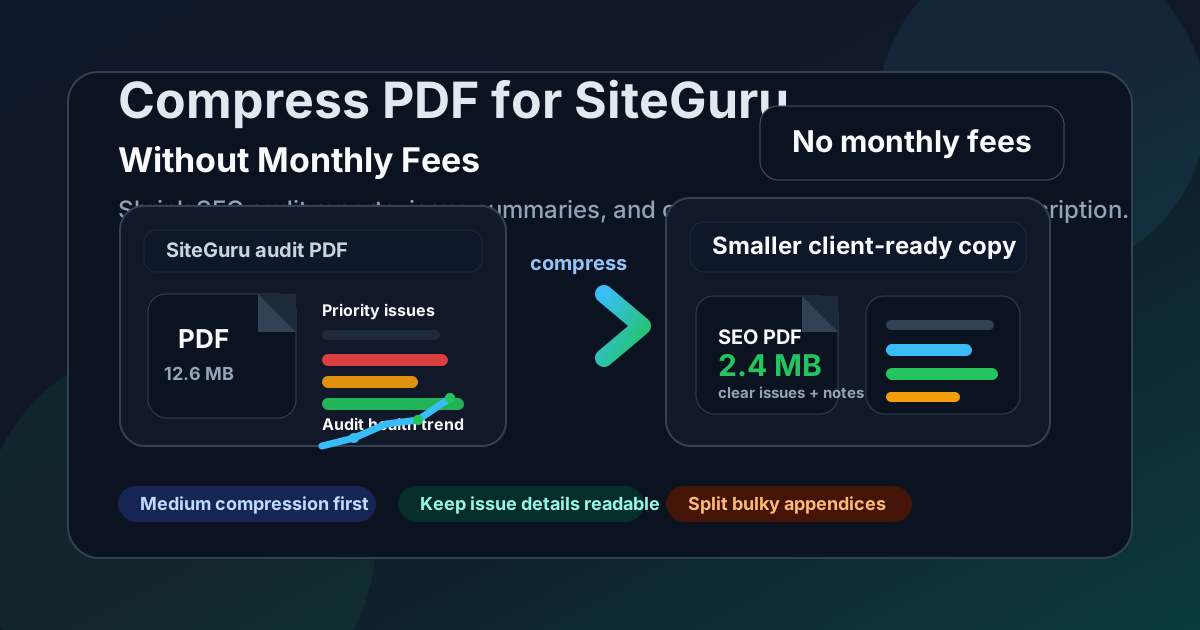
Table of contents
- Quick start: compress a SiteGuru PDF in under 2 minutes
- Why "without monthly fees" matters here
- Why smaller PDFs help in SiteGuru workflows
- What size should a SiteGuru PDF be?
- Which compression level should you choose?
- Step-by-step: use LifetimePDF to shrink the file
- Common SiteGuru PDFs that benefit from compression
- What to do if the PDF is still too large
- How to keep screenshots, issue details, and notes readable
- Workflow habits that reduce PDF bloat
- Related LifetimePDF tools and internal links
- FAQ (People Also Ask)
Quick start: compress a SiteGuru PDF in under 2 minutes
If your real goal is simply make this SiteGuru PDF smaller so it is easier to send, use this workflow:
- Export or save the PDF copy you actually plan to share.
- Open Compress PDF.
- Upload the SiteGuru audit report, issue recap, screenshot appendix, or client-ready SEO handoff you want to shrink.
- Choose Medium compression first.
- Download the smaller file and compare the new size.
- Preview the sections that matter most: issue names, screenshot callouts, priority labels, dates, notes, and recommended fixes.
- If the PDF is still bulkier than you want, use Extract Pages, Split PDF, or Delete Pages instead of repeatedly crushing the whole file.
Why "without monthly fees" matters here
People search this because the job repeats and the extra subscription feels bigger than the problem. If you already use SiteGuru and other SEO tools, you may already be paying for crawlers, analytics, storage, reporting software, and collaboration tools. Adding one more monthly bill just to shrink a PDF turns a finish-line task into recurring overhead.
That is why the no-subscription angle makes sense. The person searching is not trying to replace SiteGuru. They already have the output. They just need a smaller file that is easier to email, upload to a portal, archive, or add to a client update. A pay-once PDF workflow fits that need much better than one more account to keep alive forever.
Plain-English version: if the real task is just make this SiteGuru PDF smaller and keep it readable, a pay-once workflow usually makes more sense than subscription sprawl.
Why smaller PDFs help in SiteGuru workflows
SiteGuru PDFs usually exist because someone needs a portable version of the work outside the dashboard. A client needs the audit recap. A teammate needs the issue summary. A stakeholder needs the top findings in a format that is easy to forward. That is when file size becomes a usability problem instead of a technical one.
Heavy PDFs open more slowly, feel clumsy to send, and are more likely to be postponed by busy readers. The extra weight often comes from screenshot-heavy evidence pages, repeated cover sections, wide exports, or one oversized report trying to serve three different audiences at once. Good compression removes waste while preserving the details people still rely on, such as issue titles, screenshots, priority tags, comments, dates, and next actions.
Why compression usually helps
- Faster client delivery: smaller files attach and upload more easily.
- Smoother internal review: lighter PDFs open faster when someone only needs the main findings.
- Cleaner archives: recurring audit files take up less space and are easier to keep organized.
- Less resend friction: smaller files reduce the odds that someone asks for a lighter copy after the first send.
- Better meeting flow: people can open the report quickly instead of waiting for a large attachment to load.
What size should a SiteGuru PDF be?
There is no perfect number because a one-page issue summary behaves very differently from a screenshot-heavy appendix. Practical targets still help a lot.
| SiteGuru PDF type | Good target range | What to protect |
|---|---|---|
| Executive summary or focused issue recap | Under 2MB | Issue titles, priority labels, short notes, and action items |
| Standard audit report or client handoff | 2MB to 4MB | Screenshots, dates, section headings, and fix summaries |
| Appendix-heavy technical pack | 2MB to 5MB | Small screenshot text, annotations, and evidence details |
The right answer depends on who will open the file. An internal SEO might tolerate a larger appendix. A client or manager usually benefits from a smaller, tighter PDF that keeps the main story clear. If the report only needs a handful of essential pages, it is often smarter to send a shorter file than a more aggressively compressed full pack.
Which compression level should you choose?
If you are unsure, start with Medium compression. That is usually the safest first move for SiteGuru exports because it reduces size while keeping screenshot labels, issue notes, and summary sections readable.
| Compression level | Best for | Watch out for |
|---|---|---|
| Low | Already-lean reports where screenshots and tiny labels matter most | You may not save enough space to solve the real sharing problem |
| Medium | Most SiteGuru audit reports, issue summaries, and client handoffs | Still review the smallest screenshot text and issue notes once |
| High | Internal copies where size matters more than visual polish | Small callouts, screenshot text, and note blocks can get soft fast |
Before moving from Medium to High, ask whether the entire PDF really needs to stay together. In many cases, splitting the appendix or extracting only the decision-ready pages works better than compressing every page more aggressively.
Step-by-step: use LifetimePDF to shrink the file
- Export the final version first. Save the SiteGuru PDF you actually plan to share, not a rough draft with sections you already know will get removed.
- Open LifetimePDF Compress PDF.
- Upload the file. This could be an audit report, issue summary, screenshot appendix, or a client-ready SEO recap.
- Start at Medium. That is the safest first pass for most reader-facing files.
- Download the result and check the new size.
- Review the risky spots. Focus on screenshot annotations, issue labels, date references, tables, note blocks, and recommendation text.
- If the file is still too large, trim pages before pushing harder. Try Delete Pages, Split PDF, or Crop PDF.
Good workflow order: trim what nobody needs, compress once, then do one quick readability check before you send the final copy.
Common SiteGuru PDFs that benefit from compression
Not every SiteGuru export behaves the same way. These are the types of PDFs that usually benefit most from cleanup and compression:
Audit summaries
These are often short and easy to shrink, but they still need readable issue labels, priority markers, and action notes. A smaller file is helpful only if the summary still feels clear on a normal laptop screen.
Issue appendices
These get large quickly because screenshots, examples, and repeated problem pages add weight fast. They are great candidates for page trimming before stronger compression.
Client-ready handoffs
These usually mix a short narrative with screenshots and recommendations. Compression helps, but visual trust matters too. The PDF should still feel polished enough to send without apology.
Internal SEO and developer reviews
Sometimes teammates only need the handful of pages related to their work. In those cases, extracting pages or splitting the pack can be more useful than compressing a long all-in-one file.
What to do if the PDF is still too large
If your SiteGuru PDF is still bigger than you want after a sensible compression pass, the answer is usually less PDF, not harsher compression.
- Extract only the decision-ready pages: use Extract Pages when the reader only needs the main findings and next steps.
- Split bulky appendices: use Split PDF to separate the core report from screenshot-heavy evidence pages.
- Delete repeated or stale sections: use Delete Pages to remove duplicates, blank exports, or no-longer-useful pages.
- Crop wasted margins: use Crop PDF when screenshots include a lot of empty space.
- Clean metadata before delivery: use PDF Metadata Editor if you want a cleaner client-facing copy.
How to keep screenshots, issue details, and notes readable
The parts most likely to suffer during compression are usually the parts readers still care about most. That is why one quick review matters.
- Check issue names and priority labels: these need to stay easy to scan.
- Zoom in on the smallest screenshot callout: if the annotation is muddy, the file went too far.
- Review dates and status references: tiny labels can degrade faster than larger headings.
- Confirm note blocks and recommendations: if the action summary feels annoying to read, the PDF is not ready.
- Open the file on an ordinary screen: not just a large monitor. If it works there, it will usually work for everyone else too.
Workflow habits that reduce PDF bloat
A few habits make future SiteGuru reports easier to manage:
- Build audience-specific versions: clients, SEOs, and developers do not always need the same appendix.
- Keep evidence separate from the main story: a second PDF is often cleaner than one oversized report.
- Trim before export: if a section is optional, remove it before the final PDF exists.
- Name files clearly: a clean file title and filename help later when reports pile up.
- Reuse a simple finishing process: trim, compress, review, send.
The best PDF workflow is rarely complicated. It is the one your team can repeat without friction every time a report needs to go out.
Related LifetimePDF tools and internal links
Compressing a PDF for SiteGuru without monthly fees is usually one step in a broader reporting workflow. These tools pair naturally with it:
- Compress PDF - shrink SiteGuru exports before sharing them
- Extract Pages - send only the pages a teammate or client actually needs
- Split PDF - break one oversized audit pack into smaller sections
- Delete Pages - remove repeated evidence or stale sections before compression
- Crop PDF - trim wasted screenshot borders and dead space
- PDF Metadata Editor - clean titles and document properties before client delivery
- Compare PDFs - useful when checking revisions between report versions
Suggested internal reading
- Compress PDF for Sitechecker Without Monthly Fees
- Compress PDF for Sitebulb Without Monthly Fees
- Compress PDF for Screaming Frog Without Monthly Fees
- Compress PDF for SE Ranking Without Monthly Fees
- Compress PDF for Ahrefs Without Monthly Fees
- Compress PDF Online Free
- How to Reduce PDF File Size for Email
- Browse all LifetimePDF articles
FAQ (People Also Ask)
How do I compress a PDF for SiteGuru without monthly fees?
Use Compress PDF, upload the SiteGuru PDF, start with medium compression, and download the smaller result. If it is still bulky, extract or split the pages people actually need instead of repeatedly over-compressing the whole report.
What file size is best for SiteGuru reports?
Under 2MB is a strong target for short summaries and focused issue recaps. Larger audit reports and screenshot-heavy appendices often work better around 2MB to 5MB as long as the smallest useful text still looks clear.
Will compression make SiteGuru screenshots or issue notes blurry?
It can if you compress too aggressively. That is why medium compression is the safest default for most SiteGuru exports. Always check screenshot annotations, issue titles, dates, tables, and recommendation notes before keeping the compressed copy.
Why look for a SiteGuru PDF workflow without monthly fees?
Because shrinking exported PDFs is routine cleanup work, not something most teams want to rent forever. A pay-once workflow makes more sense when the real need is reliable compression and easier delivery around reports you already create.
What if my SiteGuru PDF is still too large after compression?
Split the appendix into its own file, extract only the summary pages, delete duplicate sections, and crop wasted screenshot margins before trying stronger compression. In many cases, sharing less PDF works better than crushing the whole pack harder.