Compress PDF for Screaming Frog Without Monthly Fees: Share Smaller Crawl Exports and Audit PDFs Without Subscription Bloat
If you need to compress a PDF for Screaming Frog without monthly fees, use a pay-once PDF tool, start with Medium compression, and review the smaller file once before you send it.
For most Screaming Frog workflows, that is enough to shrink crawl exports, technical audit PDFs, redirect appendices, and client handoff files without turning a routine SEO task into another recurring software bill.
This kind of work should stay simple. You export the audit, tighten the file, share it, and move on with the actual job: fixing issues, explaining priorities, or getting a client and developer team on the same page. Monthly-fee PDF tools have a habit of making a small finishing step feel heavier than it should. When the real need is just a lighter PDF that still keeps URL rows, issue labels, screenshots, and notes readable, a practical no-subscription workflow makes more sense.
Fastest path: save the Screaming Frog export as PDF, use LifetimePDF's Compress PDF tool, begin with Medium compression, and split or extract pages only if the file is still heavier than you want.
In a hurry? Jump to Quick start: compress a Screaming Frog PDF in under 2 minutes.
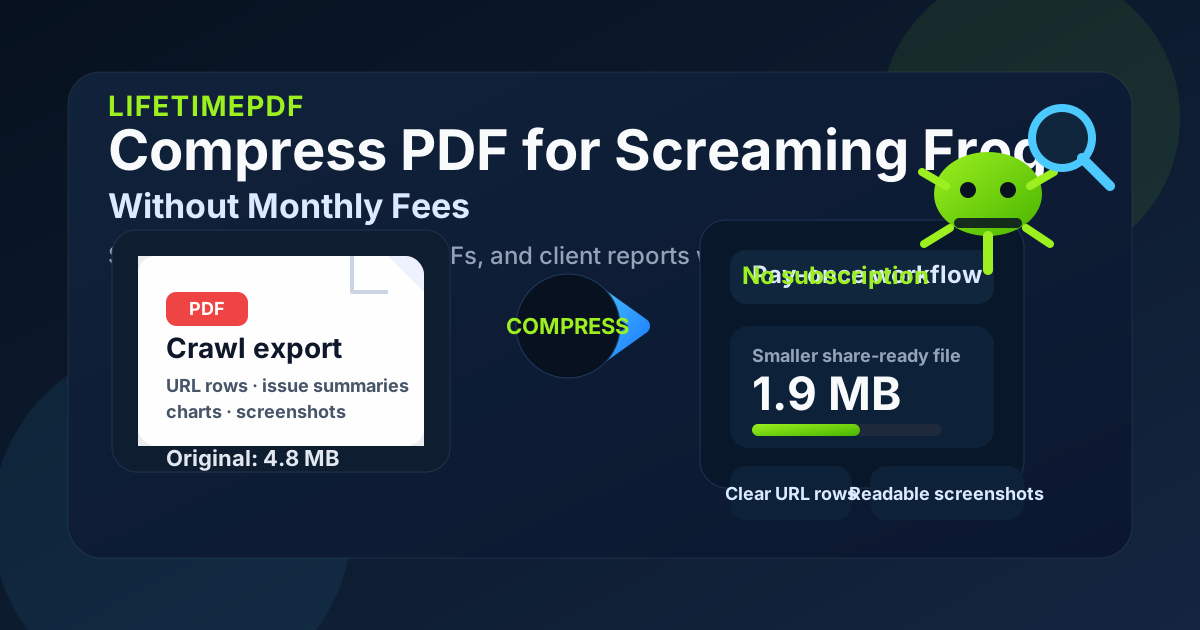
Table of contents
- Quick start: compress a Screaming Frog PDF in under 2 minutes
- Why "without monthly fees" matters here
- Why smaller PDFs work better for Screaming Frog workflows
- What size should a Screaming Frog PDF be?
- Which compression level should you choose?
- Step-by-step: use LifetimePDF to shrink the file
- Common Screaming Frog PDFs that benefit from compression
- What to do if the PDF is still too large
- How to keep URL rows, screenshots, and notes readable
- Workflow habits that reduce PDF bloat
- Related LifetimePDF tools and internal links
- FAQ (People Also Ask)
Quick start: compress a Screaming Frog PDF in under 2 minutes
If your real goal is simply make this Screaming Frog PDF smaller so it is easier to send, use this workflow:
- Create the PDF copy first by exporting the report, printing the dashboard view, or saving the audit recap as PDF.
- Open Compress PDF.
- Upload the crawl overview, issue summary, redirect review, image audit handoff, screenshot-backed technical audit, or client-ready SEO PDF you want to shrink.
- Choose Medium compression first.
- Download the smaller file and check the new size.
- Preview the sections that matter most: URL rows, issue labels, chart legends, screenshots, date ranges, notes, and action summaries.
- If the file is still heavier than you want, use Extract Pages, Split PDF, or Delete Pages instead of repeatedly crushing the whole export.
Why "without monthly fees" matters here
People do not search for this because PDF compression is exciting. They search for it because the task repeats and the subscription feels bigger than the problem. An agency, consultant, or in-house SEO team may already be paying for crawling software, reporting tools, cloud storage, project software, analytics platforms, and client communication tools. Adding another monthly bill just to make exported PDFs smaller starts to feel wasteful fast.
That is why this keyword is clean and practical. The job itself is ordinary. Someone needs to send a lighter audit, upload a smaller file to a portal, archive a cleaner copy, or avoid bouncing a bulky attachment back and forth between teams. A pay-once PDF workflow fits that reality better than subscription sprawl.
Why smaller PDFs work better for Screaming Frog workflows
Screaming Frog PDFs usually exist because the audit needs to leave the tool. A client needs a recap. A developer needs a focused issue packet. An SEO lead wants a clean archive. A strategist wants a short deck for a meeting. In all of those cases, file size becomes a practical usability issue, not just a technical detail.
Heavy PDFs are slower to upload, more awkward to email, and easier for busy readers to postpone. The extra weight usually comes from screenshot-heavy appendices, duplicated cover pages, printed tables with more rows than anyone will read, or one oversized pack trying to satisfy every audience at once. Good compression removes waste while preserving the details people still care about, such as URL paths, issue labels, chart legends, screenshot evidence, and short recommendations.
Why compression usually helps
- Faster client review: lighter PDFs open faster when someone only needs the main technical SEO story.
- Smoother sharing: smaller files are easier to email, upload, and attach to project updates.
- Cleaner archives: recurring crawl reports are easier to store when they are not bloated with stale appendix pages.
- Better meeting flow: review calls go more smoothly when everyone can open the same file without waiting on a heavy attachment.
- Less resend friction: people are less likely to ask for a smaller copy when the file already feels manageable.
What size should a Screaming Frog PDF be?
There is no perfect number, but there is a practical range. A short crawl summary or focused issue recap often works best under 2MB. Larger screenshot-backed audit packs, redirect appendices, and client-ready technical SEO decks usually land more comfortably in the 2MB to 5MB range if you still want the smallest useful text to stay readable.
| Screaming Frog PDF type | Good target range | What to protect |
|---|---|---|
| Short crawl summary or issue recap | Under 2MB | Headline findings, issue labels, short notes, main screenshots |
| Standard technical audit or client handoff | 2MB to 4MB | URL rows, chart legends, screenshot callouts, recommendation blocks |
| Screenshot-heavy appendix or redirect examples | 3MB to 5MB | Small screenshot text, annotations, browser details, path examples |
| Oversized audit pack serving multiple audiences | Keep the core file small; split the appendix | Main narrative, action pages, decision-ready summary |
Which compression level should you choose?
If you are unsure, start with Medium. That is usually the safest balance for Screaming Frog exports because it reduces size while keeping URL rows, chart legends, screenshot text, and short notes intact. Stronger compression can work, but it is better reserved for files where the visuals are simple or the appendix is expendable.
- Low compression: best when the PDF already looks clean and only needs a small reduction.
- Medium compression: the best first pass for most Screaming Frog workflows.
- High compression: only after you have trimmed pages and confirmed the smallest useful text still survives.
One smart habit is to reduce page count before chasing a harder compression setting. In technical SEO reporting, many oversized PDFs are not image problems at all. They are packaging problems.
Step-by-step: use LifetimePDF to shrink the file
- Open Compress PDF.
- Upload the Screaming Frog PDF you actually plan to share.
- Choose Medium compression first.
- Download the compressed copy.
- Check URL rows, issue names, screenshot callouts, chart labels, dates, and any notes that matter to the reader.
- If the result still feels bulky, remove repeated or low-value pages with Delete Pages.
- If the pack serves multiple audiences, split it with Split PDF so each reader gets a smaller, more focused copy.
- If only a few pages matter, use Extract Pages and send the essentials instead of the full pack.
Best workflow order: trim unnecessary pages first, compress second, and do one quick readability check before you send the file.
Common Screaming Frog PDFs that benefit from compression
Not every export behaves the same way. These are the kinds of Screaming Frog PDFs that usually benefit most from cleanup and compression:
- Crawl overview PDFs: usually short enough to compress well, but still worth keeping light for meetings and quick approvals.
- Issue summary packs: can grow fast when they include multiple sections, screenshots, and notes for several teams.
- Redirect reviews: long examples and path screenshots often add weight without helping every reader.
- Image or on-page audit handoffs: useful for content and dev teams, but easy to over-package.
- Screenshot-backed client recaps: image-heavy evidence pages are often the biggest source of bloat.
- Archive copies: lighter files are easier to store, open, and compare later.
If your PDF has both a main story and a lot of support material, keep the main report light and put the evidence in a second file. That usually feels more professional than forcing everything into one attachment.
What to do if the PDF is still too large
If the first compression pass does not get you far enough, the answer is usually not compress harder immediately. It is usually reduce unnecessary content first.
- Remove repeated cover pages or blank export pages.
- Split long appendices into a separate attachment.
- Extract only the summary pages a stakeholder actually needs.
- Crop oversized browser margins or screenshot borders with Crop PDF.
- Rebuild the final share copy from only the pages that serve the next reader.
How to keep URL rows, screenshots, and notes readable
The danger zone is usually small text. Before you keep a compressed copy, quickly inspect the parts most likely to degrade:
- URL rows with long paths or parameters
- issue labels and short explanatory notes
- chart legends, dates, and audit score summaries
- screenshots with small UI text or callouts
- redirect examples and browser captures
- client-facing evidence pages where credibility depends on clarity
You do not need a long QA process. Open the file once, zoom in on the tightest URL table or smallest screenshot text, and confirm it still looks like something a reader can actually use. If it does, you are probably done.
Workflow habits that reduce PDF bloat
A few habits make future exports easier to manage:
- Build audience-specific packs: do not send a giant all-purpose PDF when two lighter files would serve people better.
- Keep appendices separate: detailed evidence can live outside the core decision document.
- Trim before export: if you already know a section is optional, remove it before you create the final PDF.
- Name files clearly: a concise filename and clean document title make archives easier to search later.
- Reuse a simple finishing workflow: trim, compress, review, send.
The best PDF workflow is rarely the fanciest one. It is the one your team can repeat without friction every time a crawl export or audit pack needs to leave the tool.
Related LifetimePDF tools and internal links
Compressing a PDF for Screaming Frog is often one step in a broader technical-SEO workflow. These tools pair naturally with it:
- Compress PDF - shrink Screaming Frog exports before sharing them
- Extract Pages - send only the pages a teammate or client actually needs
- Split PDF - break one oversized audit pack into clearer sections
- Delete Pages - remove blank or repeated appendix pages before compression
- Crop PDF - trim wasted screenshot borders and dead space
- PDF Metadata Editor - clean titles and document properties before client delivery
- Compare PDFs - useful when checking revisions between audit rounds
- Merge PDF - combine only the support pages you actually want in the final pack
Suggested internal blog links
- Compress PDF for Screaming Frog
- Compress PDF Without Monthly Fees
- Compress PDF for Semrush Without Monthly Fees
- Compress PDF for Google Search Console Without Monthly Fees
- Compress PDF for Ahrefs Without Monthly Fees
- Compress PDF for Sitebulb
- How to Reduce PDF File Size for Email
- Browse all LifetimePDF articles
FAQ (People Also Ask)
How do I compress a PDF for Screaming Frog without monthly fees?
Use Compress PDF, upload the Screaming Frog PDF, start with medium compression, and download the smaller result. If it is still bulky, extract only the pages the reader actually needs instead of repeatedly over-compressing the whole report.
What file size is best for Screaming Frog reports?
Under 2MB is a strong target for short crawl summaries and focused issue recaps. Larger screenshot-heavy audit packs, redirect appendices, and client handoff decks often work better around 2MB to 5MB as long as the smallest useful text still looks clear.
Will compression make Screaming Frog URL rows or screenshots blurry?
It can if you compress too aggressively. That is why medium compression is the safest default for most Screaming Frog exports. Always check URL rows, issue labels, chart legends, screenshot callouts, and notes before keeping the compressed copy.
Why look for a Screaming Frog PDF workflow without monthly fees?
Because shrinking exported audit PDFs is repeatable operations work, not something most teams want to rent forever. A pay-once PDF workflow makes more sense when you only need reliable compression and cleanup around the audits you already create.
What if my Screaming Frog PDF is still too large after compression?
Split the appendix into its own file, extract only the summary pages, delete duplicate sections, and crop wasted screenshot margins before trying stronger compression. In many cases, sharing less PDF works better than crushing the whole pack harder.